Department of Pharmacology, Infection and Immunity Program, Biomedicine Discovery Institute, Monash University, Clayton, VIC, Australia.
School of Health and Biomedical Sciences, Science, Technology, Engineering and Mathematics (STEM) College, Royal Melbourne Institute of Technology (RMIT) University, Bundoora, VIC, Australia.
Front Cell Infect Microbiol. 2022 May 4;12:883448. doi: 10.3389/fcimb.2022.883448. eCollection 2022.
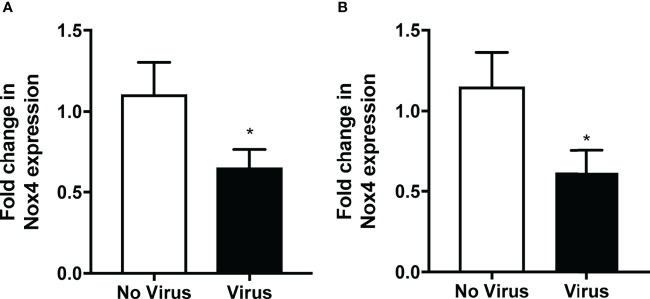
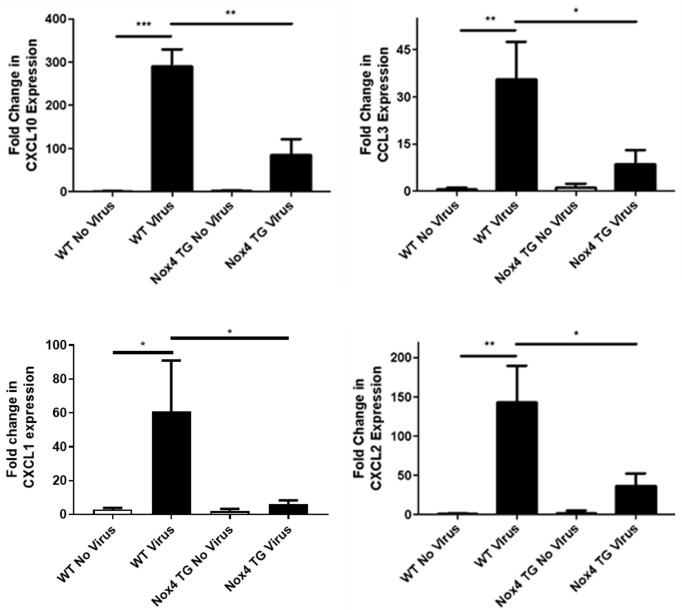
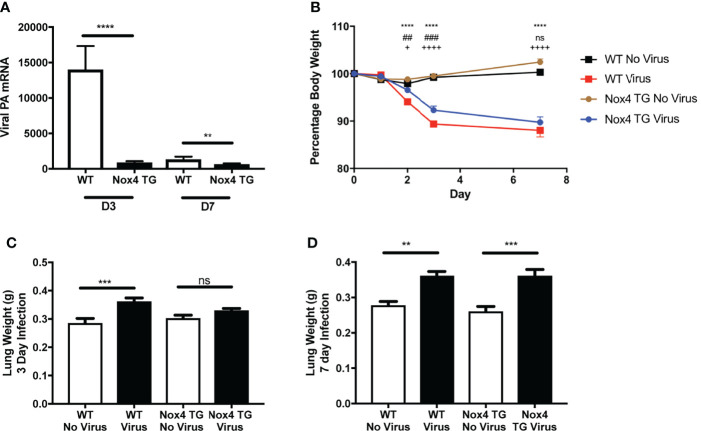
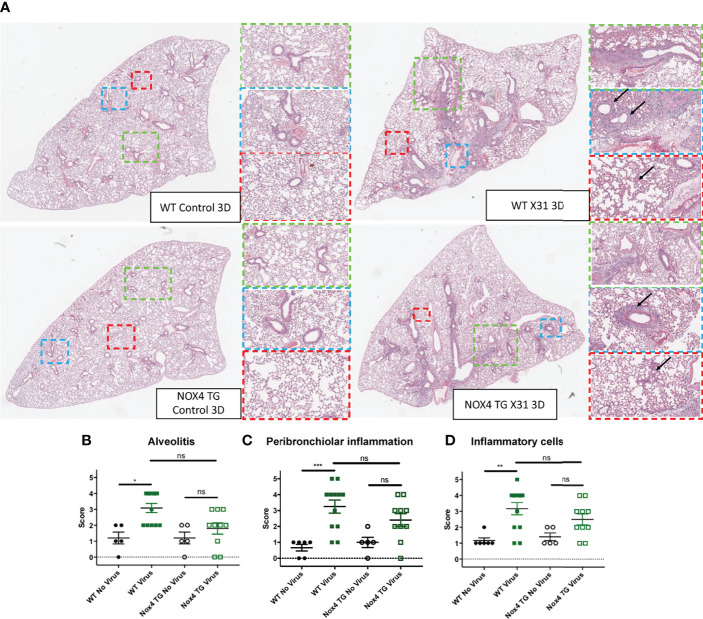
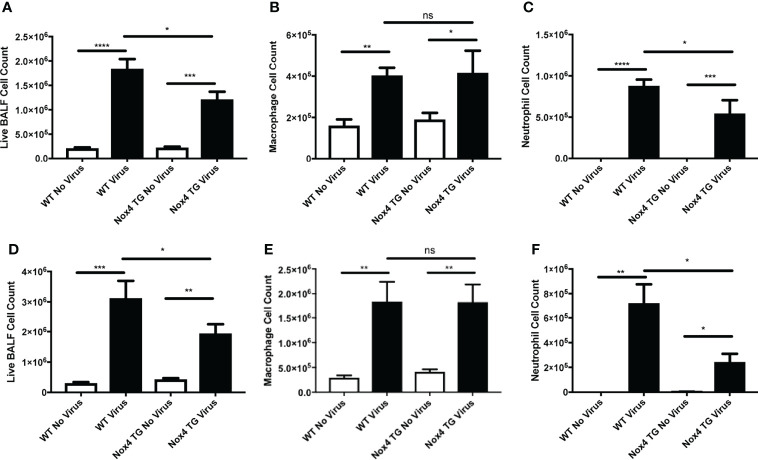
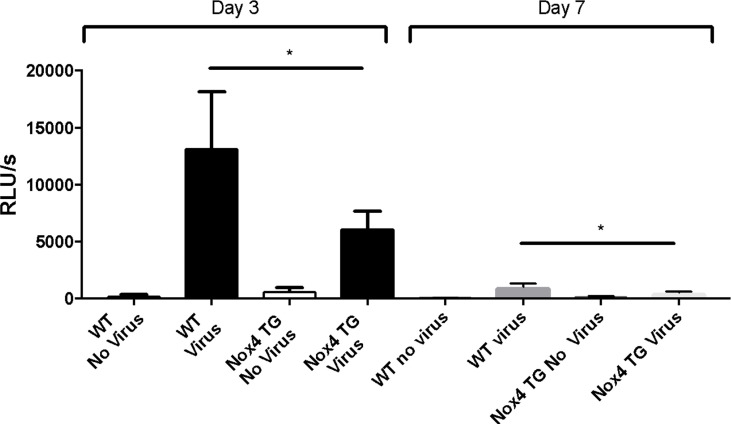
Endosomal NOX2 oxidase-dependent ROS production promotes influenza pathogenicity, but the role of NOX4 oxidase, which is highly expressed in the lung endothelium, is largely unknown. The aim of this study was to determine if endothelial NOX4 expression can influence viral pathology , using a mouse model of influenza infection. WT and transgenic endothelial NOX4 overexpressing mice (NOX4 TG) were infected intranasally with the Hong Kong H3N2 X-31 influenza A virus (10 PFU; HK x-31) or PBS control. Mice were culled at either 3 or 7 days post-infection to analyse: airway inflammation by bronchoalveolar lavage fluid (BALF) cell counts; NOX4, as well as inflammatory cytokine and chemokine gene expression by QPCR; and ROS production by an L-012-enhanced chemiluminescence assay. Influenza A virus infection of WT mice resulted in a significant reduction in lung NOX4 mRNA at day 3, which persisted until day 7, when compared to uninfected mice. Influenza A virus infection of NOX4 TG mice resulted in significantly less weight loss than that of WT mice at 3-days post infection. Viral titres were decreased in infected NOX4 TG mice compared to the infected WT mice, at both 3- and 7-days post infection and there was significantly less lung alveolitis, peri-bronchial inflammation and neutrophil infiltration. The oxidative burst from BALF inflammatory cells extracted from infected NOX4 TG mice was significantly less than that in the WT mice. Expression of macrophage and neutrophil chemoattractants CXCL10, CCL3, CXCL1 and CXCL2 in the lung tissue were significantly lower in NOX4 TG mice compared to the WT mice at 3-days post infection. We conclude that endothelial NOX4 oxidase is protective against influenza morbidity and is a potential target for limiting influenza A virus-induced lung inflammation.
内体 NOX2 氧化酶依赖性 ROS 产生促进流感致病性,但肺内皮中高度表达的 NOX4 氧化酶的作用在很大程度上尚不清楚。本研究旨在使用流感感染的小鼠模型确定内皮细胞 NOX4 表达是否可以影响病毒病理学。WT 和过表达内皮细胞 NOX4 的转基因小鼠(NOX4 TG)通过鼻腔内感染香港 H3N2 X-31 流感 A 病毒(10 PFU;HK x-31)或 PBS 对照。感染后 3 或 7 天处死小鼠,通过支气管肺泡灌洗液(BALF)细胞计数分析气道炎症;通过 QPCR 分析 NOX4 以及炎症细胞因子和趋化因子基因表达;通过 L-012 增强化学发光测定法分析 ROS 产生。与未感染的小鼠相比,WT 小鼠流感 A 病毒感染导致肺 NOX4 mRNA 在第 3 天显著减少,并持续到第 7 天。与 WT 小鼠相比,NOX4 TG 小鼠的流感 A 病毒感染导致体重减轻在感染后 3 天显著减少。与感染 WT 小鼠相比,感染 NOX4 TG 小鼠的病毒滴度在感染后 3 和 7 天均降低,并且肺肺泡炎、支气管周围炎症和中性粒细胞浸润明显减少。从感染 NOX4 TG 小鼠中提取的 BALF 炎性细胞的氧化爆发明显小于 WT 小鼠。与 WT 小鼠相比,感染后 3 天,NOX4 TG 小鼠肺组织中巨噬细胞和中性粒细胞趋化因子 CXCL10、CCL3、CXCL1 和 CXCL2 的表达明显降低。我们得出结论,内皮细胞 NOX4 氧化酶可防止流感发病率,并可能成为限制流感 A 病毒诱导的肺炎症的潜在靶点。