Faruqui Syed Hasib Akhter, Alaeddini Adel, Wang Jing, Fisher-Hoch Susan P, McCormick Joseph B
Department of Mechanical Engineering, The University of Texas at San Antonio, San Antonio, TX 78249, USA.
College of Nursing, Florida State University, Tallahassee, FL 32306, USA.
IEEE Access. 2021;9:169092-169106. doi: 10.1109/access.2021.3136618. Epub 2021 Dec 20.
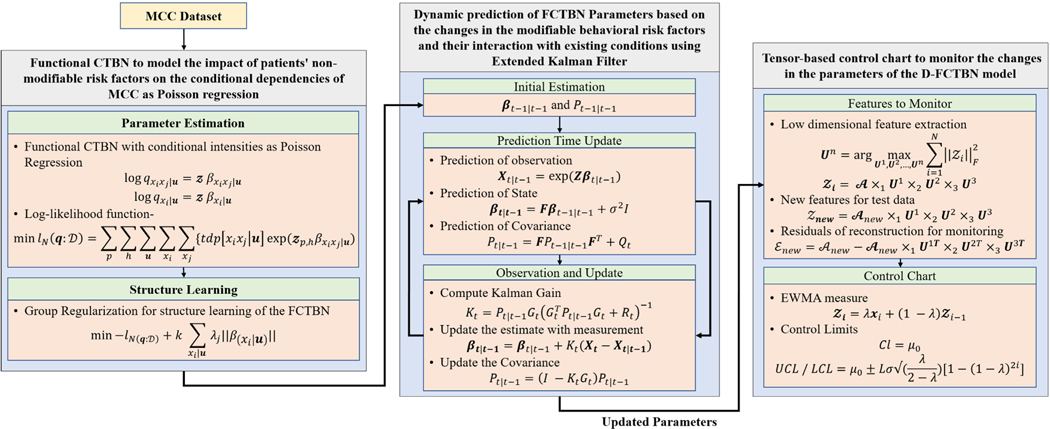
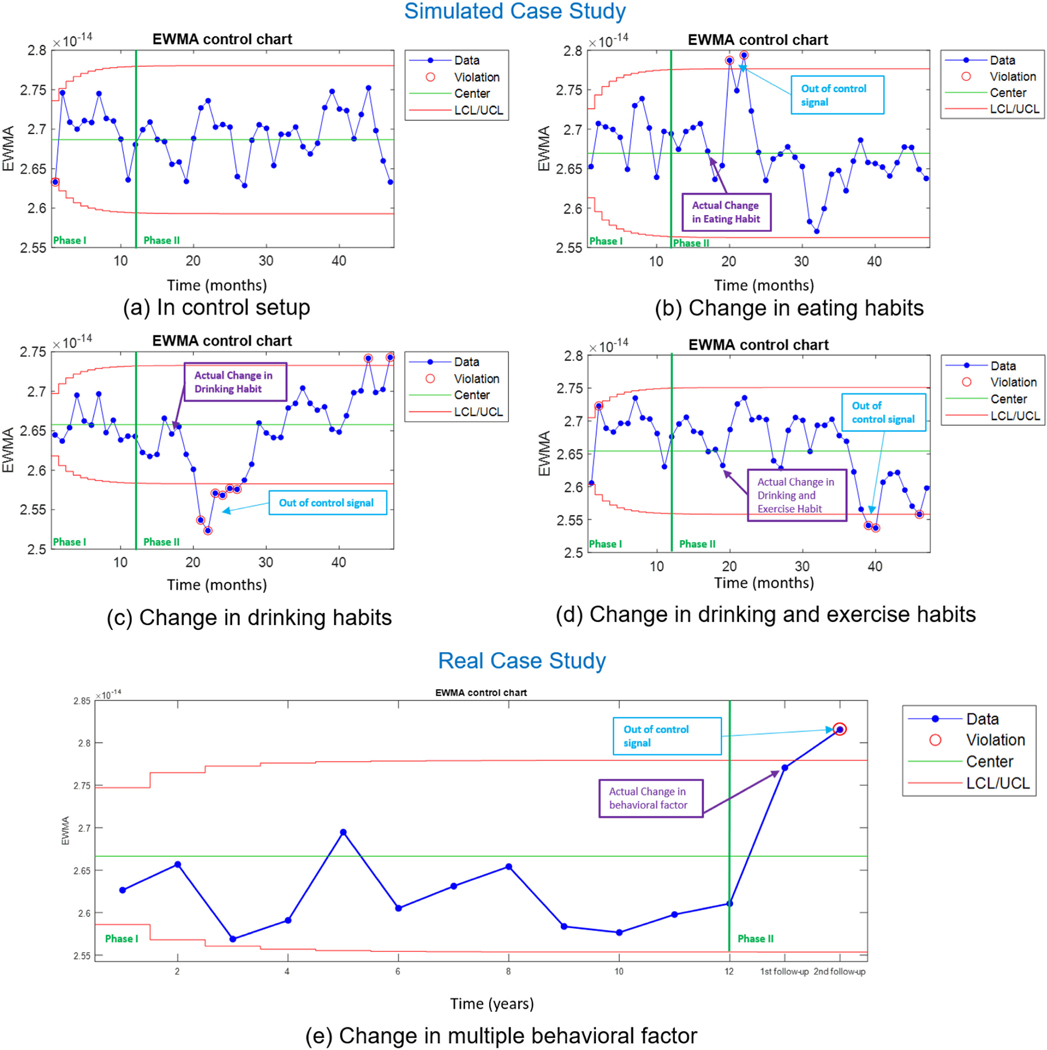
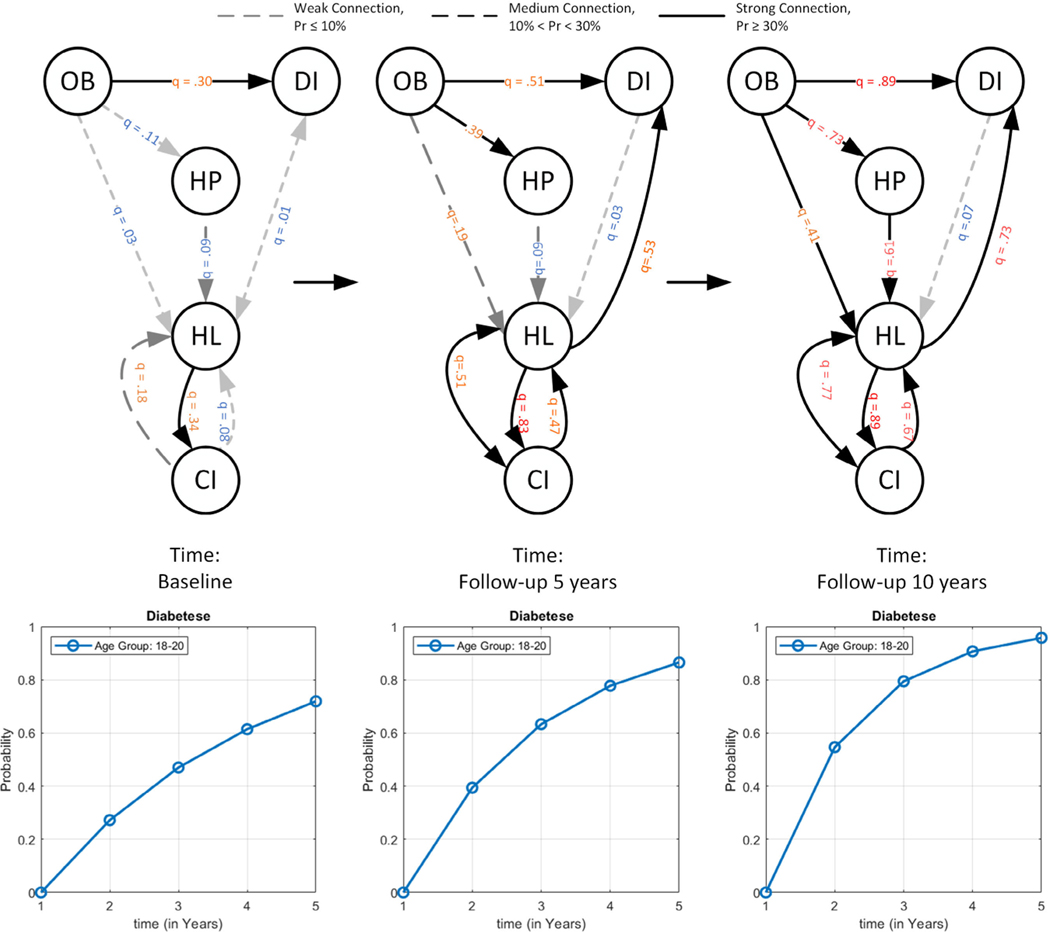
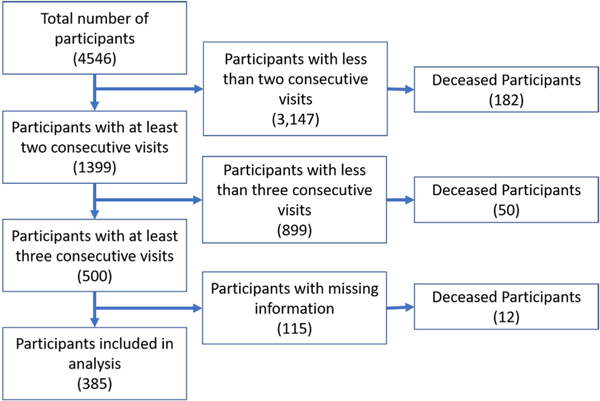
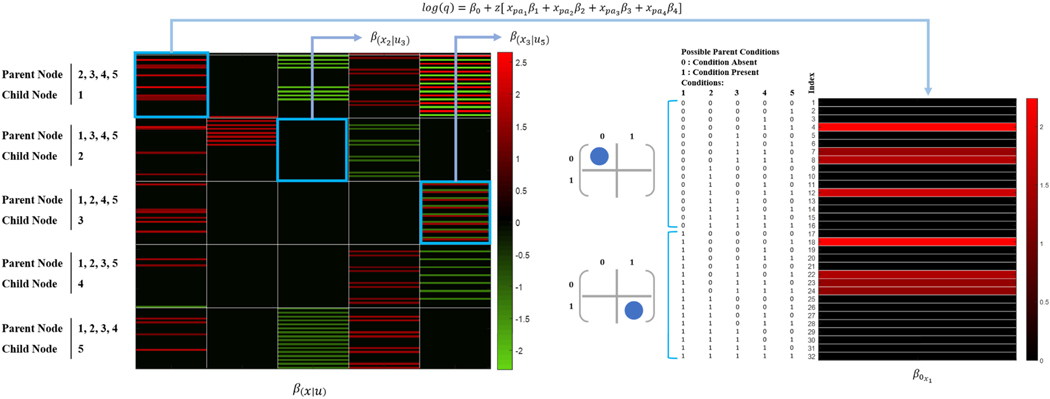
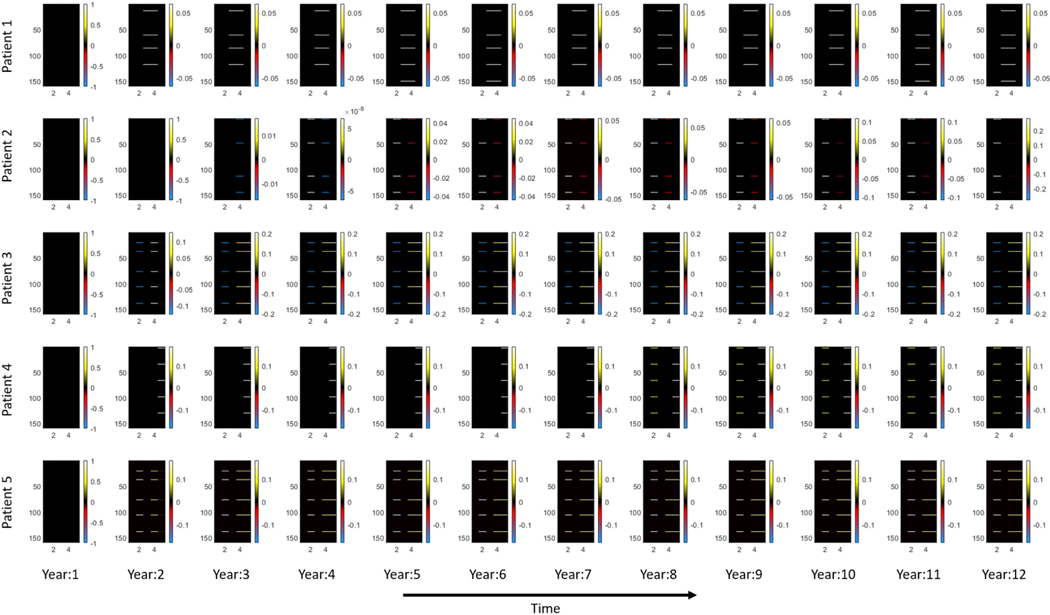
More than a quarter of all Americans are estimated to have multiple chronic conditions (MCC). It is known that shared modifiable lifestyle behaviors account for many common MCC. What is not precisely known is the dynamic effect of changes in lifestyle behaviors on the trajectories of MCC emergence. This paper proposes dynamic functional continuous time Bayesian networks to effectively formulate the dynamic effect of patients' modifiable lifestyle behaviors and their interaction with non-modifiable demographics and preexisting conditions on the emergence of MCC. The proposed method considers the parameters of the conditional dependencies of MCC as a nonlinear state-space model and develops an extended Kalman filter to capture the dynamics of the modifiable risk factors on the MCC evolution. It also develops a tensor-based control chart based on the integration of multilinear principal component analysis and multivariate exponentially weighted moving average chart to monitor the effect of changes in the modifiable risk factors on the risk of new MCC. We validate the proposed method based on a combination of simulation and a real dataset of 385 patients from the Cameron County Hispanic Cohort. The dataset examines the emergence of 5 chronic conditions (Diabetes, Obesity, Cognitive Impairment, Hyperlipidemia, Hypertension) based on 4 modifiable lifestyle behaviors representing (Diet, Exercise, Smoking Habits, Drinking Habits) and 3 non-modifiable demographic risk factors (Age, Gender, Education). For the simulated study, the proposed algorithm shows a run-length of 4 samples (4 months) to identify behavioral changes with significant impacts on the risk of new MCC. For the real data study, the proposed algorithm shows a run-length of one sample (one year) to identify behavioral changes with significant impacts on the risk of new MCC. The results demonstrate the sensitivity of the proposed methodology for dynamic prediction and monitoring of the risk of MCC emergence in individual patients.
据估计,超过四分之一的美国人患有多种慢性病(MCC)。已知共同的可改变生活方式行为是许多常见MCC的成因。但生活方式行为变化对MCC出现轨迹的动态影响尚不完全清楚。本文提出了动态功能连续时间贝叶斯网络,以有效阐述患者可改变生活方式行为及其与不可改变的人口统计学特征和既往疾病相互作用对MCC出现的动态影响。所提出的方法将MCC的条件依赖参数视为非线性状态空间模型,并开发了一种扩展卡尔曼滤波器来捕捉可改变风险因素对MCC演变的动态影响。它还基于多线性主成分分析和多变量指数加权移动平均图的集成,开发了一种基于张量的控制图,以监测可改变风险因素变化对新MCC风险的影响。我们基于模拟和来自卡梅伦县西班牙裔队列的385名患者的真实数据集对所提出的方法进行了验证。该数据集基于代表(饮食、运动、吸烟习惯、饮酒习惯)的4种可改变生活方式行为和3种不可改变的人口统计学风险因素(年龄、性别、教育程度),研究了5种慢性病(糖尿病、肥胖症、认知障碍、高脂血症、高血压)的出现情况。对于模拟研究,所提出的算法显示运行长度为4个样本(4个月),以识别对新MCC风险有显著影响的行为变化。对于真实数据研究,所提出的算法显示运行长度为1个样本(1年),以识别对新MCC风险有显著影响的行为变化。结果证明了所提出方法对个体患者中MCC出现风险进行动态预测和监测的敏感性。