Lan Jun, Zhang Yi, Song Min, Cai Shan, Luo Hong, OuYang Ruoyun, Yang Pan, Shi Xiaoliu, Long Yingjiao, Chen Yan
Department of Medical Genetics, The Second Xiangya Hospital, Central South University, Changsha, China.
Department of Gastroenterology, The Second Xiangya Hospital, Central South University, Changsha, China.
Front Med (Lausanne). 2022 May 4;9:835257. doi: 10.3389/fmed.2022.835257. eCollection 2022.
Hyper-immunoglobulin E (IgE) syndromes (HIES) are a group of primary immune deficiencies disorders (PID) characterized by elevated serum IgE, eczema, recurrent skin, or respiratory system infections and may also be accompanied by some connective tissues and skeletal abnormalities. Currently, there is no complete cure or targeted treatment for HIES. Omalizumab is a humanized recombinant monoclonal antibody against IgE, reducing the level of free IgE, inhibiting the binding of IgE to receptors on the surface of effector cells, and reducing the activation of inflammatory cells and the release of multiple inflammatory mediators. However, the effect of omalizumab in treating HIES remains unknown. Herein, we described a case of an AD-HIES patient with chronic airway disease who benefited from omalizumab treatment.
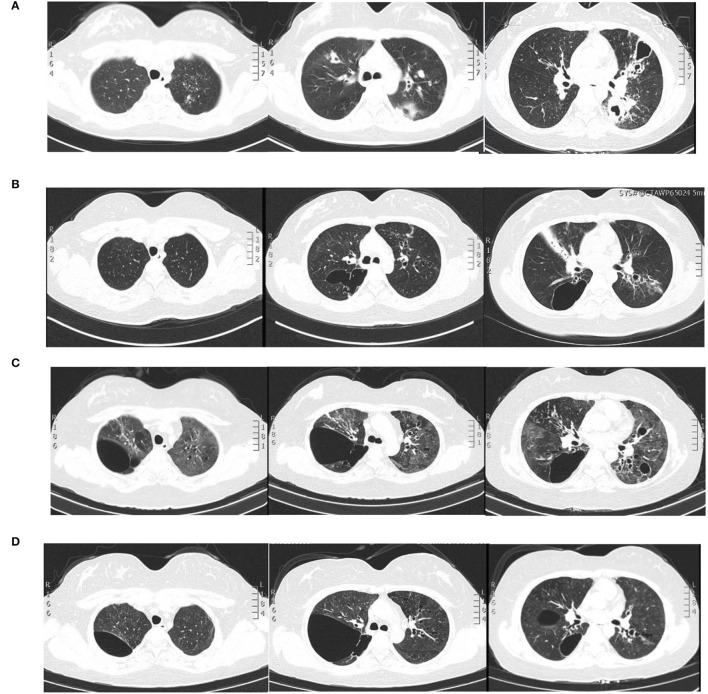
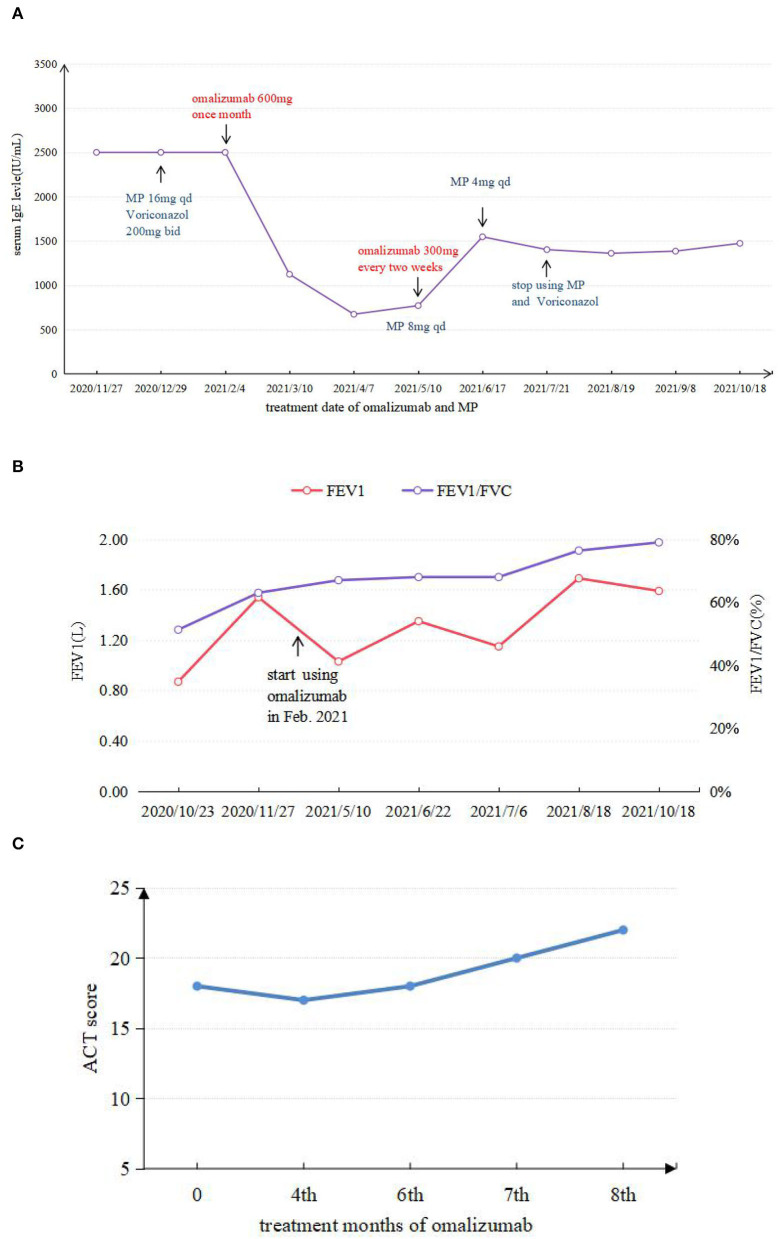
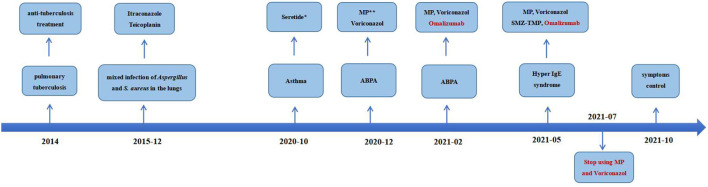
A 28-year-old Chinese woman was admitted for recurrent cough for 7 years, markedly elevated serum IgE level, and recurrent pneumonia caused by multiple pathogens, such as , and . She had eczema-dermatitis, skin abscess, slightly traumatic fracture since childhood, and developed asthma and allergic bronchopulmonary aspergillosis (ABPA) lately. Using whole-exome sequencing, the (c.1294G>T, p.Val432Leu) missense mutation for the autosomal dominant hyper-IgE syndrome was identified, and omalizumab was prescribed at 300 mg every 2 weeks. The patient responded well with the improvement of respiratory symptoms and lung function tests. The level of serum IgE remained stable on follow-up.
Omalizumab treatment proved beneficial in the case of HIES, especially with chronic airway disease, for which therapeutic options are limited. However, larger-scale prospective studies and long-term follow-up are required to establish the efficacy and safety of this therapeutic intervention.
高免疫球蛋白E(IgE)综合征(HIES)是一组原发性免疫缺陷疾病(PID),其特征为血清IgE升高、湿疹、反复的皮肤或呼吸系统感染,还可能伴有一些结缔组织和骨骼异常。目前,HIES尚无完全治愈方法或针对性治疗。奥马珠单抗是一种抗IgE的人源化重组单克隆抗体,可降低游离IgE水平,抑制IgE与效应细胞表面受体的结合,并减少炎症细胞的激活和多种炎症介质的释放。然而,奥马珠单抗治疗HIES的效果仍不明确。在此,我们描述了1例患有慢性气道疾病的常染色体显性遗传HIES(AD-HIES)患者,其从奥马珠单抗治疗中获益。
一名28岁中国女性因反复咳嗽7年、血清IgE水平显著升高以及由多种病原体(如 、 和 )引起的反复肺炎入院。她自幼患有湿疹性皮炎、皮肤脓肿、轻度外伤骨折,近期还患上了哮喘和变应性支气管肺曲霉病(ABPA)。通过全外显子组测序,确定了常染色体显性遗传高IgE综合征的 (c.1294G>T,p.Val432Leu)错义突变,并每2周给予300mg奥马珠单抗治疗。患者对治疗反应良好,呼吸道症状和肺功能测试均有改善。随访期间血清IgE水平保持稳定。
奥马珠单抗治疗对HIES患者,尤其是慢性气道疾病患者有益,因为这类患者的治疗选择有限。然而,需要更大规模的前瞻性研究和长期随访来确定这种治疗干预的疗效和安全性。