Leunissen Inge, Van Steenkiste Manon, Heise Kirstin-Friederike, Monteiro Thiago Santos, Dunovan Kyle, Mantini Dante, Coxon James P, Swinnen Stephan P
Movement Control and Neuroplasticity Research Group, Department of Movement Sciences, Group Biomedical Sciences, KU Leuven, 3000, Leuven, Belgium.
Section Brain Stimulation and Cognition, Department of Cognitive Neuroscience, Faculty of Psychology and Neuroscience, Maastricht University, 6200MD, Maastricht, the Netherlands.
iScience. 2022 Apr 30;25(5):104338. doi: 10.1016/j.isci.2022.104338. eCollection 2022 May 20.
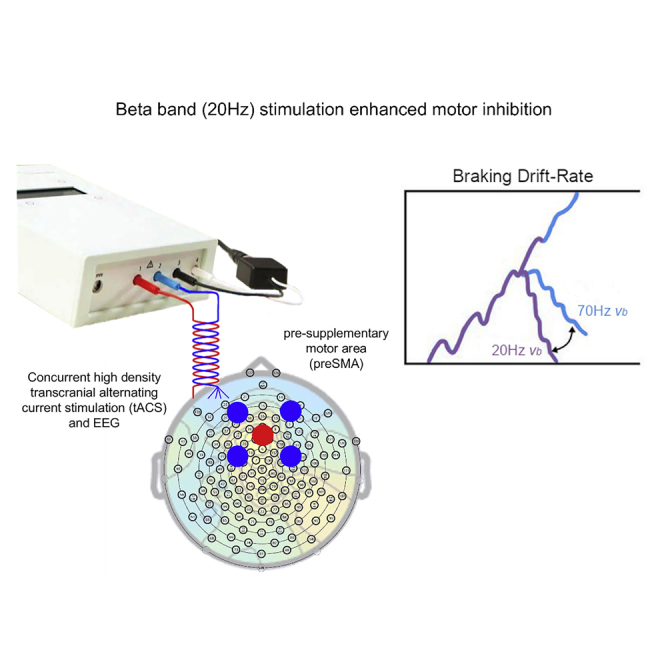
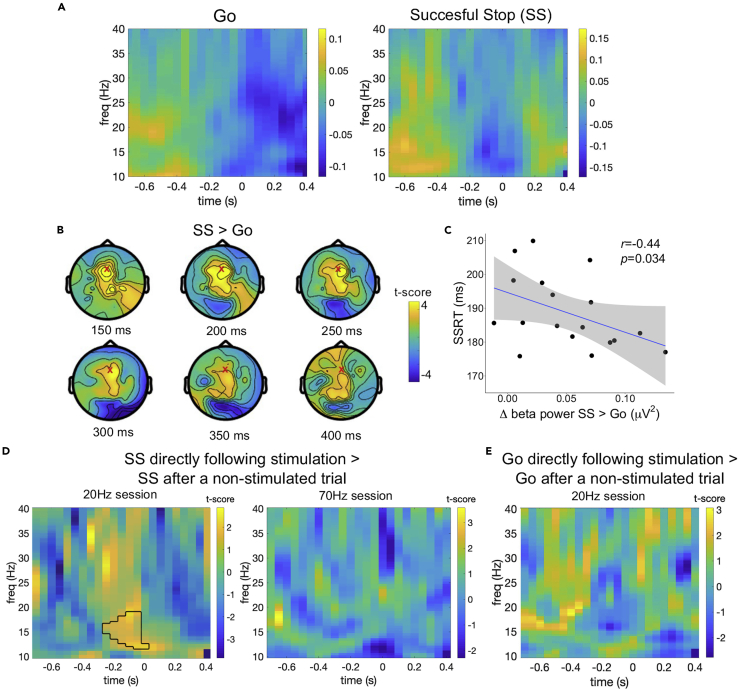
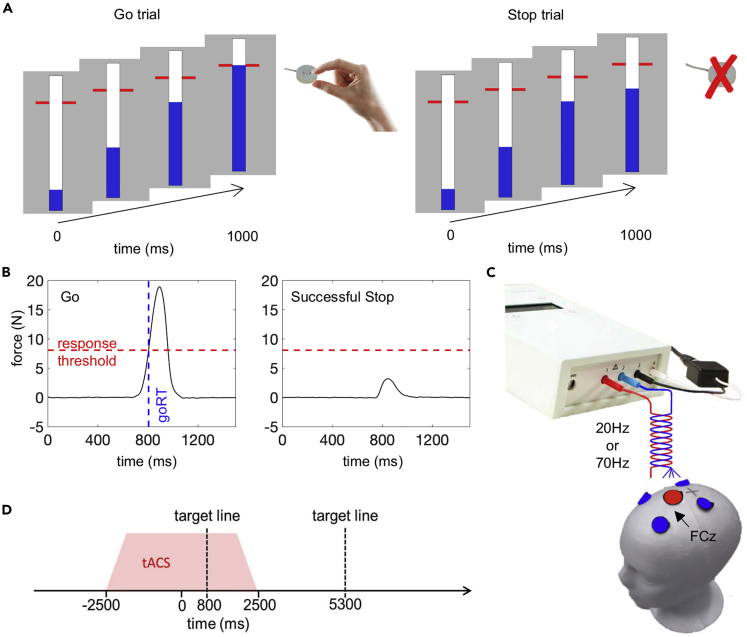
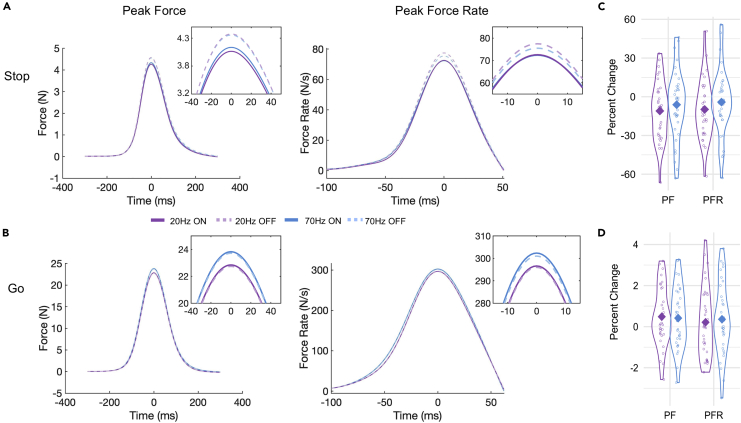
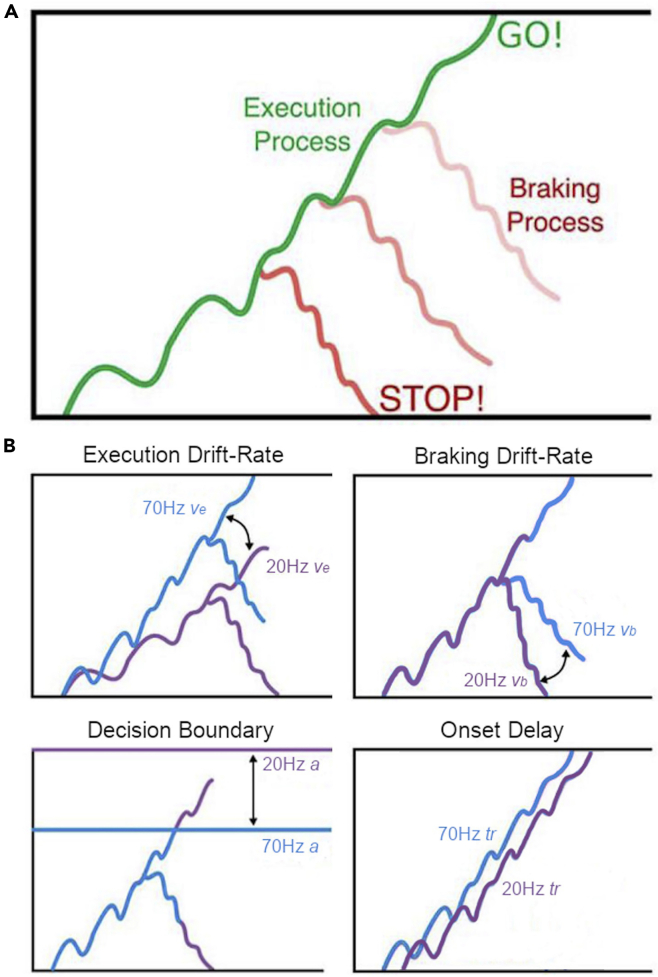
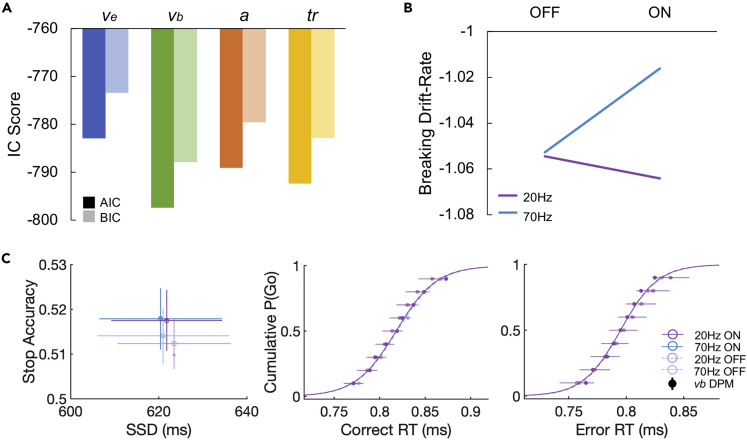
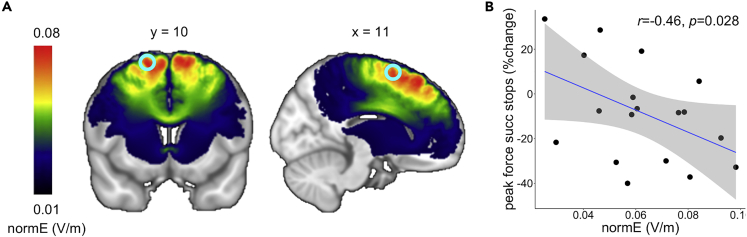
To investigate whether beta oscillations are related to motor inhibition, thirty-six participants underwent two concurrent transcranial alternating current stimulation (tACS) and electroencephalography (EEG) sessions during which either beta (20 Hz) or gamma (70 Hz) stimulation was applied while participants performed a stop-signal task. In addition, we acquired magnetic resonance images to simulate the electric field during tACS. 20 Hz stimulation targeted at the pre-supplementary motor area enhanced inhibition and increased beta oscillatory power around the time of the stop-signal in trials directly following stimulation. The increase in inhibition on stop trials followed a dose-response relationship with the strength of the individually simulated electric field. Computational modeling revealed that 20 and 70 Hz stimulation had opposite effects on the braking process. These results highlight that the effects of tACS are state-dependent and demonstrate that fronto-central beta activity is causally related to successful motor inhibition, supporting its use as a functional biomarker.
为了研究β振荡是否与运动抑制有关,36名参与者进行了两次同时进行的经颅交流电刺激(tACS)和脑电图(EEG)实验,在参与者执行停止信号任务时,分别施加β(20赫兹)或γ(70赫兹)刺激。此外,我们采集了磁共振图像以模拟tACS期间的电场。针对辅助运动前区的20赫兹刺激增强了抑制作用,并在刺激后的试验中,在停止信号出现时增加了β振荡功率。停止试验中抑制作用的增加与个体模拟电场的强度呈剂量反应关系。计算模型显示,20赫兹和70赫兹刺激对制动过程有相反的影响。这些结果突出表明,tACS的作用取决于状态,并证明额中央β活动与成功的运动抑制存在因果关系,支持将其用作功能性生物标志物。