Centre for Nutrition and Food Sciences, Queensland Alliance for Agriculture and Food Innovation, The University of Queensland, St Lucia, QLD, 4072, Australia.
School of Chemistry and Molecular Bioscience, The University of Queensland, St Lucia, QLD, 4072, Australia.
BMC Genomics. 2022 May 23;23(1):393. doi: 10.1186/s12864-022-08625-2.
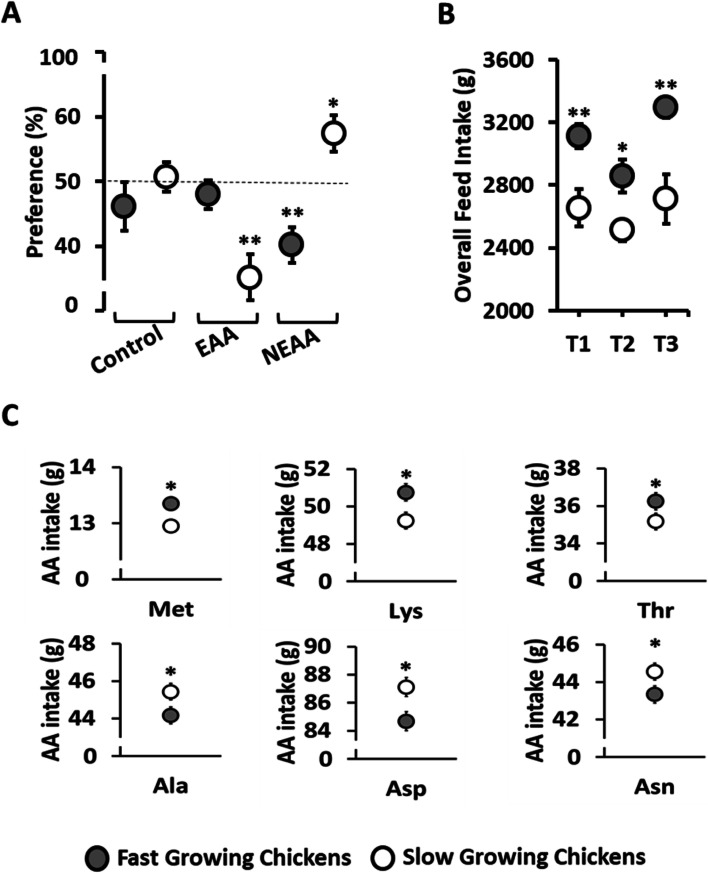
The rate of protein accretion and growth affect amino acid requirements in young animals. Differences in amino acid metabolism contribute to individual variations in growth rate. This study aimed at determining how amino acid needs may change with growth rates in broiler chickens. Experiment 1 consisted of testing amino acid choices in two chicken groups with extreme growth rates (the slowest -SG- or fastest -FG- growing birds in a flock). Essential (EAA) (methionine, lysine and threonine) or non-essential (NEAA) (alanine, aspartic acid and asparagine) amino acids were added to a standard control feed (13.2 MJ/kg; 21.6% crude protein). The chickens were offered simultaneous access to the control feed and a feed supplemented with one of the two amino acid mixes added at 73% above standard dietary levels. Experiment 2 consisted of the selection of the bottom 5 SG and top 5 FG chickens from a flock of 580 to study differences in amino acid metabolism using the proventriculus representing gut sensing mechanism. In this experiment, transcriptomic, proteomic, and genomic analyses were used to compare the two groups of chickens.
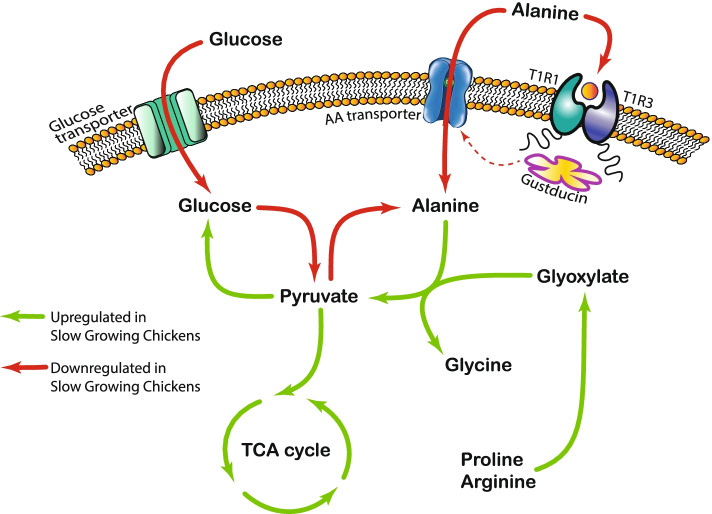
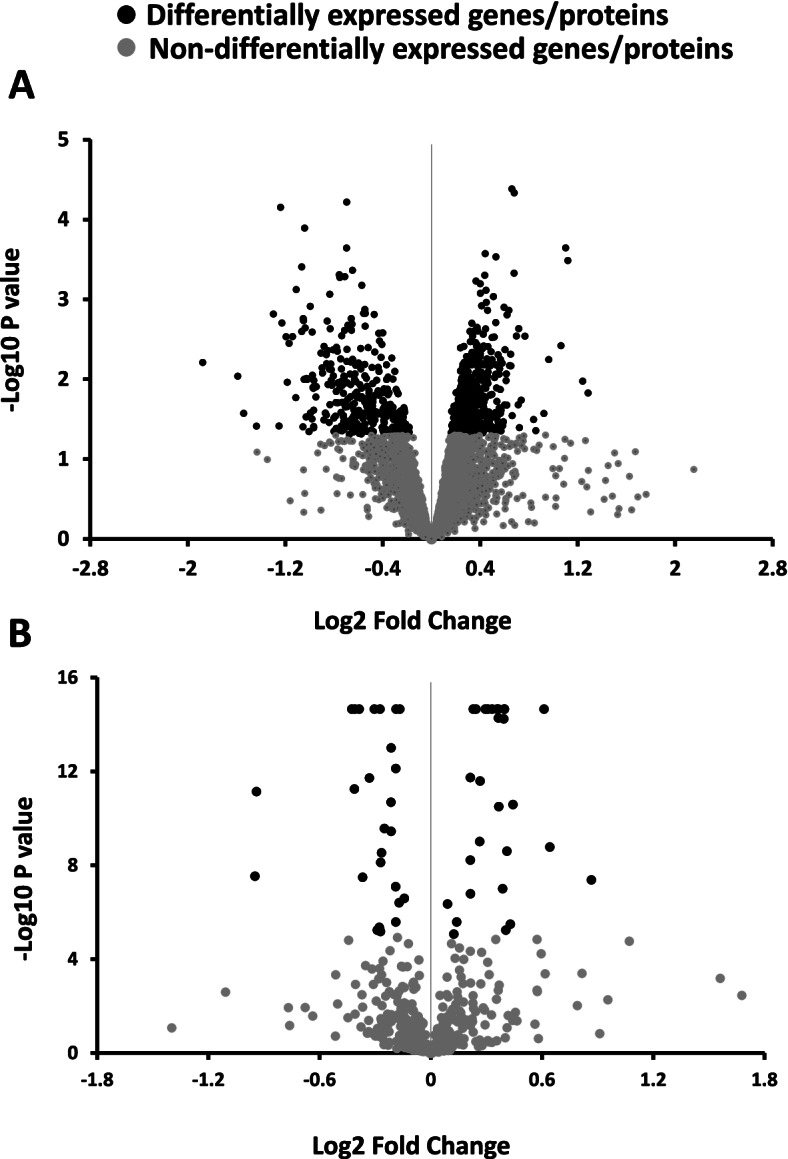
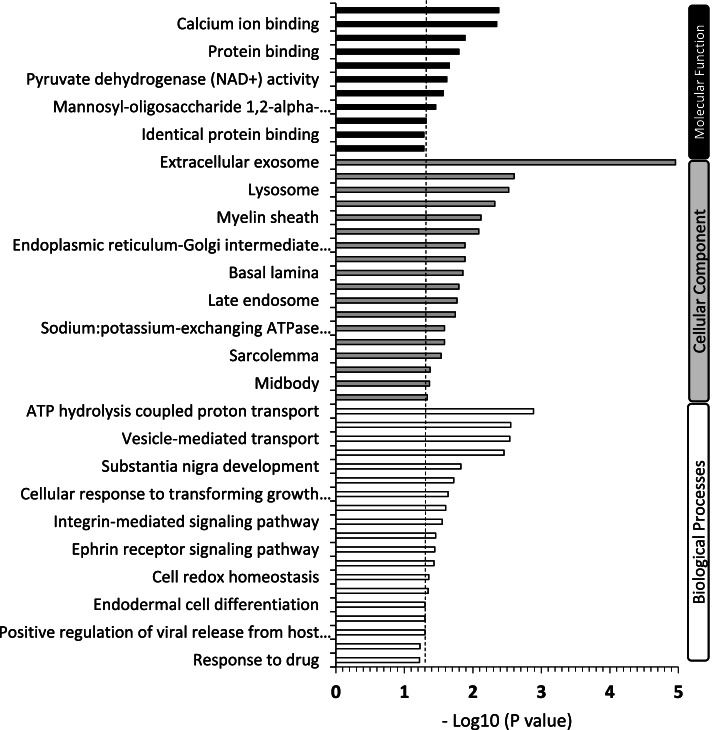
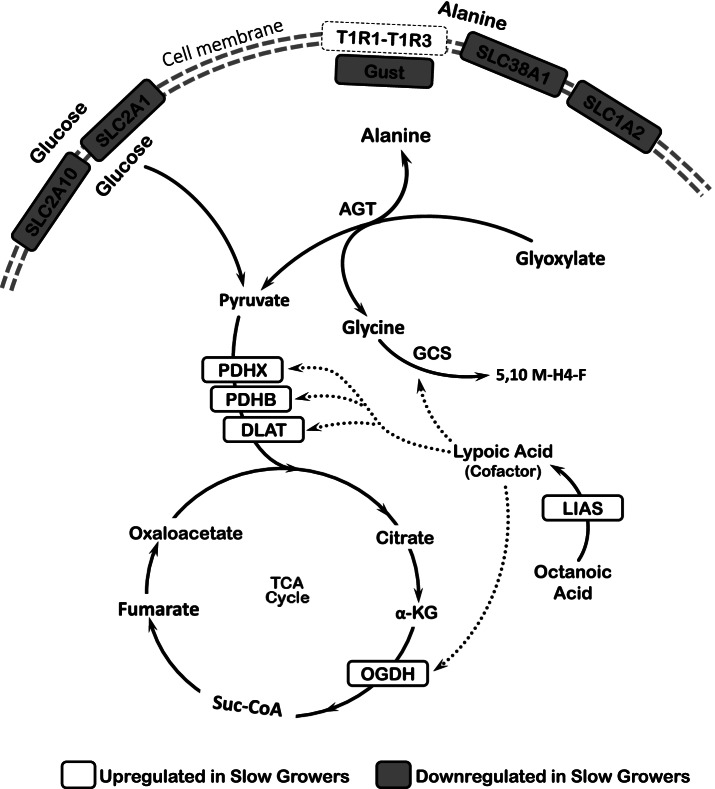
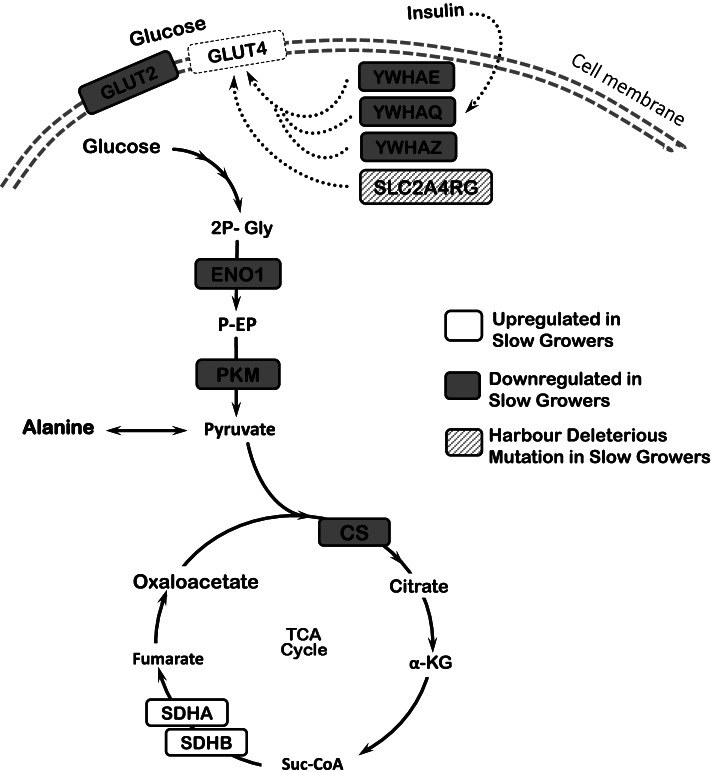
SG preferred NEAA, while they rejected EAA supplemented feeds (P < 0.05). However, FG rejected NEAA (P < 0.05), and they were indifferent to EAA supplemented feed (P > 0.05). Transcriptomic and proteomic analyses identified 909 differentially expressed genes and 146 differentially abundant proteins associated with differences in growth rate (P < 0.05). The integration of gene expression and protein abundance patterns showed the downregulation of sensing and transport of alanine and glucose associated with increased alanine catabolism to pyruvate in SG chickens.
Dietary preferences for NEAA in the SG group are associated with a potential cytosolic depletion of alanine following an upregulation of the catabolism into TCA cycle intermediates.
蛋白质沉积和生长速度会影响幼小动物的氨基酸需求。氨基酸代谢的差异导致生长速度的个体差异。本研究旨在确定肉鸡的氨基酸需求如何随生长速度而变化。实验 1 包括在一个鸡群中测试两个生长速度极端的鸡群(最慢的-SG-或最快的-FG-生长鸟类)的氨基酸选择。必需氨基酸(EAA)(蛋氨酸、赖氨酸和苏氨酸)或非必需氨基酸(NEAA)(丙氨酸、天冬氨酸和天冬酰胺)被添加到标准对照饲料(13.2MJ/kg;21.6%粗蛋白)中。鸡同时可以选择对照饲料和补充饲料,补充饲料中添加了两种氨基酸混合物中的一种,添加量为标准饮食水平的 73%以上。实验 2 从 580 只鸡群中选择 5 只生长最慢的 SG 和 5 只生长最快的 FG 鸡,使用代表肠道感应机制的前胃来研究氨基酸代谢的差异。在这个实验中,使用转录组学、蛋白质组学和基因组学分析来比较这两组鸡。
SG 更喜欢 NEAA,而它们拒绝添加 EAA 的饲料(P<0.05)。然而,FG 拒绝了 NEAA(P<0.05),对添加 EAA 的饲料则漠不关心(P>0.05)。转录组学和蛋白质组学分析确定了 909 个差异表达基因和 146 个差异丰度蛋白与生长速度差异相关(P<0.05)。基因表达和蛋白质丰度模式的整合表明,SG 鸡中与葡萄糖相关的丙氨酸的感应和转运下调,与丙氨酸分解代谢为丙酮酸的增加有关。
SG 组对 NEAA 的膳食偏好与 TCA 循环中间产物分解代谢上调后细胞质中丙氨酸的潜在耗竭有关。