Laboratory of Biological Rhythms, Institute of Physiology of the Czech Academy of Sciences, Prague, Czech Republic.
PLoS Biol. 2022 May 24;20(5):e3001637. doi: 10.1371/journal.pbio.3001637. eCollection 2022 May.
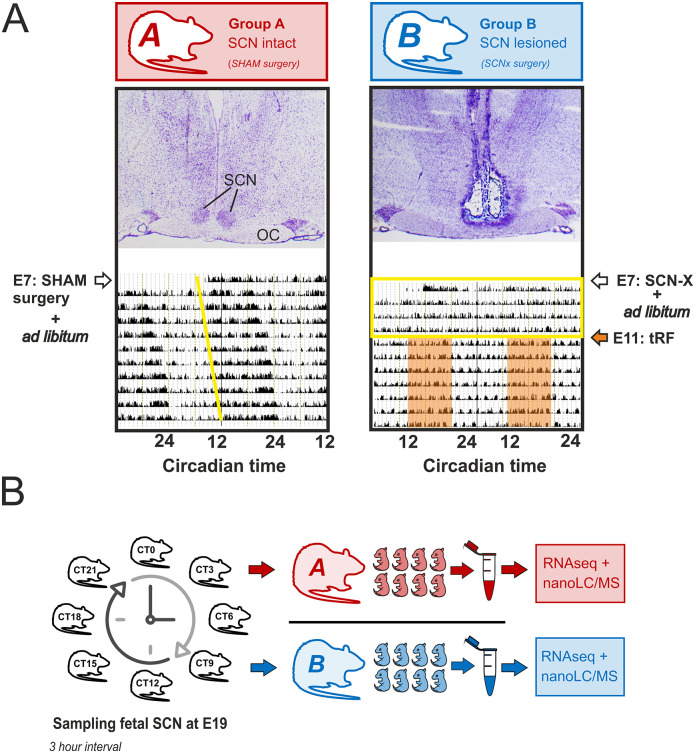
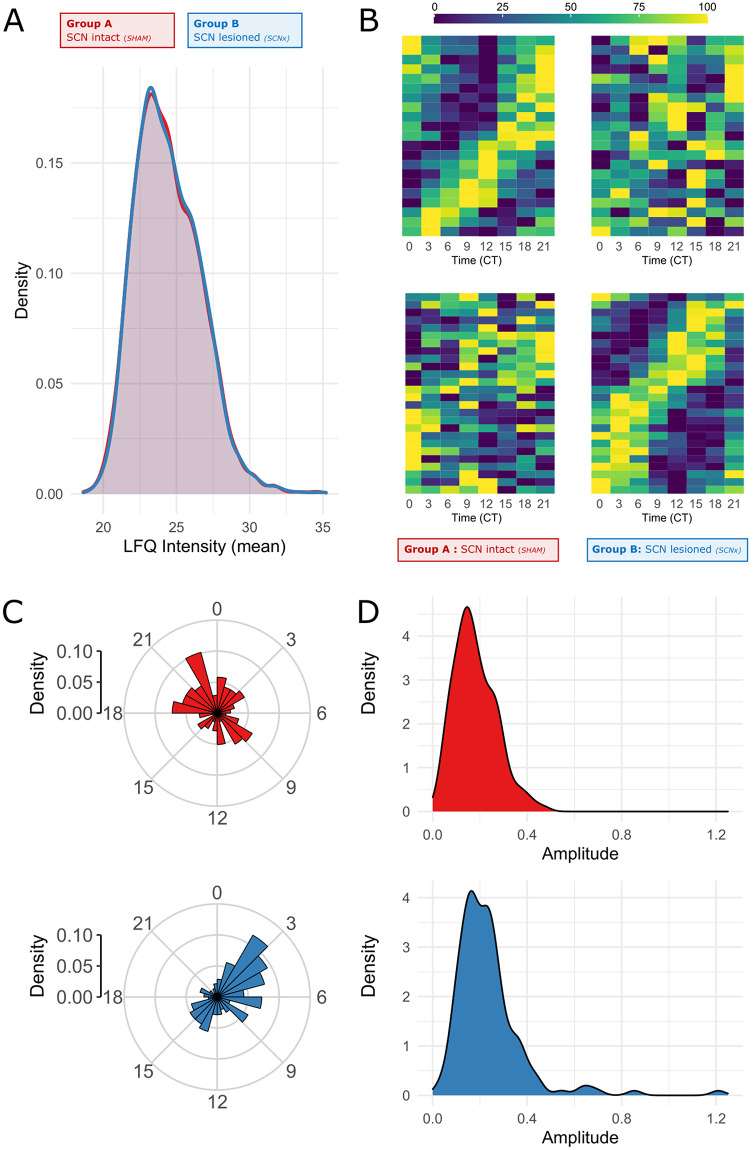
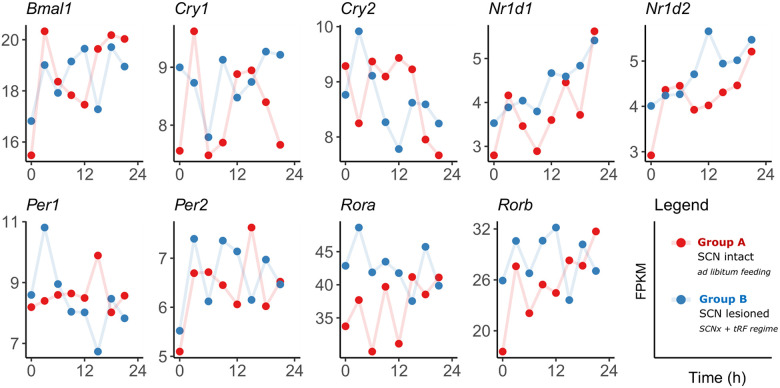
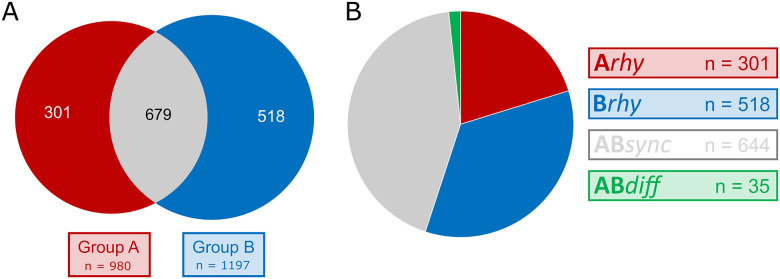
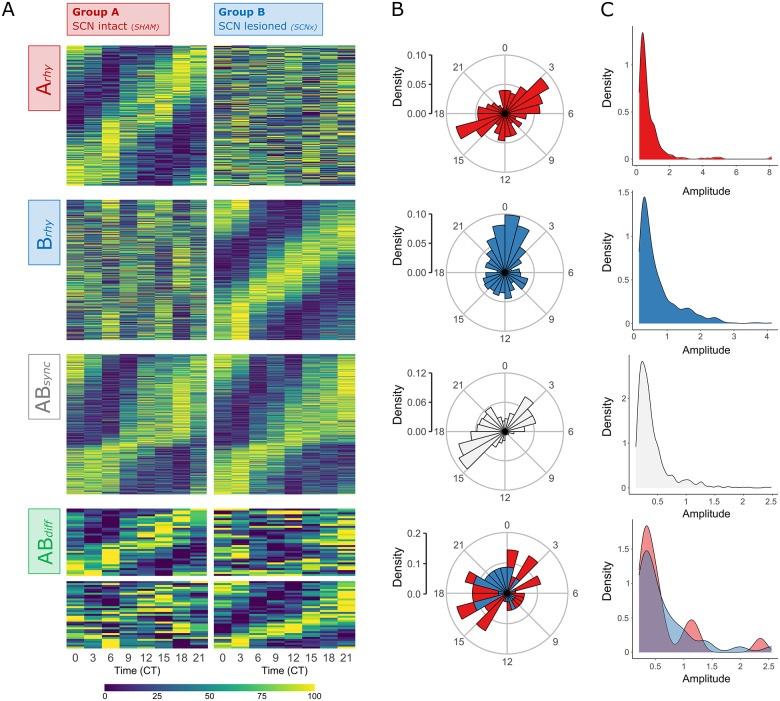
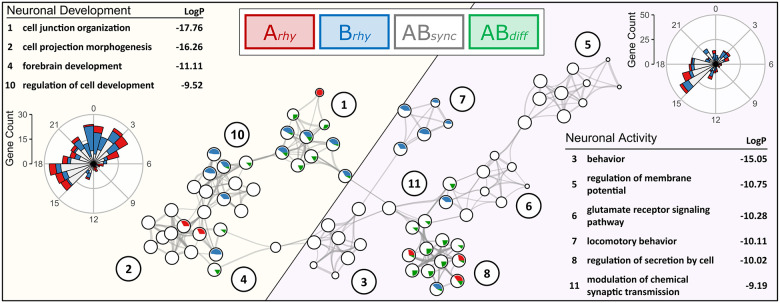
The suprachiasmatic nuclei (SCN) of the hypothalamus harbor the central clock of the circadian system, which gradually matures during the perinatal period. In this study, time-resolved transcriptomic and proteomic approaches were used to describe fetal SCN tissue-level rhythms before rhythms in clock gene expression develop. Pregnant rats were maintained in constant darkness and had intact SCN, or their SCN were lesioned and behavioral rhythm was imposed by temporal restriction of food availability. Model-selecting tools dryR and CompareRhythms identified sets of genes in the fetal SCN that were rhythmic in the absence of the fetal canonical clock. Subsets of rhythmically expressed genes were assigned to groups of fetuses from mothers with either intact or lesioned SCN, or both groups. Enrichment analysis for GO terms and signaling pathways revealed that neurodevelopment and cell-to-cell signaling were significantly enriched within the subsets of genes that were rhythmic in response to distinct maternal signals. The findings discovered a previously unexpected breadth of rhythmicity in the fetal SCN at a developmental stage when the canonical clock has not yet developed at the tissue level and thus likely represents responses to rhythmic maternal signals.
下丘脑的视交叉上核(SCN)拥有生物钟系统的中央时钟,它在围产期逐渐成熟。在这项研究中,使用时间分辨的转录组学和蛋白质组学方法来描述在时钟基因表达出现节律之前,胎儿 SCN 组织水平的节律。将怀孕的大鼠维持在持续的黑暗中,并保留完整的 SCN,或损伤其 SCN 并通过限制食物的时间可用性来施加行为节律。模型选择工具 dryR 和 CompareRhythms 确定了在没有胎儿典型时钟的情况下具有节律性的胎儿 SCN 中的基因集。将节律性表达基因的子集分配给来自具有完整或损伤 SCN 的母亲的胎儿组,或者两组。GO 术语和信号通路的富集分析显示,在对不同的母体信号有反应的基因子集中,神经发育和细胞间信号显著富集。这些发现发现了在组织水平上尚未发育出典型时钟的发育阶段,胎儿 SCN 中存在的节律性的先前未预料到的广度,这可能代表对节律性母体信号的反应。