CAS and Shandong Province Key Laboratory of Experimental Marine Biology, Institute of Oceanology; CAS Center for Ocean Mega-Science, Chinese Academy of Sciences, Qingdao, China.
Laboratory for Marine Biology and Biotechnology, Pilot National Laboratory for Marine Science and Technology, Qingdao, China.
Cell Death Dis. 2022 May 24;13(5):491. doi: 10.1038/s41419-022-04896-5.
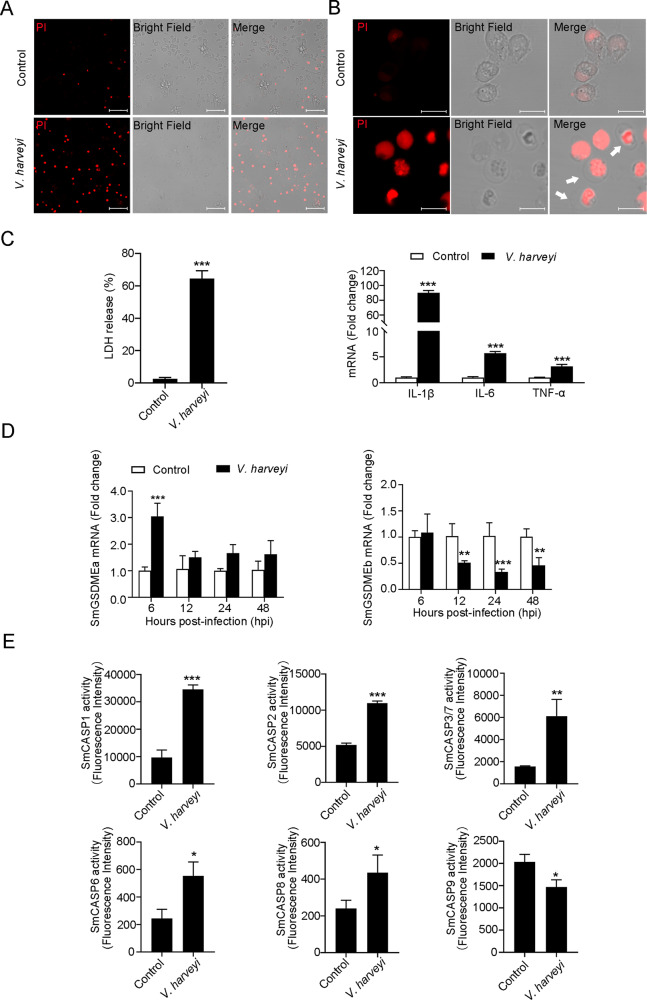
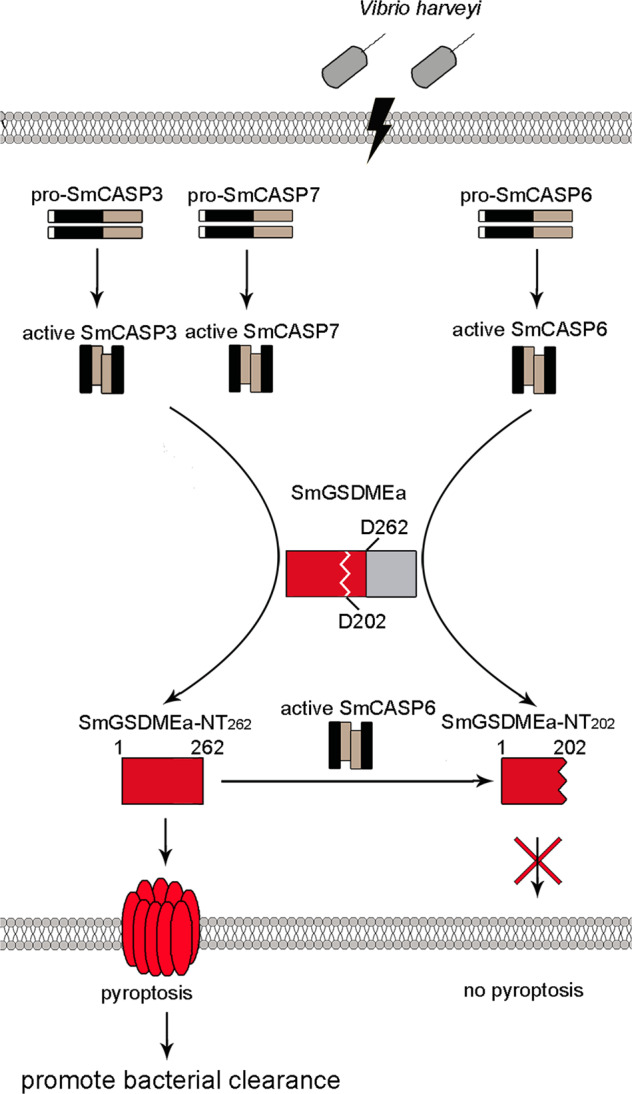
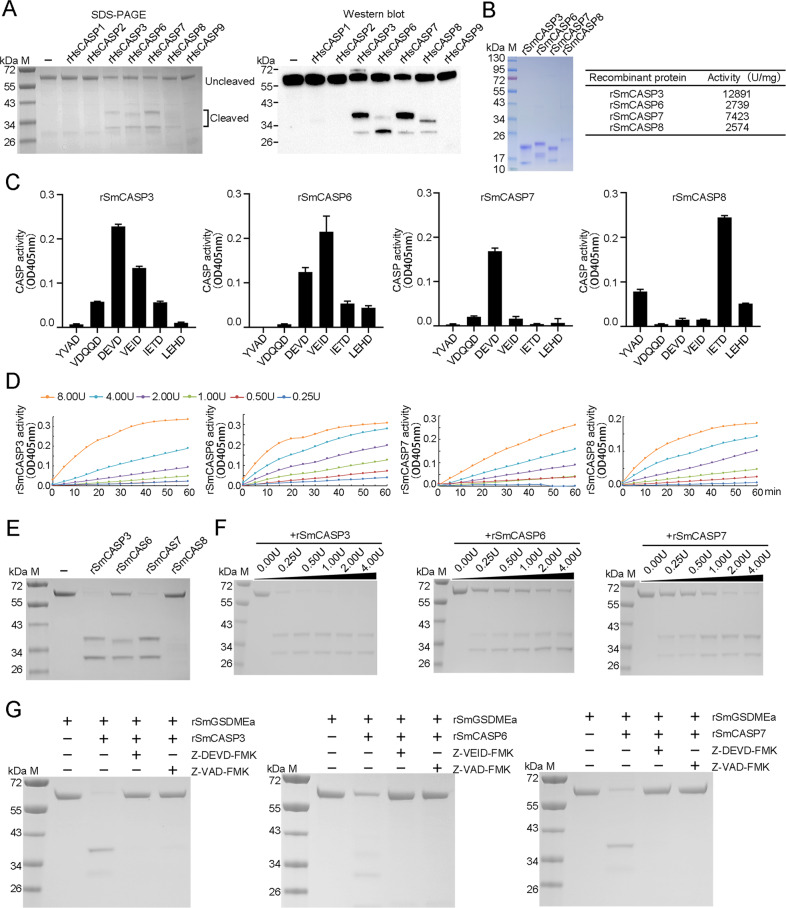
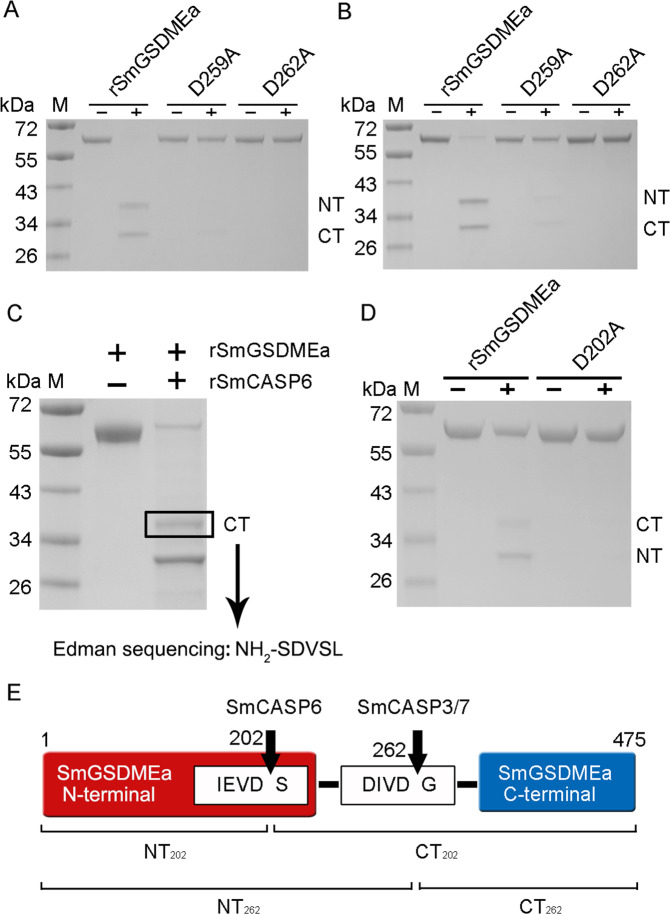
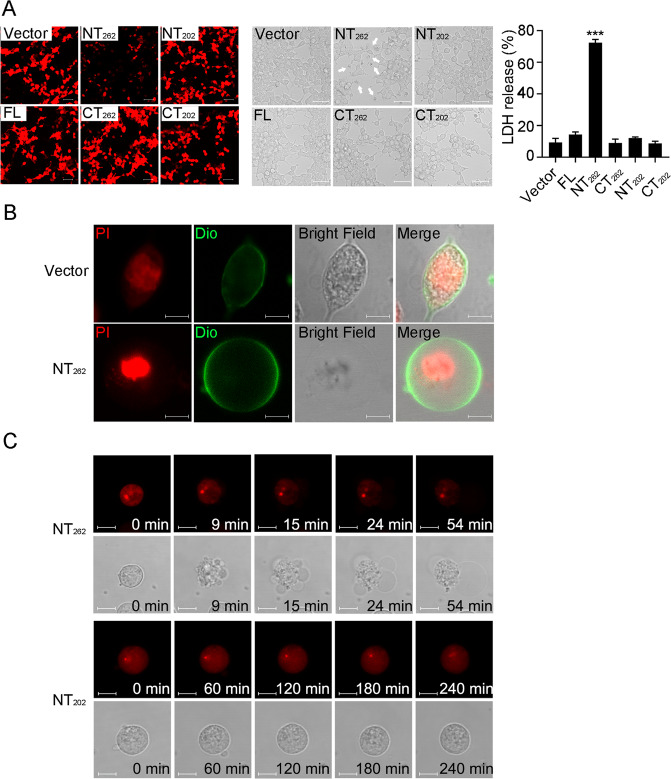
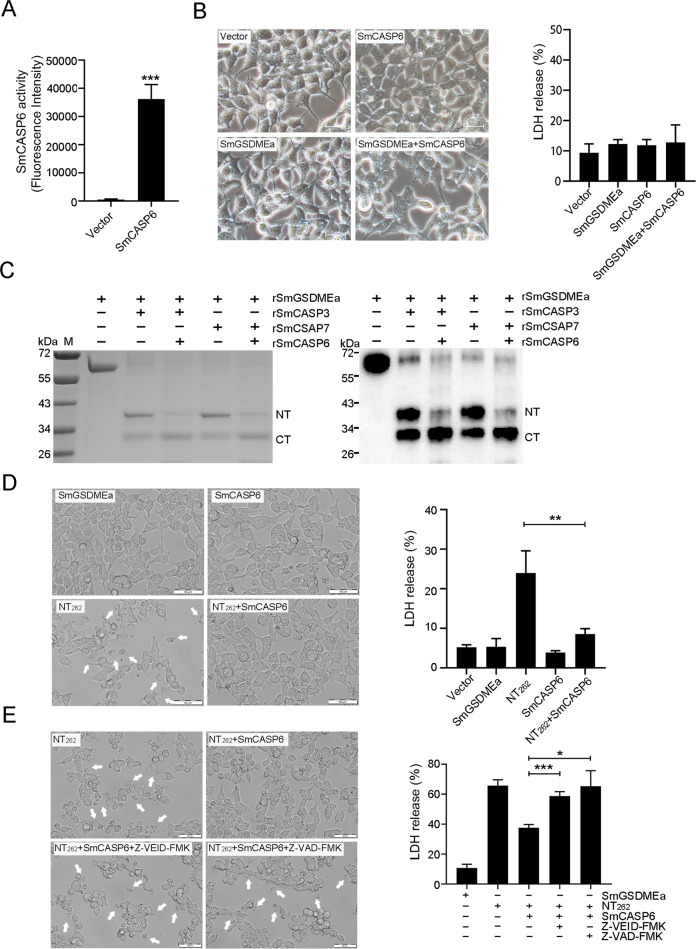
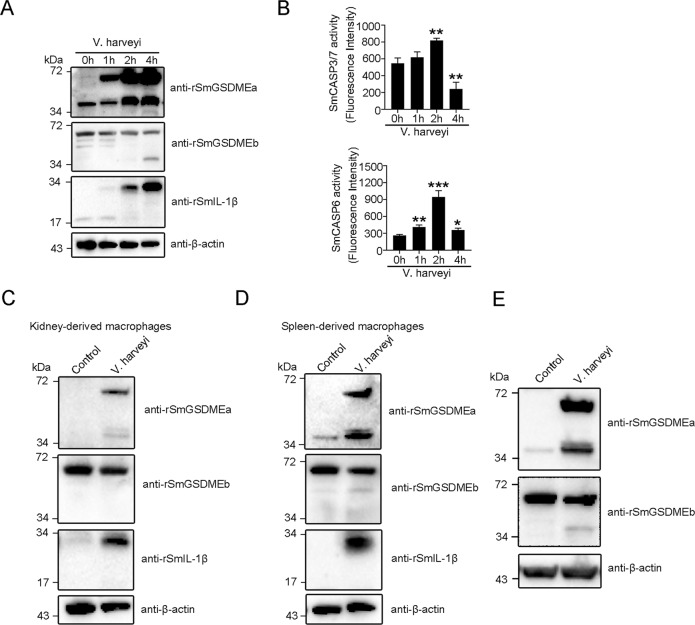
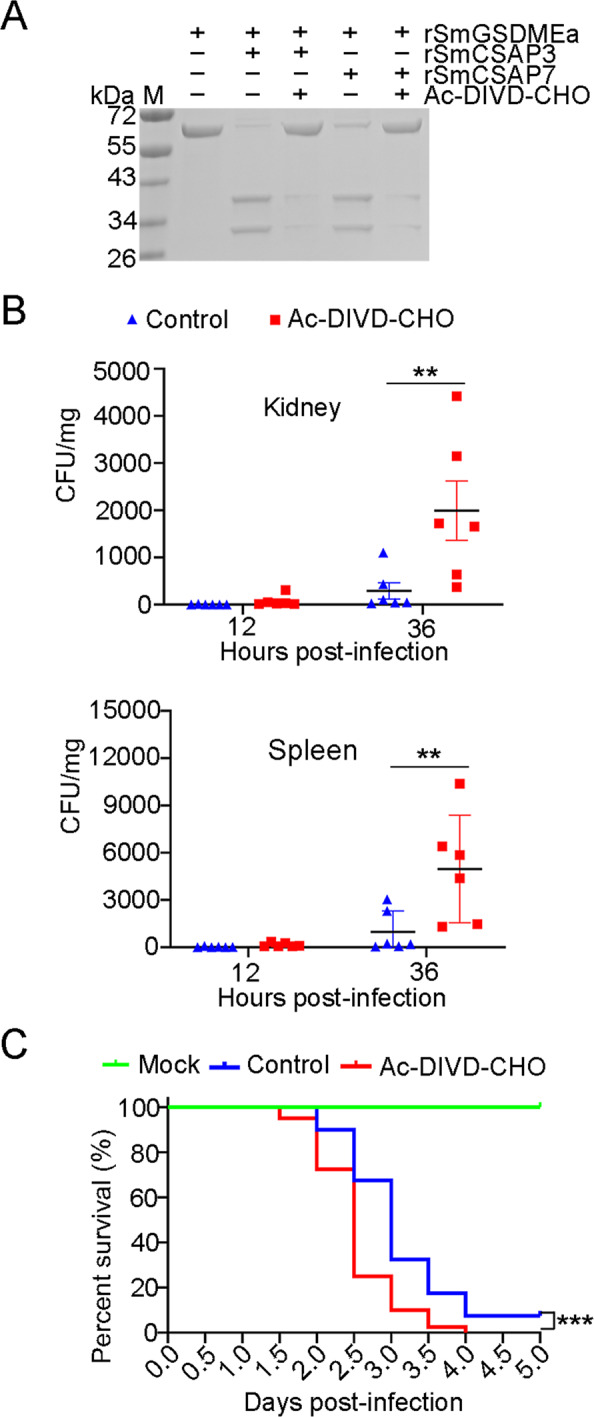
Gasdermin (GSDM) is a family of pore-forming proteins that, after cleavage by caspase (CASP), induce a type of programmed necrotic cell death called pyroptosis. Gasdermin E (GSDME) is the only pyroptosis-inducing member of the GSDM family existing in teleost. To date, the regulation and function of teleost GSDME in response to bacterial infection remain elusive. In this study, we observed activation of GSDME, as well as multiple CASPs, in turbot Scophthalmus maximus during the infection of the bacterial pathogen Vibrio harveyi. Turbot has two GSDME orthologs named SmGSDMEa and SmGSDMEb. We found that SmGSDMEa was specifically cleaved by turbot CASP (SmCASP) 3/7 and SmCASP6, which produced two different N-terminal (NT) fragments. Only the NT fragment produced by SmCASP3/7 cleavage was able to induce pyroptosis. Ectopically expressed SmCASP3/7 activated SmGSDMEa, resulting in pyroptotic cell death. In contrast, SmCASP6 inactivated SmGSDMEa by destructive cleavage of the NT domain, thus nullifying the activation effect of SmCASP3/7. Unlike SmGSDMEa, SmGSDMEb was cleaved by SmCASP8 and unable to induce cell death. V. harveyi infection dramatically promoted the production and activation of SmGSDMEa, but not SmGSDMEb, and caused pyroptosis in turbot. Interference with SmCASP3/7 activity significantly enhanced the invasiveness and lethality of V. harveyi in a turbot infection model. Together, these results revealed a previously unrecognized bi-directional regulation mode of GSDME-mediated pyroptosis, and a functional difference between teleost GSDMEa and GSDMEb in the immune defense against bacterial infection.
Gasdermin (GSDM) 是一组形成孔的蛋白家族,在被半胱天冬酶(CASP)切割后,诱导一种称为细胞焦亡的程序性坏死细胞死亡。Gasdermin E (GSDME) 是硬骨鱼中唯一的诱导细胞焦亡的 GSDM 家族成员。迄今为止,硬骨鱼 GSDME 对细菌感染的反应的调节和功能仍然难以捉摸。在本研究中,我们观察到在细菌病原体哈维弧菌感染大菱鲆 Scophthalmus maximus 期间,GSDME 和多种 CASP 的激活。大菱鲆有两个 GSDME 同源物,分别命名为 SmGSDMEa 和 SmGSDMEb。我们发现 SmGSDMEa 被大菱鲆 CASP(SmCASP)3/7 和 SmCASP6 特异性切割,产生两个不同的 N 端(NT)片段。只有 SmCASP3/7 切割产生的 NT 片段能够诱导细胞焦亡。异位表达的 SmCASP3/7 激活了 SmGSDMEa,导致细胞焦亡性死亡。相比之下,SmCASP6 通过破坏 NT 结构域的切割使 SmGSDMEa 失活,从而消除了 SmCASP3/7 的激活作用。与 SmGSDMEa 不同,SmGSDMEb 被 SmCASP8 切割,无法诱导细胞死亡。哈维弧菌感染显著促进了 SmGSDMEa 的产生和激活,但不能诱导 SmGSDMEb 的产生和激活,导致大菱鲆细胞焦亡。干扰 SmCASP3/7 活性显著增强了哈维弧菌在大菱鲆感染模型中的侵袭性和致死性。总之,这些结果揭示了 GSDME 介导的细胞焦亡的一种以前未被认识的双向调节模式,以及硬骨鱼 GSDMEa 和 GSDMEb 在免疫防御细菌感染方面的功能差异。