Barison Gustavo Anderman Silva, D'Amora Paulo, Izidoro Mário Augusto, Corinti Mariana, Martins Luísa Marcella, Bonduki Claudio Emílio, Castro Rodrigo de Aquino, Girão Manoel João Batista Castello, Gomes Mariano Tamura Vieira
Department of Gynecology, Federal University of Sao Paulo, Sao Paulo, Brazil.
Spectrometry Laboratory; Beneficent Association for Blood Collection (COLSAN), Sao Paulo, Brazil.
J Endocr Soc. 2022 Apr 14;6(7):bvac061. doi: 10.1210/jendso/bvac061. eCollection 2022 Jul 1.
Uterine leiomyomas are benign monoclonal tumors originating from the myometrium. Little information exists concerning metabolomics and the presence of leiomyomas.
The present study evaluated circulating metabolites in the plasma and their correlation with the presence and size of leiomyomas.
Cross-sectional observational study, including women divided into 3 groups: 37 with leiomyomas and uterus >500 cm, 17 with leiomyomas and uterus ≤150 cm, and 21 leiomyoma-free. Patients underwent peripheral blood collection using untargeted metabolic assessment by gas chromatography coupled to mass spectrometer.
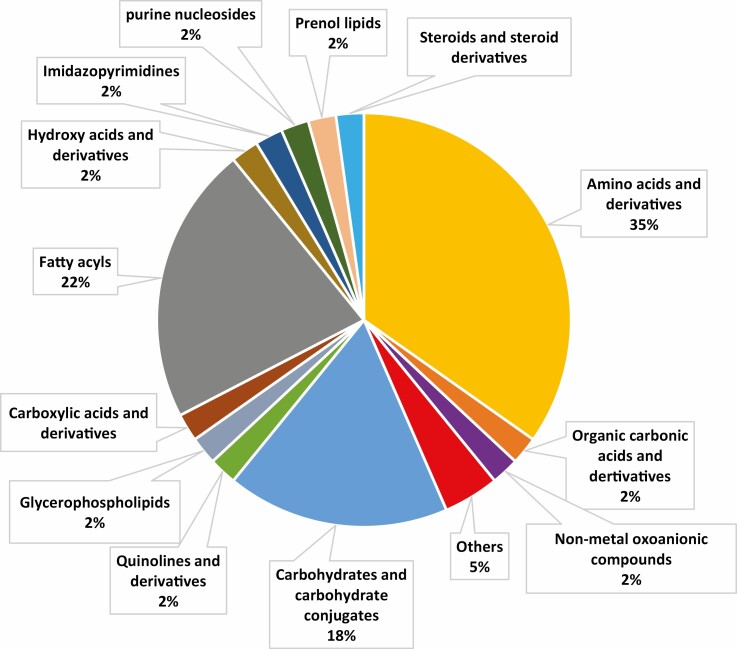
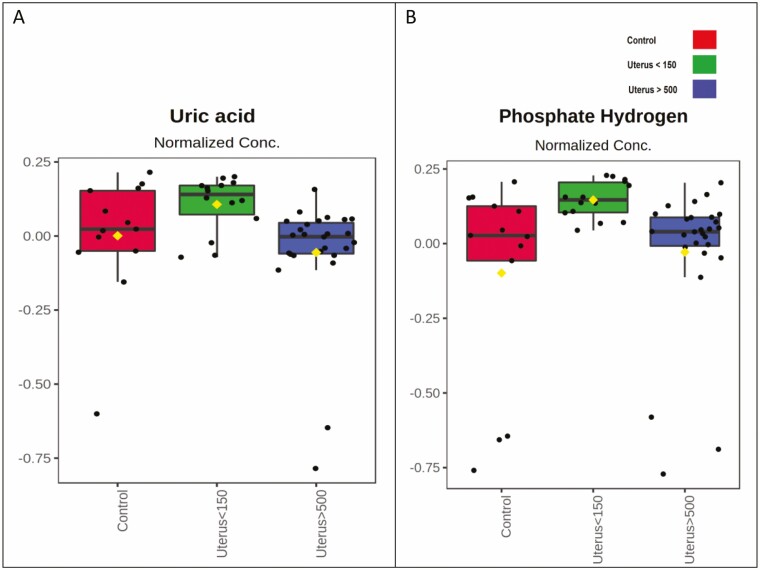
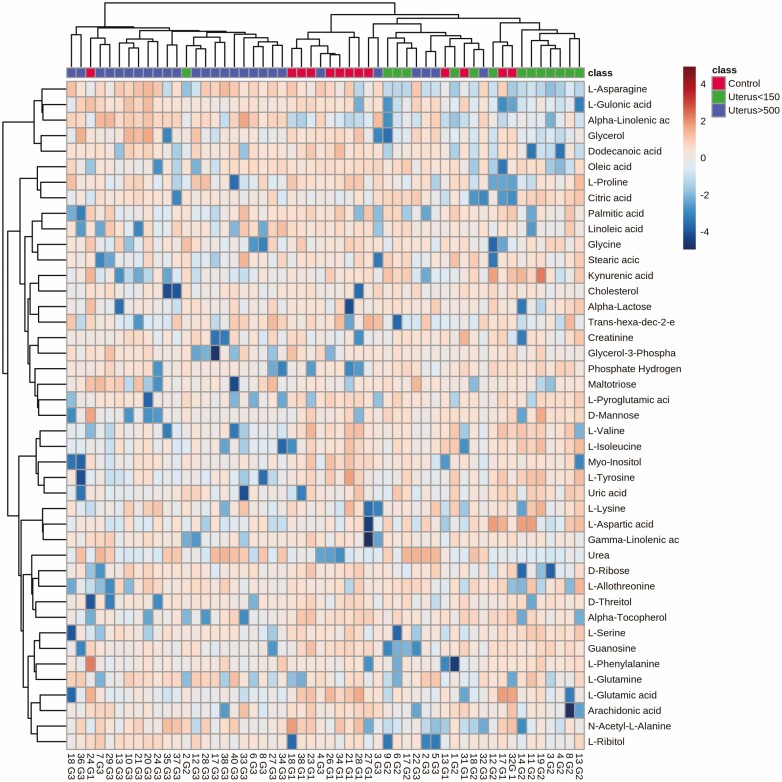
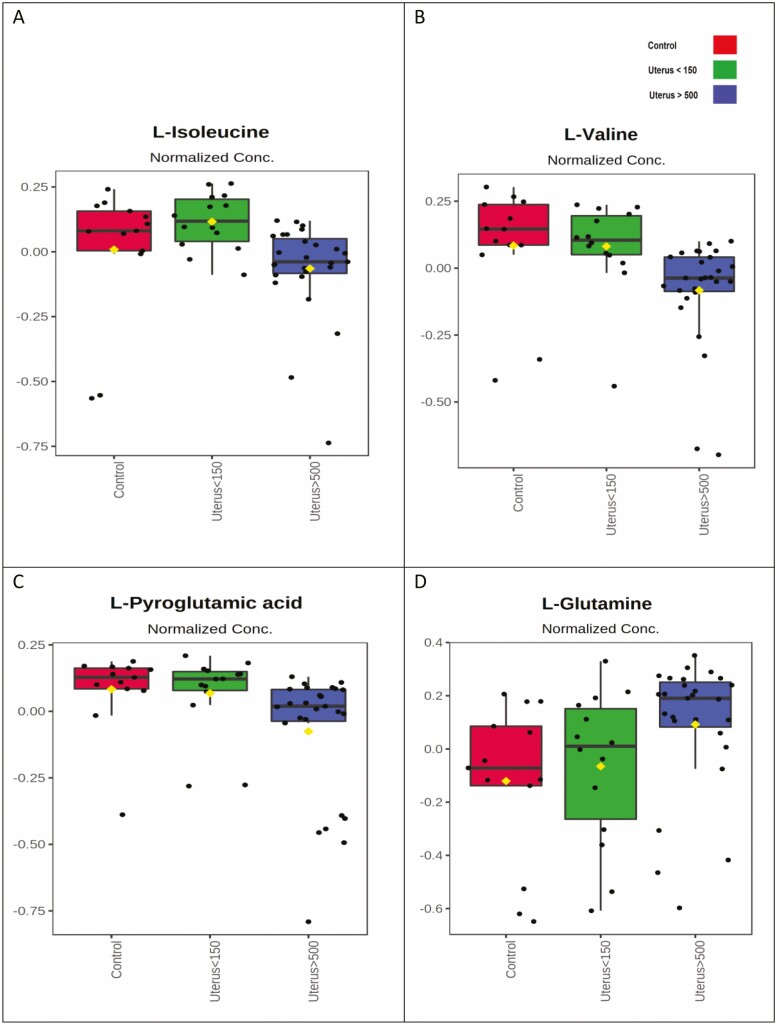
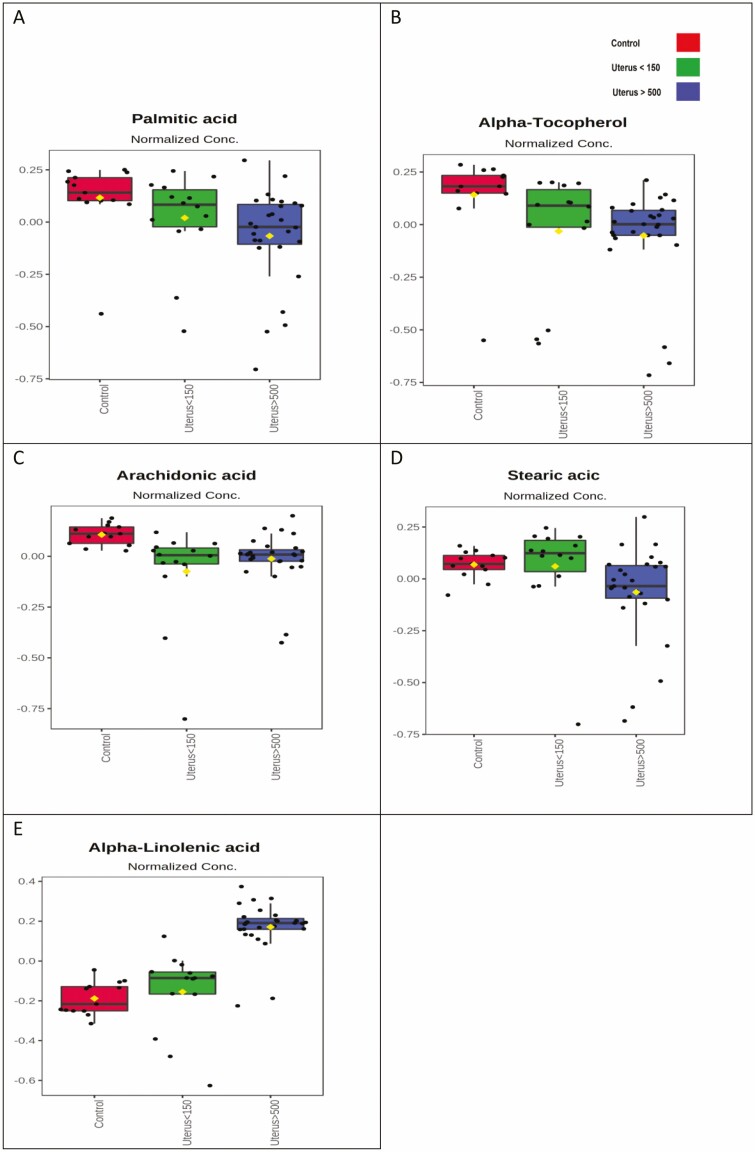
There was no statistical difference between patients' anthropometric and demographic features and laboratory tests. Statistical differences in uterus volume ( < 0.0001) were found. Forty-six metabolites were identified (35% amino acids and derivatives, 22% fatty acids, and 18% carbohydrates). Statistically significant metabolic distinction ( < 0.05, false discovery rate< 0.05) was observed for 14 metabolites. Most amino acids (L-isoleucine, L-valine, and pyroglutamic acid) were significantly reduced in plasma levels of patients with large leiomyomas. The only exception was L-glutamine, with a significant increase. Fatty acids (arachidonic acid, alfa-tocopherol, palmitic acid, and stearic acid) were similarly reduced in large leiomyomas patients, except for alpha-linolenic acid, which increased. For carbohydrates (myo-inositol, D-threitol, and D-ribose), there was a decrease in the plasma of patients with leiomyomas.
There are different plasma metabolites levels of amino acids, fatty acids, and carbohydrates among patients with leiomyomas, most of them reduced, but some significantly increased in large leiomyomas, compared to leiomyoma-free patients.
子宫平滑肌瘤是起源于子宫肌层的良性单克隆肿瘤。关于代谢组学与平滑肌瘤存在情况的信息较少。
本研究评估了血浆中的循环代谢物及其与平滑肌瘤的存在和大小的相关性。
横断面观察性研究,纳入的女性分为3组:37例患有平滑肌瘤且子宫>500 cm,17例患有平滑肌瘤且子宫≤150 cm,以及21例无平滑肌瘤。患者通过气相色谱-质谱联用进行非靶向代谢评估来采集外周血。
患者的人体测量学和人口统计学特征以及实验室检查之间无统计学差异。发现子宫体积存在统计学差异(<0.0001)。鉴定出46种代谢物(35%为氨基酸及其衍生物,22%为脂肪酸,18%为碳水化合物)。观察到14种代谢物存在统计学显著的代谢差异(<0.05,错误发现率<0.05)。大多数氨基酸(L-异亮氨酸、L-缬氨酸和焦谷氨酸)在大平滑肌瘤患者的血浆水平中显著降低。唯一的例外是L-谷氨酰胺,其显著增加。脂肪酸(花生四烯酸、α-生育酚、棕榈酸和硬脂酸)在大平滑肌瘤患者中同样降低,除了α-亚麻酸增加。对于碳水化合物(肌醇、D-苏糖醇和D-核糖),平滑肌瘤患者的血浆中有所减少。
与无平滑肌瘤的患者相比,平滑肌瘤患者中氨基酸、脂肪酸和碳水化合物的血浆代谢物水平不同,其中大多数降低,但在大平滑肌瘤中一些显著增加。