Department of Chemistry, University of Cambridge, Lensfield Road, Cambridge CB2 1EW, UK.
Hoekmine BV, Room 1.091 (iLab), Kenniscentrum Technologie en Innovatie, Hogeschool Utrecht, Heidelberglaan 7, 3584 CS, Utrecht, The Netherlands.
J R Soc Interface. 2022 May;19(190):20220181. doi: 10.1098/rsif.2022.0181. Epub 2022 May 25.
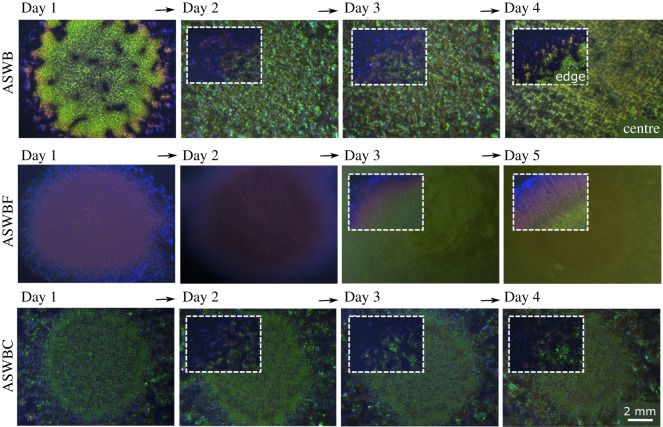
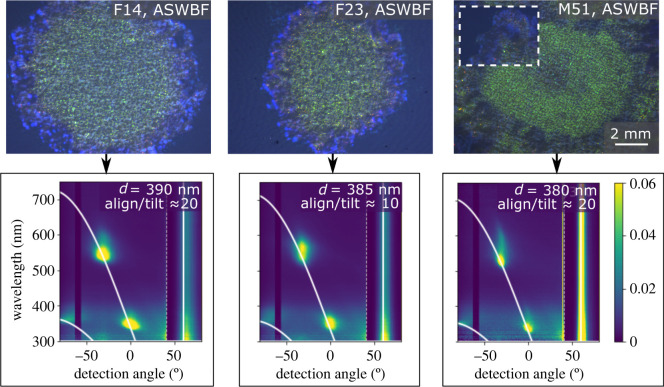
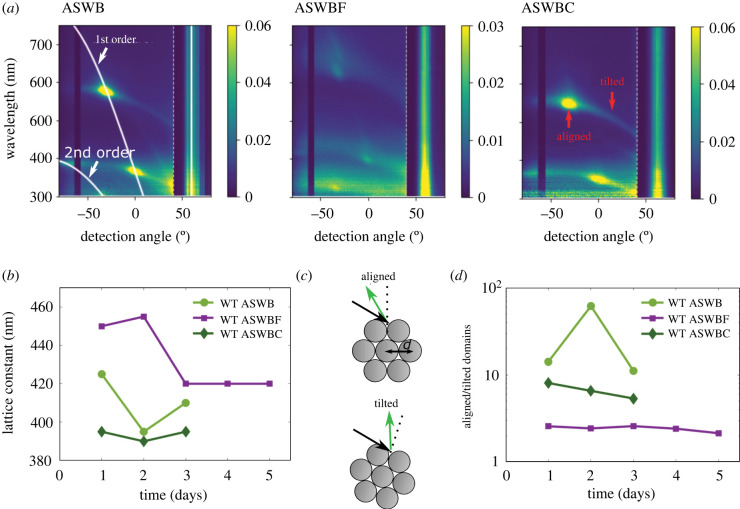
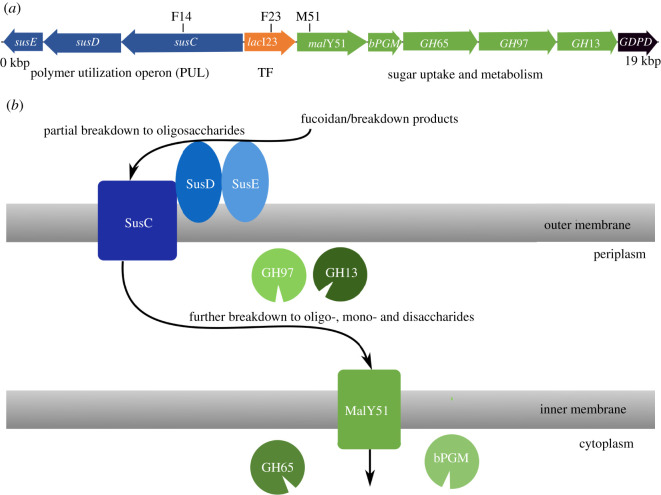
The brightest colours in nature often originate from the interaction of light with materials structured at the nanoscale. Different organisms produce such coloration with a wide variety of materials and architectures. In the case of bacterial colonies, structural colours stem for the periodic organization of the cells within the colony, and while considerable efforts have been spent on elucidating the mechanisms responsible for such coloration, the biochemical processes determining the development of this effect have not been explored. Here, we study the influence of nutrients on the organization of cells from the structurally coloured bacteria strain IR1. By analysing the optical properties of the colonies grown with and without specific polysaccharides, we found that the highly ordered organization of the cells can be altered by the presence of fucoidans. Additionally, by comparing the organization of the wild-type strain with mutants grown in different nutrient conditions, we deduced that this regulation of cell ordering is linked to a specific region of the IR1 chromosome. This region encodes a mechanism for the uptake and metabolism of polysaccharides, including a polysaccharide utilization locus (PUL operon) that appears specific to fucoidan, providing new insight into the biochemical pathways regulating structural colour in bacteria.
自然界中最鲜艳的颜色通常源于光与纳米尺度结构材料的相互作用。不同的生物体利用各种各样的材料和结构来产生这种颜色。在细菌菌落的情况下,结构色源于菌落中细胞的周期性组织,尽管已经花费了相当大的精力来阐明导致这种颜色的机制,但决定这种效应发展的生化过程尚未得到探索。在这里,我们研究了营养物质对结构色细菌 IR1 菌株细胞组织的影响。通过分析有和没有特定多糖的菌落的光学性质,我们发现褐藻胶的存在可以改变细胞的高度有序组织。此外,通过比较在不同营养条件下生长的野生型菌株和突变体的组织,我们推断这种细胞排序的调节与 IR1 染色体的特定区域有关。该区域编码了一种用于摄取和代谢多糖的机制,包括一个似乎专门针对褐藻胶的多糖利用基因座(PUL 操纵子),为调节细菌结构颜色的生化途径提供了新的见解。