Division of Plastic Surgery, Department of Surgery, University of Wisconsin-Madison, School of Medicine and Public Health, Madison, Wisconsin, USA.
Microsurgery. 2023 Jan;43(1):78-88. doi: 10.1002/micr.30921. Epub 2022 May 25.
Microsurgical free tissue transfer (FTT) is a widely employed surgical modality utilized for reconstruction of a broad range of defects, including head and neck, extremity, and breast. Flap survival is reported to be 90%-95%. When FTT fails, salvage procedures aim at establishing reperfusion while limiting ischemia time-with salvage rates between 22% and 67%. There are limited data-driven predictors of successful salvage present in the literature. This systematic review aims to identify predictors of flap salvage.
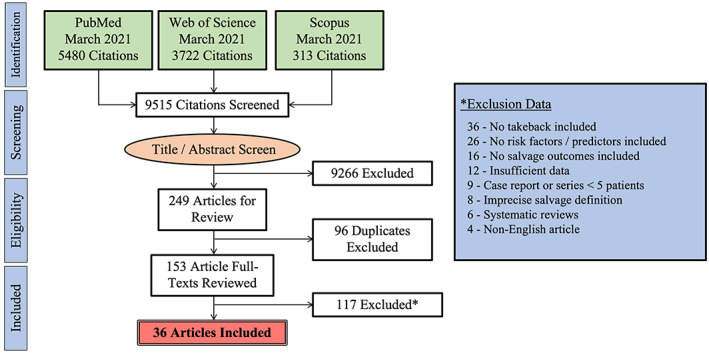
A systematic literature review was conducted per PRISMA guidelines. Articles included in the final analysis were limited to those investigating FTT salvage procedures and included factors impacting outcomes. Cohort and case series (>5 flaps) studies up until March 2021 were included. Chi-square tests and linear regression modeling was completed for analysis.
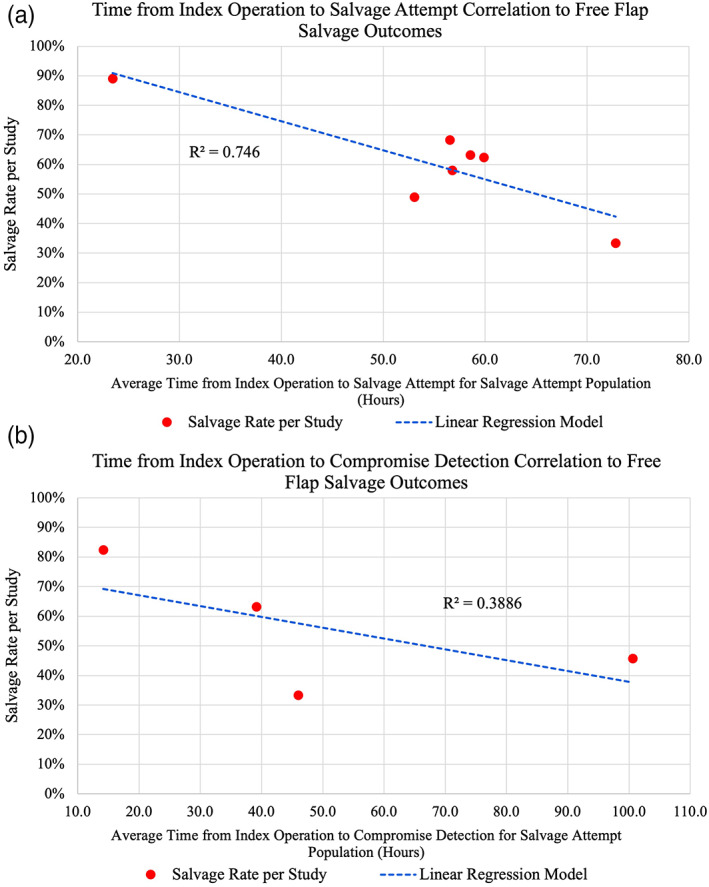
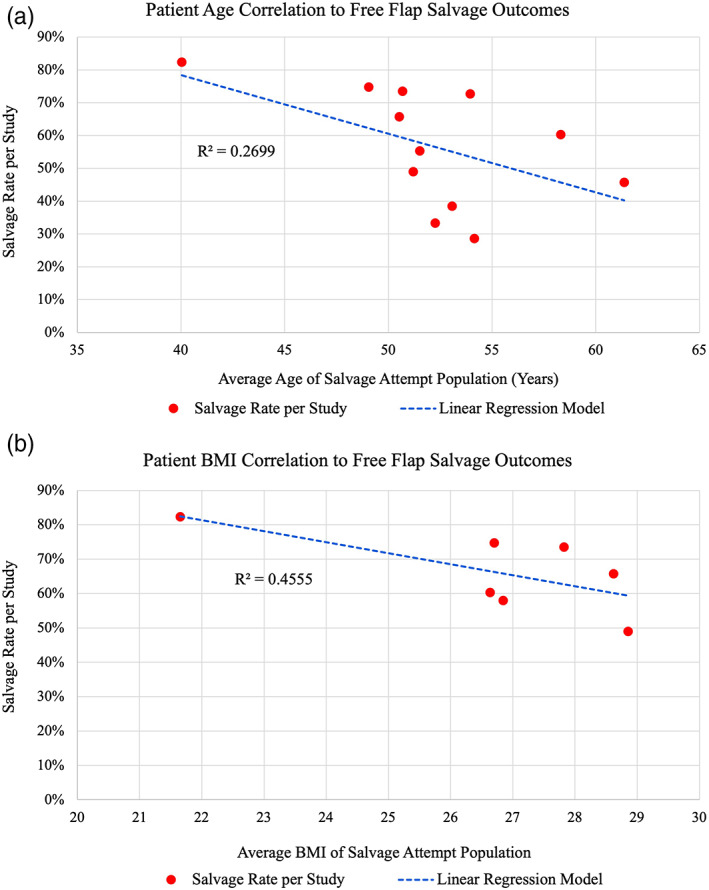
The patient-specific factors significantly associated with salvage included the absence of hypercoagulability (p < .00001) and no previous salvage attempts (p < .00001). Case-specific factors significantly associated with salvage included trunk/breast flaps (p < .00001), fasciocutaneous/osteocutaneous flaps (p = .006), venous compromise (p < .00001), and shorter time from index procedure to salvage attempt (R = .746). Radiation in the head and neck population was significantly associated with flap salvage failure.
Given the complexity and challenges surrounding free flap salvage procedures, the goal of this manuscript was to present data helping guide surgical decision-making. Based on our findings, patients without documented hypercoagulability, no previous salvage attempts, fasciocutaneous/osteocutaneous flaps, trunk/breast flaps, and a shorter time interval post-index operation are the best candidates for a salvage attempt.
显微游离组织移植(FTT)是一种广泛应用的手术方式,用于重建多种缺陷,包括头颈部、四肢和乳房。报道称皮瓣存活率为 90%-95%。当 FTT 失败时,挽救程序旨在建立再灌注,同时限制缺血时间-挽救率在 22%至 67%之间。文献中有限的数据驱动因素预测了成功的挽救。本系统综述旨在确定皮瓣挽救的预测因素。
根据 PRISMA 指南进行系统文献回顾。最终分析中纳入的文章仅限于调查 FTT 挽救程序并包括影响结果的因素。纳入了直到 2021 年 3 月的队列和病例系列(>5 例皮瓣)研究。完成了卡方检验和线性回归建模分析。
与挽救显著相关的患者特定因素包括无高凝状态(p<0.00001)和无先前挽救尝试(p<0.00001)。与挽救显著相关的病例特定因素包括躯干/乳房皮瓣(p<0.00001)、筋膜皮/骨皮瓣(p=0.006)、静脉损伤(p<0.00001)和从索引手术到挽救尝试的时间较短(R=0.746)。头颈部人群中的放疗与皮瓣挽救失败显著相关。
鉴于游离皮瓣挽救程序的复杂性和挑战,本手稿的目的是提供有助于指导手术决策的数据。根据我们的发现,没有记录到高凝状态、没有先前的挽救尝试、筋膜皮/骨皮瓣、躯干/乳房皮瓣和索引手术后较短的时间间隔的患者是挽救尝试的最佳候选者。