Casini Ilenia, Fatighenti Elena, Giannantoni Antonella, Massai Lauretta, Pieretti Stefano, Ceccarelli Ilaria, Aloisi Anna Maria
Department of Medicine, Surgery and Neuroscience, University of Siena, Via Aldo Moro, 2, 53100, Siena, Italy.
Pain Therapy Department, Santa Maria Alle Scotte Hospital, Viale Bracci 1, 53100, Siena, Italy.
Pain Ther. 2022 Sep;11(3):873-906. doi: 10.1007/s40122-022-00391-z. Epub 2022 May 25.
Chronic pain is related to gastrointestinal (GI) functions because food components affect inflammation and pain through their action on the GI immune and/or neural system and because many analgesics interact with the gut to alter its structure and function. Immunoglobulin G4 (IgG4) are food-specific antibodies resulting from exposure of the gut immune system to nutrients. High IgG4 levels have been found to be associated with inflammation.
IgG4 were determined (both with the rapid test and enzyme-linked immunosorbent assay, ELISA) in men and women outpatients with chronic pain. All subjects were asked to exclude for 4 weeks all foods to which they had high blood levels of IgG4 antibodies. Pain and quality of life questionnaires were administered before (visit 1) and after (visit 2) the personalized exclusion diet period. Visual analogue scale (VAS), Italian Pain Questionnaire (QUID) and Margolis (MA) questionnaires were administered to determine pain intensity, pain features and pain extent, while Short Form Health Survey (SF-36) and Profile of Mood States (POMS) were used to test the quality of life and mood state. The nutritional status was evaluated in all subjects. Subject groups were women of reproductive age (pre-MW), women in menopause for at least 1 year (MW) and men.
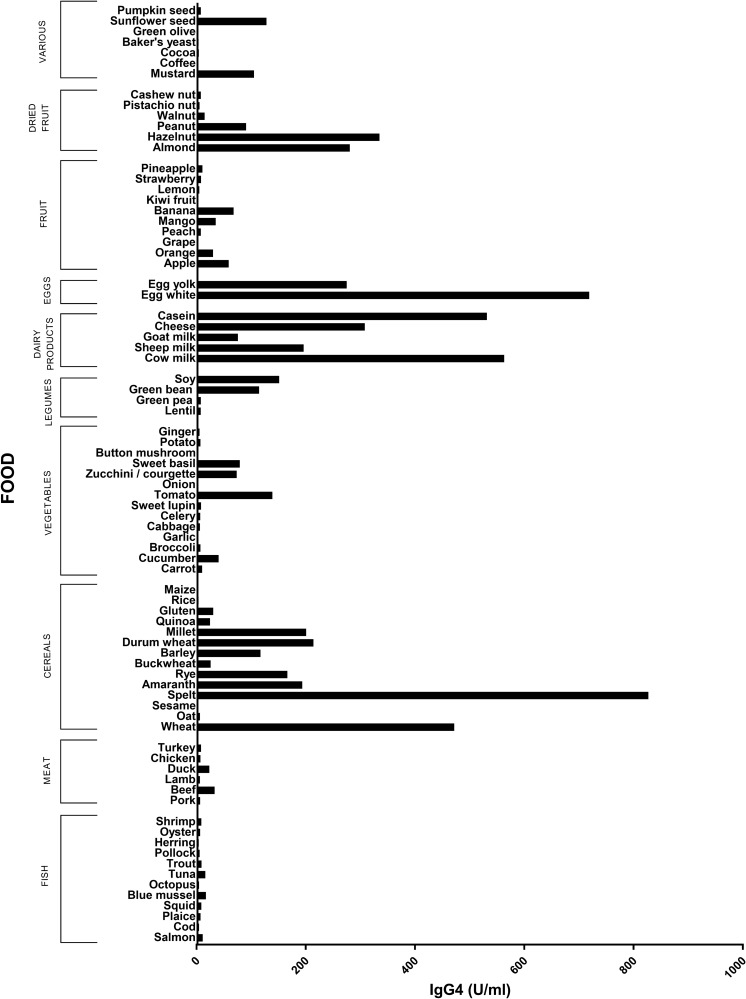
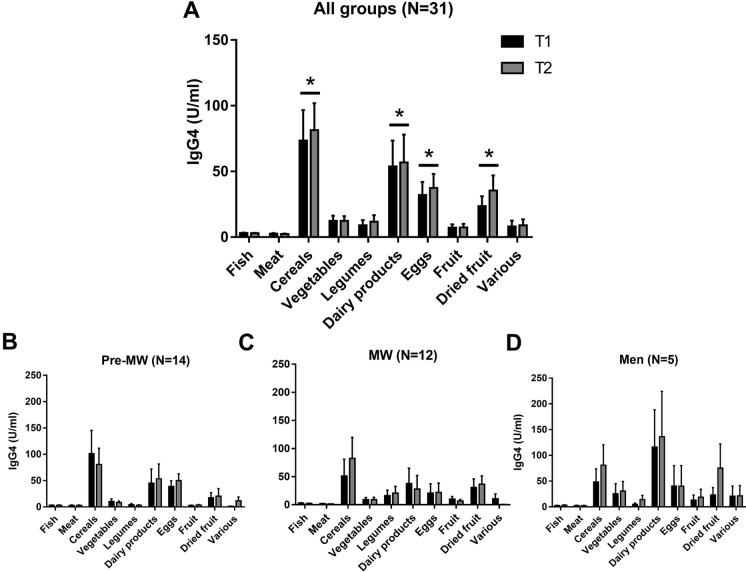
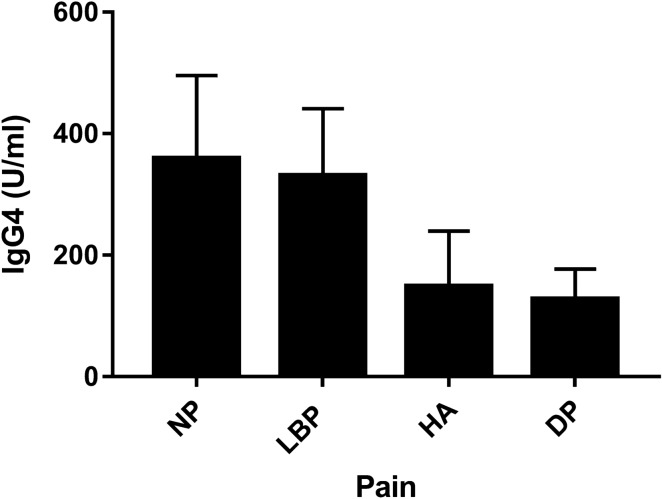
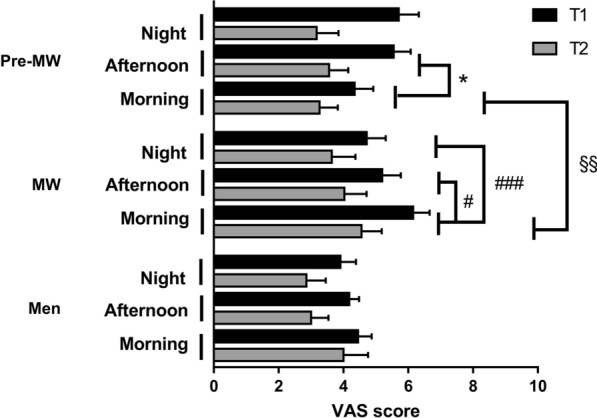
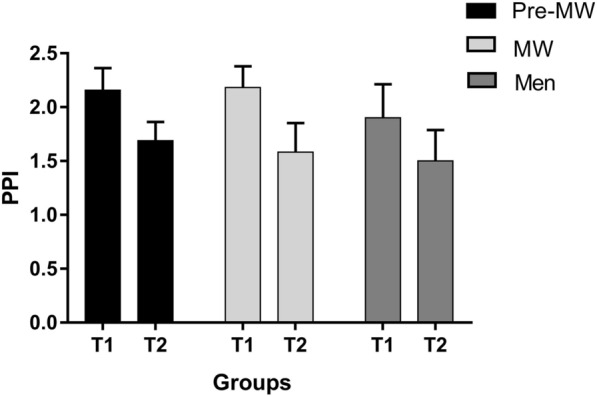
Fifty-four subjects with chronic pain (n = 12 neuropathic, n = 14 diffuse pain, n = 11 headache, n = 17 low back pain) completed the two visits and the 1-month exclusion diet. At visit 1, 47 (87%) subjects showed medium/high levels of IgG4 to at least one food. The foods showing the highest IgG4 values were eggs, dairy products, cereals and dried fruit. At visit 2, IgG4 levels were decreased, increased or unchanged. In all groups, the 4-week exclusion diet resulted in a significant reduction in all pain measures and an improvement of quality of life parameters. In particular, at visit 2, the VAS score determined in the morning decreased by more than 50%.
A food elimination diet based on IgG4 antibody levels may be effective in reducing pain and improving quality of life in patients with chronic pain.
慢性疼痛与胃肠道(GI)功能相关,这是因为食物成分通过作用于胃肠道免疫系统和/或神经系统来影响炎症和疼痛,还因为许多镇痛药会与肠道相互作用以改变其结构和功能。免疫球蛋白G4(IgG4)是肠道免疫系统接触营养物质后产生的食物特异性抗体。已发现高IgG4水平与炎症相关。
对患有慢性疼痛的门诊男女患者测定IgG4(采用快速检测和酶联免疫吸附测定法,即ELISA)。要求所有受试者在4周内排除所有其血液中IgG4抗体水平较高的食物。在个性化排除饮食期之前(第1次就诊)和之后(第2次就诊)进行疼痛和生活质量问卷调查。采用视觉模拟量表(VAS)、意大利疼痛问卷(QUID)和马戈利斯(MA)问卷来确定疼痛强度、疼痛特征和疼痛范围,同时使用简短健康调查问卷(SF - 36)和情绪状态剖面图(POMS)来测试生活质量和情绪状态。对所有受试者的营养状况进行评估。受试者分组为育龄期女性(绝经前女性,pre - MW)、绝经至少1年的女性(绝经后女性,MW)和男性。
54名患有慢性疼痛的受试者(n = 12名神经性疼痛患者,n = 14名弥漫性疼痛患者,n = 11名头痛患者,n = 17名腰痛患者)完成了两次就诊和为期1个月的排除饮食。在第1次就诊时,47名(87%)受试者显示对至少一种食物的IgG4水平为中/高。显示IgG4值最高的食物是鸡蛋、乳制品、谷物和干果。在第2次就诊时,IgG4水平有所下降、上升或未改变。在所有组中,为期4周的排除饮食导致所有疼痛指标显著降低,生活质量参数得到改善。特别是在第2次就诊时,早晨测定的VAS评分下降超过50%。
基于IgG4抗体水平的食物排除饮食可能对减轻慢性疼痛患者的疼痛和改善其生活质量有效。