Department of Pharmacology, Ribeirao Preto Medical School, University of Sao Paulo, Ribeirao Preto, SP 14049-900, Brazil; Center for Research in Inflammatory Diseases, Ribeirao Preto Medical School, University of Sao Paulo, Ribeirao Preto, SP 14049-900, Brazil.
Laboratory of Immunoinflammation, Department of Genetics, Evolution, Microbiology, and Immunology, Institute of Biology, University of Campinas, Campinas, SP 13083-862, Brazil.
Cell Rep. 2022 May 24;39(8):110838. doi: 10.1016/j.celrep.2022.110838.
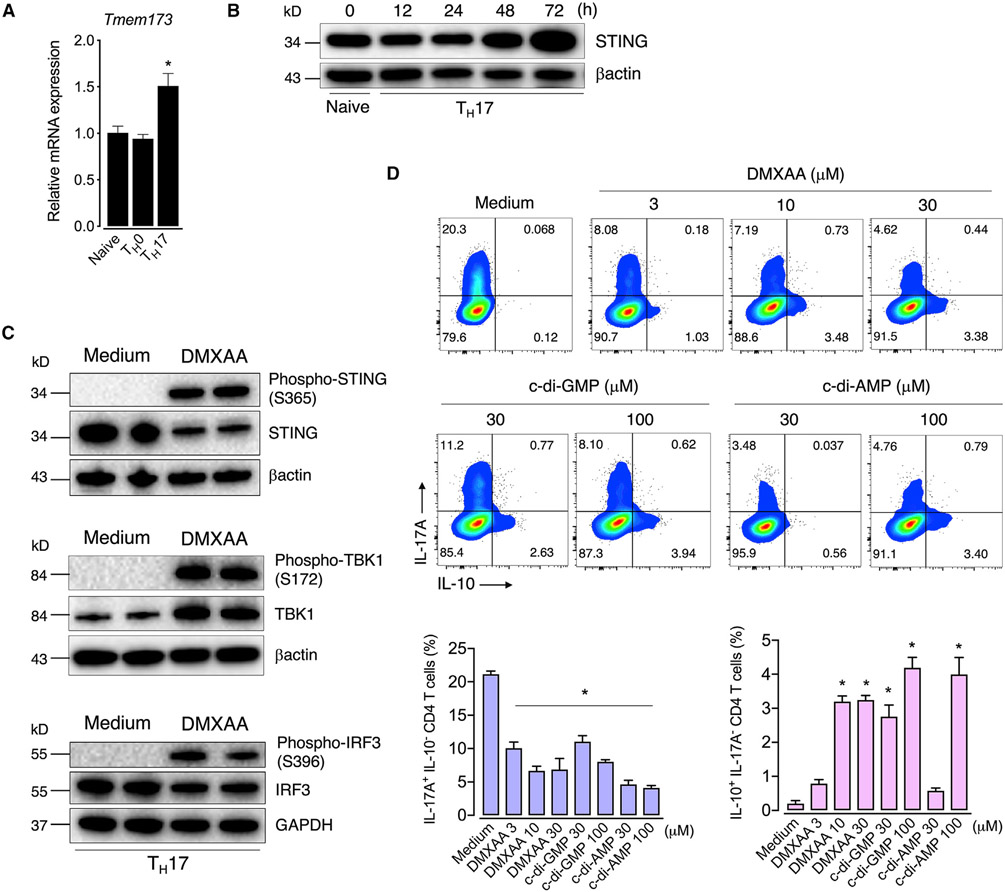
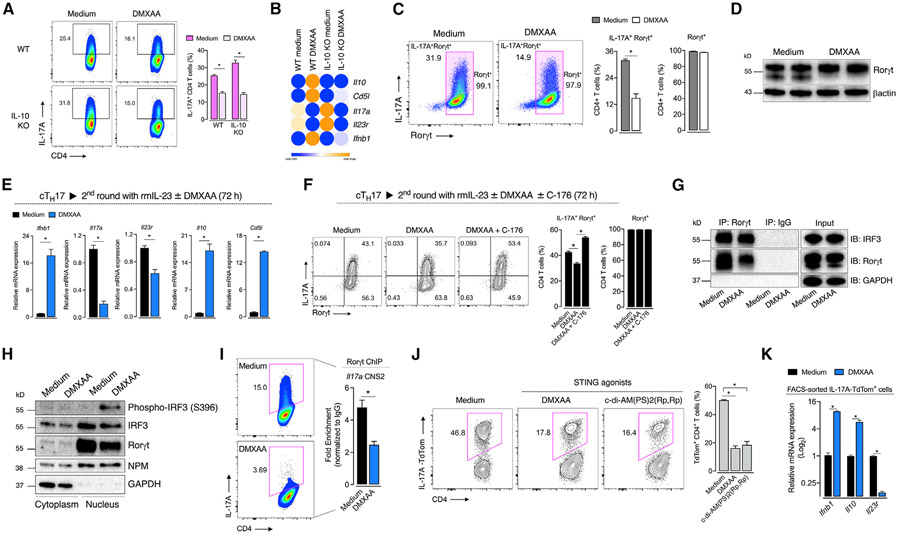
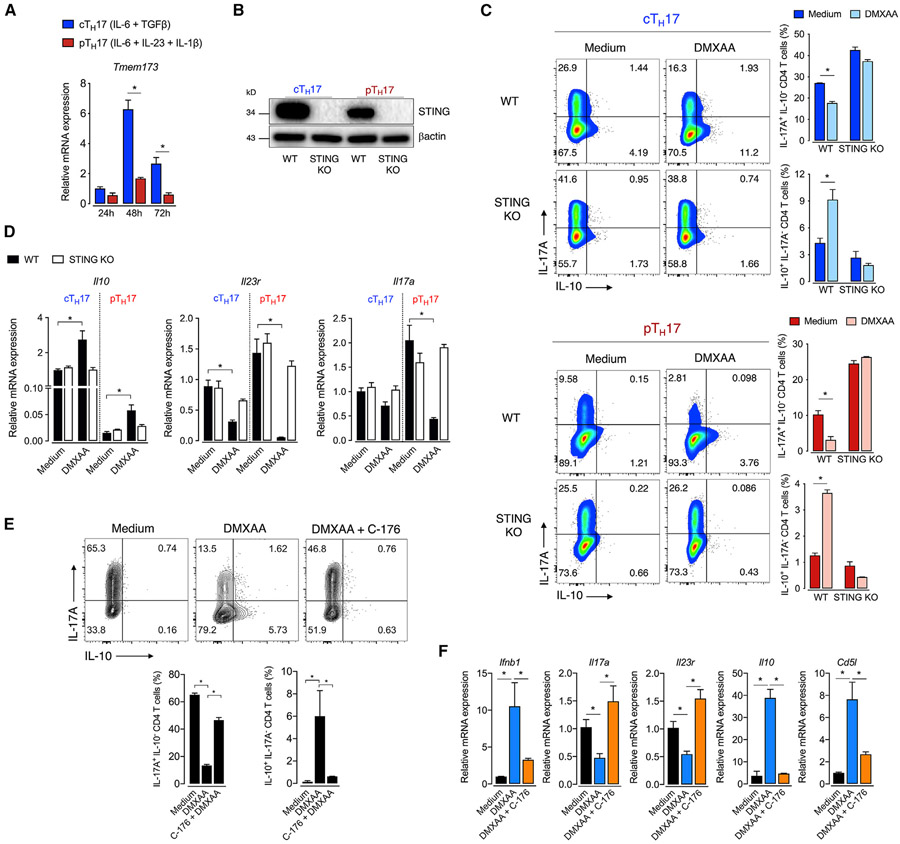
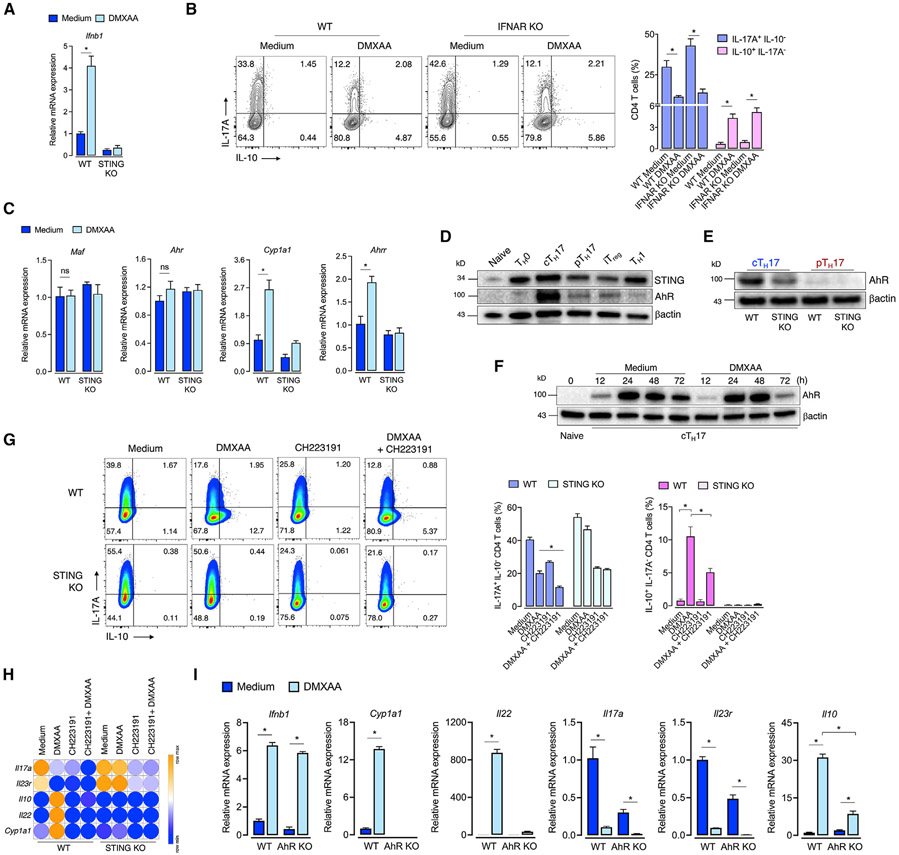
External and intrinsic factors regulate the transcriptional profile of T helper 17 (T17) cells, thereby affecting their pathogenic potential and revealing their context-dependent plasticity. The stimulator of interferon genes (STING), a component of the intracellular DNA-sensing pathway, triggers immune responses but remains largely unexplored in T cells. Here, we describe an intrinsic role of STING in limiting the T17 cell pathogenic program. We demonstrate that non-pathogenic T17 cells express higher levels of STING than those activated under pathogenic conditions. Activation of STING induces interleukin-10 (IL-10) production in T17 cells, decreasing IL-17A and IL-23R expression in a type I interferon (IFN)-independent manner. Mechanistically, STING-induced IL-10 production partially requires aryl hydrocarbon receptor (AhR) signaling, while the decrease of IL-17A expression occurs due to a reduction of Rorγt transcriptional activity. Our findings reveal a regulatory function of STING in the T17 cell activation program, proposing it as a valuable target to limit T17-cell-mediated inflammation.
外部和内在因素调节辅助性 T 细胞 17(T17)细胞的转录谱,从而影响其致病潜能,并揭示其依赖于上下文的可塑性。干扰素基因刺激物(STING)是细胞内 DNA 感应途径的一个组成部分,可触发免疫反应,但在 T 细胞中仍在很大程度上未被探索。在这里,我们描述了 STING 在限制 T17 细胞致病程序中的内在作用。我们证明,非致病性 T17 细胞表达的 STING 水平高于在致病条件下激活的 T17 细胞。STING 的激活诱导 T17 细胞中白细胞介素 10(IL-10)的产生,以不依赖于 I 型干扰素(IFN)的方式降低 IL-17A 和 IL-23R 的表达。在机制上,STING 诱导的 IL-10 产生部分需要芳香烃受体(AhR)信号,而 IL-17A 表达的降低是由于 Rorγt 转录活性的降低。我们的发现揭示了 STING 在 T17 细胞激活程序中的调节功能,提出它是限制 T17 细胞介导的炎症的有价值的靶点。