Tropical Futures Institute, James Cook University Singapore, Singapore.
Molecular Allergy Research Laboratory, College of Public Health, Medical and Veterinary Sciences, Australian Institute of Tropical Health and Medicine, James Cook University, Townsville, Queensland, Australia.
Pediatr Allergy Immunol. 2022 May;33(5):e13781. doi: 10.1111/pai.13781.
Clinical cross-reactivity between bony fish, cartilaginous fish, frog, and chicken muscle has previously been demonstrated in fish-allergic patients. In indicative studies, two reports of anaphylaxis following the consumption of crocodile meat and IgE-cross-binding were linked to the major fish allergen parvalbumin (PV). This study investigates IgE-binding proteins in crocodile meat with a focus on PV and their clinical relevance.
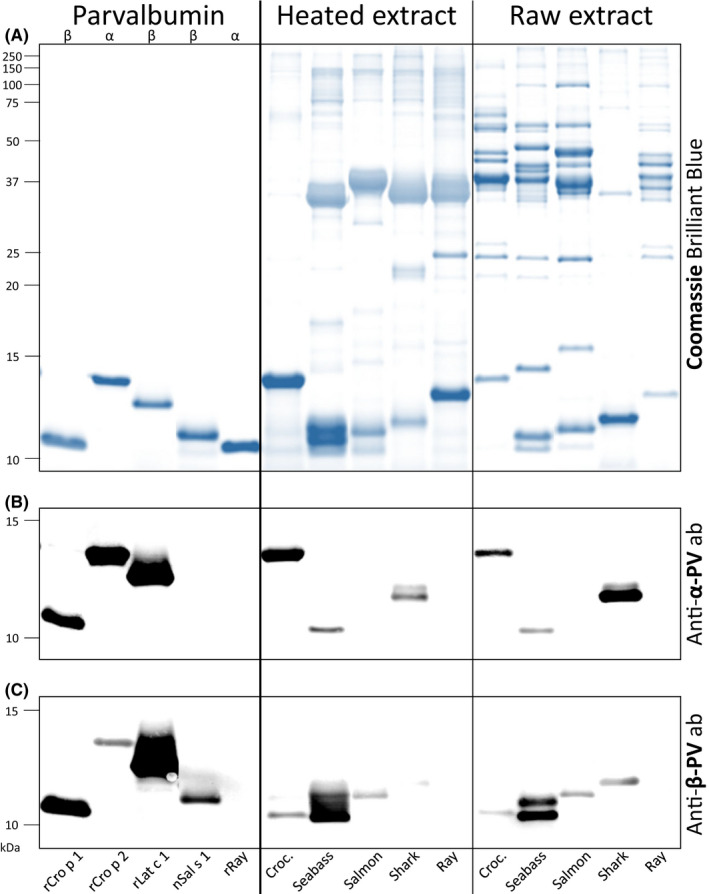
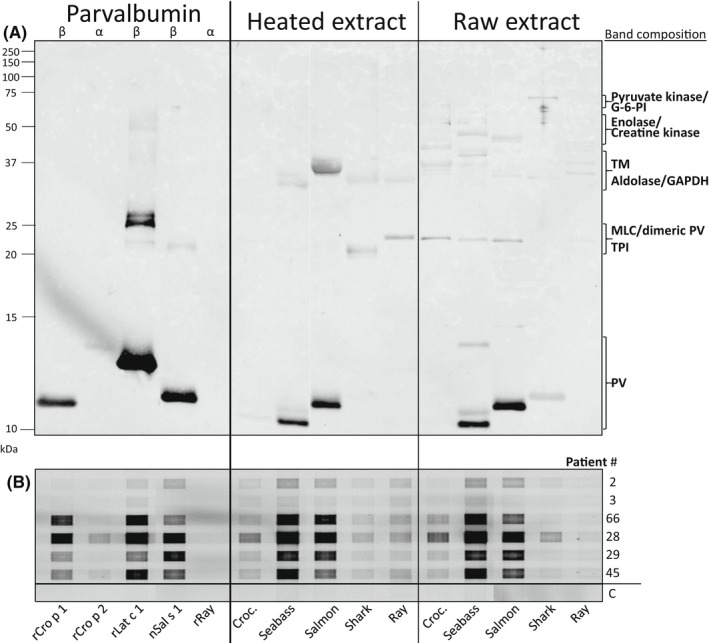
Proteins were extracted from muscle tissue of crocodile, three bony fish, and two cartilaginous fish. A cohort of fish-allergic pediatric patients (n = 77) underwent allergen skin prick testing (SPT) to three fish preparations (n = 77) and crocodile (n = 12). IgE-binding proteins were identified and quantified by SDS-PAGE, mass spectrometric analyses, and immunoblotting using commercial and in-house antibodies, as well as individual and pooled patients' serum. PV isoforms were purified or recombinantly expressed before immunological analyses, including human mast cell degranulation assay.
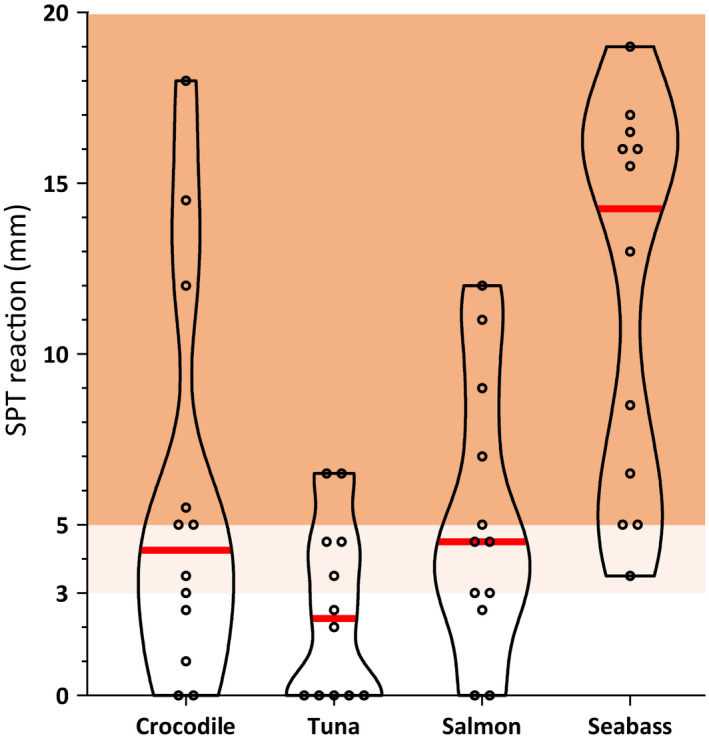
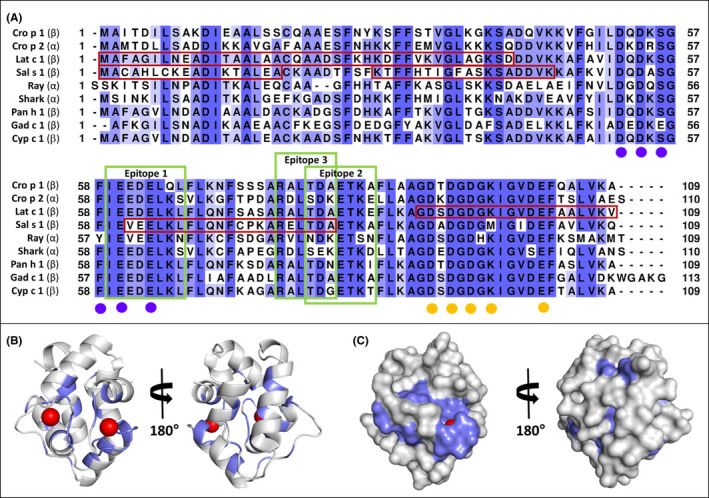
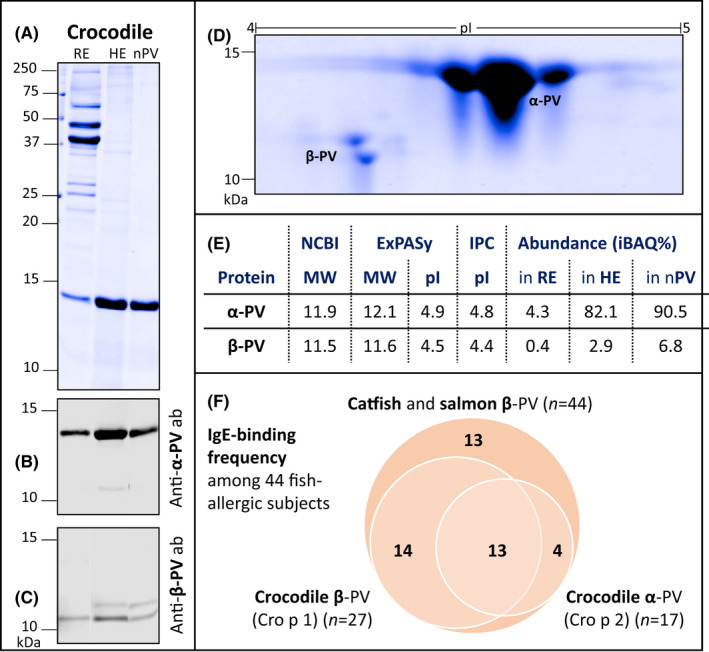
Of the tissues analyzed, PV was most abundant in heated crocodile preparation, triggering an SPT of ≥3 mm in 8 of 12 (67%) fish-allergic patients. Seventy percent (31 of 44) of fish PV-sensitized patients demonstrated IgE-binding to crocodile PV. Crocodile β-PV was the major IgE-binding protein but 20-fold less abundant than α-PV. Cellular reactivity was demonstrated for β-PV and epitopes predicted, explaining frequent IgE-cross-binding of β-PVs. Both PV isoforms are now registered as the first reptile allergens with the WHO/IUIS (β-PV as Cro p 1 and α-PV as Cro p 2).
Fish-allergic individuals may be at risk of an allergy to crocodile and should seek specialist advice before consuming crocodilian meat.
在鱼类过敏患者中,先前已经证明了骨鱼、软骨鱼、青蛙和鸡肌肉之间的临床交叉反应。在指示性研究中,有两份关于食用鳄鱼肉和 IgE 交叉结合后发生过敏反应的报告,与主要鱼类过敏原副肌球蛋白 (PV) 有关。本研究调查了鳄鱼肉中的 IgE 结合蛋白,重点是 PV 及其临床相关性。
从鳄鱼肉、三种骨鱼和两种软骨鱼的肌肉组织中提取蛋白质。一组鱼类过敏的儿科患者(n=77)接受了三种鱼类制剂(n=77)和鳄鱼肉(n=12)的过敏原皮肤点刺试验 (SPT)。使用商业和内部抗体以及个体和 pooled 患者血清,通过 SDS-PAGE、质谱分析和免疫印迹鉴定和定量 IgE 结合蛋白。在进行免疫学分析之前,对 PV 同工型进行了纯化或重组表达,包括人类肥大细胞脱颗粒测定。
在所分析的组织中,加热的鳄鱼肉中 PV 含量最丰富,在 12 名(67%)鱼类过敏患者中引发 SPT 大于 3mm。70%(31/44)鱼类 PV 致敏患者对鳄鱼肉 PV 表现出 IgE 结合。鳄鱼肉β-PV 是主要的 IgE 结合蛋白,但含量比α-PV 少 20 倍。已证明β-PV 具有细胞反应性,并且预测了表位,这解释了β-PVs 的频繁 IgE 交叉结合。两种 PV 同工型现在都被 WHO/IUIS 注册为第一种爬行动物过敏原(β-PV 为 Cro p 1,α-PV 为 Cro p 2)。
鱼类过敏个体可能有对鳄鱼肉过敏的风险,在食用鳄鱼肉之前应寻求专家建议。