Berlet Maximilian, Vogel Thomas, Gharba Mohamed, Eichinger Joseph, Schulz Egon, Friess Helmut, Wilhelm Dirk, Ostler Daniel, Kranzfelder Michael
Department of Surgery, Klinikum Rechts der Isar, Technical University Munich, Munich, Germany.
German Research Center, Munich Office, Huawei Technologies Düsseldorf GmbH, Munich, Germany.
JMIR Form Res. 2022 May 26;6(5):e36824. doi: 10.2196/36824.
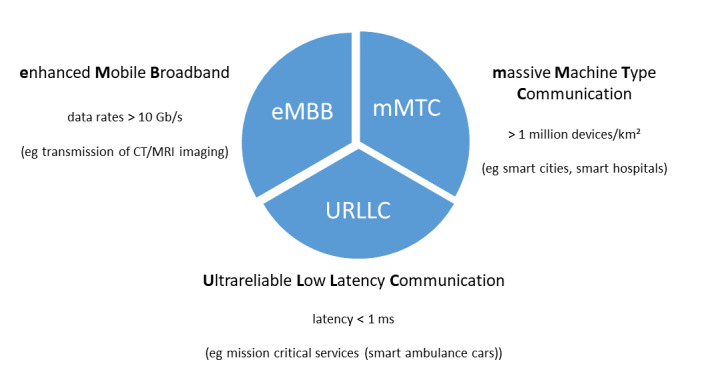
Digitalization affects almost every aspect of modern daily life, including a growing number of health care services along with telemedicine applications. Fifth-generation (5G) mobile communication technology has the potential to meet the requirements for this digitalized future with high bandwidths (10 GB/s), low latency (<1 ms), and high quality of service, enabling wireless real-time data transmission in telemedical emergency health care applications.
The aim of this study is the development and clinical evaluation of a 5G usability test framework enabling preclinical diagnostics with mobile ultrasound using 5G network technology.
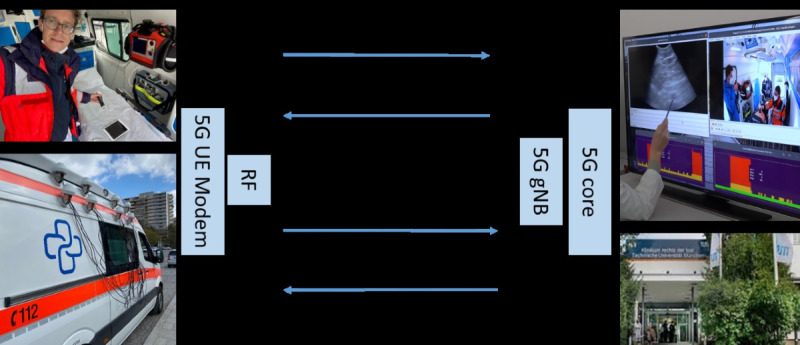
A bidirectional audio-video data transmission between the ambulance car and hospital was established, combining both 5G-radio and -core network parts. Besides technical performance evaluations, a medical assessment of transferred ultrasound image quality and transmission latency was examined.
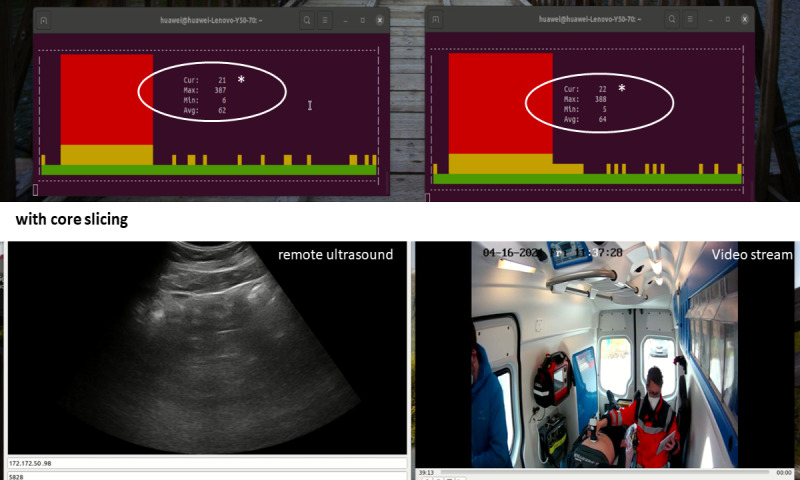
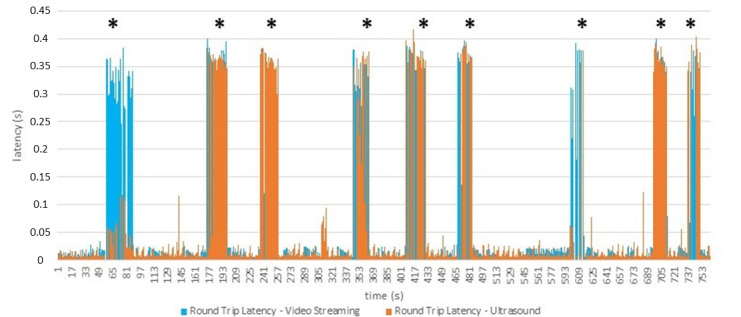
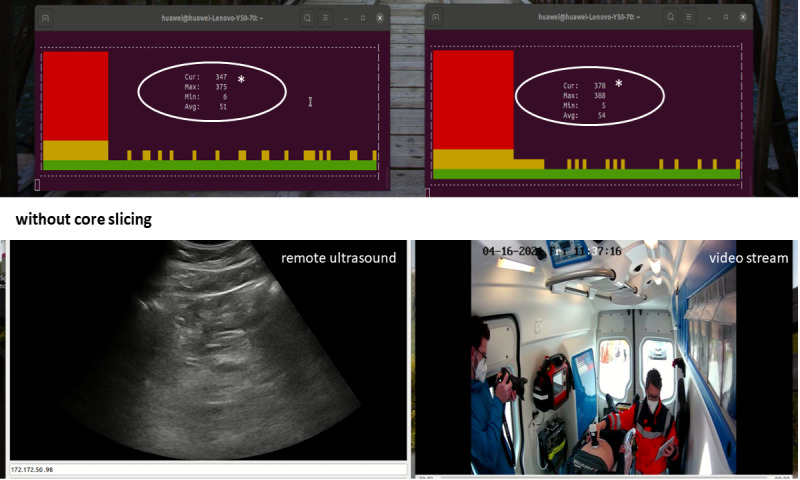
Telemedical and clinical application properties of the ultrasound probe were rated 1 (very good) to 2 (good; on a 6 -point Likert scale rated by 20 survey participants). The 5G field test revealed an average end-to-end round trip latency of 10 milliseconds. The measured average throughput for the ultrasound image traffic was 4 Mbps and for the video stream 12 Mbps. Traffic saturation revealed a lower video quality and a slower video stream. Without core slicing, the throughput for the video application was reduced to 8 Mbps. The deployment of core network slicing facilitated quality and latency recovery.
Bidirectional data transmission between ambulance car and remote hospital site was successfully established through the 5G network, facilitating sending/receiving data and measurements from both applications (ultrasound unit and video streaming). Core slicing was implemented for a better user experience. Clinical evaluation of the telemedical transmission and applicability of the ultrasound probe was consistently positive.
数字化几乎影响现代日常生活的方方面面,包括越来越多的医疗保健服务以及远程医疗应用。第五代(5G)移动通信技术有潜力凭借高带宽(10GB/秒)、低延迟(<1毫秒)和高服务质量满足这一数字化未来的需求,从而在远程医疗急救保健应用中实现无线实时数据传输。
本研究旨在开发并临床评估一个5G可用性测试框架,该框架能够利用5G网络技术通过移动超声进行临床前诊断。
建立了救护车与医院之间的双向音频-视频数据传输,结合了5G无线和核心网络部分。除了技术性能评估外,还对传输的超声图像质量和传输延迟进行了医学评估。
超声探头的远程医疗和临床应用属性在20名调查参与者给出的6分李克特量表上被评为1(非常好)至2(好)。5G现场测试显示平均端到端往返延迟为10毫秒。测得的超声图像流量平均吞吐量为4Mbps,视频流平均吞吐量为12Mbps。流量饱和显示视频质量较低且视频流较慢。在没有核心切片的情况下,视频应用的吞吐量降至8Mbps。核心网络切片的部署有助于恢复质量和延迟。
通过5G网络成功建立了救护车与远程医院站点之间的双向数据传输,便于从两个应用程序(超声设备和视频流)发送/接收数据和测量结果。实施核心切片以获得更好的用户体验。对超声探头的远程医疗传输和适用性的临床评估始终呈阳性。