Morgan Rachael, Andreassen Anna H, Åsheim Eirik R, Finnøen Mette H, Dresler Gunnar, Brembu Tore, Loh Adrian, Miest Joanna J, Jutfelt Fredrik
Department of Biology, Norwegian University of Science and Technology, 7491 Trondheim, Norway.
Department of Biological Sciences, University of Bergen, 5020 Bergen, Norway.
Proc Natl Acad Sci U S A. 2022 May 31;119(22):e2201919119. doi: 10.1073/pnas.2201919119. Epub 2022 May 26.
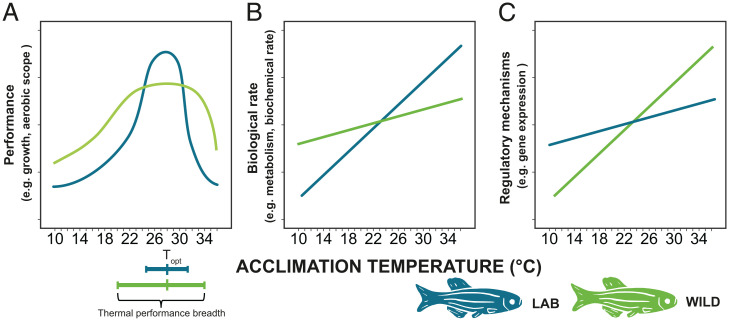
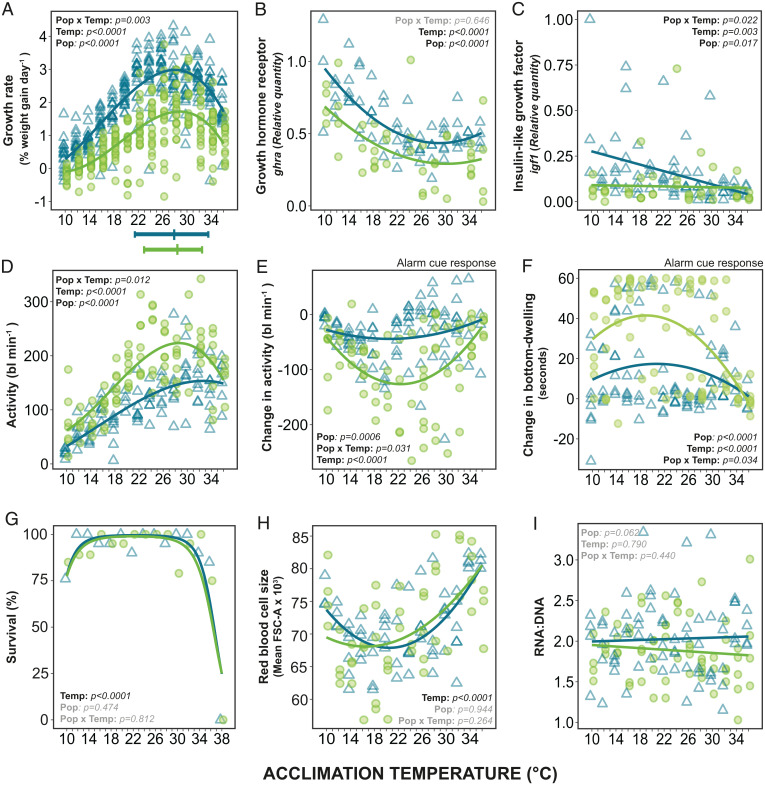
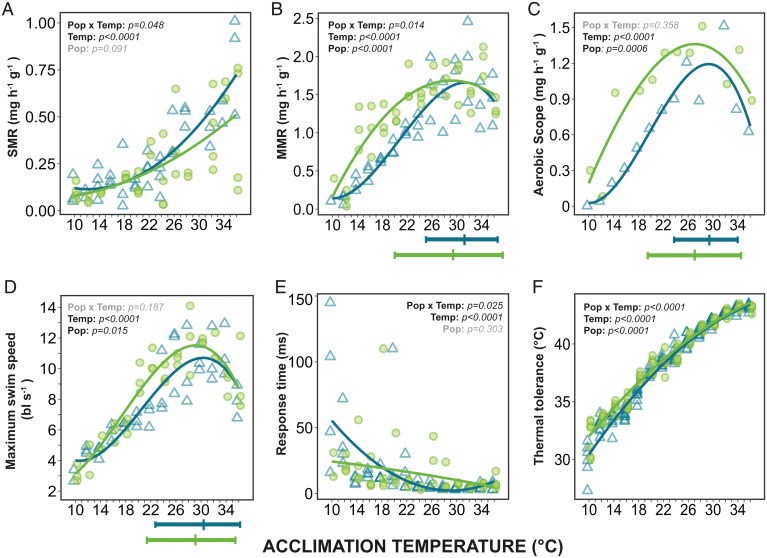
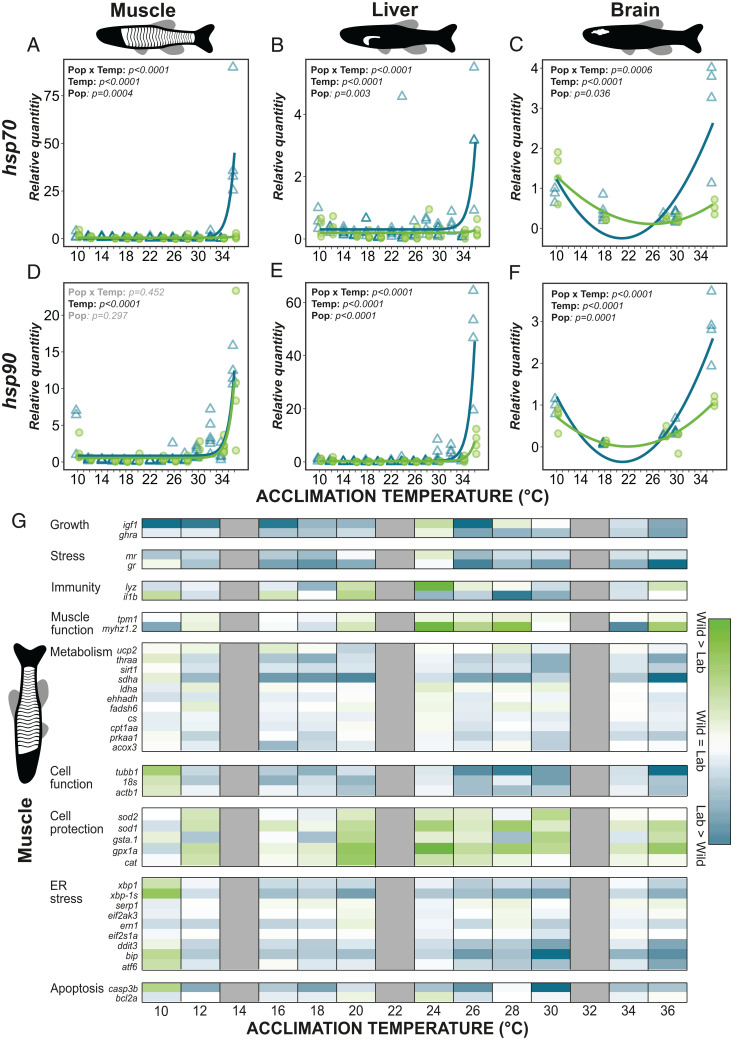
Plasticity can allow organisms to maintain consistent performance across a wide range of environmental conditions. However, it remains largely unknown how costly plasticity is and whether a trade-off exists between plasticity and performance under optimal conditions. Biological rates generally increase with temperature, and to counter that effect, fish use physiological plasticity to adjust their biochemical and physiological functions. Zebrafish in the wild encounter large daily and seasonal temperature fluctuations, suggesting they should display high physiological plasticity. Conversely, laboratory zebrafish have been at optimal temperatures with low thermal fluctuations for over 150 generations. We treated this domestication as an evolution experiment and asked whether this has reduced the physiological plasticity of laboratory fish compared to their wild counterparts. We measured a diverse range of phenotypic traits, from gene expression through physiology to behavior, in wild and laboratory zebrafish acclimated to 15 temperatures from 10 °C to 38 °C. We show that adaptation to the laboratory environment has had major effects on all levels of biology. Laboratory fish show reduced plasticity and are thus less able to counter the direct effects of temperature on key traits like metabolic rates and thermal tolerance, and this difference is detectable down to gene expression level. Rapid selection for faster growth in stable laboratory environments appears to have carried with it a trade-off against physiological plasticity in captive zebrafish compared with their wild counterparts.
可塑性能够使生物体在广泛的环境条件下保持稳定的表现。然而,可塑性的代价究竟有多大,以及在最佳条件下可塑性与表现之间是否存在权衡,在很大程度上仍然未知。生物速率通常随温度升高而增加,为了抵消这种影响,鱼类利用生理可塑性来调节其生化和生理功能。野生斑马鱼每天和季节性地遭遇大幅度的温度波动,这表明它们应表现出较高的生理可塑性。相反,实验室中的斑马鱼在超过150代的时间里一直处于热波动较小的最佳温度环境中。我们将这种驯化视为一项进化实验,并探究与野生斑马鱼相比,这是否降低了实验室斑马鱼的生理可塑性。我们在适应了10°C至38°C的15种温度的野生和实验室斑马鱼中,测量了从基因表达到生理再到行为等一系列多样的表型特征。我们发现,对实验室环境的适应对生物学的各个层面都产生了重大影响。实验室斑马鱼的可塑性降低,因此在应对温度对代谢率和热耐受性等关键特征的直接影响方面能力较弱,而且这种差异在基因表达水平上也能检测到。与野生斑马鱼相比,在稳定的实验室环境中对更快生长的快速选择似乎伴随着圈养斑马鱼生理可塑性的权衡。