Oyama Yuki, Miyata Haruhiko, Shimada Keisuke, Larasati Tamara, Fujihara Yoshitaka, Ikawa Masahito
Graduate School of Pharmaceutical Sciences Osaka University Suita Japan.
Department of Experimental Genome Research Research Institute for Microbial Diseases Osaka University Suita Japan.
Reprod Med Biol. 2022 May 23;21(1):e12467. doi: 10.1002/rmb2.12467. eCollection 2022 Jan-Dec.
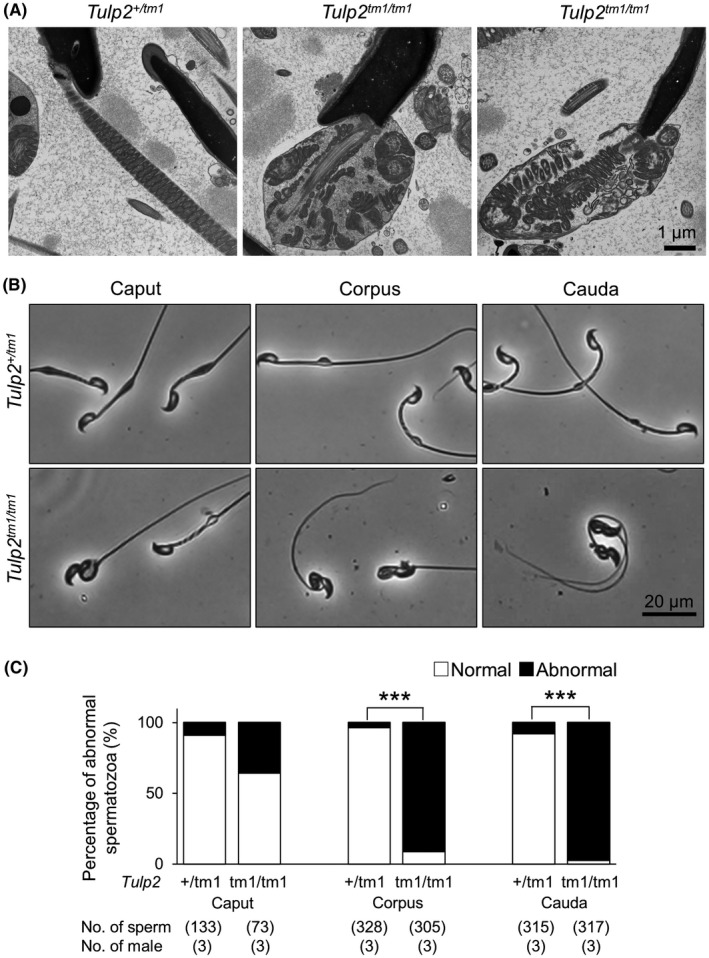
(tubby-like protein 2) is a member of the tubby protein family and expressed predominantly in mouse testis. Recently, it was reported that knockout (KO) mice exhibited disrupted sperm tail morphology; however, it remains to be determined how TULP2 deletion causes abnormal tail formation.
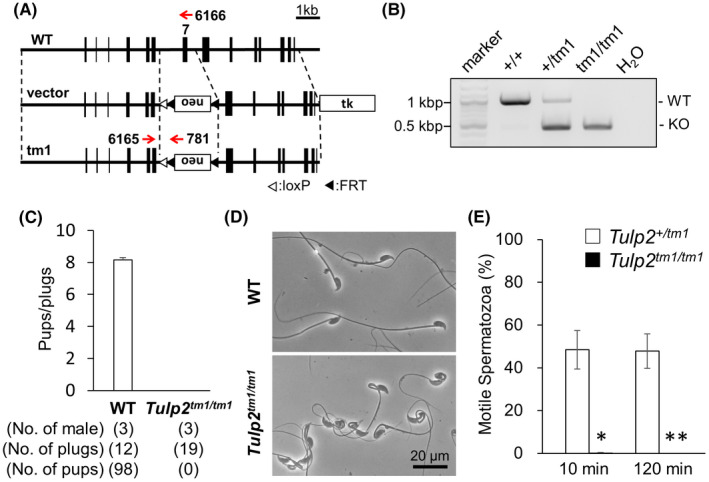
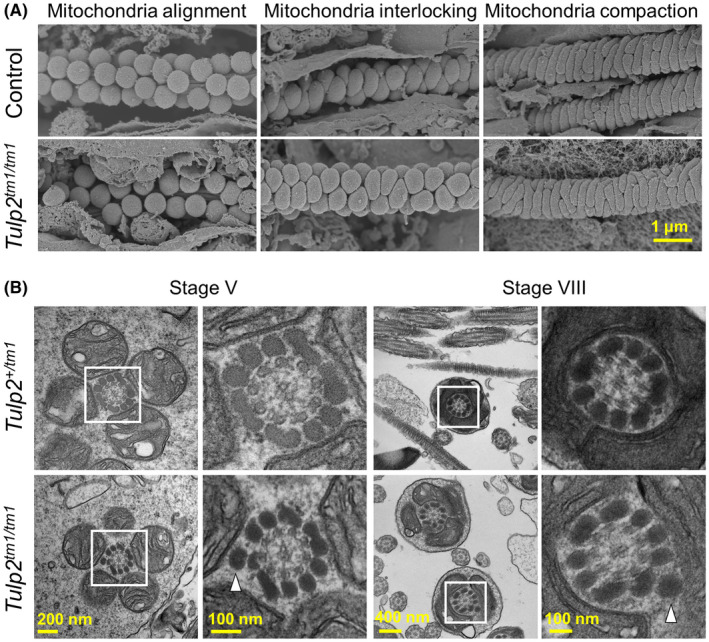
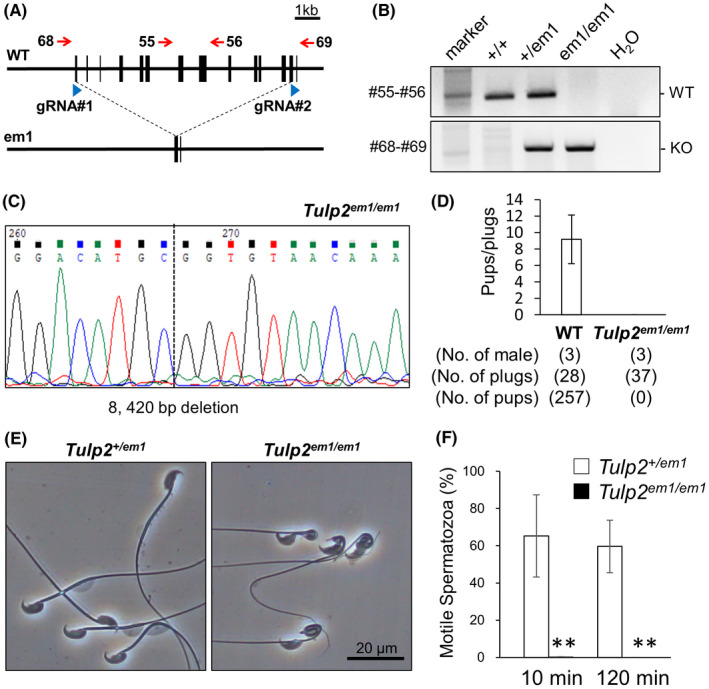
The authors analyzed male fertility, sperm morphology, and motility of two KO mouse lines that were generated using the conventional method that utilizes homologous recombination in embryonic stem (ES) cells as well as the clustered regularly interspaced short palindromic repeats/CRISPR-associated protein 9 (CRISPR/Cas9) system. Furthermore, the authors observed the spermatogenesis of KO mice in more detail using scanning and transmission electron microscopy (SEM and TEM).
Both mouse lines of KO exhibited male infertility, abnormal tail morphology, and impaired sperm motility. No overt abnormalities were found in the formation of the mitochondrial sheath in KO mice using the freeze-fracture method with SEM. In contrast, abnormal outer dense fiber (ODF) structure was observed in KO testis with TEM.
TULP2 may play roles in the correct formation and/or maintenance of ODF, which may lead to abnormal tail morphology, impaired sperm motility, and male infertility.
类 Tubby 蛋白 2(Tubby-like protein 2)是 Tubby 蛋白家族的成员,主要在小鼠睾丸中表达。最近有报道称,敲除(KO)小鼠表现出精子尾部形态异常;然而,TULP2 缺失如何导致尾部形成异常仍有待确定。
作者分析了使用传统方法(利用胚胎干细胞(ES)中的同源重组)以及成簇规律间隔短回文重复序列/CRISPR 相关蛋白 9(CRISPR/Cas9)系统产生的两种 TULP2 KO 小鼠品系的雄性生育力、精子形态和活力。此外,作者使用扫描和透射电子显微镜(SEM 和 TEM)更详细地观察了 TULP2 KO 小鼠的精子发生过程。
两种 TULP2 KO 小鼠品系均表现出雄性不育、尾部形态异常和精子活力受损。使用 SEM 的冷冻断裂方法在 TULP2 KO 小鼠中未发现线粒体鞘形成的明显异常。相比之下,用 TEM 在 TULP2 KO 睾丸中观察到异常的外致密纤维(ODF)结构。
TULP2 可能在 ODF 的正确形成和/或维持中发挥作用,这可能导致尾部形态异常、精子活力受损和雄性不育。