Zheng Meimei, Chen Xu, Cui Yiqiang, Li Wen, Dai Haiqian, Yue Qiuling, Zhang Hao, Zheng Ying, Guo Xuejiang, Zhu Hui
State Key Laboratory of Reproductive Medicine, Department of Histology and Embryology, Nanjing Medical University, Nanjing, China.
Reproductive Medicine Center of No. 960 Hospital of PLA, Jinan, China.
Front Cell Dev Biol. 2021 Feb 18;9:623738. doi: 10.3389/fcell.2021.623738. eCollection 2021.
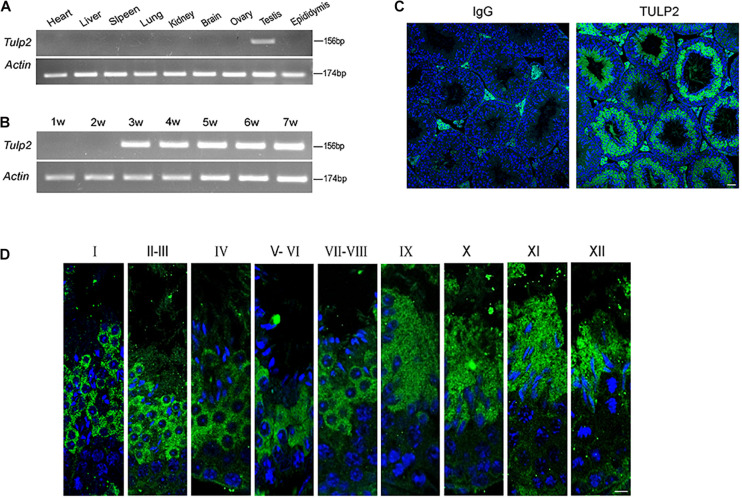
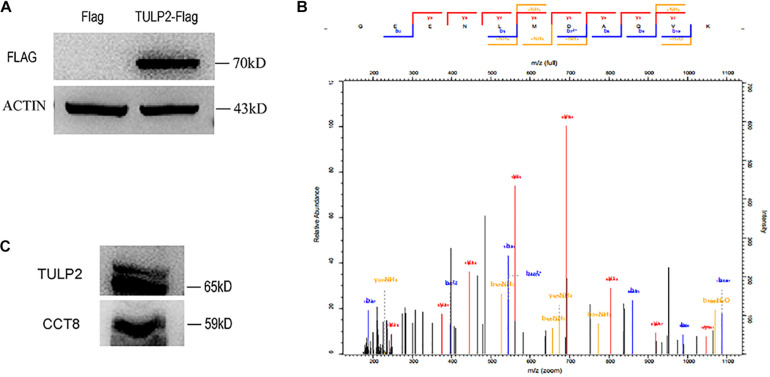
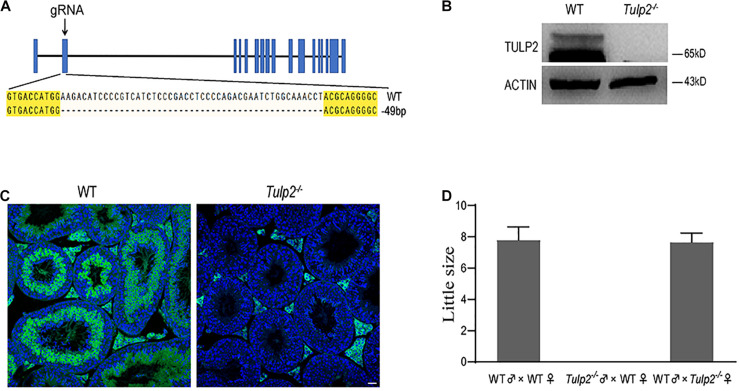
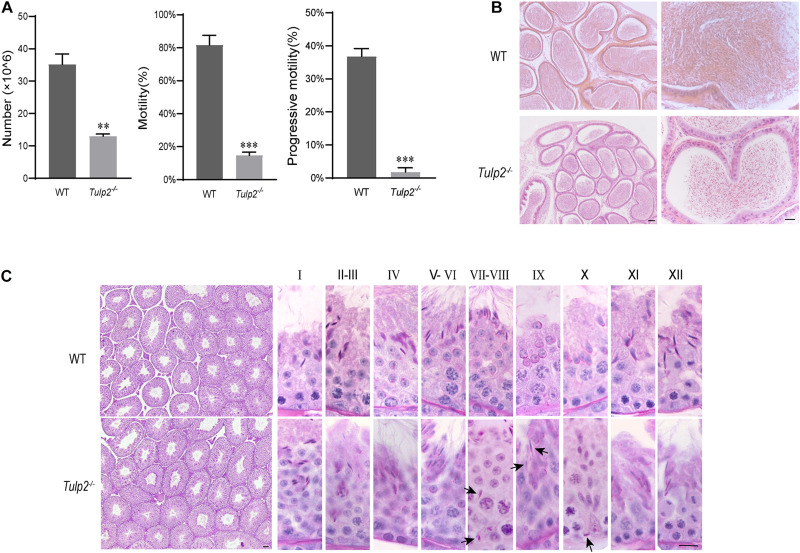
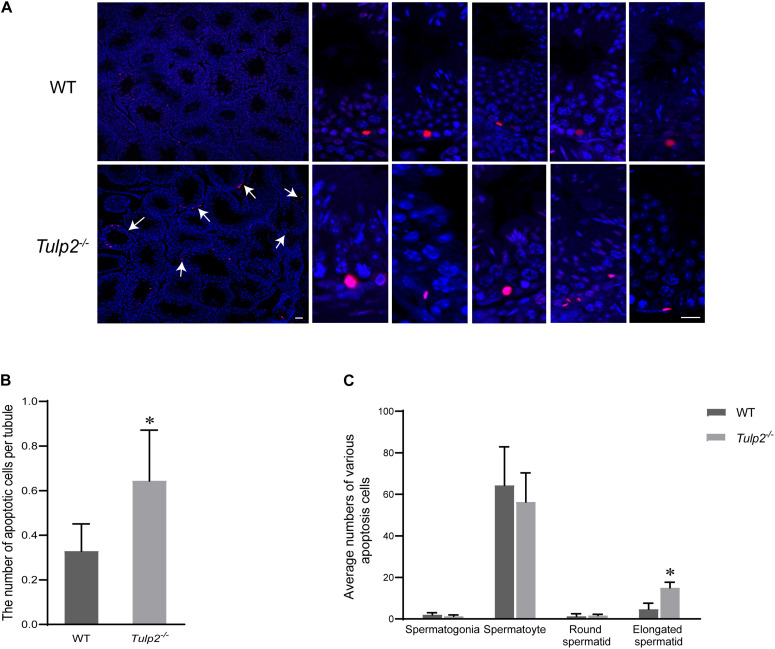
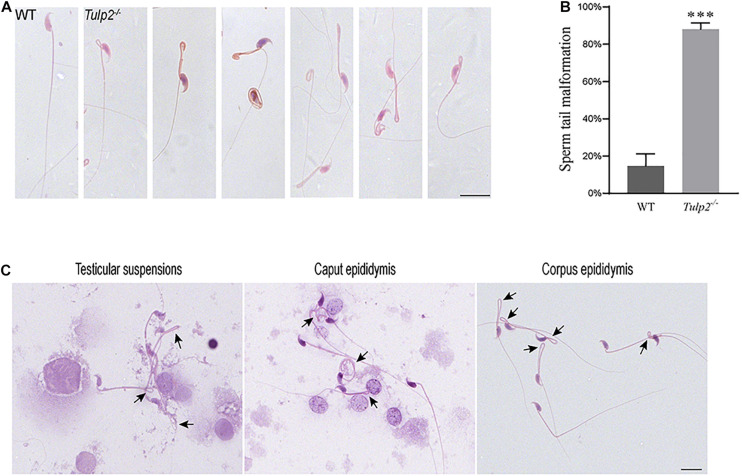
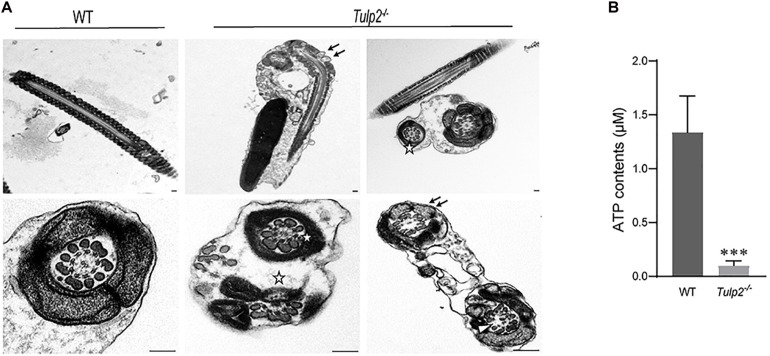
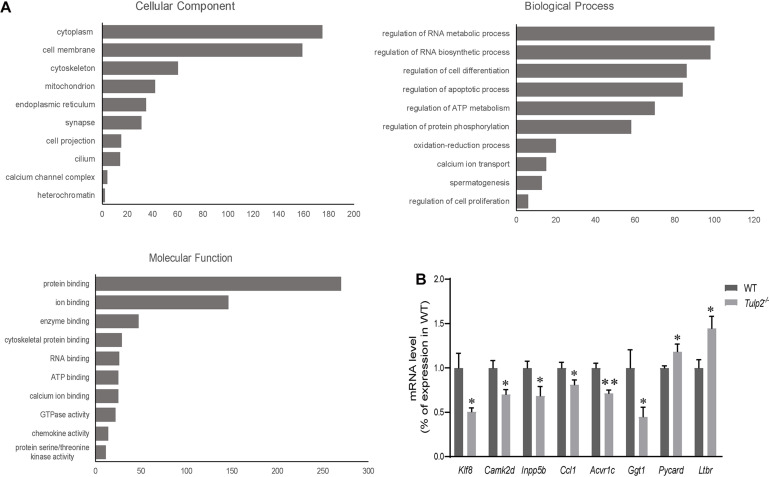
Spermatogenesis requires a large number of proteins to be properly expressed at certain stages, during which post-transcriptional regulation plays an important role. RNA-binding proteins (RBPs) are key players in post-transcriptional regulation, but only a few RBPs have been recognized and preliminary explored their function in spermatogenesis at present. Here we identified a new RBP tubby-like protein 2 (TULP2) and found three potential deleterious missense mutations of gene in dyszoospermia patients. Therefore, we explored the function and mechanism of TULP2 in male reproduction. TULP2 was specifically expressed in the testis and localized to spermatids. Studies on knockout mice demonstrated that the loss of TULP2 led to male sterility; on the one hand, increases in elongated spermatid apoptosis and restricted spermatid release resulted in a decreased sperm count; on the other hand, the abnormal differentiation of spermatids induced defective sperm tail structures and reduced ATP contents, influencing sperm motility. Transcriptome sequencing of mouse testis revealed the potential target molecular network of TULP2, which played its role in spermatogenesis by regulating specific transcripts related to the cytoskeleton, apoptosis, RNA metabolism and biosynthesis, and energy metabolism. We also explored the potential regulator of TULP2 protein function by using immunoprecipitation and mass spectrometry analysis, indicating that TUPL2 might be recognized by CCT8 and correctly folded by the CCT complex to play a role in spermiogenesis. Our results demonstrated the important role of TULP2 in spermatid differentiation and male fertility, which could provide an effective target for the clinical diagnosis and treatment of patients with oligo-astheno-teratozoospermia, and enrich the biological theory of the role of RBPs in male reproduction.
精子发生需要大量蛋白质在特定阶段正确表达,在此过程中,转录后调控起着重要作用。RNA结合蛋白(RBPs)是转录后调控的关键参与者,但目前仅有少数RBPs被识别并初步探索了其在精子发生中的功能。在此,我们鉴定出一种新的RBP——类 tubby 蛋白 2(TULP2),并在精子发育异常患者中发现了该基因的三个潜在有害错义突变。因此,我们探索了TULP2在雄性生殖中的功能和机制。TULP2在睾丸中特异性表达,并定位于精子细胞。对TULP2基因敲除小鼠的研究表明,TULP2缺失导致雄性不育;一方面,延长型精子细胞凋亡增加和精子细胞释放受限导致精子数量减少;另一方面,精子细胞的异常分化导致精子尾部结构缺陷和ATP含量降低,影响精子活力。小鼠睾丸转录组测序揭示了TULP2的潜在靶分子网络,其通过调控与细胞骨架、凋亡、RNA代谢与生物合成以及能量代谢相关的特定转录本在精子发生中发挥作用。我们还通过免疫沉淀和质谱分析探索了TULP2蛋白功能的潜在调节因子,表明TUPL2可能被CCT8识别并由CCT复合体正确折叠,从而在精子形成过程中发挥作用。我们的结果证明了TULP2在精子细胞分化和雄性生育中的重要作用,可为少弱畸精子症患者的临床诊断和治疗提供有效靶点,并丰富RBPs在雄性生殖中作用的生物学理论。