Lee Jyun-Lin, Wang Yao-Chien, Hsu Yu-An, Chen Chih-Sheng, Weng Rui-Cian, Lu Yen-Pei, Chuang Chun-Yu, Wan Lei
Department of Biomedical Engineering and Environmental Sciences, National Tsing Hua University, Hsinchu 300, Taiwan.
Department of Emergency Medicine, Taichung Tzu Chi Hospital, Taichung 427, Taiwan.
Toxics. 2022 Apr 22;10(5):208. doi: 10.3390/toxics10050208.
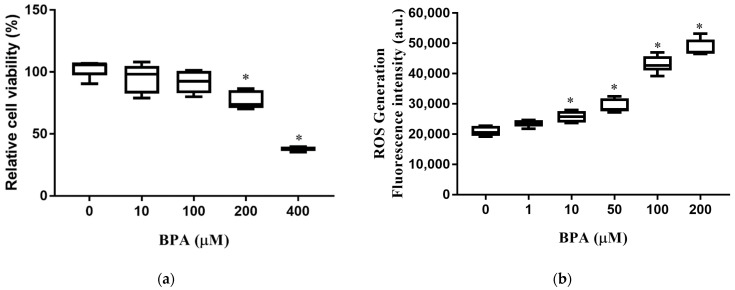
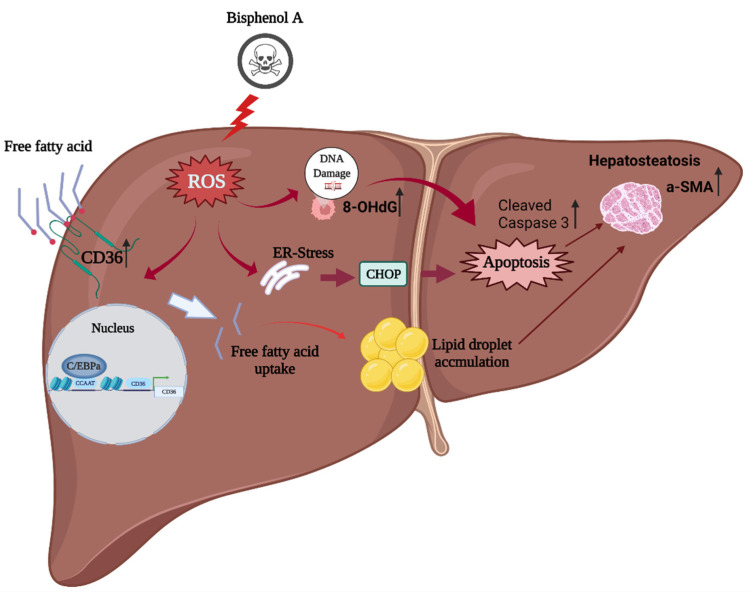
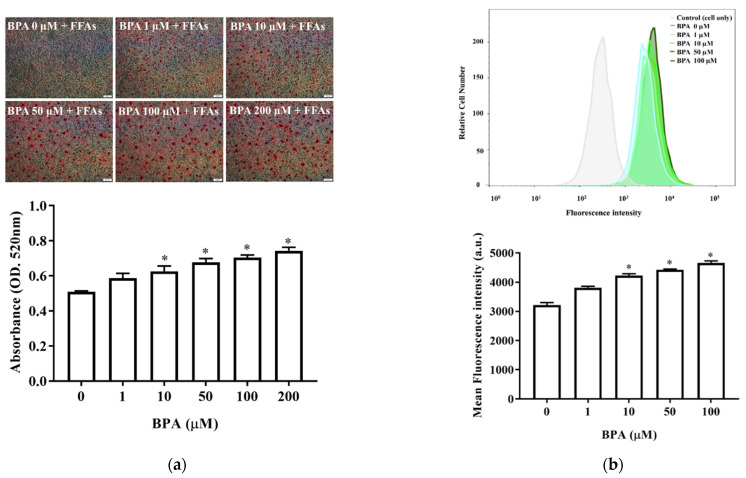
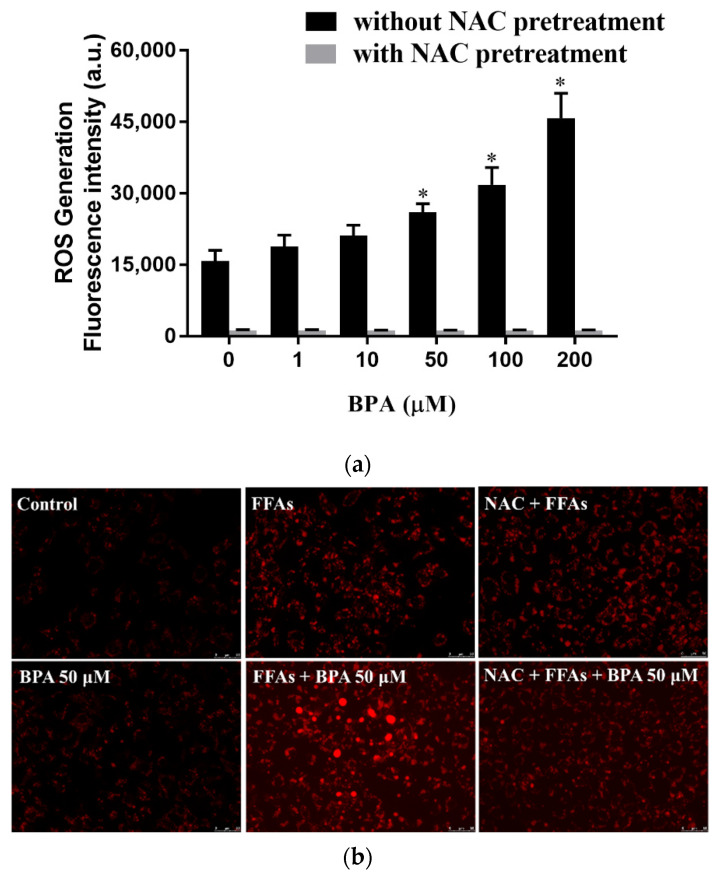
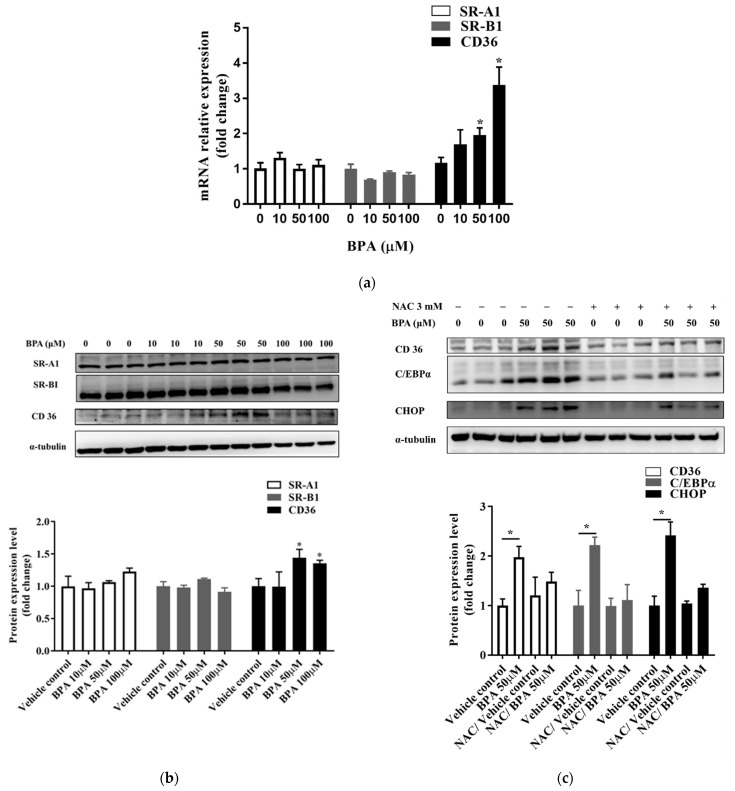
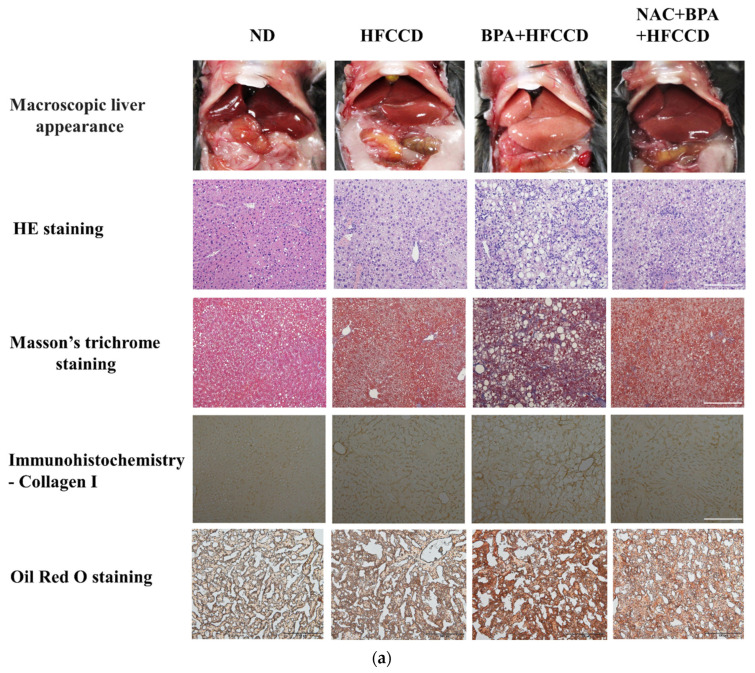
Bisphenol A (BPA) is an endocrine-disrupting chemical that affects lipid metabolism and contributes to non-alcoholic fatty liver disease (NAFLD). The mechanism of BPA exposure in hepatic lipid accumulation and its potential effect on NAFLD remain unclear. This study investigated the effect of BPA-exposure-induced hepatic lipid deposition on the pathology of NAFLD and its underlying mechanism in vitro and in vivo. BPA increased intracellular reactive oxygen species (ROS) levels, and promoted fatty acid uptake through upregulation of a free fatty acid uptake transporter, cluster of differentiation 36 (CD36), in HUH-7 cells. Additionally, C57BL/6 mice administered a high-fat/high-cholesterol/high-cholic acid diet (HFCCD) and BPA (50 mg/kg body weight) for 8 weeks developed a steatohepatitis-like phenotype, characterized by alpha-smooth muscle actin (α-SMA, an indicator of hepatic fibrosis) and cleaved caspase 3 (an indicator of apoptosis) in hepatic tissue; moreover, they had a higher oxidative stress index of 8-hydroxydeoxyguanosine (8-OHdG) in liver tissue compared to the control group. Treatment with ROS scavenger n-acetylcysteine (NAC) ameliorated BPA-mediated HFCCD-induced lipid accumulation and steatohepatitis in the livers of treated mice. Our study indicates that BPA acts synergistically to increase hepatic lipid uptake and promote NAFLD development by stimulating ROS-induced CD36 overexpression.
双酚A(BPA)是一种内分泌干扰化学物质,会影响脂质代谢并导致非酒精性脂肪性肝病(NAFLD)。BPA暴露导致肝脏脂质蓄积的机制及其对NAFLD的潜在影响尚不清楚。本研究在体外和体内研究了BPA暴露诱导的肝脏脂质沉积对NAFLD病理的影响及其潜在机制。BPA增加了HUH-7细胞内活性氧(ROS)水平,并通过上调游离脂肪酸摄取转运蛋白分化簇36(CD36)促进脂肪酸摄取。此外,给予高脂/高胆固醇/高胆酸饮食(HFCCD)和BPA(50毫克/千克体重)8周的C57BL/6小鼠出现了脂肪性肝炎样表型,其特征是肝组织中α-平滑肌肌动蛋白(α-SMA,肝纤维化指标)和裂解的半胱天冬酶3(凋亡指标)升高;此外,与对照组相比,它们肝脏组织中的氧化应激指标8-羟基脱氧鸟苷(8-OHdG)更高。用ROS清除剂N-乙酰半胱氨酸(NAC)治疗可改善BPA介导的HFCCD诱导的处理小鼠肝脏脂质蓄积和脂肪性肝炎。我们的研究表明,BPA具有协同作用,通过刺激ROS诱导的CD36过表达增加肝脏脂质摄取并促进NAFLD发展。