Department of Functional Sciences-Chair of Pathophysiology, "Victor Babeș" University of Medicine and Pharmacy of Timișoara, E. Murgu Sq. No. 2, 300041 Timișoara, Romania.
Centre for Translational Research and Systems Medicine, "Victor Babeș" University of Medicine and Pharmacy of Timișoara, E. Murgu Sq. No. 2, 300041 Timișoara, Romania.
Int J Mol Sci. 2024 Jul 6;25(13):7420. doi: 10.3390/ijms25137420.
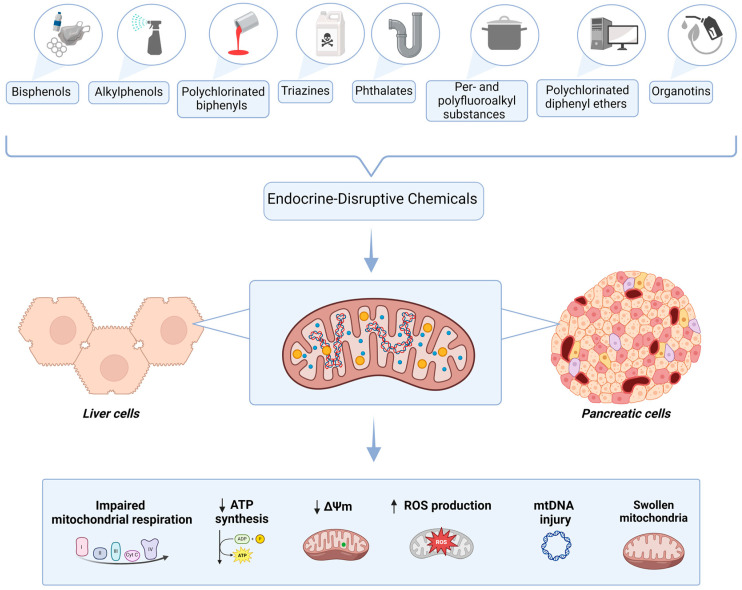
In recent years, the worldwide epidemic of metabolic diseases, namely obesity, metabolic syndrome, diabetes and metabolic-associated fatty liver disease (MAFLD) has been strongly associated with constant exposure to endocrine-disruptive chemicals (EDCs), in particular, the ones able to disrupt various metabolic pathways. EDCs have a negative impact on several human tissues/systems, including metabolically active organs, such as the liver and pancreas. Among their deleterious effects, EDCs induce mitochondrial dysfunction and oxidative stress, which are also the major pathophysiological mechanisms underlying metabolic diseases. In this narrative review, we delve into the current literature on EDC toxicity effects on the liver and pancreatic tissues in terms of impaired mitochondrial function and redox homeostasis.
近年来,代谢性疾病(肥胖症、代谢综合征、糖尿病和代谢相关性脂肪性肝病)在全球范围内流行,这与内分泌干扰化学物质(EDCs)的持续暴露密切相关,尤其是那些能够干扰各种代谢途径的 EDCs。EDCs 对人体的许多组织/系统都有负面影响,包括代谢活跃的器官,如肝脏和胰腺。在它们的有害影响中,EDCs 会导致线粒体功能障碍和氧化应激,这也是代谢性疾病的主要病理生理机制。在这篇叙述性综述中,我们深入探讨了目前关于 EDC 对肝脏和胰腺组织毒性作用的文献,这些作用涉及线粒体功能障碍和氧化还原稳态失衡。