Department of Neurosurgery, Xijing Hospital, Fourth Military Medical University, 127 Changlexi Road, Xi'an, China.
National Translational Science Center for Molecular Medicine and Department of Cell Biology, Fourth Military Medical University, 169 Changlexi Road, Xi'an, China.
J Neuroinflammation. 2022 May 27;19(1):122. doi: 10.1186/s12974-022-02474-2.
Inflammation contributes to the poor prognosis of intracerebral hemorrhage (ICH). Intermittent fasting (IF) has been shown to be protective against inflammation in multiple pathogenic processes. In the present study, we aimed to investigated the beneficial effects of IF in attenuating neuroinflammation and neurological deficits in a mouse model of ICH and to investigate the underlying mechanism.
ICH was modeled by intrastriatal injection of autologous blood and IF was modeled by every-other-day feeding in male control mice (C57BL/6), mice with and microglia specific knockout Sirt3;Cx3cr1-Cre (Sirt3 cKO), and Sirt3 (wild-type) mice. Brain tissues and arterial blood were harvested at 1, 3, 7 and 28 days after ICH for immunohistochemistry analysis of Iba-1, DARPP-32 and HO-1, morphological analysis by HE staining and inflammatory factor release tests by ELISA. Neurological functions were approached by corner test and cylinder test. Fluorescent double-labeled staining of Iba-1 with CD16, Arg1 or Sirt3 was used to provide direct image of co-expression of these molecules in microglia. TUNEL, cleaved caspase-3 and Nissl staining was performed to evaluate cellular injuries.
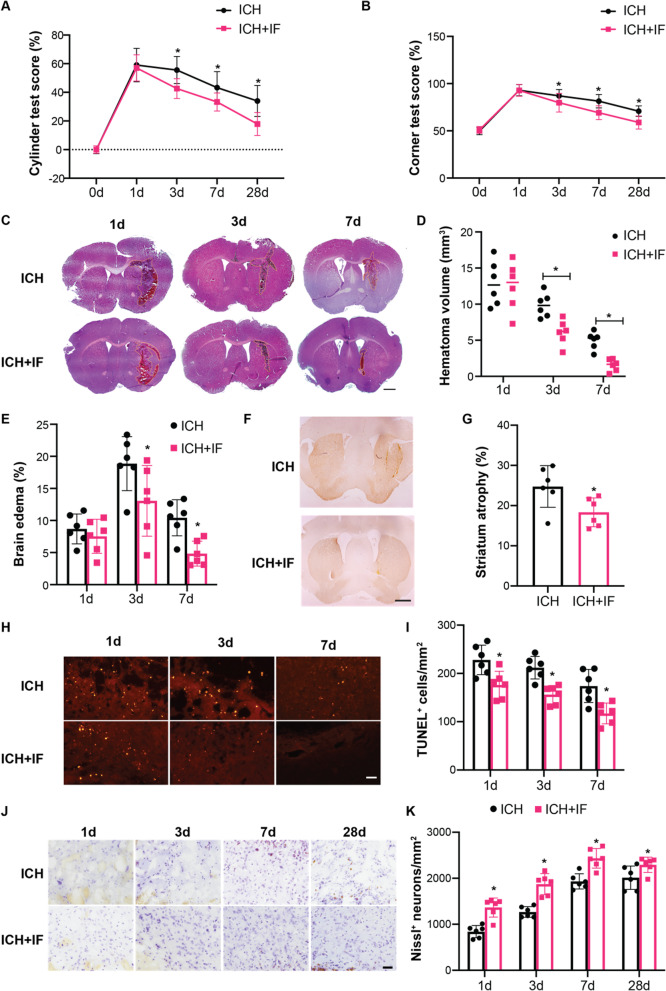
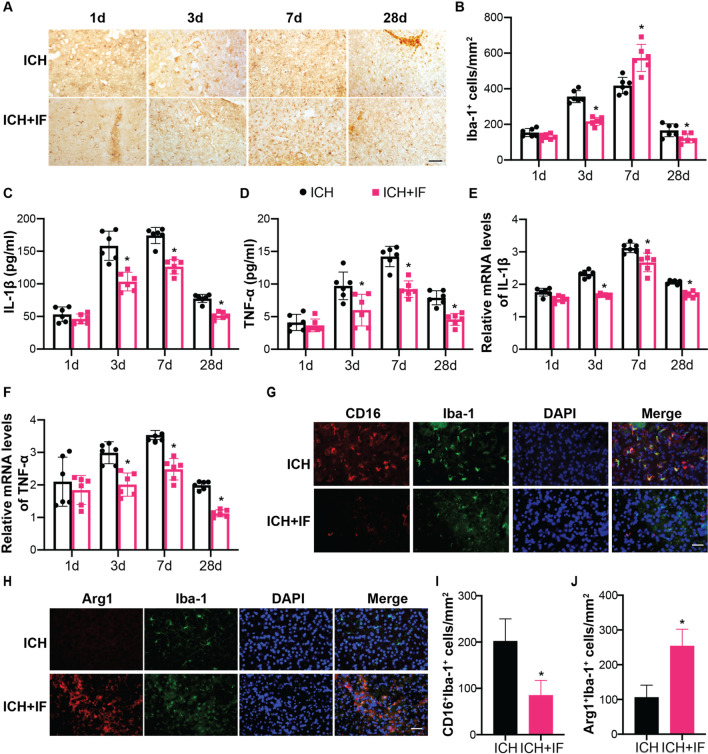
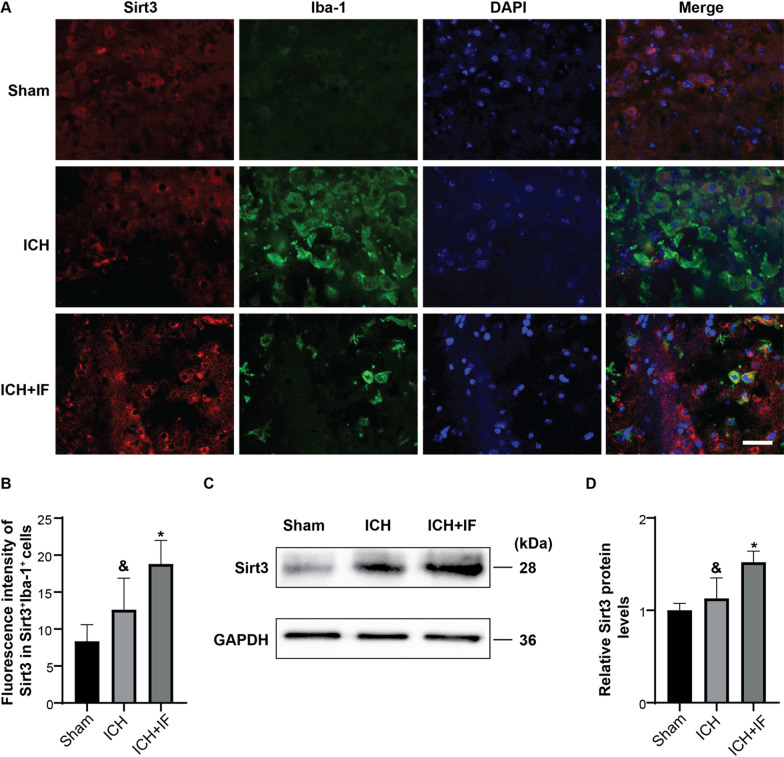
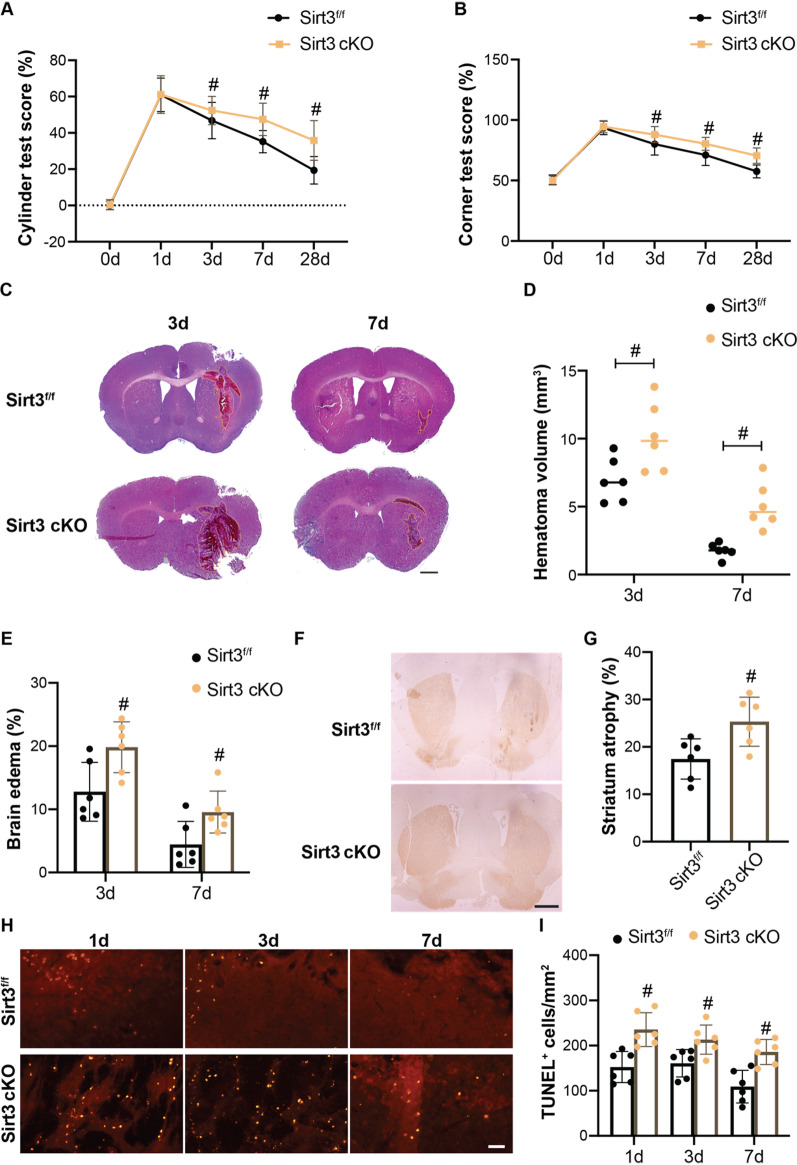
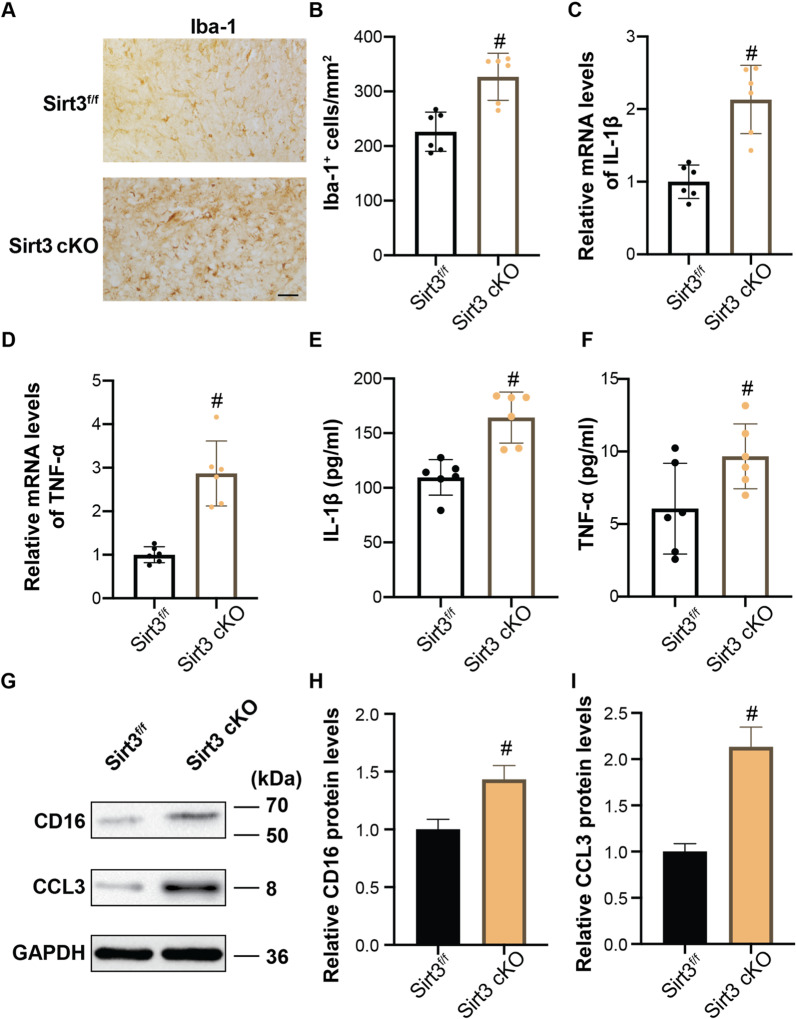
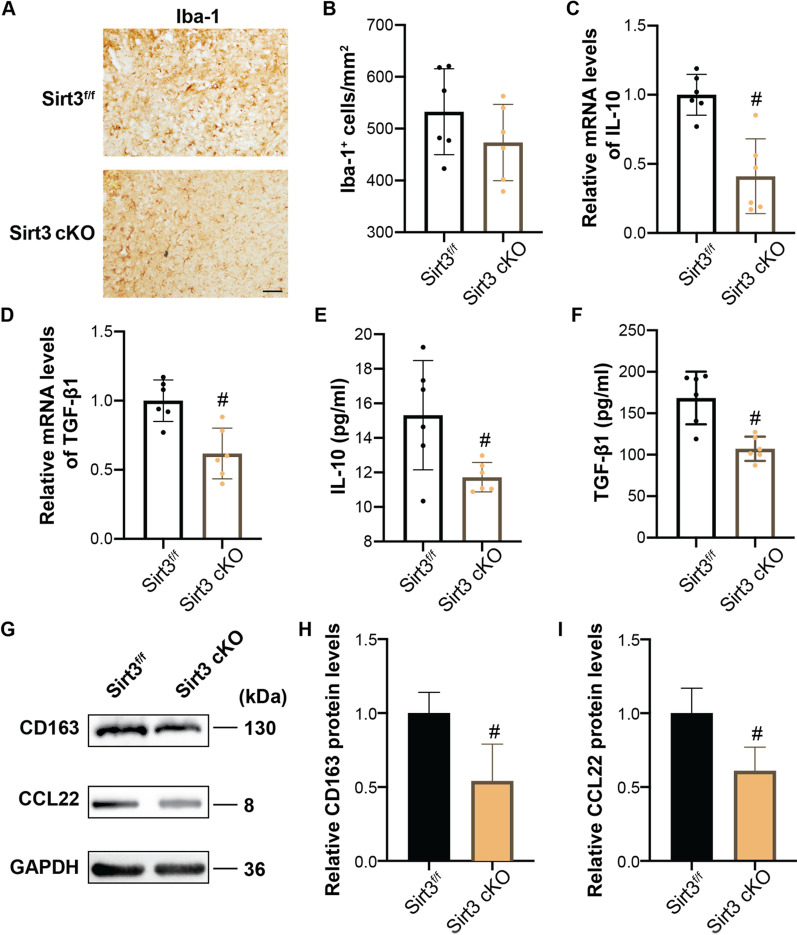
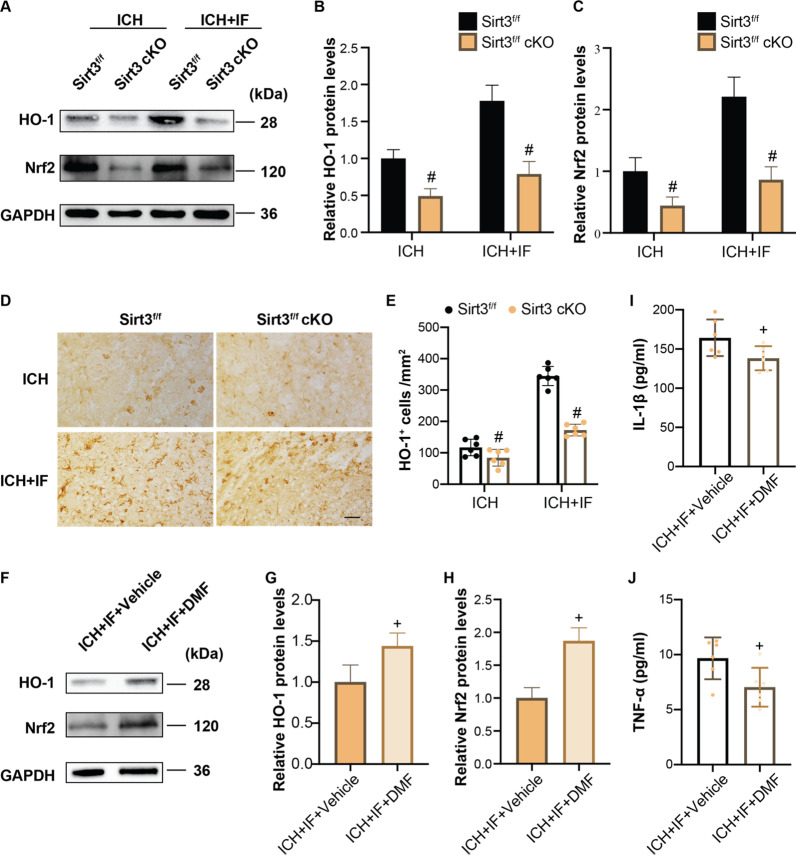
IF alleviated neurological deficits in both acute and chronic phases after ICH. Morphologically, IF enhanced hematoma clearance, reduced brain edema in acute phase and attenuated striatum atrophy in chronic phase. In addition, IF decreased the numbers of TUNEL cells and increased Nissl neuron number at day 1, 3 and 7 after ICH. IF suppressed CD16Iba-1 microglia activation at day 3 after ICH and reduced inflammatory releases, such as IL-1β and TNF-α. The above effects of IF were attenuated by microglia Sirt3 deletion partly because of an inhibition of Nrf2/HO-1 signaling pathway. Interestingly, IF increased Iba-1 microglia number at day 7 which mainly expressed Arg1 while decreased the proinflammatory factor levels. In mice with microglia-specific Sirt3 deletion, the effects of IF on Iba-1 microglia activation and anti-inflammatory factor expressions were attenuated when compared with wild-type Sirt3 mice.
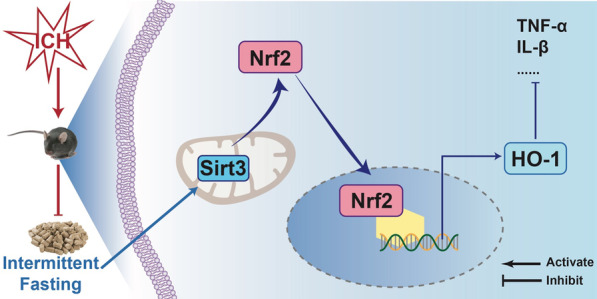
IF protects against ICH by suppressing the inflammatory responses via the Sirt3/Nrf2/HO-1 pathway.
炎症是导致脑出血(ICH)预后不良的原因之一。间歇性禁食(IF)已被证明可在多种致病过程中起到抗炎作用。在本研究中,我们旨在研究 IF 通过减轻ICH 小鼠模型中的神经炎症和神经功能缺损的有益作用,并探讨其潜在机制。
采用纹状体自体血注射法建立 ICH 模型,雄性对照小鼠(C57BL/6)、小胶质细胞特异性 Sirt3 敲除(Sirt3 cKO)和 Sirt3(野生型)小鼠采用隔日喂养法建立 IF 模型。ICH 后 1、3、7 和 28 天采集脑组织和动脉血,进行 Iba-1、DARPP-32 和 HO-1 的免疫组化分析、HE 染色的形态学分析以及 ELISA 检测炎症因子释放试验。采用转角试验和圆筒试验评估神经功能。通过 Iba-1 与 CD16、Arg1 或 Sirt3 的荧光双标染色,提供小胶质细胞中这些分子共表达的直接图像。进行 TUNEL、cleaved caspase-3 和尼氏染色以评估细胞损伤。
IF 在 ICH 后的急性和慢性阶段均能改善神经功能缺损。形态学上,IF 促进血肿清除,减轻急性期脑水肿,减轻慢性期纹状体萎缩。此外,IF 可减少 ICH 后 1、3 和 7 天的 TUNEL 细胞数量,并增加尼氏染色神经元数量。IF 在 ICH 后 3 天抑制 CD16Iba-1 小胶质细胞激活并降低炎症因子释放,如 IL-1β和 TNF-α。IF 的上述作用因小胶质细胞 Sirt3 缺失而部分减弱,这是由于 Nrf2/HO-1 信号通路受到抑制。有趣的是,IF 在 ICH 后 7 天增加了表达 Arg1 的 Iba-1 小胶质细胞数量,同时降低了促炎因子水平。在小胶质细胞特异性 Sirt3 缺失的小鼠中,与野生型 Sirt3 小鼠相比,IF 对 Iba-1 小胶质细胞激活和抗炎因子表达的作用减弱。
IF 通过 Sirt3/Nrf2/HO-1 通路抑制炎症反应,从而起到对 ICH 的保护作用。