Zapata Agustín G
Department of Cell Biology, Faculty of Biology, Complutense University of Madrid, 28040 Madrid, Spain.
Health Research Institute, Hospital 12 de Octubre (imas12), 28041 Madrid, Spain.
Biology (Basel). 2022 May 13;11(5):747. doi: 10.3390/biology11050747.
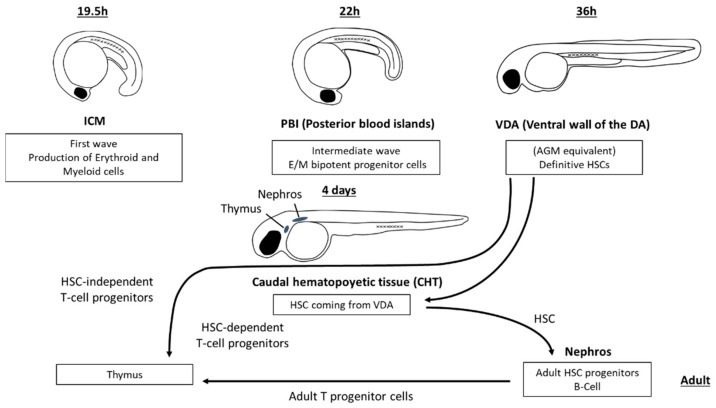
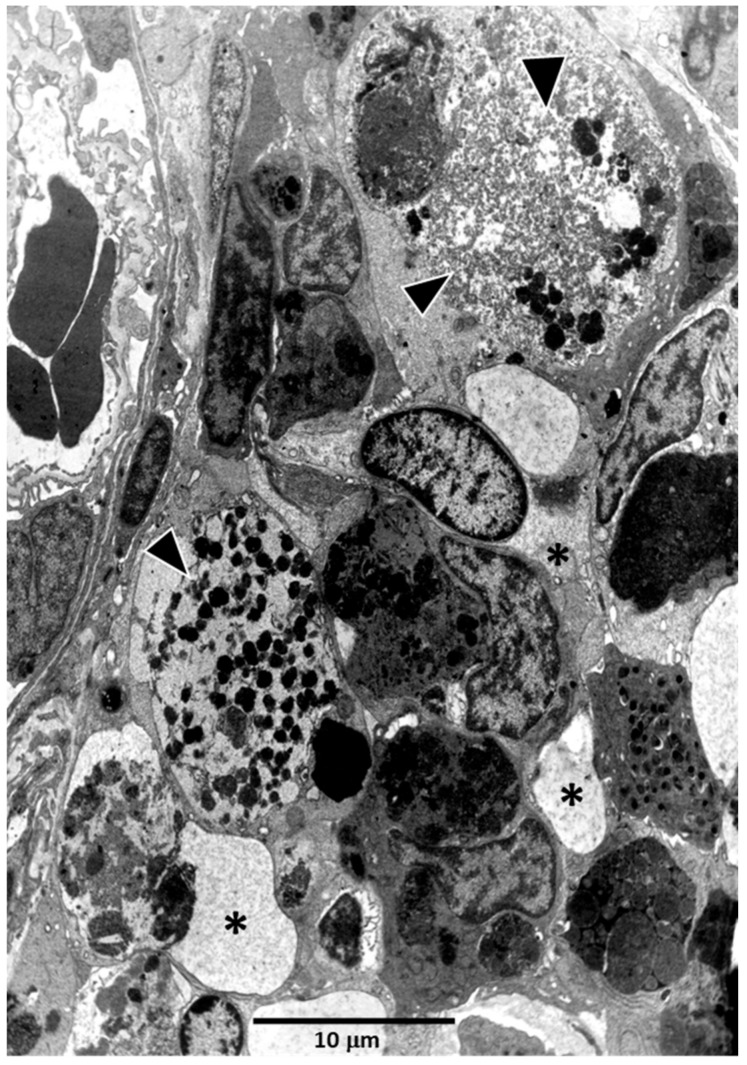
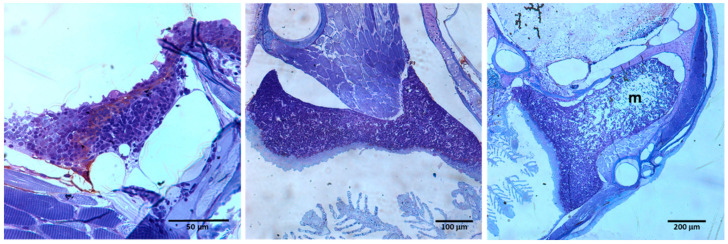
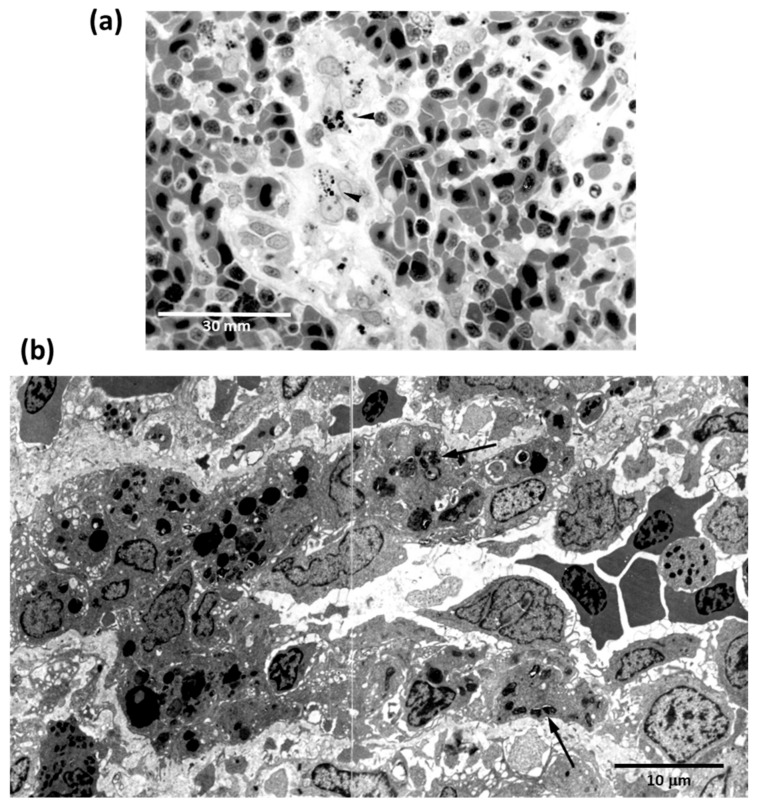
In the last 50 years information on the fish immune system has increased importantly, particularly that on species of marked commercial interest (i.e., salmonids, cods, catfish, sea breams), that occupy a key position in the vertebrate phylogenetical tree (i.e., Agnatha, Chondrichtyes, lungfish) or represent consolidated experimental models, such as zebrafish or medaka. However, most obtained information was based on genetic sequence analysis with little or no information on the cellular basis of the immune responses. Although jawed fish contain a thymus and lympho-hematopoietic organs equivalents to mammalian bone marrow, few studies have accounted for the presumptive relationships between the organization of these cell microenvironments and the known immune capabilities of the fish immune system. In the current review, we analyze this topic providing information on: (1) The origins of T and B lymphopoiesis in Agnatha and jawed fish; (2) the remarkable organization of the thymus of teleost fish; (3) the occurrence of numerous, apparently unrelated organs housing lympho-hematopoietic progenitors and, presumably, B lymphopoiesis; (4) the existence of fish immunological memory in the absence of germinal centers.
在过去的50年里,关于鱼类免疫系统的信息有了显著增加,尤其是那些具有重大商业价值的物种(如鲑科鱼类、鳕鱼、鲶鱼、海鲷),它们在脊椎动物系统发育树中占据关键位置(如无颌类、软骨鱼类、肺鱼),或者是成熟的实验模型,如斑马鱼或青鳉。然而,大多数已获得的信息是基于基因序列分析,关于免疫反应细胞基础的信息很少或几乎没有。虽然有颌鱼类拥有与哺乳动物骨髓等效的胸腺和淋巴造血器官,但很少有研究探讨这些细胞微环境的组织与鱼类免疫系统已知免疫能力之间的假定关系。在本综述中,我们分析了这个主题,提供了以下方面的信息:(1)无颌类和有颌鱼类中T和B淋巴细胞生成的起源;(2)硬骨鱼类胸腺的显著组织结构;(3)存在众多容纳淋巴造血祖细胞以及推测的B淋巴细胞生成的、看似不相关的器官;(4)在没有生发中心的情况下鱼类免疫记忆的存在。