Fu Mei Rosemary, Li Yuan, Conway Catherine, Masone Alessandra, Fang Jinbo, Lee Christopher
School of Nursing-Camden, Rutgers, The State University of New Jersey, Camden, NJ 08102, USA.
West China School of Nursing, Sichuan University, Chengdu 610041, China.
Biomedicines. 2022 May 11;10(5):1111. doi: 10.3390/biomedicines10051111.
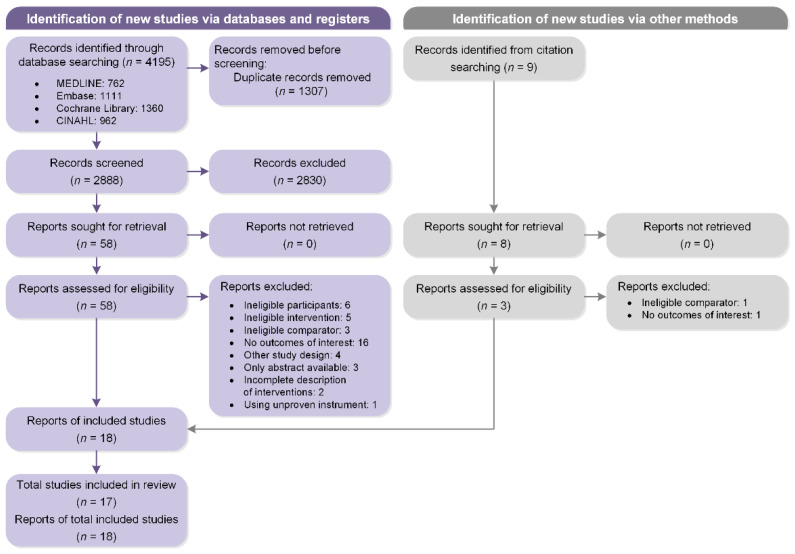
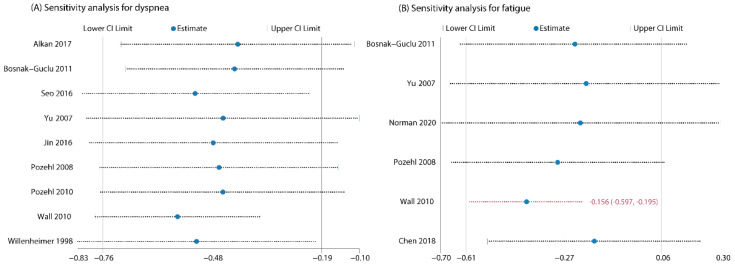
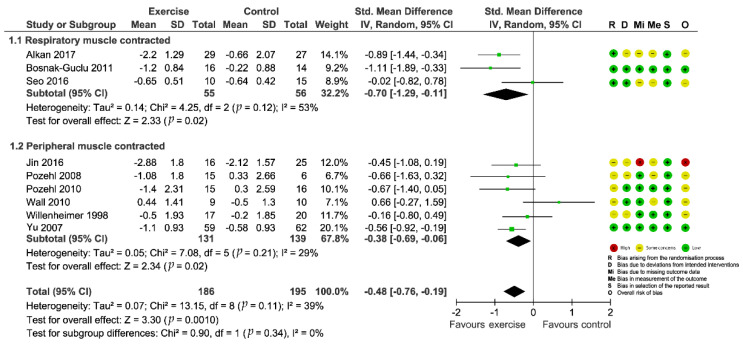
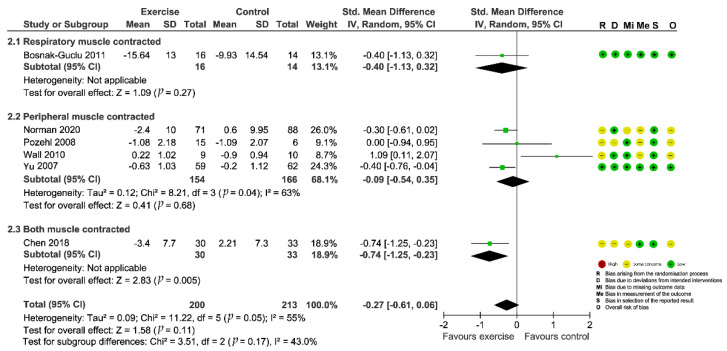
Patients with heart failure are subjected to a substantial burden related to fluid overload symptoms. Exercise can help the lymphatic system function more effectively to prevent fluid build-up in tissues and interstitium, thus potentially mitigating the symptoms due to fluid overload. The objective of this systematic review was to examine the effects of exercise-based interventions on fluid overload symptoms among patients with heart failure. MEDLINE, Embase, Cochrane Library, and CINAHL databases were systematically searched for relevant studies published from inception to August 2021. We included randomized controlled trials that compared exercise-based interventions of different modalities and usual medical care for adult patients with heart failure and reported the effects of interventions on any symptoms related to fluid overload. A random-effects meta-analysis was used to estimate the effectiveness, and a subgroup analysis and univariate meta-regression analysis were used to explore heterogeneity. Seventeen studies covering 1086 participants were included. We found robust evidence indicating the positive effect of exercises in dyspnea relief (SMD = -0.48; 95%CI [-0.76, -0.19]; = 0.001); the intervention length also influenced the treatment effect (β = 0.033; 95%CI [0.003, 0.063]; = 0.04). Initial evidence from existing limited research showed that exercise-based intervention had positive effect to alleviate edema, yet more studies are needed to verify the effect. In contrast, the exercise-based interventions did not improve fatigue compared with usual care (SMD = -0.27; 95%CI [-0.61, 0.06]; = 0.11). Findings regarding the effects of exercises on bodily pain, gastro-intestinal symptoms, and peripheral circulatory symptoms were inconclusive due to limited available studies. In conclusion, exercise-based interventions can be considered as an effective nonpharmacological therapy for patients with heart failure to promote lymph flow and manage fluid overload symptoms. Exercise-based interventions seem to have very limited effect on fatigue. More research should investigate the mechanism of fatigue related to heart failure. Future studies with high methodological quality and comprehensive assessment of symptoms and objective measure of fluid overload are warranted.
心力衰竭患者承受着与液体超负荷症状相关的沉重负担。运动可以帮助淋巴系统更有效地发挥功能,防止液体在组织和间质中积聚,从而有可能减轻因液体超负荷引起的症状。本系统评价的目的是研究基于运动的干预措施对心力衰竭患者液体超负荷症状的影响。我们系统检索了MEDLINE、Embase、Cochrane图书馆和CINAHL数据库,以查找从数据库建立至2021年8月发表的相关研究。我们纳入了比较不同形式的基于运动的干预措施与成年心力衰竭患者常规医疗护理的随机对照试验,并报告了干预措施对任何与液体超负荷相关症状的影响。采用随机效应荟萃分析来估计有效性,并采用亚组分析和单变量荟萃回归分析来探讨异质性。纳入了17项研究,共1086名参与者。我们发现有力证据表明运动对缓解呼吸困难有积极作用(标准化均数差=-0.48;95%置信区间[-0.76,-0.19];P=0.001);干预时长也影响治疗效果(β=0.033;95%置信区间[0.003,0.063];P=0.04)。现有有限研究的初步证据表明,基于运动的干预措施对减轻水肿有积极作用,但仍需要更多研究来验证这一效果。相比之下,与常规护理相比,基于运动的干预措施并未改善疲劳症状(标准化均数差=-0.27;95%置信区间[-0.61,0.06];P=0.11)。由于现有研究有限,关于运动对身体疼痛、胃肠道症状和外周循环症状影响的研究结果尚无定论。总之,基于运动的干预措施可被视为一种有效的非药物疗法,用于心力衰竭患者促进淋巴流动和管理液体超负荷症状。基于运动的干预措施对疲劳的影响似乎非常有限。更多研究应调查与心力衰竭相关的疲劳机制。未来需要开展具有高方法学质量且对症状进行全面评估以及对液体超负荷进行客观测量的研究。