Yang Waisley, Singla Rohit, Maheshwari Oshin, Fontaine Christine J, Gil-Mohapel Joana
Island Medical Program, Faculty of Medicine, University of British Columbia, Victoria, BC V8P 5C2, Canada.
Psychiatry Residency Program, Faculty of Medicine, University of British Columbia, Victoria, BC V8W 3P5, Canada.
Biomedicines. 2022 May 21;10(5):1192. doi: 10.3390/biomedicines10051192.
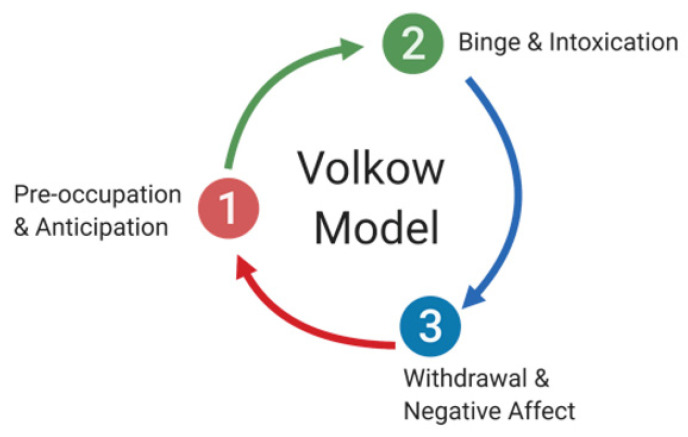
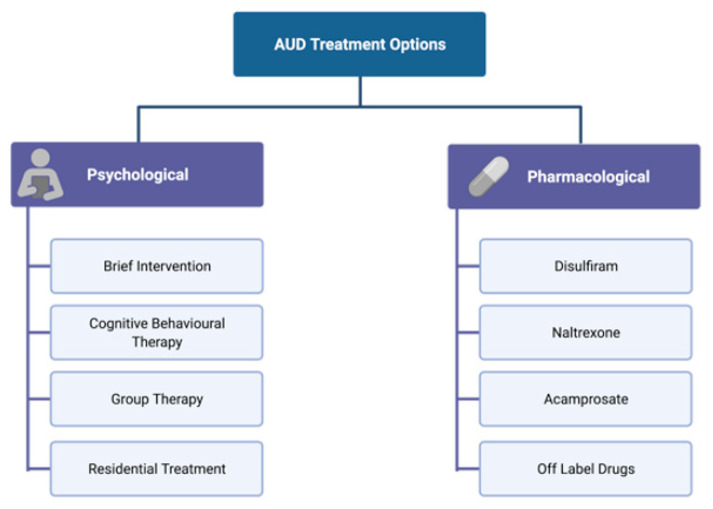
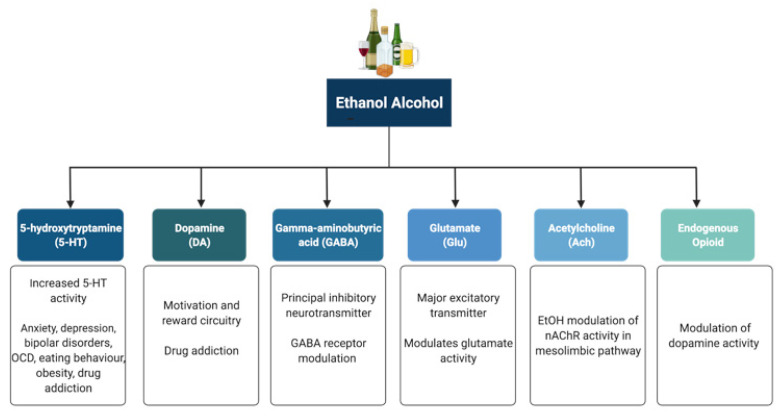
Alcohol use disorder (AUD) encompasses the dysregulation of multiple brain circuits involved in executive function leading to excessive consumption of alcohol, despite negative health and social consequences and feelings of withdrawal when access to alcohol is prevented. Ethanol exerts its toxicity through changes to multiple neurotransmitter systems, including serotonin, dopamine, gamma-aminobutyric acid, glutamate, acetylcholine, and opioid systems. These neurotransmitter imbalances result in dysregulation of brain circuits responsible for reward, motivation, decision making, affect, and the stress response. Despite serious health and psychosocial consequences, this disorder still remains one of the leading causes of death globally. Treatment options include both psychological and pharmacological interventions, which are aimed at reducing alcohol consumption and/or promoting abstinence while also addressing dysfunctional behaviours and impaired functioning. However, stigma and social barriers to accessing care continue to impact many individuals. AUD treatment should focus not only on restoring the physiological and neurological impairment directly caused by alcohol toxicity but also on addressing psychosocial factors associated with AUD that often prevent access to treatment. This review summarizes the impact of alcohol toxicity on brain neurocircuitry in the context of AUD and discusses pharmacological and non-pharmacological therapies currently available to treat this addiction disorder.
酒精使用障碍(AUD)包括参与执行功能的多个脑回路失调,导致酒精过度消费,尽管存在负面的健康和社会后果,且在无法获得酒精时会出现戒断症状。乙醇通过改变多种神经递质系统发挥其毒性作用,这些系统包括血清素、多巴胺、γ-氨基丁酸、谷氨酸、乙酰胆碱和阿片类系统。这些神经递质失衡导致负责奖赏、动机、决策、情感和应激反应的脑回路失调。尽管存在严重的健康和心理社会后果,但这种障碍仍然是全球主要死因之一。治疗选择包括心理和药物干预,旨在减少酒精消费和/或促进戒酒,同时解决功能失调行为和功能受损问题。然而,寻求治疗的耻辱感和社会障碍继续影响着许多人。AUD治疗不仅应专注于恢复由酒精毒性直接导致的生理和神经损伤,还应解决与AUD相关的心理社会因素,这些因素常常阻碍人们获得治疗。本综述总结了在AUD背景下酒精毒性对脑神经网络的影响,并讨论了目前可用于治疗这种成瘾性障碍的药物和非药物疗法。