Department of Health Sciences, The Graduate School of Dong-A University, 840 Hadan-dong, Saha-gu, Busan 49315, Korea.
Department of Physiology, College of Korean Medicine, Kyung Hee University, 26-6 Kyungheedae-ro, Dongdaemoon-gu, Seoul 02453, Korea.
Int J Mol Sci. 2022 May 10;23(10):5292. doi: 10.3390/ijms23105292.
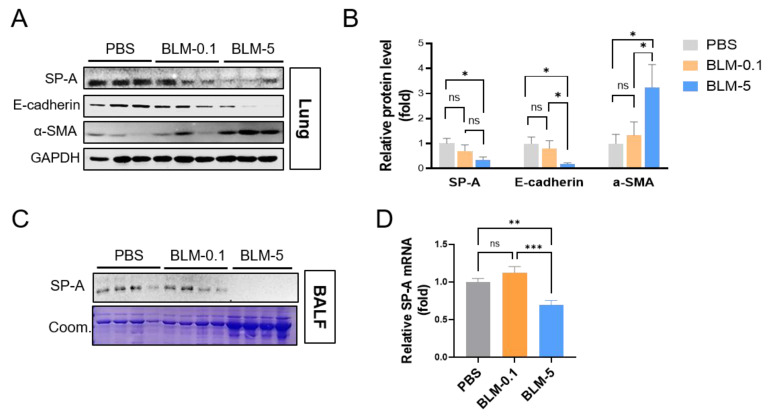
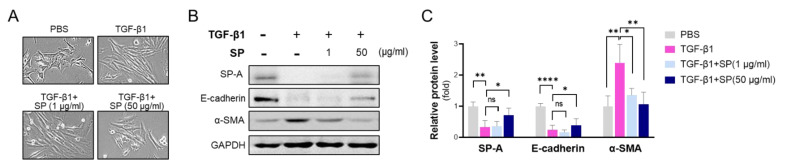
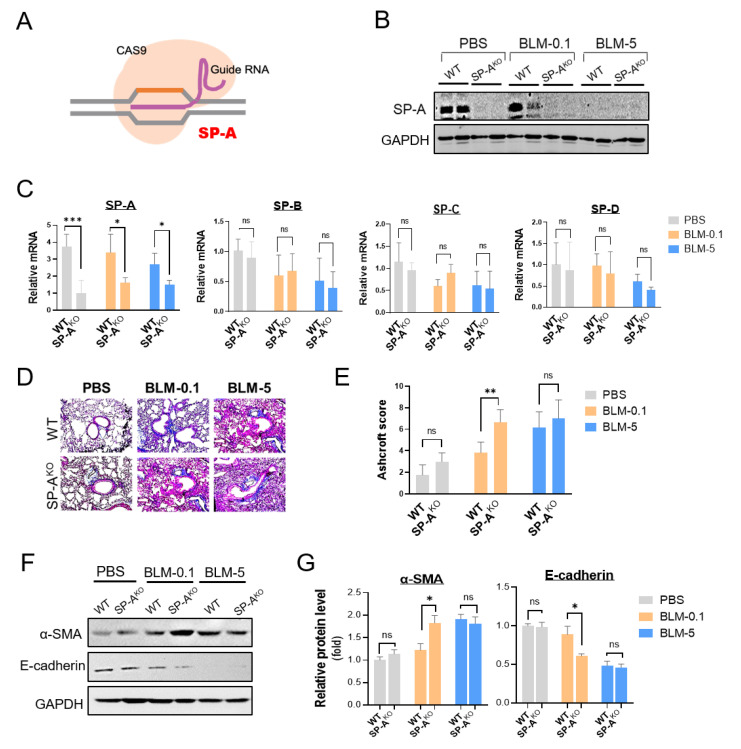
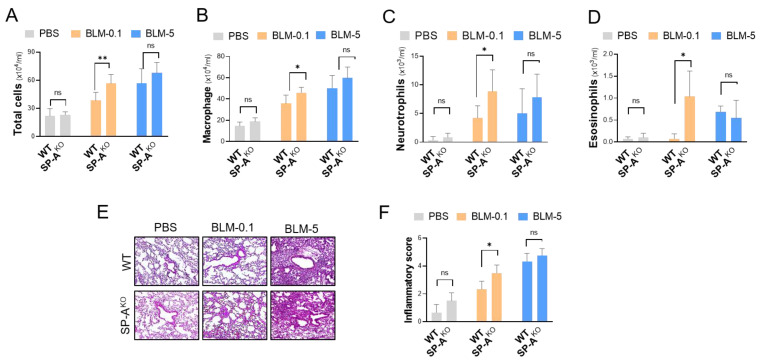
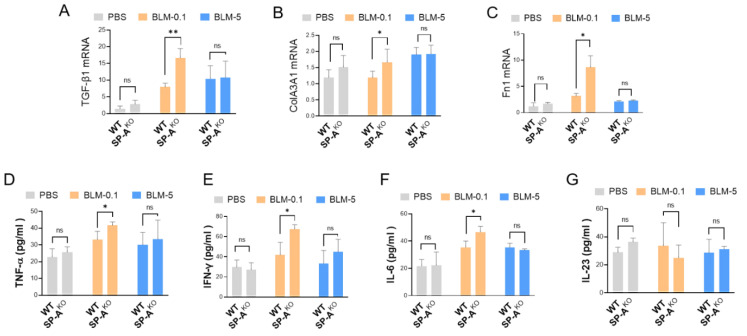
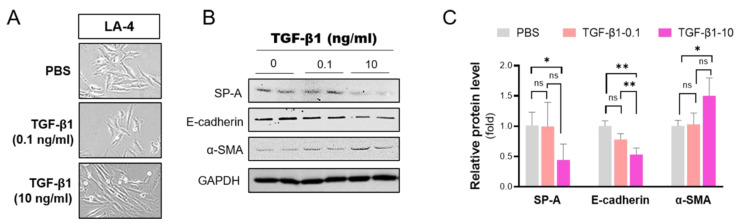
Idiopathic pulmonary fibrosis (IPF) is a devastating and common chronic lung disease that is pathologically characterized by the destruction of lung architecture and the accumulation of extracellular matrix in the lung. Previous studies have shown an association between lung surfactant protein (SP) and the pathogenesis of IPF, as demonstrated by mutations and the altered expression of SP in patients with IPF. However, the role of SP in the development of lung fibrosis is poorly understood. In this study, the role of surfactant protein A (SP-A) was explored in experimental lung fibrosis induced with a low or high dose of bleomycin (BLM) and CRISPR/Cas9-mediated genetic deletion of SP-A. Our results showed that lung SP-A deficiency in mice promoted the development of fibrotic damage and exacerbated inflammatory responses to the BLM challenge. In vitro experiments with murine lung epithelial LA-4 cells demonstrated that in response to transforming growth factor-β1 (TGF-β1), LA-4 cells had a decreased protein expression of SP-A. Furthermore, exogenous SP administration to LA-4 cells inhibited the TGF-β1-induced upregulation of fibrotic markers. Overall, these findings suggest a novel antifibrotic mechanism of SP-A in the development of lung fibrosis, which indicates the therapeutic potential of the lung SP-A in preventing the development of IPF.
特发性肺纤维化 (IPF) 是一种破坏性的常见慢性肺部疾病,其病理特征为肺结构破坏和细胞外基质在肺部积聚。先前的研究表明,肺表面活性剂蛋白 (SP) 与 IPF 的发病机制有关,这表现在 IPF 患者的 SP 基因突变和表达改变。然而,SP 在肺纤维化发展中的作用仍知之甚少。在这项研究中,我们用低剂量或高剂量博来霉素 (BLM) 和 CRISPR/Cas9 介导的 SP-A 基因缺失来诱导实验性肺纤维化,探讨了表面活性剂蛋白 A (SP-A) 的作用。我们的结果表明,小鼠肺 SP-A 缺乏促进了纤维化损伤的发展,并加重了 BLM 刺激引起的炎症反应。体外实验表明,在转化生长因子-β1 (TGF-β1) 的刺激下,LA-4 细胞中 SP-A 的蛋白表达减少。此外,外源性 SP 给药可抑制 LA-4 细胞 TGF-β1 诱导的纤维化标志物的上调。总之,这些发现提示 SP-A 在肺纤维化发展中具有一种新的抗纤维化机制,这表明肺 SP-A 具有预防 IPF 发展的治疗潜力。