Department of Medical Research, Kaohsiung Chang Gung Memorial Hospital, Kaohsiung 833401, Taiwan.
Department of Biotechnology, Kaohsiung Medical University, Kaohsiung 807017, Taiwan.
Int J Mol Sci. 2022 May 15;23(10):5524. doi: 10.3390/ijms23105524.
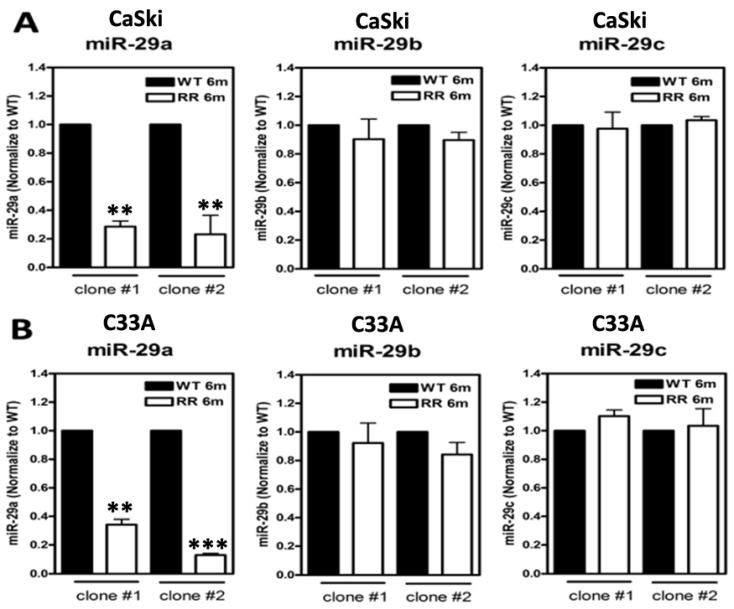
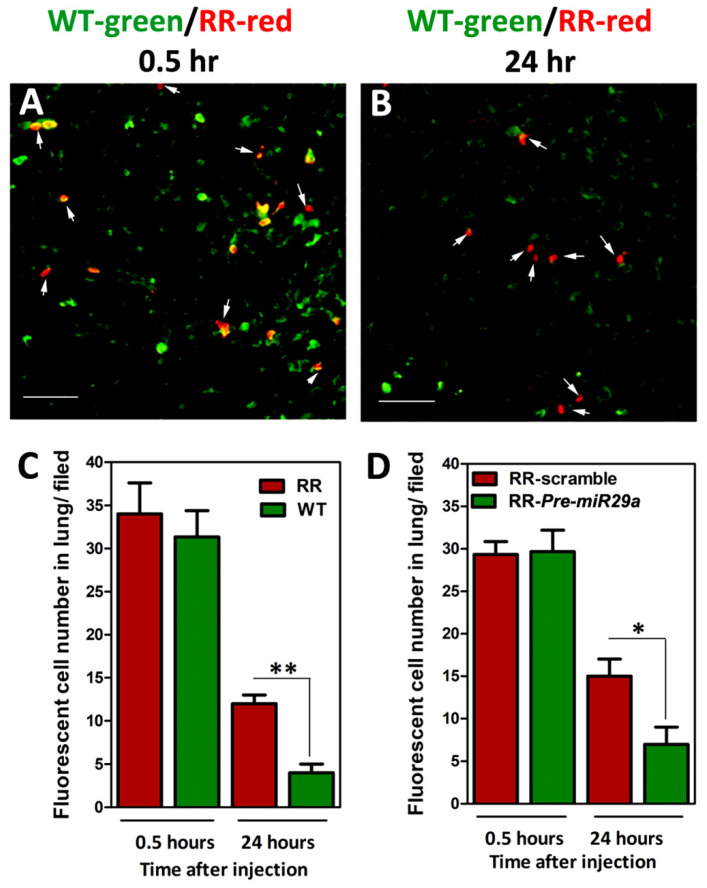
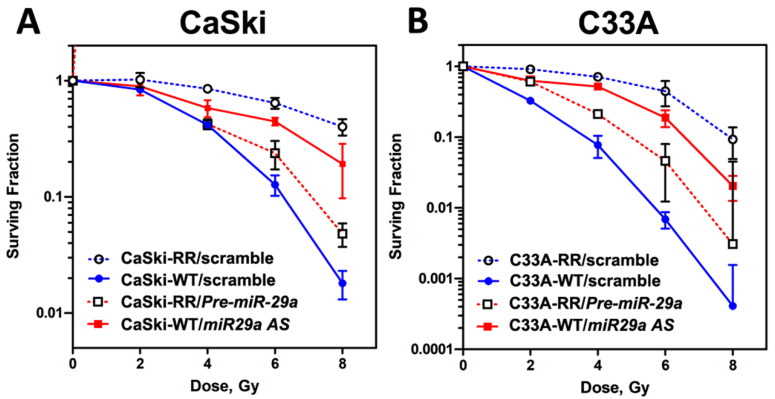
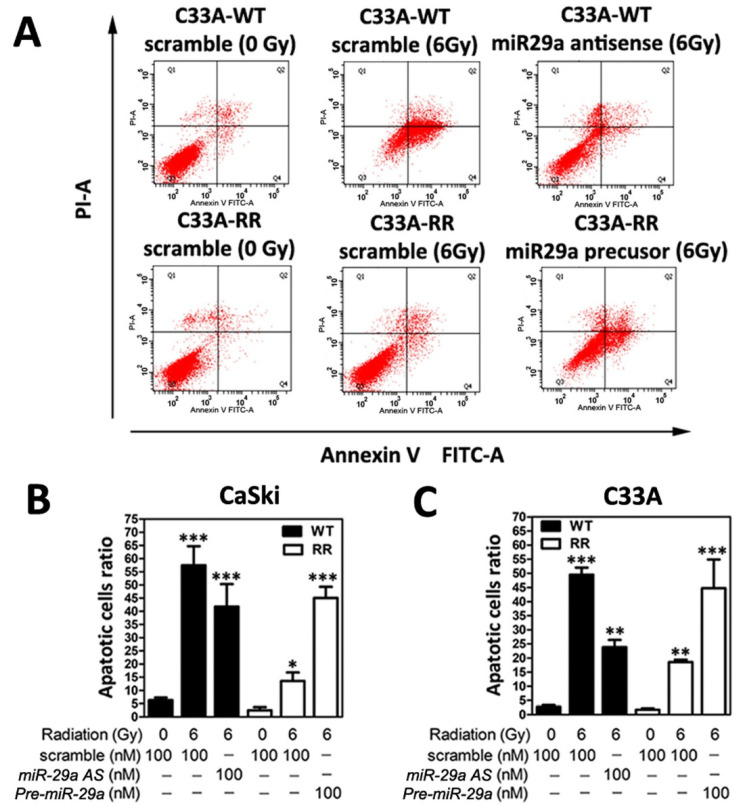
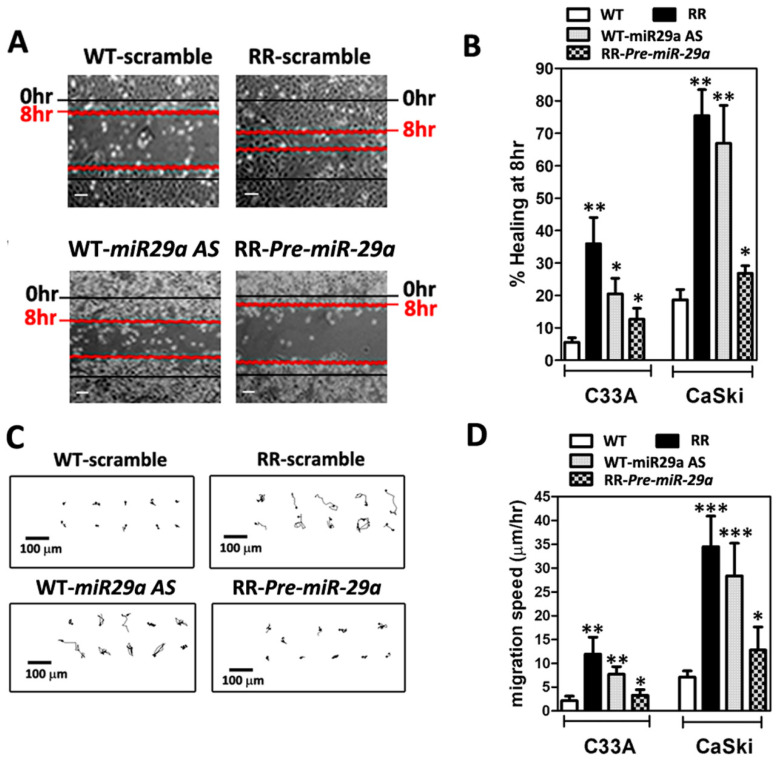
Radioresistance remains a major clinical challenge in cervical cancer therapy and results in tumor relapse and metastasis. Nevertheless, the detailed mechanisms are still largely enigmatic. This study was conducted to elucidate the prospective impacts of () on the modulation of radioresistance-associated cervical cancer progression. Herein, we established two pairs of parental wild-type (WT) and radioresistant (RR) cervical cancer cells (CaSki and C33A), and we found that constant suppressed but not was exhibited in RR-clones that underwent a dose of 6-Gy radiation treatment. Remarkably, radioresistant clones displayed low radiosensitivity, and the reduced apoptosis rate resulted in augmented surviving fractions, measured by the clonogenic survival curve assay and the Annexin V/Propidium Iodide apoptosis assay, respectively. Overexpression of effectively intensified the radiosensitivity and triggered the cell apoptosis in RR-clones. In contrast, suppressed modestly abridged the radiosensitivity and abolished the cell apoptosis in WT-clones. Hence, ectopically introduced into RR-clones notably attenuated the wound-healing rate and cell migration, whereas reduced aggravated cell mobilities of WT-clones estimated via the in vitro wound-healing assay and time-lapse recording assay. Notably, we further established the in vivo short-term lung locomotion metastasis model in BALB/c nude mice, and we found that increased lung localization was shown after tail-vein injection of RR-CaSki cells compared to those of WT-CaSki cells. Amplified significantly eliminated the radioresistance-enhanced lung locomotion. Our data provide evidence suggesting that is a promising signature in radioresistance of cervical cancer cells and displays multifaceted innovative roles involved in anti-radioresistance, escalated apoptosis, and anti-cell migration/metastasis. Amalgamation of a nucleoid-based strategy () together with conventional radiotherapy may be an innovative and eminent strategy to intensify the radiosensitivity and further protect against the subsequent radioresistance and the potential metastasis in cervical cancer treatment.
放射抵抗仍然是宫颈癌治疗中的一个主要临床挑战,导致肿瘤复发和转移。然而,其详细机制在很大程度上仍然是个谜。本研究旨在阐明()对放射抵抗相关宫颈癌进展的调节的预期影响。在此,我们建立了两对亲本野生型(WT)和放射抵抗(RR)宫颈癌细胞(CaSki 和 C33A),我们发现,在接受 6-Gy 辐射处理的 RR-克隆中,持续抑制()但不抑制()。引人注目的是,放射抵抗克隆显示出低放射敏感性,并且减少的细胞凋亡率导致存活分数增加,分别通过集落形成存活曲线测定和 Annexin V/碘化丙啶凋亡测定来测量。过表达()有效地增强了 RR-克隆的放射敏感性并引发了细胞凋亡。相反,抑制()适度缩短了 WT-克隆的放射敏感性并消除了细胞凋亡。因此,外源性引入 RR-克隆中显著减弱了伤口愈合率和细胞迁移,而降低 WT-克隆中的()则加剧了细胞迁移。因此,外源性引入 RR-克隆中显著减弱了伤口愈合率和细胞迁移,而降低 WT-克隆中的()则加剧了细胞迁移。因此,外源性引入 RR-克隆中显著减弱了伤口愈合率和细胞迁移,而降低 WT-克隆中的()则加剧了细胞迁移。因此,外源性引入 RR-克隆中显著减弱了伤口愈合率和细胞迁移,而降低 WT-克隆中的()则加剧了细胞迁移。因此,外源性引入 RR-克隆中显著减弱了伤口愈合率和细胞迁移,而降低 WT-克隆中的()则加剧了细胞迁移。RR-CaSki 细胞比 WT-CaSki 细胞经尾静脉注射后显示出增加的肺部定位。扩增()显著消除了放射抵抗增强的肺部运动。我们的数据提供了证据表明,()是宫颈癌细胞放射抵抗的有前途的标志物,并显示出涉及抗放射抵抗、细胞凋亡增加和抗细胞迁移/转移的多方面创新作用。基于核小体的策略()与常规放射疗法的联合可能是一种创新和卓越的策略,可增强放射敏感性,并进一步防止宫颈癌治疗中随后的放射抵抗和潜在转移。