Paredes-Rojas Araceli, Palma-Ramos Alejandro, Castrillón-Rivera Laura Estela, Mendoza-Pérez Felipe, Navarro-González María Del Carmen, Arenas-Guzmán Roberto, Castañeda-Sánchez Jorge Ismael, Luna-Herrera Julieta
Departamento de Inmunología, Escuela Nacional de Ciencias Biológicas, Instituto Politécnico Nacional, Mexico City 11340, Mexico.
Departamento de Sistemas Biológicos, Universidad Autónoma Metropolitana Unidad Xochimilco, Mexico City 04960, Mexico.
J Fungi (Basel). 2022 Apr 23;8(5):437. doi: 10.3390/jof8050437.
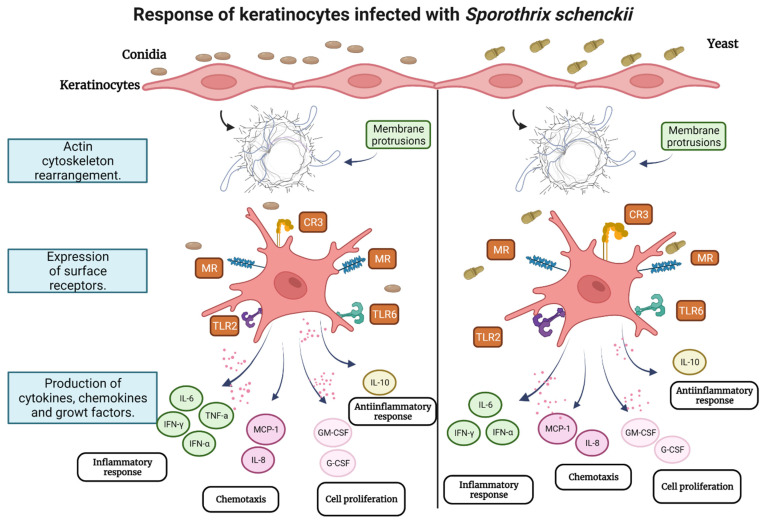
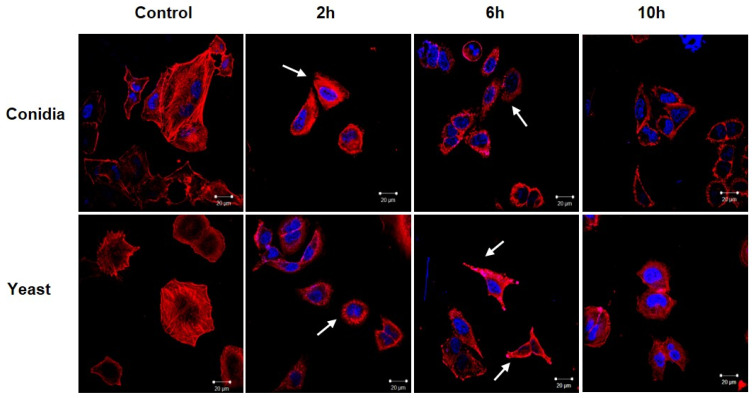
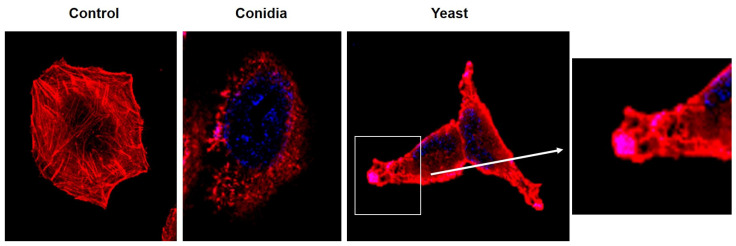
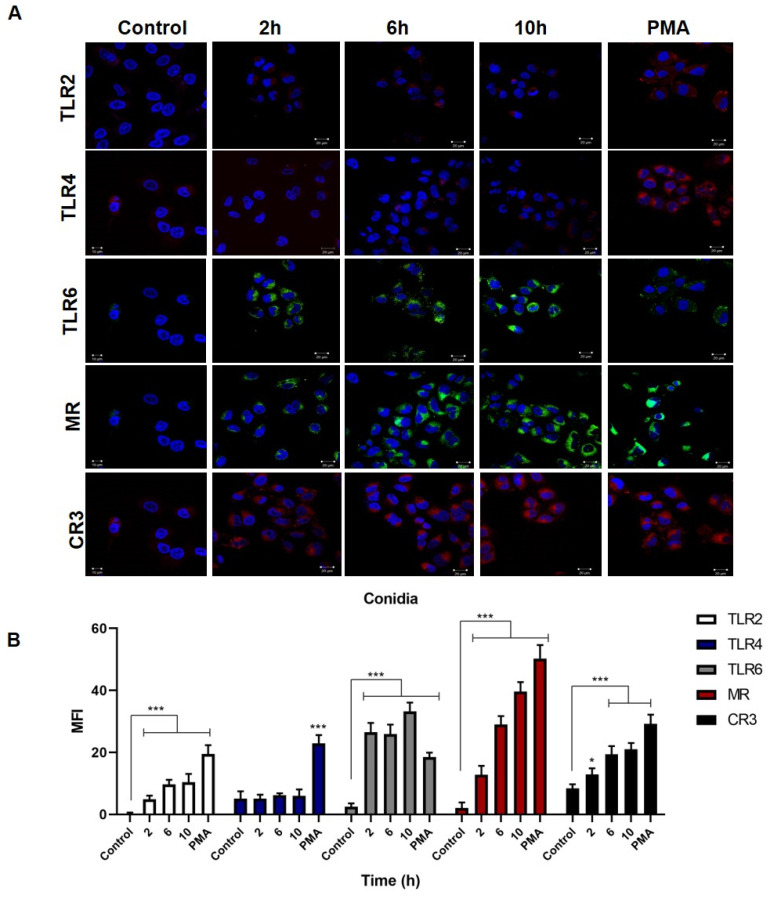
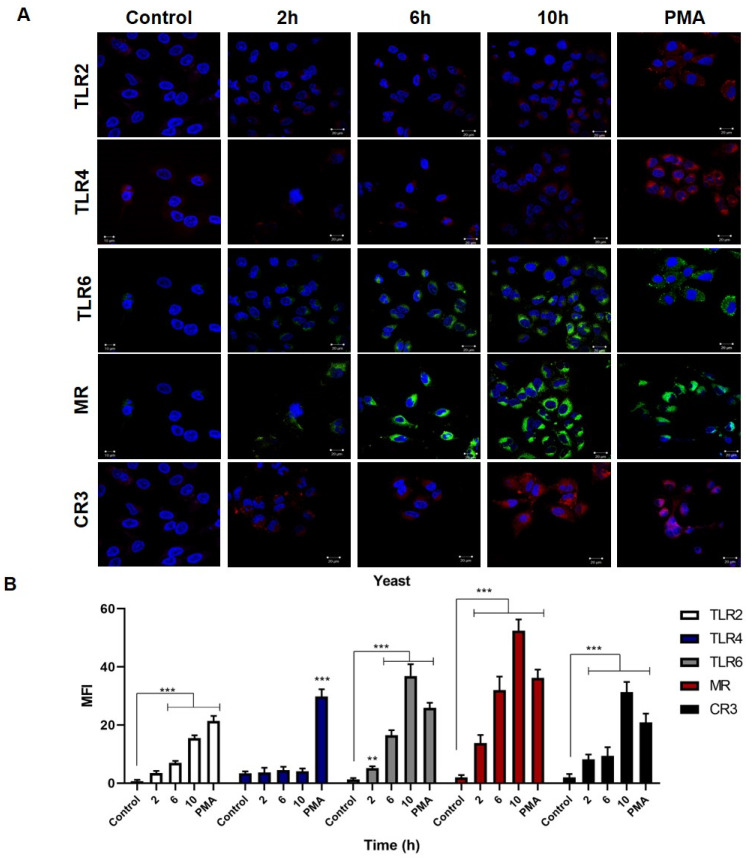
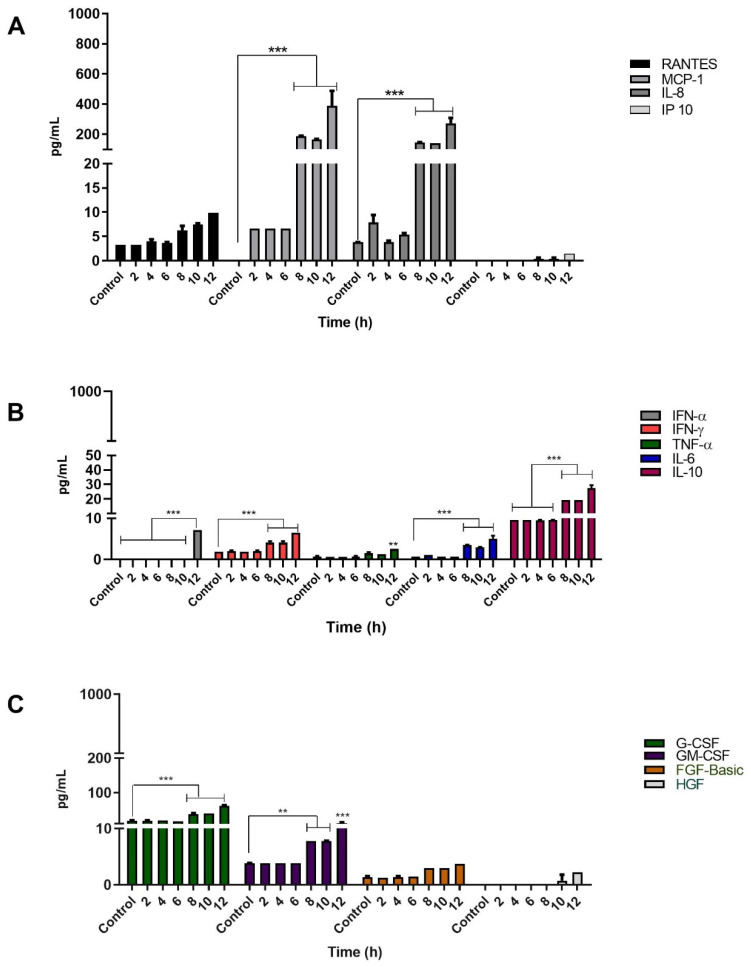
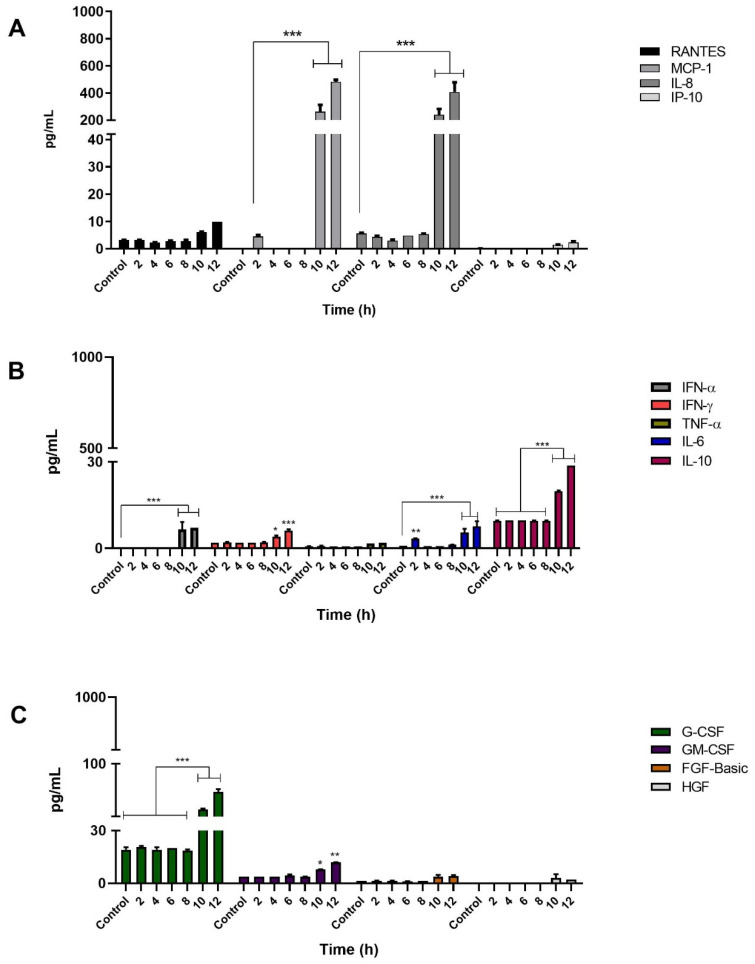
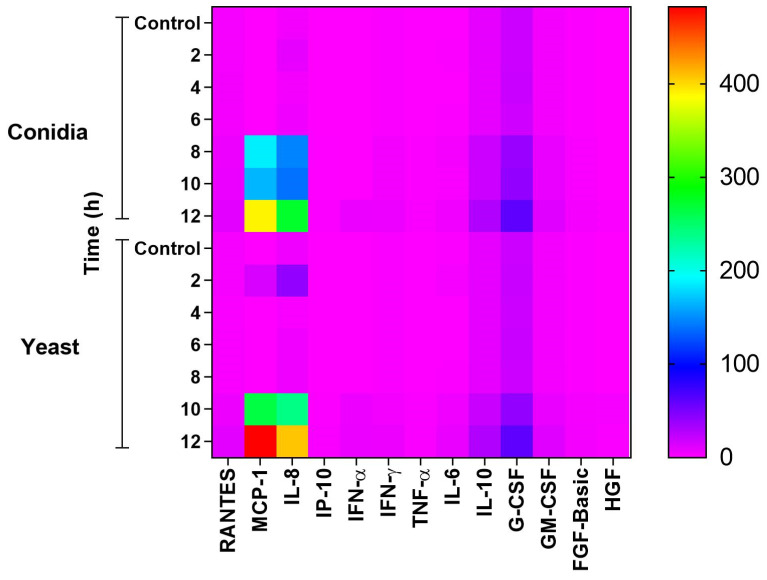
Sporotrichosis is a subacute, or chronic mycosis caused by traumatic inoculation of material contaminated with the fungus which is part of the spp. complex. The infection is limited to the skin, although its progression to more severe systemic or disseminated forms remains possible. Skin is the tissue that comes into contact with first, and the role of various cell lines has been described with regard to infection control. However, there is little information on the response of keratinocytes. In this study, we used the human keratinocyte cell line (HaCaT) and evaluated different aspects of infection from modifications in the cytoskeleton to the expression of molecules of the innate response during infection with conidia and yeast cells of . We found that during infection with both phases of the fungus, alterations of the actin cytoskeleton, formation of membrane protuberances, and loss of stress fibers were induced. We also observed an overexpression of the surface receptors MR, TLR6, CR3 and TLR2. Cytokine analysis showed that both phases of the fungus induced the production of elevated levels of the chemokines MCP-1 and IL-8, and proinflammatory cytokines IFN-α, IFN-γ and IL-6. In contrast, TNF-α production was significant only with conidial infection. In late post-infection, cytokine production was observed with immunoregulatory activity, IL-10, and growth factors, G-CSF and GM-CSF. In conclusion, infection of keratinocytes with conidia and yeast cells of induces an inflammatory response and rearrangements of the cytoskeleton.
孢子丝菌病是一种亚急性或慢性真菌病,由创伤性接种被申克孢子丝菌复合体真菌污染的物质引起。感染通常局限于皮肤,不过仍有可能进展为更严重的全身或播散形式。皮肤是首先接触申克孢子丝菌的组织,并且已经描述了各种细胞系在感染控制方面的作用。然而,关于角质形成细胞的反应却知之甚少。在本研究中,我们使用了人角质形成细胞系(HaCaT),并评估了在感染申克孢子丝菌分生孢子和酵母细胞期间,从细胞骨架的改变到固有免疫反应分子表达等感染的不同方面。我们发现,在感染真菌的两个阶段,肌动蛋白细胞骨架都会发生改变,形成膜突起,应力纤维消失。我们还观察到表面受体MR、TLR6、CR3和TLR2的过表达。细胞因子分析表明,真菌的两个阶段都会诱导趋化因子MCP-1和IL-8以及促炎细胞因子IFN-α、IFN-γ和IL-6的高水平产生。相比之下,仅在分生孢子感染时TNF-α的产生显著。在感染后期,观察到具有免疫调节活性的细胞因子IL-10以及生长因子G-CSF和GM-CSF的产生。总之,角质形成细胞被申克孢子丝菌分生孢子和酵母细胞感染会诱导炎症反应和细胞骨架重排。