Alonso-Alonso Maria Luz, Sampedro-Viana Ana, Rodríguez-Yáñez Manuel, López-Dequidt Iria, Pumar José M, Mosqueira Antonio J, Ouro Alberto, Ávila-Gómez Paulo, Sobrino Tomás, Campos Francisco, Castillo José, Hervella Pablo, Iglesias-Rey Ramón
Neuroimaging and Biotechnology Laboratory (NOBEL), Clinical Neurosciences Research Laboratory (LINC), Health Research Institute of Santiago de Compostela (IDIS), 15706 Santiago de Compostela, Spain.
Stroke Unit, Department of Neurology, Hospital Clínico Universitario, 15706 Santiago de Compostela, Spain.
J Clin Med. 2022 May 19;11(10):2874. doi: 10.3390/jcm11102874.
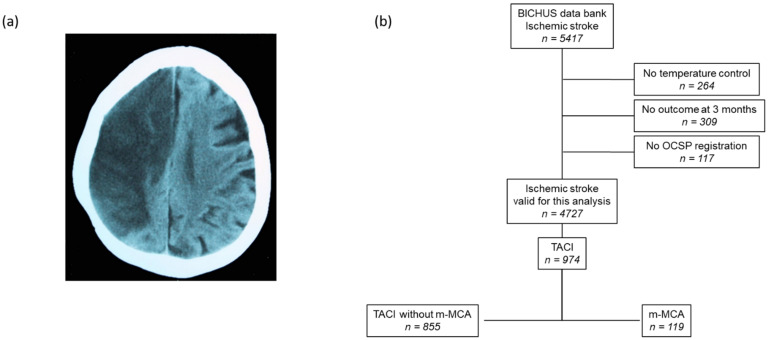
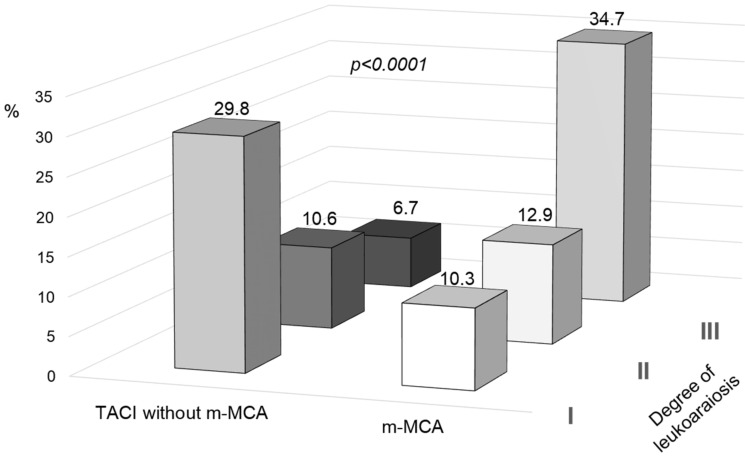
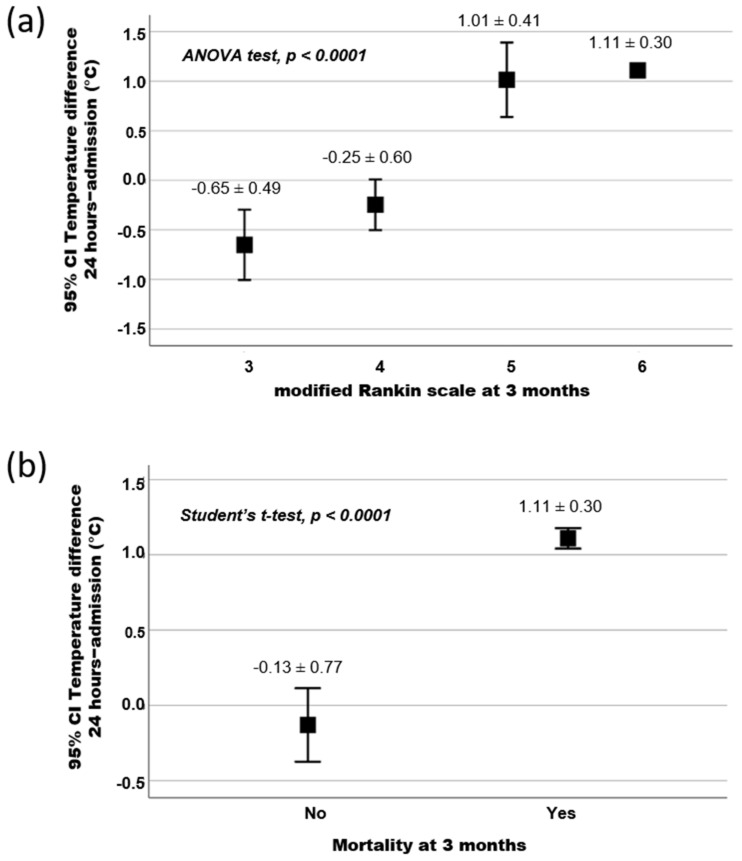
Malignant infarction of the middle cerebral artery (m-MCA) is a complication of ischemic stroke. Since hyperthermia is a predictor of poor outcome, and antihyperthermic treatment is well tolerated, our main aim was to analyze whether the systemic temperature decrease within the first 24 h was associated with a better outcome. Furthermore, we studied potential biochemical and neuroimaging biomarkers. This is a retrospective observational analysis that included 119 patients. The temperature variations within the first 24 h were recorded. Biochemical laboratory parameters and neuroimaging variables were also analyzed. The temperature increase at the first 24 h (OR: 158.97; CI 95%: 7.29−3465.61; p < 0.001) was independently associated with a higher mortality. Moreover, antihyperthermic treatment (OR: 0.08; CI 95%: 0.02−0.38; p = 0.002) was significantly associated with a good outcome at 3 months. Importantly, antihyperthermic treatment was associated with higher survival at 3 months (78% vs. 50%, p = 0.003). Significant independently associations between the development of m-MCA and both microalbuminuria (OR: 1.01; CI 95%: 1.00−1.02; p = 0.005) and leukoaraiosis (OR: 3.07; CI 1.84−5.13−1.02; p < 0.0001) were observed. Thus, antihyperthermic treatment within the first 24 h was associated with both a better outcome and higher survival. An increased risk of developing m-MCA was associated with leukoaraiosis and an elevated level of microalbuminuria.
大脑中动脉恶性梗死(m-MCA)是缺血性中风的一种并发症。由于体温过高是预后不良的一个预测指标,且抗高温治疗耐受性良好,我们的主要目的是分析在最初24小时内体温下降是否与更好的预后相关。此外,我们研究了潜在的生化和神经影像生物标志物。这是一项回顾性观察分析,纳入了119例患者。记录了最初24小时内的体温变化。还分析了生化实验室参数和神经影像变量。最初24小时体温升高(比值比:158.97;95%置信区间:7.29−3465.61;p<0.001)与较高的死亡率独立相关。此外,抗高温治疗(比值比:0.08;95%置信区间:0.02−0.38;p = 0.002)与3个月时的良好预后显著相关。重要的是,抗高温治疗与3个月时较高的生存率相关(78%对50%,p = 0.003)。观察到m-MCA的发生与微量白蛋白尿(比值比:1.01;95%置信区间:1.00−1.02;p = 0.005)和脑白质疏松症(比值比:3.07;置信区间1.84−5.13−1.02;p<0.0001)之间存在显著的独立关联。因此,最初24小时内的抗高温治疗与更好的预后和更高的生存率相关。m-MCA发生风险增加与脑白质疏松症和微量白蛋白尿水平升高有关。