Al-Nesf Amna, Mohamed-Ali Nada, Acquaah Vanessa, Al-Jaber Maneera, Al-Nesf Maryam, Yassin Mohamed A, Orie Nelson N, Voss Sven Christian, Georgakopoulos Costas, Bhatt Rikesh, Beotra Alka, Mohamed-Ali Vidya, Al-Maadheed Mohammed
Anti-Doping Lab Qatar, Doha P.O. Box 27775, Qatar.
Centre of Metabolism and Inflammation, UCL, London NW3 2PF, UK.
Metabolites. 2022 May 10;12(5):425. doi: 10.3390/metabo12050425.
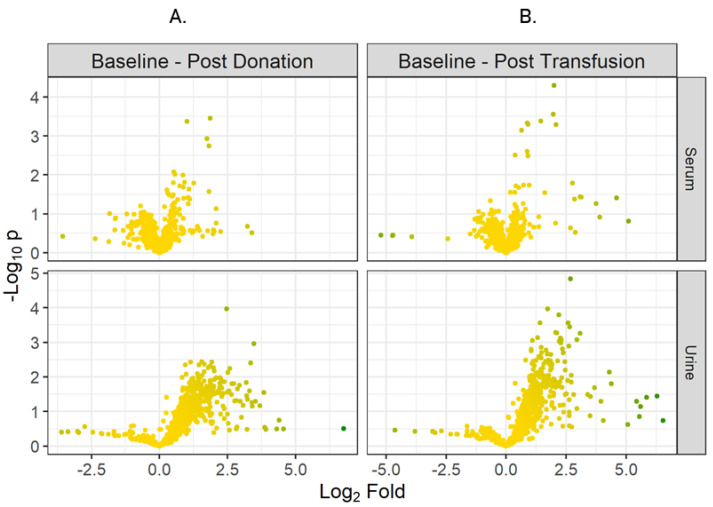
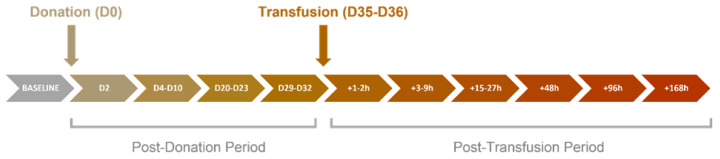
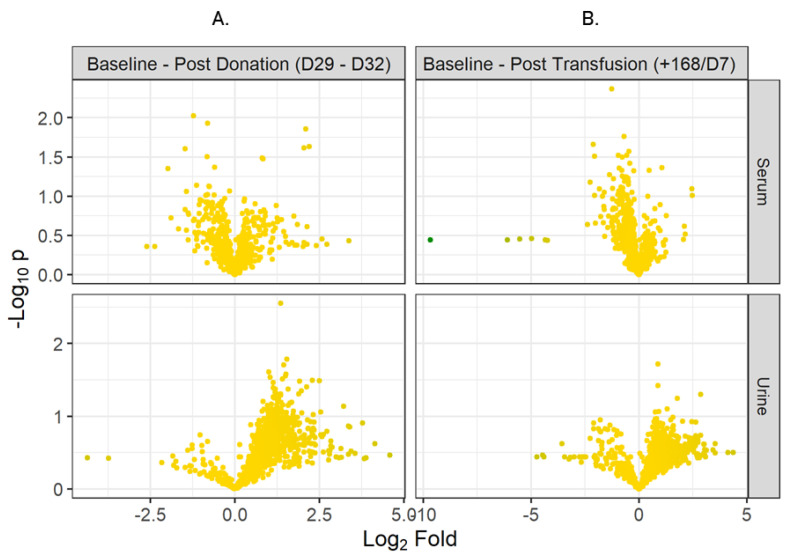
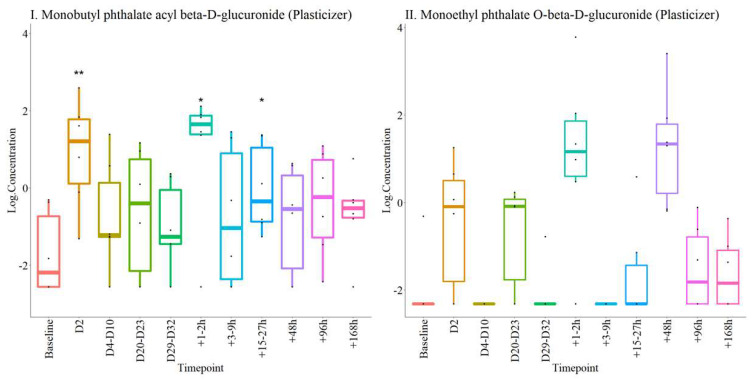
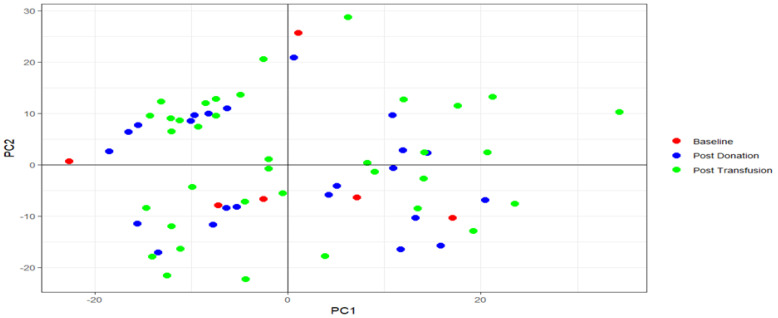
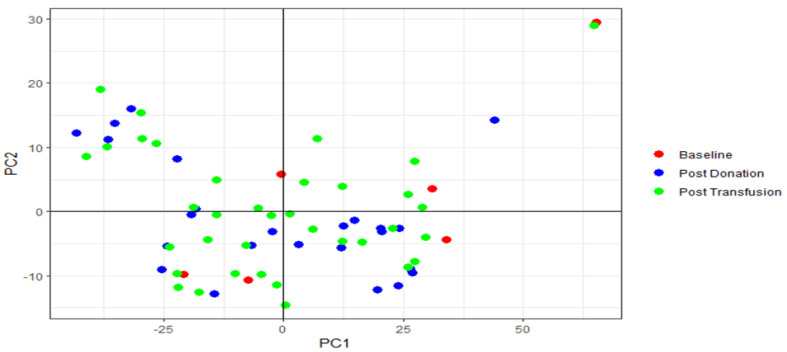
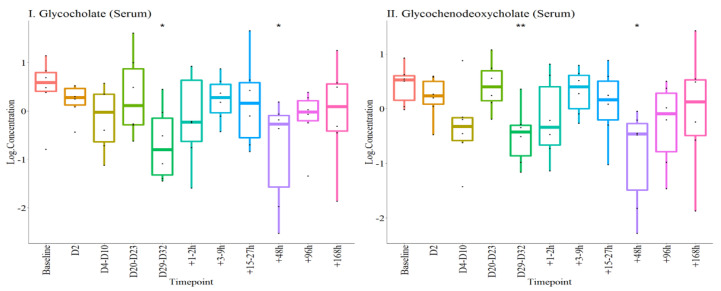
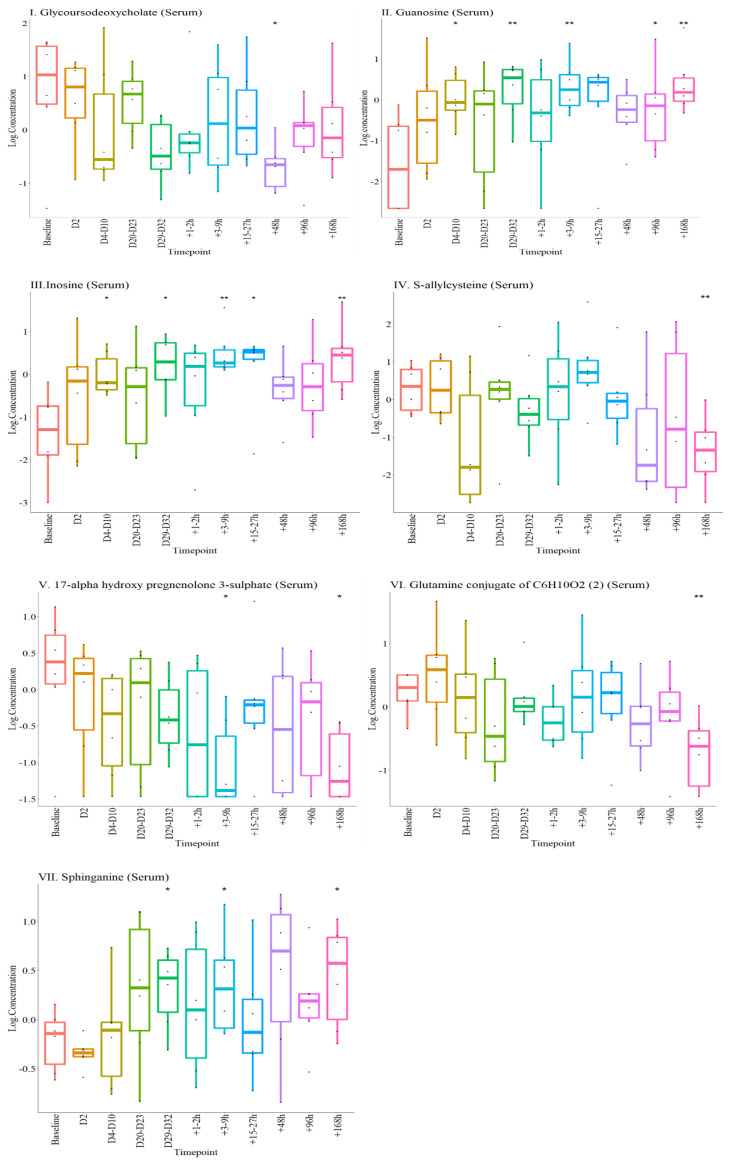
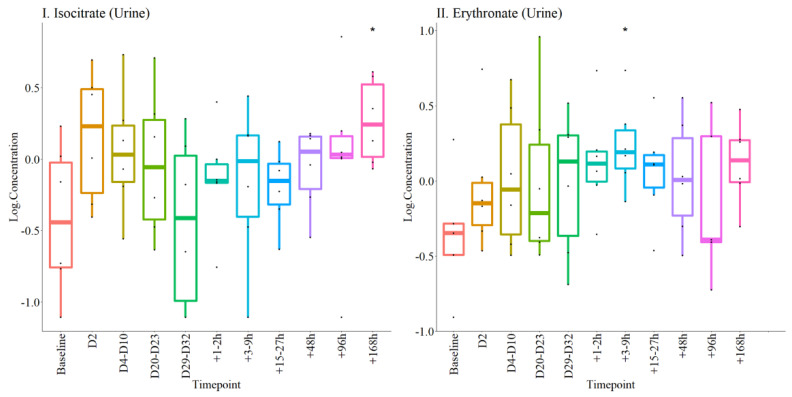
Untargeted metabolomics was used to analyze serum and urine samples for biomarkers of autologous blood transfusion (ABT). Red blood cell concentrates from donated blood were stored for 35−36 days prior to reinfusion into the donors. Participants were sampled at different time points post-donation and up to 7 days post-transfusion. Metabolomic profiling was performed using ACQUITY ultra performance liquid chromatography (UPLC), Q-Exactive high resolution/accurate mass spectrometer interfaced with a heated electrospray ionization (HESI-II) source and Orbitrap mass analyzer operated at 35,000 mass resolution. The markers of ABT were determined by principal component analysis and metabolites that had p < 0.05 and met ≥ 2-fold change from baseline were selected. A total of 11 serum and eight urinary metabolites, including two urinary plasticizer metabolites, were altered during the study. By the seventh day post-transfusion, the plasticizers had returned to baseline, while changes in nine other metabolites (seven serum and two urinary) remained. Five of these metabolites (serum inosine, guanosine and sphinganine and urinary isocitrate and erythronate) were upregulated, while serum glycourdeoxycholate, S-allylcysteine, 17-alphahydroxypregnenalone 3 and Glutamine conjugate of C6H10O2 (2)* were downregulated. This is the first study to identify a panel of metabolites, from serum and urine, as markers of ABT. Once independently validated, it could be universally adopted to detect ABT.
非靶向代谢组学用于分析血清和尿液样本中的自体输血(ABT)生物标志物。献血采集的红细胞浓缩物在回输给献血者之前储存35 - 36天。在献血后的不同时间点以及输血后长达7天对参与者进行采样。使用ACQUITY超高效液相色谱(UPLC)、与加热电喷雾电离(HESI-II)源接口的Q-Exactive高分辨率/精确质量质谱仪以及在35,000质量分辨率下运行的Orbitrap质量分析仪进行代谢组学分析。通过主成分分析确定ABT的标志物,并选择p < 0.05且相对于基线变化≥2倍的代谢物。在研究过程中,共有11种血清代谢物和8种尿液代谢物发生了变化,其中包括两种尿液增塑剂代谢物。到输血后第7天,增塑剂已恢复到基线水平,而其他9种代谢物(7种血清代谢物和2种尿液代谢物)的变化仍然存在。这些代谢物中有5种(血清中的肌苷、鸟苷和鞘氨醇以及尿液中的异柠檬酸和赤藓糖酸盐)上调,而血清甘氨脱氧胆酸盐、S-烯丙基半胱氨酸、17-α羟基孕烯醇酮3和C6H10O2(2)*的谷氨酰胺共轭物下调。这是第一项从血清和尿液中鉴定出一组代谢物作为ABT标志物的研究。一旦经过独立验证,它可被广泛用于检测ABT。