Institute of Medicinal Plant Development, Chinese Academy of Medical Sciences & Peking Union Medical College, Beijing 100193, China.
Beijing Wehand-Bio Pharmaceutical Co., Ltd., Beijing 102629, China.
Molecules. 2022 May 19;27(10):3245. doi: 10.3390/molecules27103245.
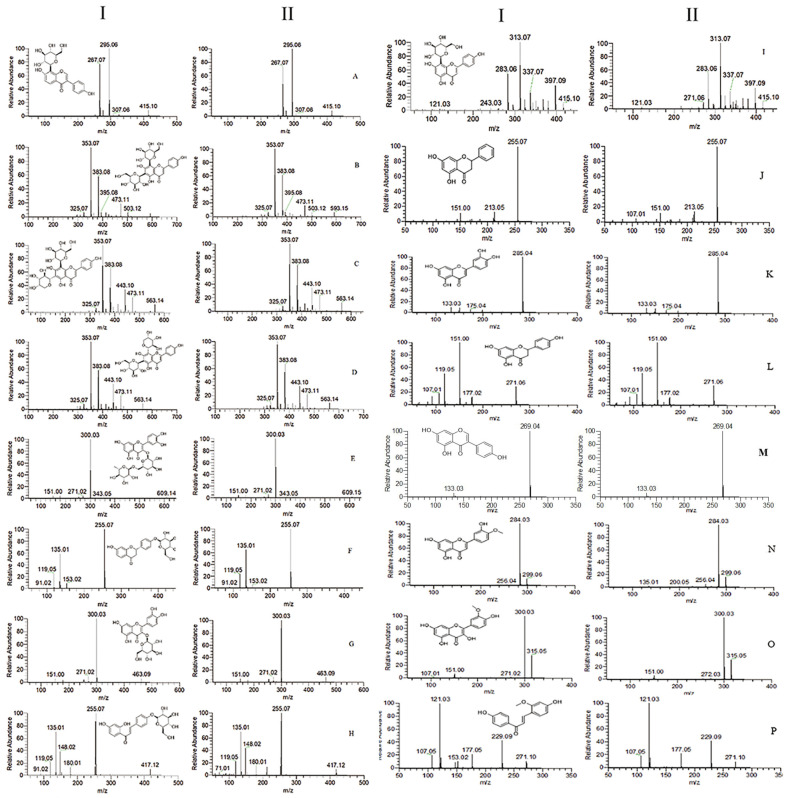
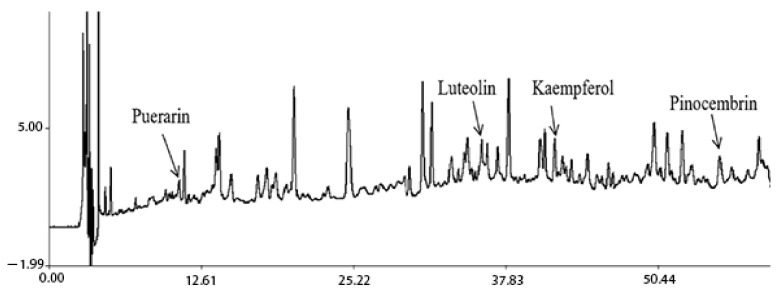
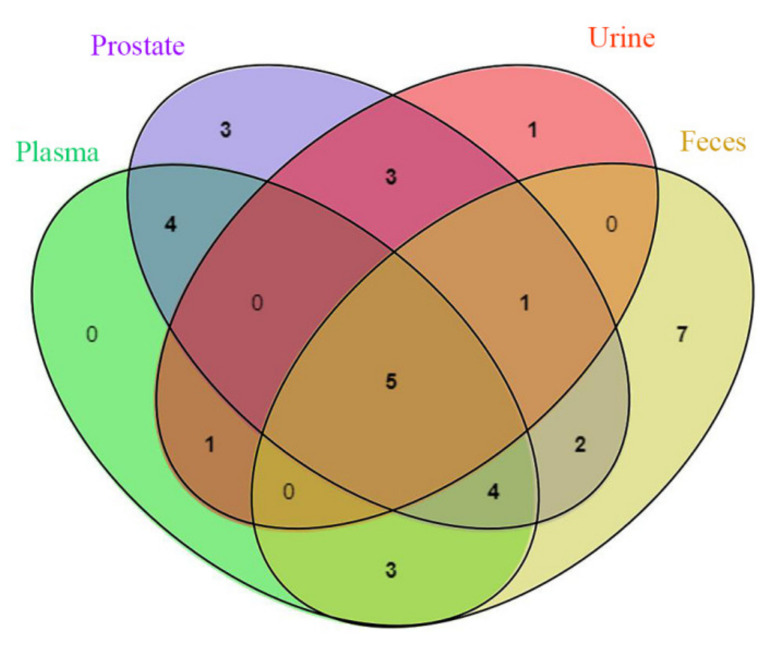
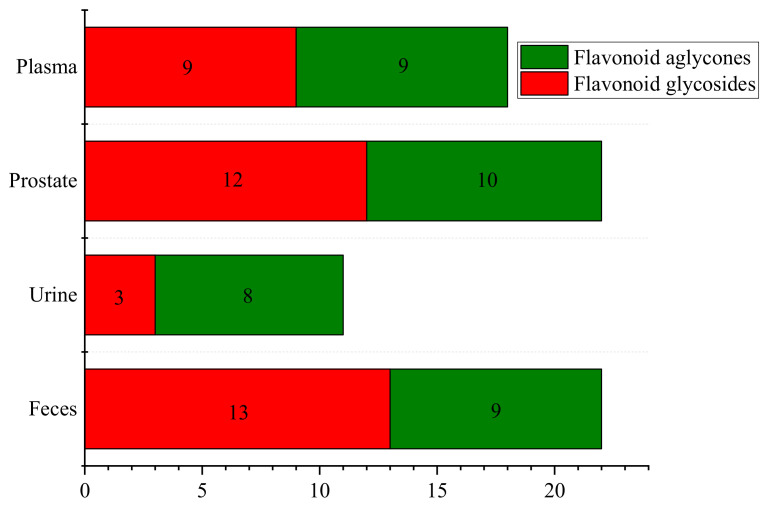
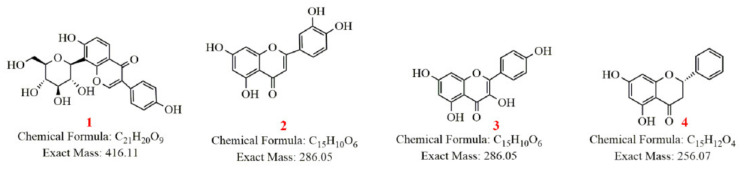
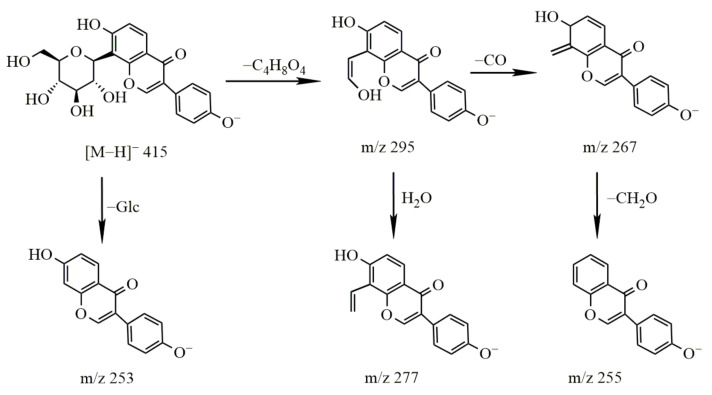
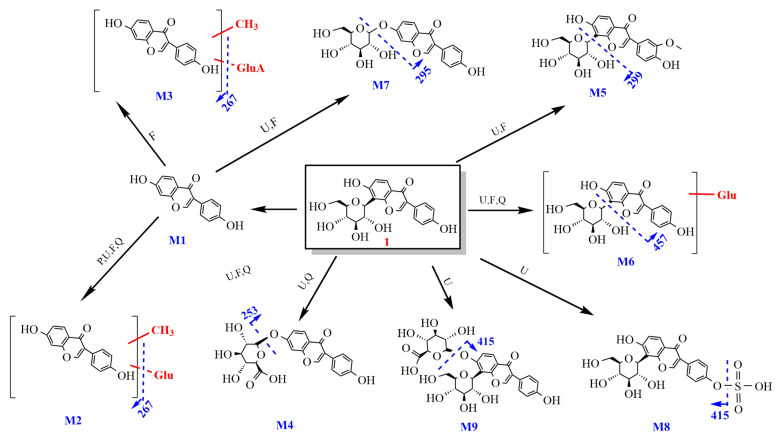
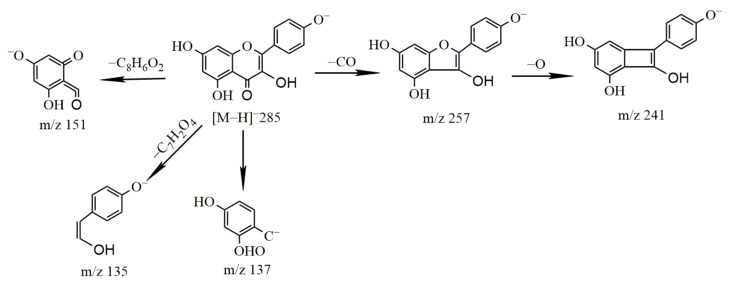
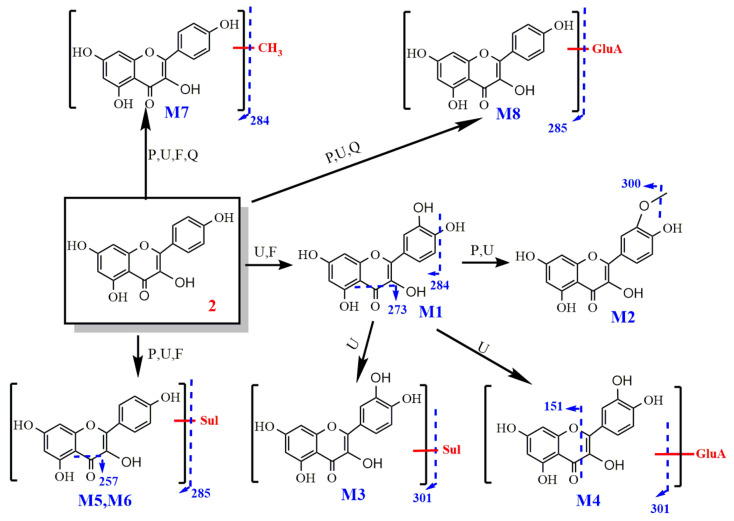
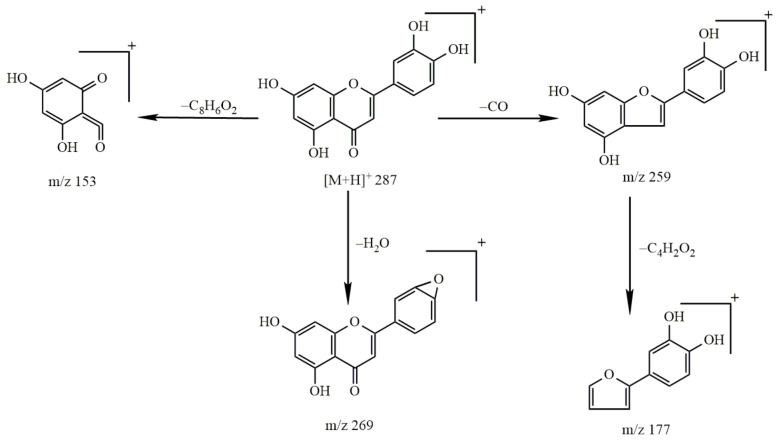
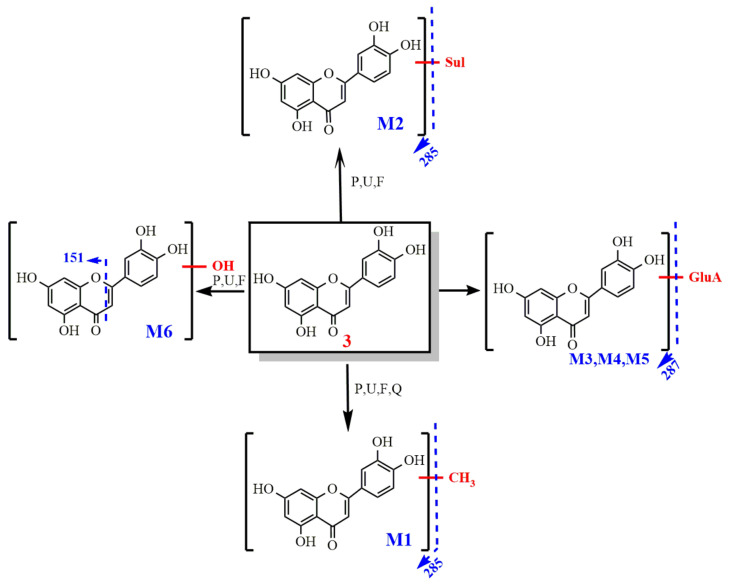
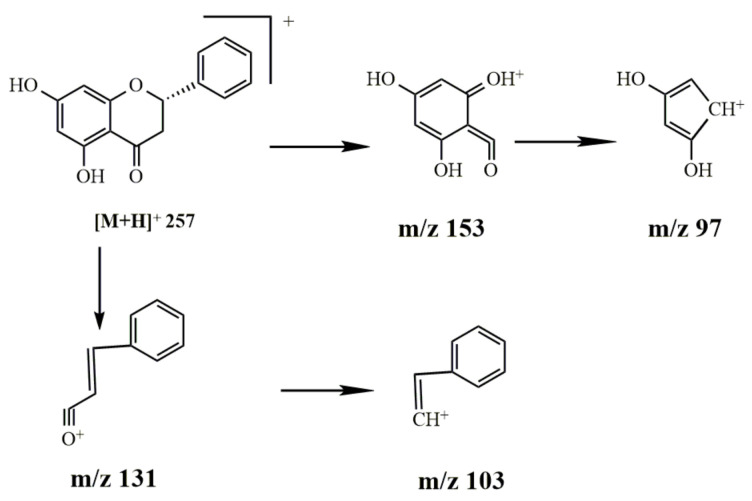
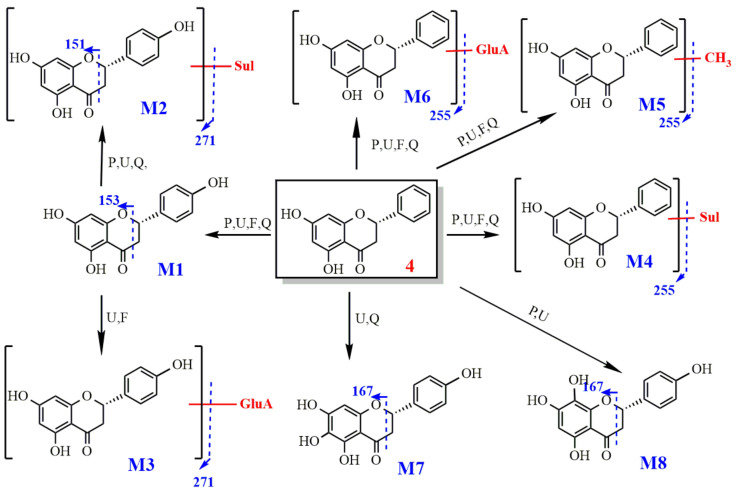
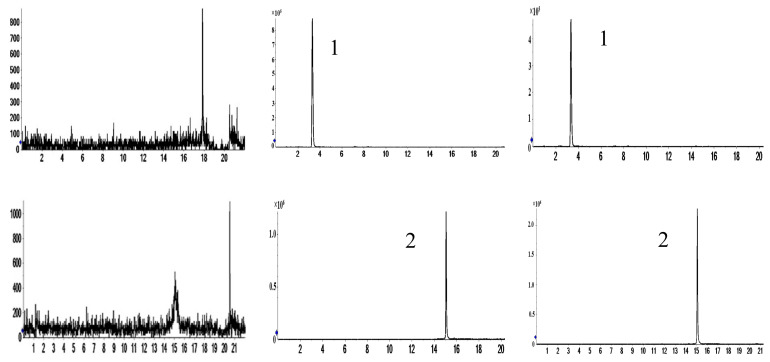
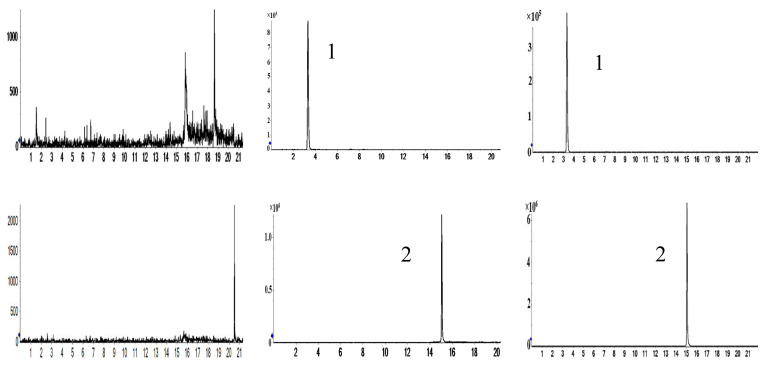
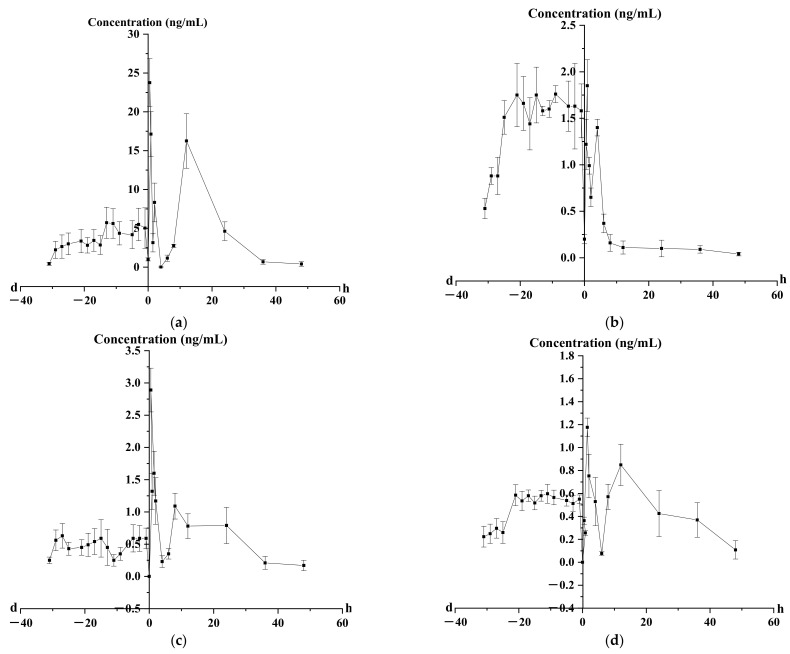
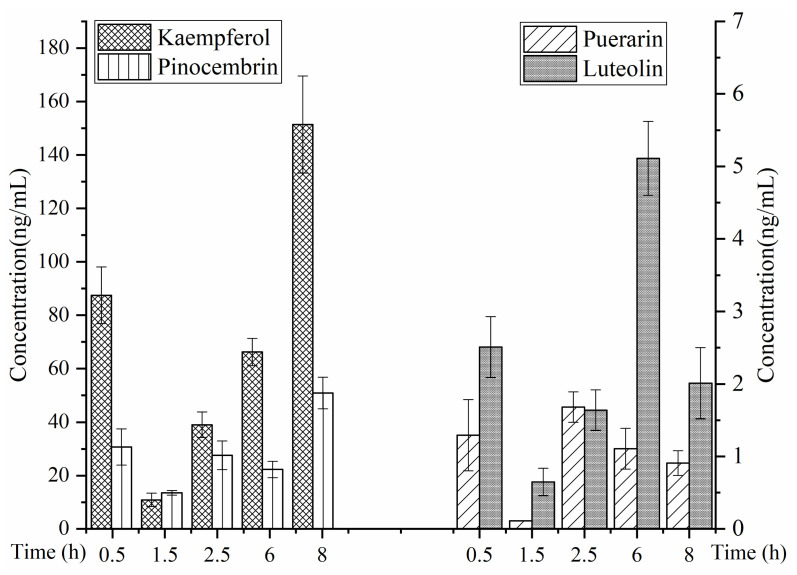
(1) Background: The aerial part of G. uralensis had pharmacological effects against chronic non-bacterial prostatitis (CNP), and flavonoids are the main efficacy components. The purpose of this study was to obtain the pharmacokinetics, prostate distribution and metabolic characteristics of some flavonoids in rats. (2) Methods: The prototype flavones and the metabolites of four representative flavonoids, namely puerarin, luteolin, kaempferol and pinocembrin in plasma, prostate, urine and feces of rats were analyzed by UPLC-Q-Exactive Orbitrap-MS. In addition, the pharmacokinetic parameters in plasma and distribution of prostate of four components were analyzed by HPLC-MS/MS. (3) Results: In total, 22, 17, 22 and 11 prototype flavones were detected in the prostate, plasma, urine and feces, respectively. The metabolites of puerarin in the prostate are hydrolysis and glucose-conjugated products, the metabolites of kaempferol and luteolin in the prostate are methylation and glucuronidation, and the metabolites of pinocembrin in the prostate are naringenin, oxidation, sulfation, methylation and glucuronidation products. The t1/2 of puerarin, luteolin, kaempferol and pinocembrin was 6.43 ± 0.20, 31.08 ± 1.17, 18.98 ± 1.46 and 13.18 ± 0.72 h, respectively. The concentrations of the four flavonoids in prostate were ranked as kaempferol > pinocembrin > luteolin > puerarin. (4) Conclusions: Methylation and glucuronidation metabolites were the main metabolites detected in the prostate. A sensitive and validated HPLC−MS/MS method for simultaneous determination of puerarin, luteolin, kaempferol and pinocembrin in rat plasma and prostate was described, and it was successfully applied to the pharmacokinetic and prostate distribution studies.
(1) 背景:苍耳地上部分对慢性非细菌性前列腺炎(CNP)具有药理作用,而黄酮类化合物是其主要功效成分。本研究旨在获得黄酮类化合物在大鼠体内的药代动力学、前列腺分布和代谢特征。
(2) 方法:采用 UPLC-Q-Exactive Orbitrap-MS 分析大鼠血浆、前列腺、尿液和粪便中葛根素、木樨草素、山柰酚和松属素等 4 种代表性黄酮类化合物原型黄酮及其代谢产物。此外,采用 HPLC-MS/MS 分析了 4 种成分在血浆和前列腺中的药代动力学参数和分布。
(3) 结果:共在前列腺中检测到 22 种、17 种、22 种和 11 种原型黄酮,在血浆、尿液和粪便中分别检测到 17 种、22 种、11 种和 11 种原型黄酮。前列腺中葛根素的代谢产物为水解和葡萄糖缀合物,前列腺中山柰酚和木樨草素的代谢产物为甲基化和葡萄糖醛酸化,前列腺中松属素的代谢产物为橙皮素、氧化、硫酸化、甲基化和葡萄糖醛酸化产物。葛根素、木樨草素、山柰酚和松属素的 t1/2 分别为 6.43±0.20、31.08±1.17、18.98±1.46 和 13.18±0.72 h。4 种黄酮类化合物在前列腺中的浓度依次为山柰酚>松属素>木樨草素>葛根素。
(4) 结论:甲基化和葡萄糖醛酸化代谢物是在前列腺中检测到的主要代谢物。建立了一种同时测定大鼠血浆和前列腺中葛根素、木樨草素、山柰酚和松属素的灵敏、有效的 HPLC-MS/MS 方法,并成功应用于药代动力学和前列腺分布研究。