He Xin, Hao Jinghong, Fan Shuangxi, Liu Chaojie, Han Yingyan
Beijing Key Laboratory for Agricultural Application and New Technique, College of Plant Science and Technology, Beijing University of Agriculture, Beijing 102206, China.
Beijing Vocational College of Agriculture, Beijing 102442, China.
Plants (Basel). 2022 May 23;11(10):1385. doi: 10.3390/plants11101385.
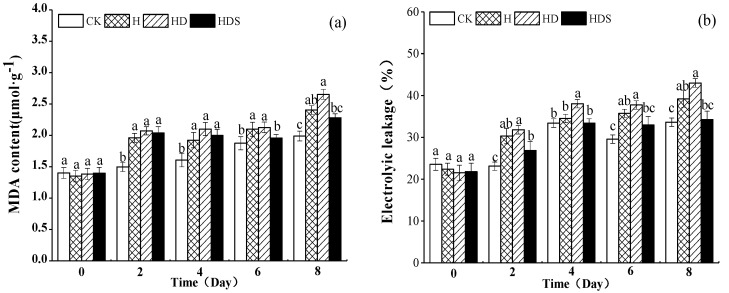
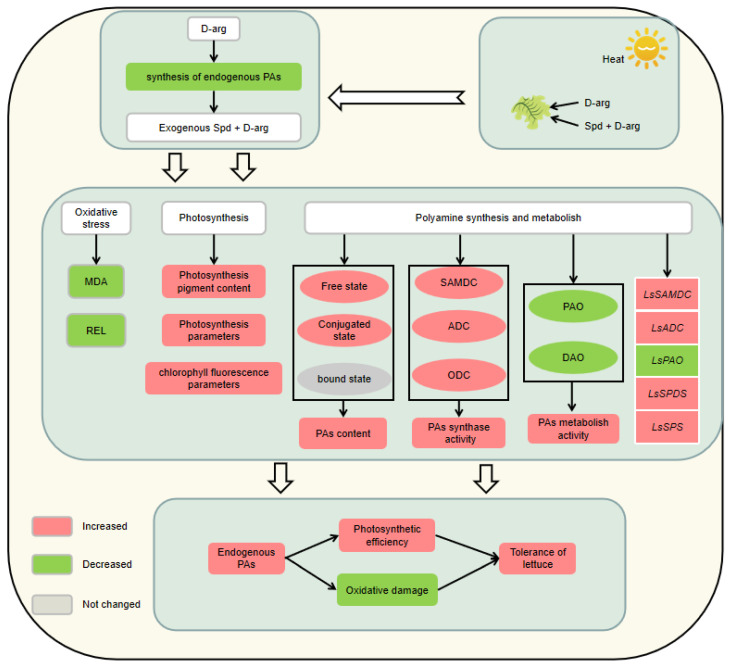
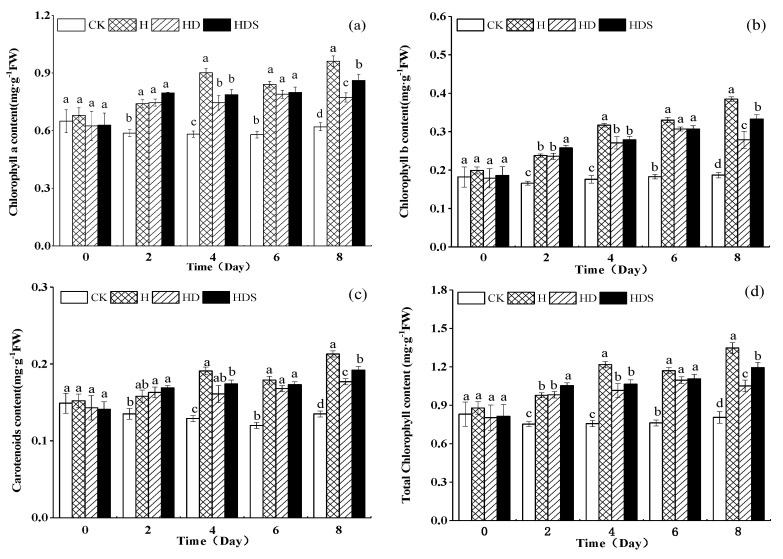
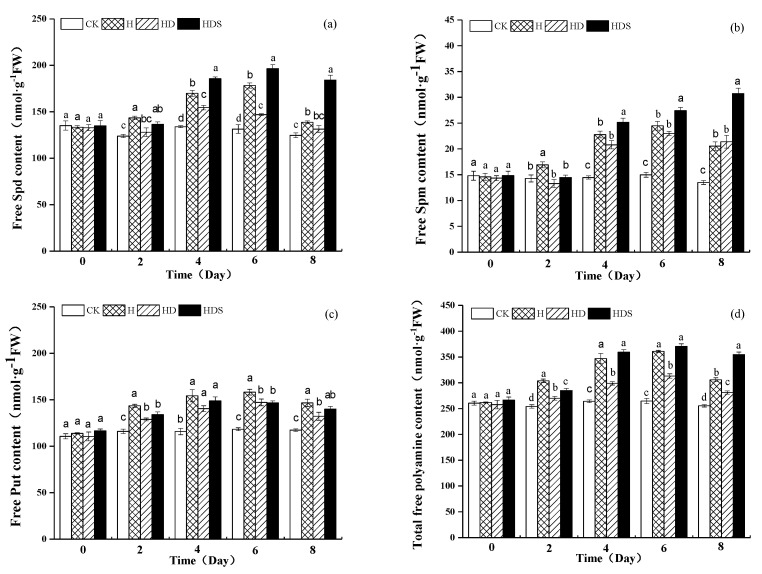
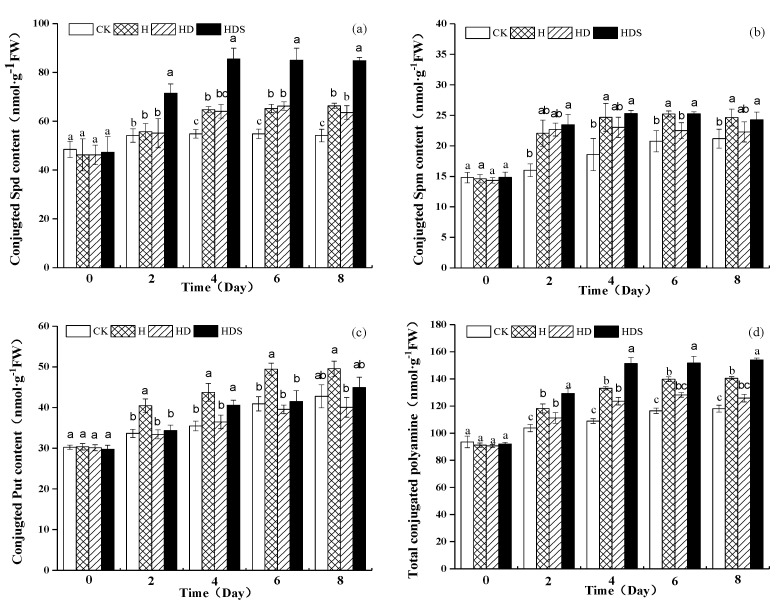
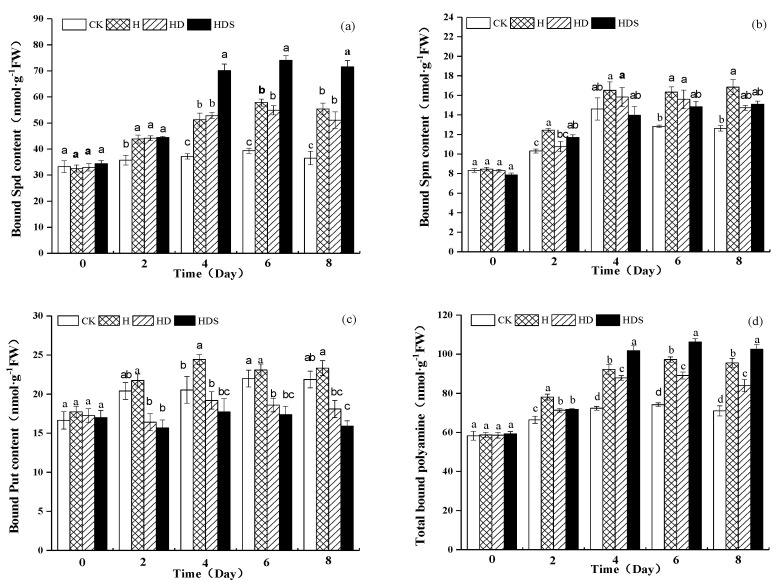
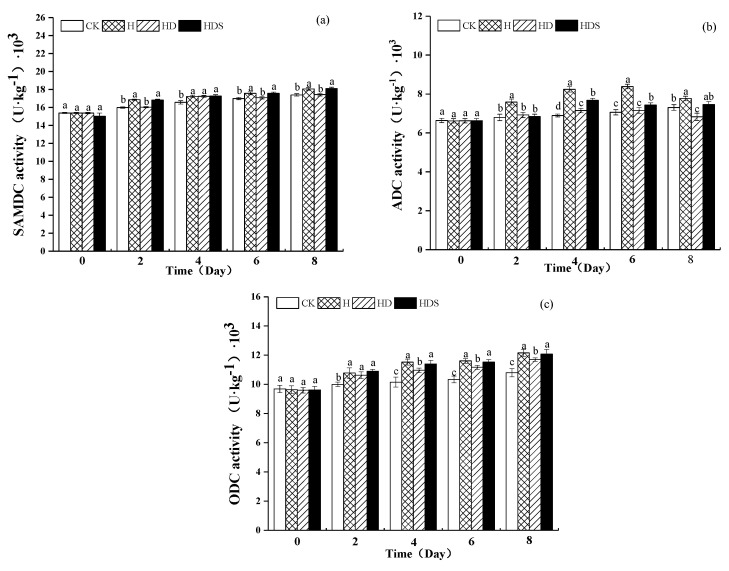
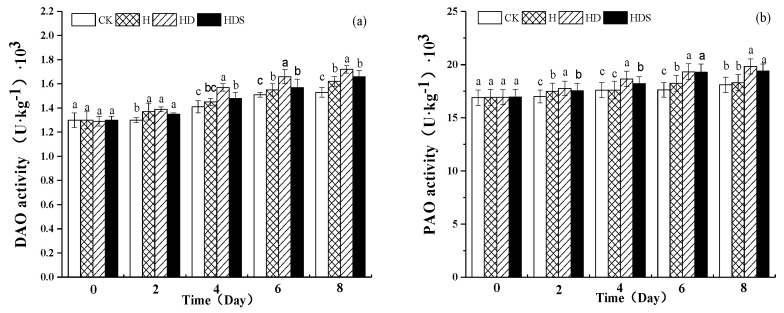
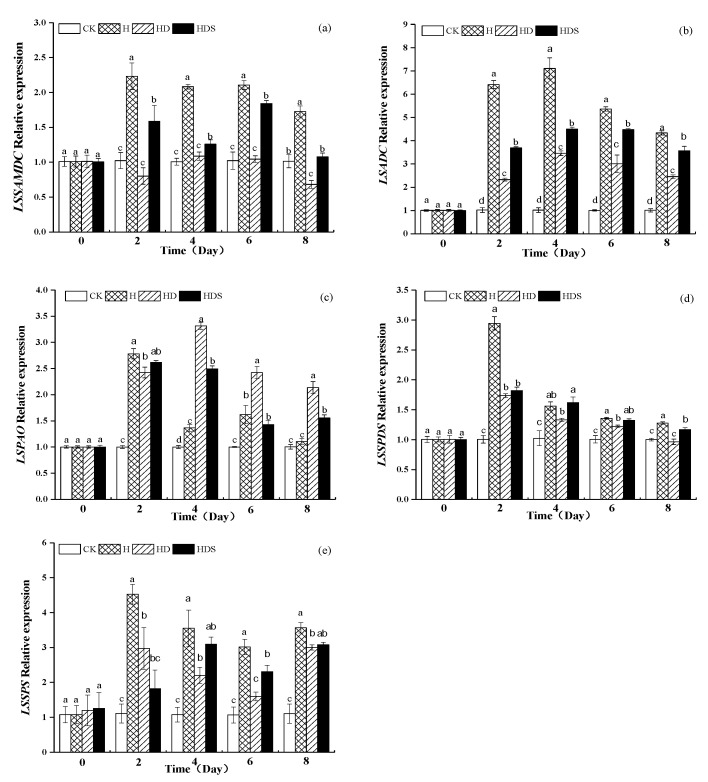
High temperature is a huge threat to lettuce production in the world, and spermidine (Spd) has been shown to improve heat tolerance in lettuce, but the action mechanism of Spd and the role of polyamine metabolism are still unclear. The effects of Spd and D-arginine (D-arg) on hydroponic lettuce seedlings under high-temperature stress by foliar spraying of Spd and D-arg were investigated. The results showed that high-temperature stress significantly inhibited the growth of lettuce seedlings, with a 33% decrease in total fresh weight and total dry weight; photosynthesis of lettuce seedlings was inhibited by high-temperature stress, and the inhibition was greater in the D-arg treatment, while the Spd recovery treatment increased net photosynthetic rate (Pn), stomatal conductance (Gs), transpiration rate (Tr), stomatal limit value (Ls), and intercellular CO concentration (Ci). High-temperature stress significantly reduced the maximum photochemical efficiency (Fv/Fm), photochemical quenching coefficient (qP), electron transport rate (ETR), and photochemical efficiency of PSII (ΦPSII), increased the non-photochemical burst coefficient (NPQ) and reduced the use of light energy, which was alleviated by exogenous Spd. The increase in polyamine content may be due to an increase in polyamine synthase activity and a decrease in polyamine oxidase activity, as evidenced by changes in the expression levels of genes related to polyamine synthesis and metabolism enzymes. This evidence suggested that D-arg suppressed endogenous polyamine levels in lettuce and reduced its tolerance, whereas exogenous Spd promoted the synthesis and accumulation of polyamines in lettuce and increased its photosynthetic and oxidative stress levels, which had an impact on the tolerance of lettuce seedlings.
高温是全球生菜生产面临的巨大威胁,亚精胺(Spd)已被证明可提高生菜的耐热性,但Spd的作用机制以及多胺代谢的作用仍不清楚。通过叶面喷施Spd和D-精氨酸(D-arg),研究了它们对高温胁迫下的水培生菜幼苗的影响。结果表明,高温胁迫显著抑制了生菜幼苗的生长,总鲜重和总干重下降了33%;高温胁迫抑制了生菜幼苗的光合作用,D-arg处理的抑制作用更大,而Spd恢复处理提高了净光合速率(Pn)、气孔导度(Gs)、蒸腾速率(Tr)、气孔限制值(Ls)和细胞间CO浓度(Ci)。高温胁迫显著降低了最大光化学效率(Fv/Fm)、光化学猝灭系数(qP)、电子传递速率(ETR)和PSII的光化学效率(ΦPSII),增加了非光化学猝灭系数(NPQ)并降低了光能利用,外源Spd缓解了这种情况。多胺含量的增加可能是由于多胺合成酶活性的增加和多胺氧化酶活性的降低,这由多胺合成和代谢酶相关基因表达水平的变化所证明。这一证据表明,D-arg抑制了生菜体内的多胺水平并降低了其耐受性,而外源Spd促进了生菜体内多胺的合成和积累,并提高了其光合和氧化应激水平,这对生菜幼苗的耐受性产生了影响。