Khan Niaz Ali, Khan Amjad, Ullah Rooh, Ullah Majeed, Alotaibi Amal, Ullah Riaz, Haider Adnan
Department of Pharmacy, Abasyn University, Peshawar 25000, Pakistan.
Department of Pharmacy, Kohat University of Science and Technology (KUST), Kohat 26000, Pakistan.
Polymers (Basel). 2022 May 13;14(10):1985. doi: 10.3390/polym14101985.
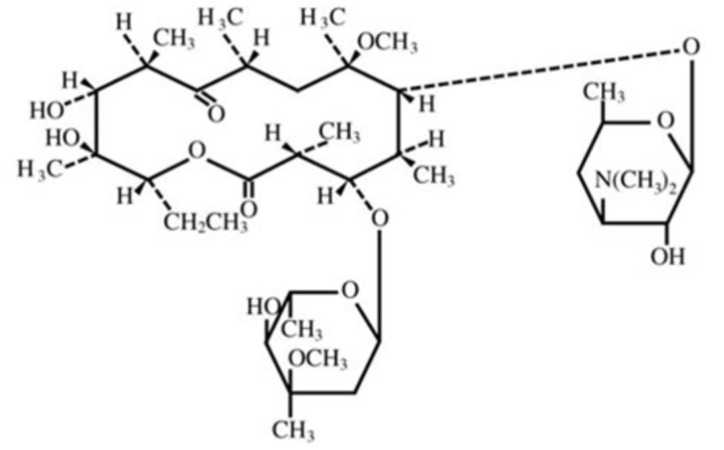
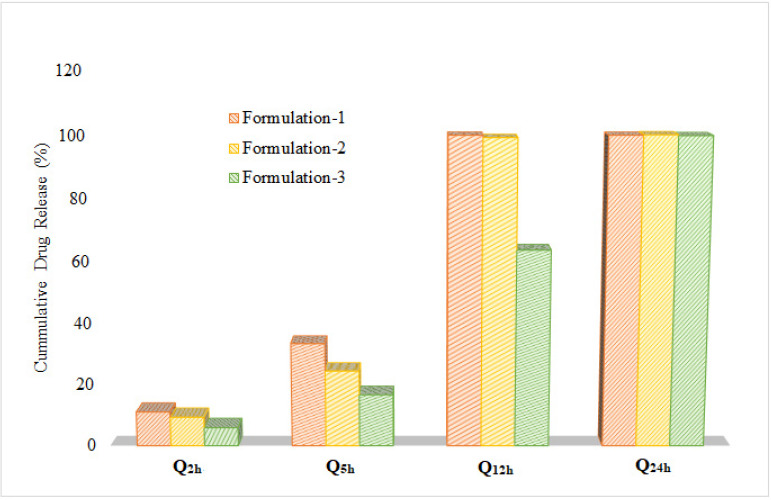
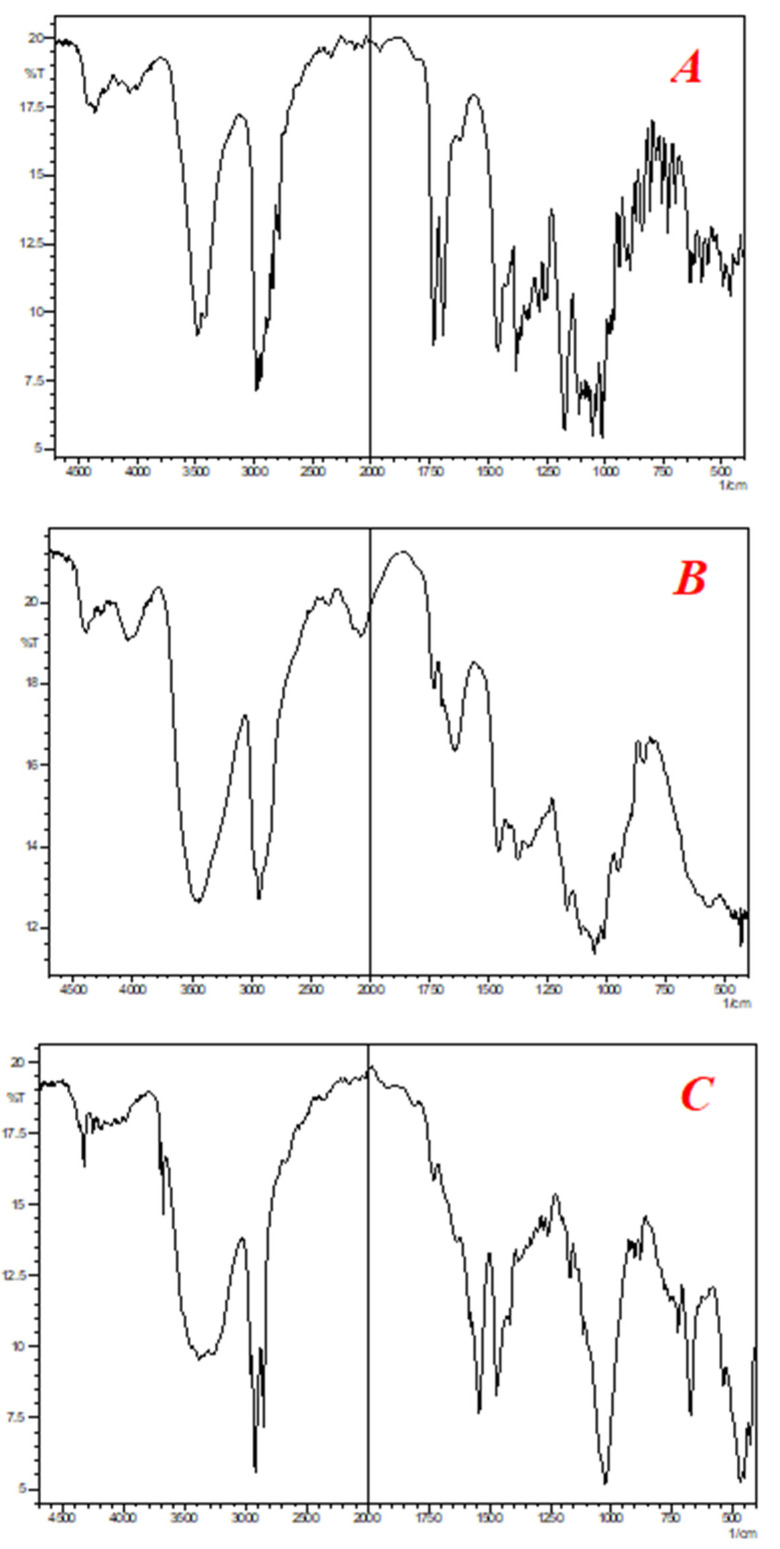
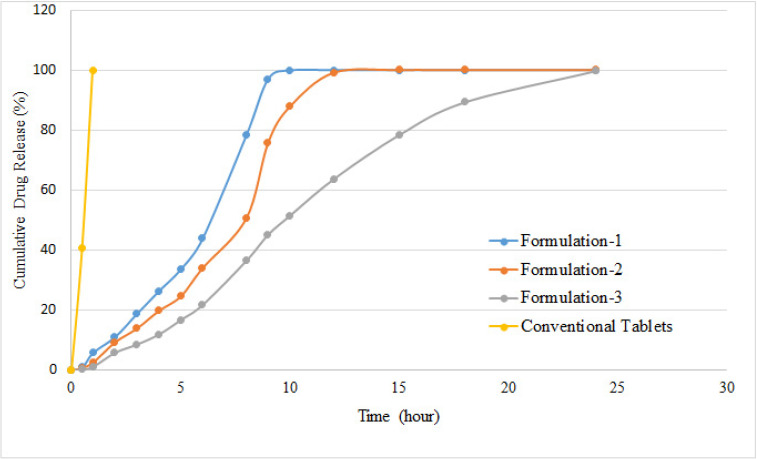
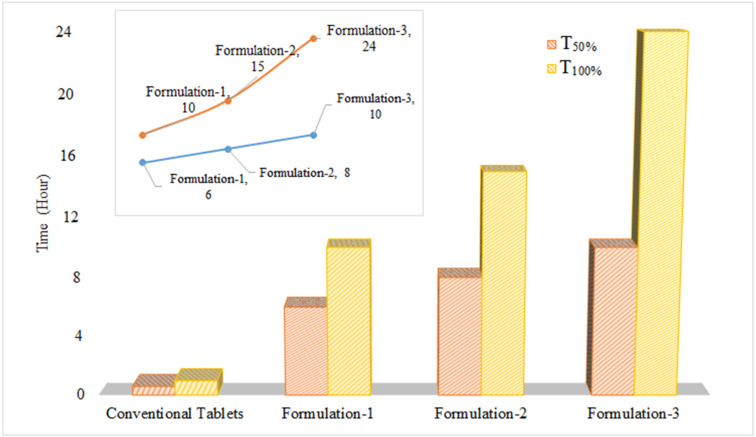
The objective of this study was the preparation and characterization of a sustained-release matrix tablet containing a high-dose hydrophobic drug and its comparison with marketed products. In the present study, HPMC was applied as the matrix-forming polymer for the sustained release of clarithromycin (500 mg). The compatibility of clarithromycin and excipients was studied using a binary mixture approach and compatible excipients were selected. Matrix tablets were prepared using the high-shear wet granulation technique. Tablets were compressed using oblong (19 mm), shallow concave punches, under a compression weight of 900 mg/tablet. The flow of granules was evaluated by determining their bulk density, tapped density, angle of repose, Hausner ratio, and Car's index. Compressed tablets were tested for their physical parameters, mechanical characteristics, drug content, and in vitro drug release, as per United States Pharmacopeia (USP). Clarithromycin is a drug having poor water solubility and showed compatibility with all the excipients used in the formulation of polymeric matrix tablets. FTIR spectra of clarithromycin, before and after being subjected to the stress conditions, confirmed the compatibility of clarithromycin and other ingredients of the matrix tablets. All the formulations exhibited good rheological characteristics and all the parameters related to flow showed results in the acceptable range. Physically, matrix tablets were smooth and shiny, without any surface defects. Weight variation (±5%) and drug content of the tablets (95-102%) were within the pharmacopeial limits. HPMC successfully sustained the drug release for 24 h. It is concluded from the study that dissolution rate of clarithromycin can be sustained using hydrophilic polymer (HPMC) as a release-controlling agent.
本研究的目的是制备并表征一种含有高剂量疏水药物的缓释骨架片,并将其与市售产品进行比较。在本研究中,羟丙甲纤维素(HPMC)被用作形成骨架的聚合物以实现克拉霉素(500毫克)的缓释。采用二元混合法研究了克拉霉素与辅料的相容性,并选择了相容的辅料。使用高剪切湿法制粒技术制备骨架片。片剂使用长方形(19毫米)浅凹冲头压制,压制重量为每片900毫克。通过测定颗粒的堆密度、振实密度、休止角、豪斯纳比和卡尔指数来评估颗粒的流动性。按照美国药典(USP)对压制片进行物理参数、机械特性、药物含量和体外药物释放测试。克拉霉素是一种水溶性差的药物,与用于制备聚合物骨架片的所有辅料均显示出相容性。在经受应力条件前后,克拉霉素的傅里叶变换红外光谱(FTIR)证实了克拉霉素与骨架片其他成分的相容性。所有制剂均表现出良好的流变学特性,所有与流动性相关的参数结果均在可接受范围内。从物理外观上看,骨架片光滑有光泽,没有任何表面缺陷。片剂的重量差异(±5%)和药物含量(95 - 102%)在药典规定的限度内。HPMC成功地使药物释放持续了24小时。该研究得出结论,使用亲水性聚合物(HPMC)作为释放控制剂可以维持克拉霉素的溶出速率。