• 文献检索
  • 文档翻译
  • 深度研究
  • 学术资讯
  • Suppr Zotero 插件Zotero 插件
  • 邀请有礼
  • 套餐&价格
  • 历史记录
应用&插件
Suppr Zotero 插件Zotero 插件浏览器插件Mac 客户端Windows 客户端微信小程序
定价
高级版会员购买积分包购买API积分包
服务
文献检索文档翻译深度研究API 文档MCP 服务
关于我们
关于 Suppr公司介绍联系我们用户协议隐私条款
关注我们

Suppr 超能文献

核心技术专利:CN118964589B侵权必究
粤ICP备2023148730 号-1Suppr @ 2026

文献检索

告别复杂PubMed语法,用中文像聊天一样搜索,搜遍4000万医学文献。AI智能推荐,让科研检索更轻松。

立即免费搜索

文件翻译

保留排版,准确专业,支持PDF/Word/PPT等文件格式,支持 12+语言互译。

免费翻译文档

深度研究

AI帮你快速写综述,25分钟生成高质量综述,智能提取关键信息,辅助科研写作。

立即免费体验

创新康复机器人的理论与性能分析研究。

Research on Theory and a Performance Analysis of an Innovative Rehabilitation Robot.

机构信息

Mechanical and Electrical Engineering, Harbin Institute of Technology, Harbin 150001, China.

出版信息

Sensors (Basel). 2022 May 22;22(10):3929. doi: 10.3390/s22103929.

DOI:10.3390/s22103929
PMID:35632338
原文链接:https://pmc.ncbi.nlm.nih.gov/articles/PMC9147418/
Abstract

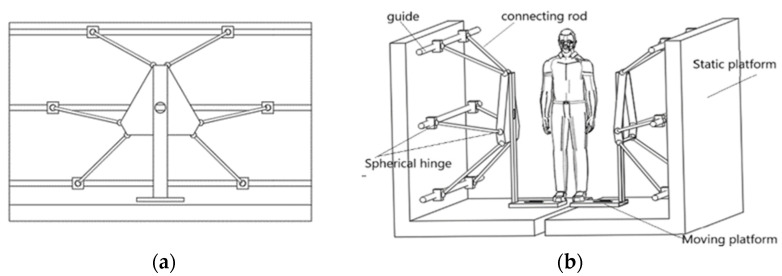
This paper presents an innovative application of a 6-DOF robot in the field of rehabilitation training. This robot operates in a parallel fashion for lower limb movement, which adopts a new structure that can help patients to carry out a variety of rehabilitation exercises. Traditional parallel robots, such as the Stewart robot, have the characteristics of strong bearing capacity. However, it is difficult to achieve high-speed, high-acceleration and long journey movement. This paper presents a new robot configuration that can address these problems. This paper also conducts an all-around characteristic analysis of this new parallel robot, including kinematics, dynamics and structure, to better study the robot and improve its performance. This paper optimizes an algorithm to make it more suitable for rehabilitation training. Finally, the performance improvements brought by optimization are verified by simulations.

摘要

本文提出了一种将六自由度机器人应用于康复训练领域的创新方法。该机器人采用新的结构,用于下肢运动的平行运动方式,可帮助患者进行各种康复运动。传统的并联机器人,如 Stewart 机器人,具有承载能力强的特点。但是,实现高速、高加速度和长行程运动较为困难。本文提出了一种新的机器人配置,可以解决这些问题。本文还对这种新型并联机器人进行了全面的特性分析,包括运动学、动力学和结构,以更好地研究机器人并提高其性能。本文优化了一种算法,使其更适合康复训练。最后,通过模拟验证了优化带来的性能提升。
https://cdn.ncbi.nlm.nih.gov/pmc/blobs/b42f/9147418/a558e4913e52/sensors-22-03929-g016a.jpg
https://cdn.ncbi.nlm.nih.gov/pmc/blobs/b42f/9147418/f42176f06810/sensors-22-03929-g001.jpg
https://cdn.ncbi.nlm.nih.gov/pmc/blobs/b42f/9147418/5a2ea17fa6ad/sensors-22-03929-g002.jpg
https://cdn.ncbi.nlm.nih.gov/pmc/blobs/b42f/9147418/33e1961da081/sensors-22-03929-g003.jpg
https://cdn.ncbi.nlm.nih.gov/pmc/blobs/b42f/9147418/168ad182eed6/sensors-22-03929-g004.jpg
https://cdn.ncbi.nlm.nih.gov/pmc/blobs/b42f/9147418/7bb4de69651e/sensors-22-03929-g005.jpg
https://cdn.ncbi.nlm.nih.gov/pmc/blobs/b42f/9147418/3c2a0434b20f/sensors-22-03929-g006.jpg
https://cdn.ncbi.nlm.nih.gov/pmc/blobs/b42f/9147418/86fb58addf76/sensors-22-03929-g007.jpg
https://cdn.ncbi.nlm.nih.gov/pmc/blobs/b42f/9147418/2d7cdd6bb591/sensors-22-03929-g008.jpg
https://cdn.ncbi.nlm.nih.gov/pmc/blobs/b42f/9147418/154429ec04fc/sensors-22-03929-g009.jpg
https://cdn.ncbi.nlm.nih.gov/pmc/blobs/b42f/9147418/4197b5132293/sensors-22-03929-g010.jpg
https://cdn.ncbi.nlm.nih.gov/pmc/blobs/b42f/9147418/dac9cbe1b0e7/sensors-22-03929-g011.jpg
https://cdn.ncbi.nlm.nih.gov/pmc/blobs/b42f/9147418/a5136eeba971/sensors-22-03929-g012.jpg
https://cdn.ncbi.nlm.nih.gov/pmc/blobs/b42f/9147418/e77416c33d0a/sensors-22-03929-g013.jpg
https://cdn.ncbi.nlm.nih.gov/pmc/blobs/b42f/9147418/412d5bbc5277/sensors-22-03929-g014.jpg
https://cdn.ncbi.nlm.nih.gov/pmc/blobs/b42f/9147418/27599326b6db/sensors-22-03929-g015a.jpg
https://cdn.ncbi.nlm.nih.gov/pmc/blobs/b42f/9147418/a558e4913e52/sensors-22-03929-g016a.jpg
https://cdn.ncbi.nlm.nih.gov/pmc/blobs/b42f/9147418/f42176f06810/sensors-22-03929-g001.jpg
https://cdn.ncbi.nlm.nih.gov/pmc/blobs/b42f/9147418/5a2ea17fa6ad/sensors-22-03929-g002.jpg
https://cdn.ncbi.nlm.nih.gov/pmc/blobs/b42f/9147418/33e1961da081/sensors-22-03929-g003.jpg
https://cdn.ncbi.nlm.nih.gov/pmc/blobs/b42f/9147418/168ad182eed6/sensors-22-03929-g004.jpg
https://cdn.ncbi.nlm.nih.gov/pmc/blobs/b42f/9147418/7bb4de69651e/sensors-22-03929-g005.jpg
https://cdn.ncbi.nlm.nih.gov/pmc/blobs/b42f/9147418/3c2a0434b20f/sensors-22-03929-g006.jpg
https://cdn.ncbi.nlm.nih.gov/pmc/blobs/b42f/9147418/86fb58addf76/sensors-22-03929-g007.jpg
https://cdn.ncbi.nlm.nih.gov/pmc/blobs/b42f/9147418/2d7cdd6bb591/sensors-22-03929-g008.jpg
https://cdn.ncbi.nlm.nih.gov/pmc/blobs/b42f/9147418/154429ec04fc/sensors-22-03929-g009.jpg
https://cdn.ncbi.nlm.nih.gov/pmc/blobs/b42f/9147418/4197b5132293/sensors-22-03929-g010.jpg
https://cdn.ncbi.nlm.nih.gov/pmc/blobs/b42f/9147418/dac9cbe1b0e7/sensors-22-03929-g011.jpg
https://cdn.ncbi.nlm.nih.gov/pmc/blobs/b42f/9147418/a5136eeba971/sensors-22-03929-g012.jpg
https://cdn.ncbi.nlm.nih.gov/pmc/blobs/b42f/9147418/e77416c33d0a/sensors-22-03929-g013.jpg
https://cdn.ncbi.nlm.nih.gov/pmc/blobs/b42f/9147418/412d5bbc5277/sensors-22-03929-g014.jpg
https://cdn.ncbi.nlm.nih.gov/pmc/blobs/b42f/9147418/27599326b6db/sensors-22-03929-g015a.jpg
https://cdn.ncbi.nlm.nih.gov/pmc/blobs/b42f/9147418/a558e4913e52/sensors-22-03929-g016a.jpg

相似文献

1
Research on Theory and a Performance Analysis of an Innovative Rehabilitation Robot.创新康复机器人的理论与性能分析研究。
Sensors (Basel). 2022 May 22;22(10):3929. doi: 10.3390/s22103929.
2
Research on a New Rehabilitation Robot for Balance Disorders.平衡障碍新型康复机器人研究
IEEE Trans Neural Syst Rehabil Eng. 2023;31:3927-3936. doi: 10.1109/TNSRE.2023.3312692. Epub 2023 Oct 16.
3
A Lower Limb Rehabilitation Assistance Training Robot System Driven by an Innovative Pneumatic Artificial Muscle System.一种新型气动人工肌肉驱动的下肢康复训练机器人系统。
Soft Robot. 2023 Feb;10(1):1-16. doi: 10.1089/soro.2020.0216. Epub 2022 Feb 21.
4
[Preliminary Study on Current Research Status and Clinical Application of Lower Limb Rehabilitation Robot Mechanisms].下肢康复机器人机构的研究现状及临床应用初步研究
Zhongguo Yi Liao Qi Xie Za Zhi. 2024 Jan 30;48(1):30-37. doi: 10.3969/j.issn.1671-7104.230135.
5
A Novel Evaluation Index and Optimization Method for Ankle Rehabilitation Robots Based on Ankle-Foot Motion.一种基于踝足运动的踝关节康复机器人新型评估指标与优化方法
J Biomech Eng. 2023 May 1;145(5). doi: 10.1115/1.4056479.
6
A Lower Limb Rehabilitation Robot in Sitting Position with a Review of Training Activities.一种坐姿下肢康复机器人及训练活动综述
J Healthc Eng. 2018 Apr 1;2018:1927807. doi: 10.1155/2018/1927807. eCollection 2018.
7
Kinematics and workspace analysis of 4SPRR-SPR parallel robots.4SPRR-SPR 并联机器人的运动学和工作空间分析。
PLoS One. 2021 Jan 20;16(1):e0239150. doi: 10.1371/journal.pone.0239150. eCollection 2021.
8
Robustness and Tracking Performance Evaluation of PID Motion Control of 7 DoF Anthropomorphic Exoskeleton Robot Assisted Upper Limb Rehabilitation.7 自由度仿人上肢康复外骨骼机器人的 PID 运动控制的鲁棒性和跟踪性能评估。
Sensors (Basel). 2022 May 14;22(10):3747. doi: 10.3390/s22103747.
9
Design and Optimization of a Hybrid-Driven Waist Rehabilitation Robot.一种混合驱动腰部康复机器人的设计与优化
Sensors (Basel). 2016 Dec 14;16(12):2121. doi: 10.3390/s16122121.
10
Robot-Assisted Reach Training With an Active Assistant Protocol for Long-Term Upper Extremity Impairment Poststroke: A Randomized Controlled Trial.机器人辅助主动辅助协议下的上肢康复训练对脑卒中后长期上肢功能障碍的影响:一项随机对照试验
Arch Phys Med Rehabil. 2019 Feb;100(2):213-219. doi: 10.1016/j.apmr.2018.10.002. Epub 2018 Oct 26.

引用本文的文献

1
Tracing the evolving dynamics and research hotspots of spinal cord injury and surgical decompression from 1975 to 2024: a bibliometric analysis.1975年至2024年脊髓损伤与手术减压的动态演变及研究热点追踪:一项文献计量分析
Front Neurol. 2024 Aug 5;15:1442145. doi: 10.3389/fneur.2024.1442145. eCollection 2024.
2
Global research trends and hotspots of artificial intelligence research in spinal cord neural injury and restoration-a bibliometrics and visualization analysis.脊髓神经损伤与修复中人工智能研究的全球趋势和热点——文献计量学与可视化分析
Front Neurol. 2024 Apr 2;15:1361235. doi: 10.3389/fneur.2024.1361235. eCollection 2024.
3

本文引用的文献

1
Why There Is a Vestibular Sense, or How Metacognition Individuates the Senses.为什么会有前庭感觉,或者说,元认知如何使感觉个体化。
Multisens Res. 2020 Jun 25;34(3):261-280. doi: 10.1163/22134808-bja10026.
2
A Lower Limb Rehabilitation Robot in Sitting Position with a Review of Training Activities.一种坐姿下肢康复机器人及训练活动综述
J Healthc Eng. 2018 Apr 1;2018:1927807. doi: 10.1155/2018/1927807. eCollection 2018.
3
Robotic orthosis lokomat: a rehabilitation and research tool.机器人矫形器 lokomat:一种康复和研究工具。
The Application of Wearable Sensors and Machine Learning Algorithms in Rehabilitation Training: A Systematic Review.
可穿戴传感器和机器学习算法在康复训练中的应用:系统评价。
Sensors (Basel). 2023 Sep 5;23(18):7667. doi: 10.3390/s23187667.
Neuromodulation. 2003 Apr;6(2):108-15. doi: 10.1046/j.1525-1403.2003.03017.x. Epub 2003 Jun 16.