Department of Head and Neck Surgery, University of California, Los Angeles, California, USA.
Laryngoscope. 2023 Feb;133(2):357-365. doi: 10.1002/lary.30178. Epub 2022 May 28.
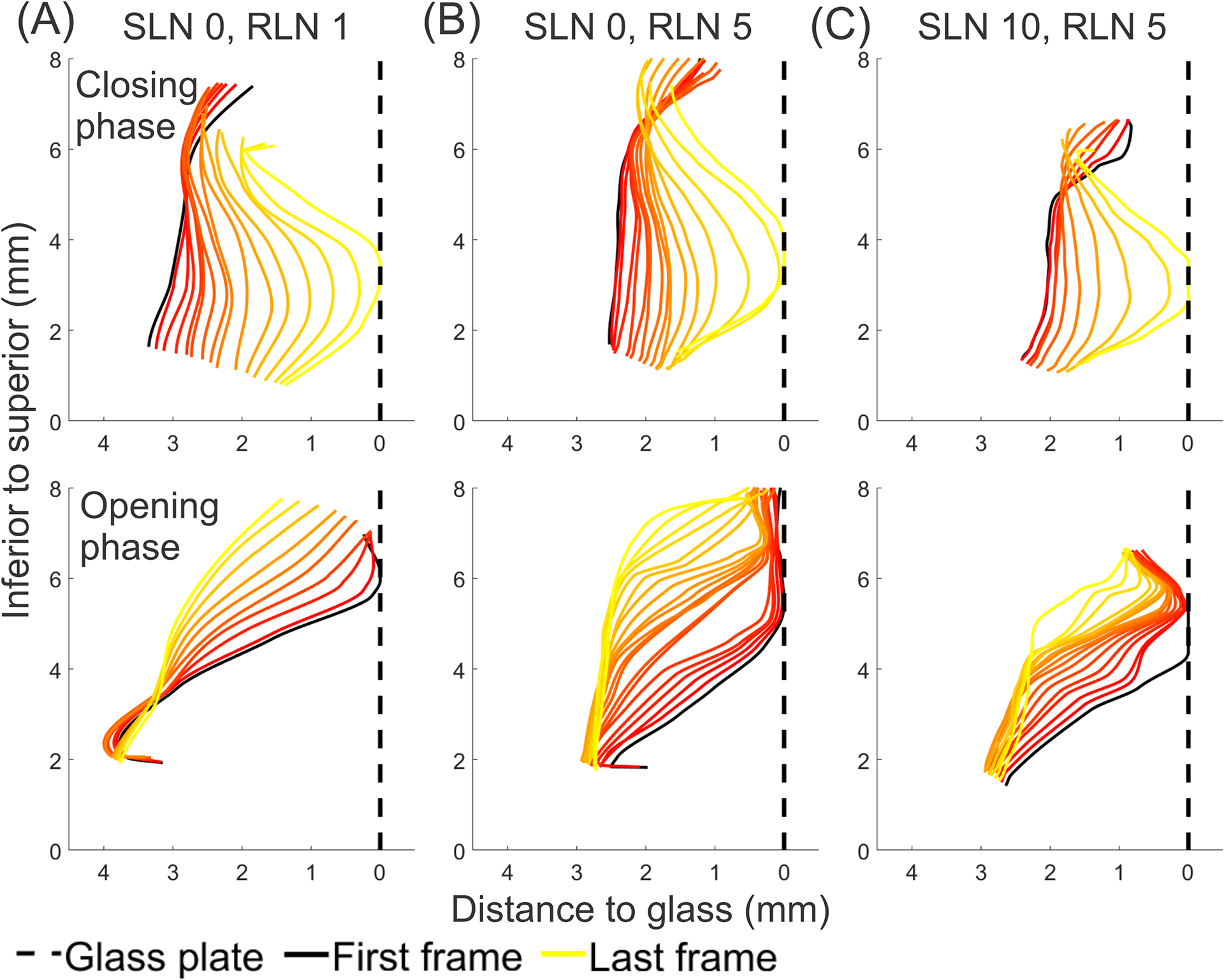
Although phonatory glottal posture and airflow pulse shape affect voice quality, studies to date have been limited by visualization of vocal fold (VF) vibration from a superior view. We performed a 3D reconstruction of VF vibratory motion during phonation from a medial view and assessed the glottal volume waveform and resulting acoustics as a function of neuromuscular stimulation.
In vivo canine hemilarynx phonation.
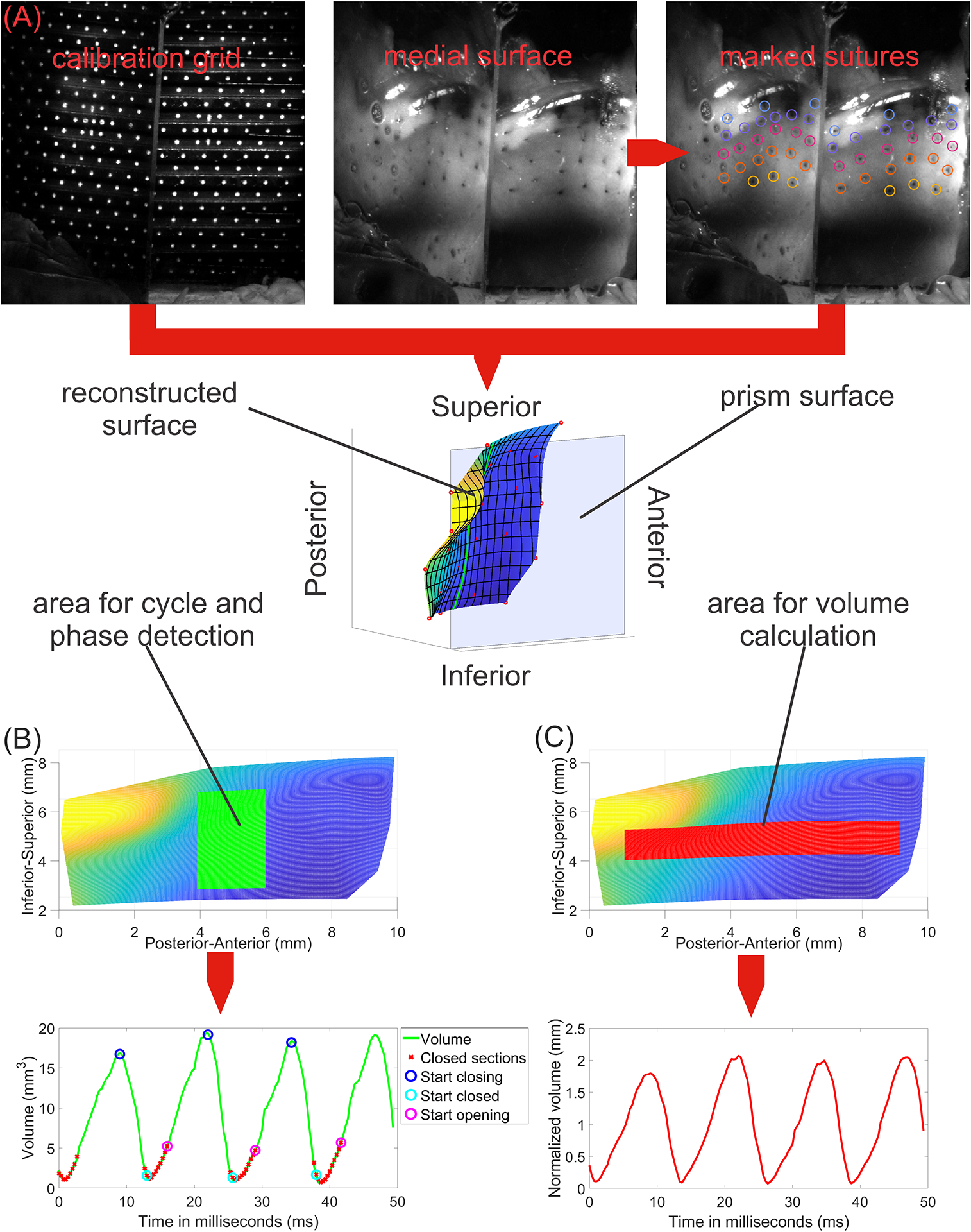
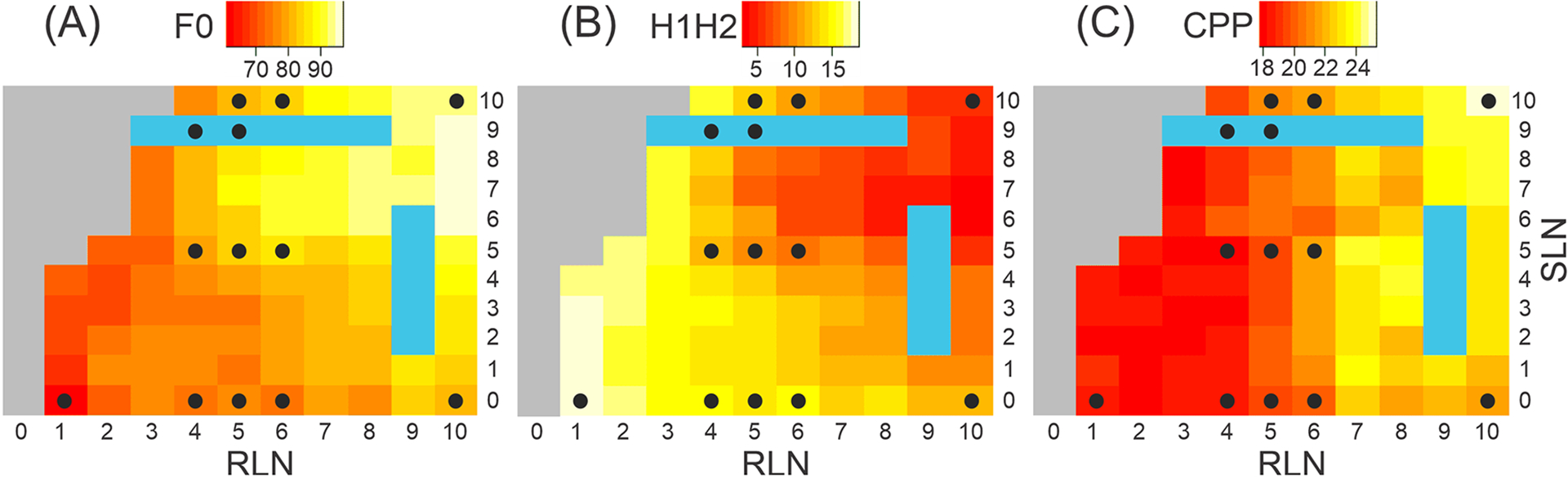
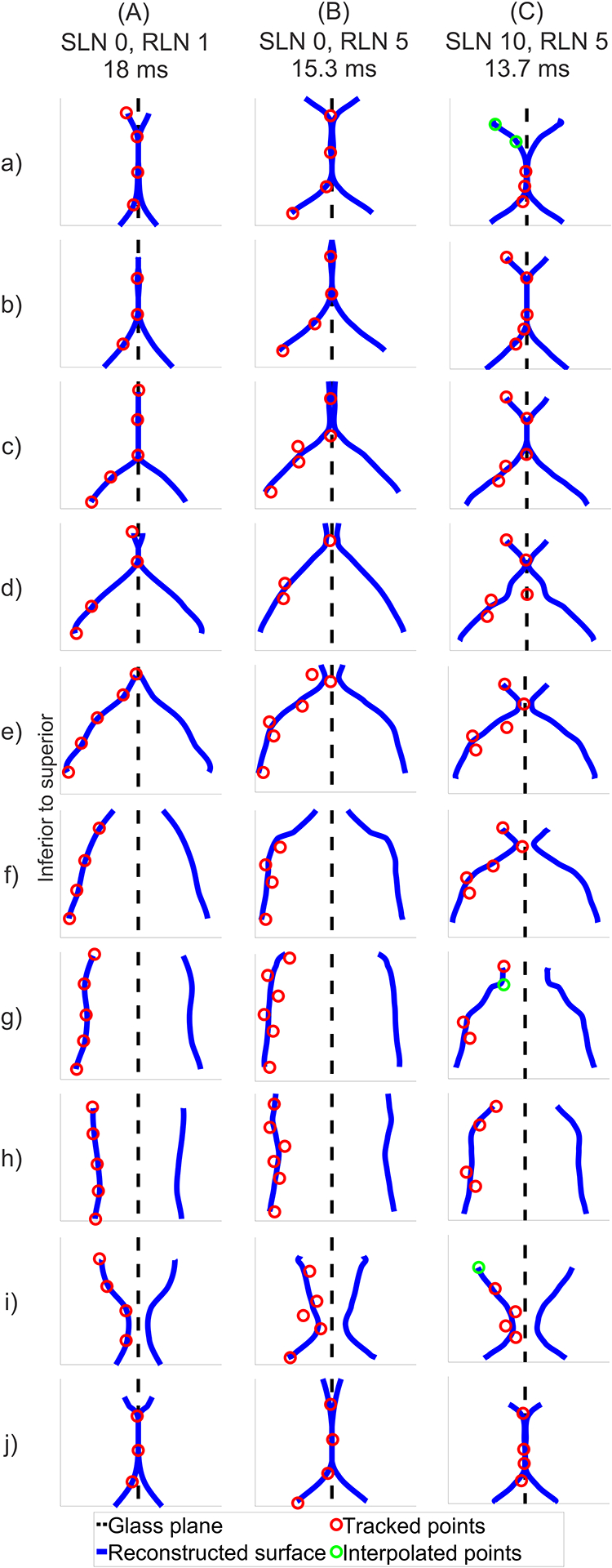
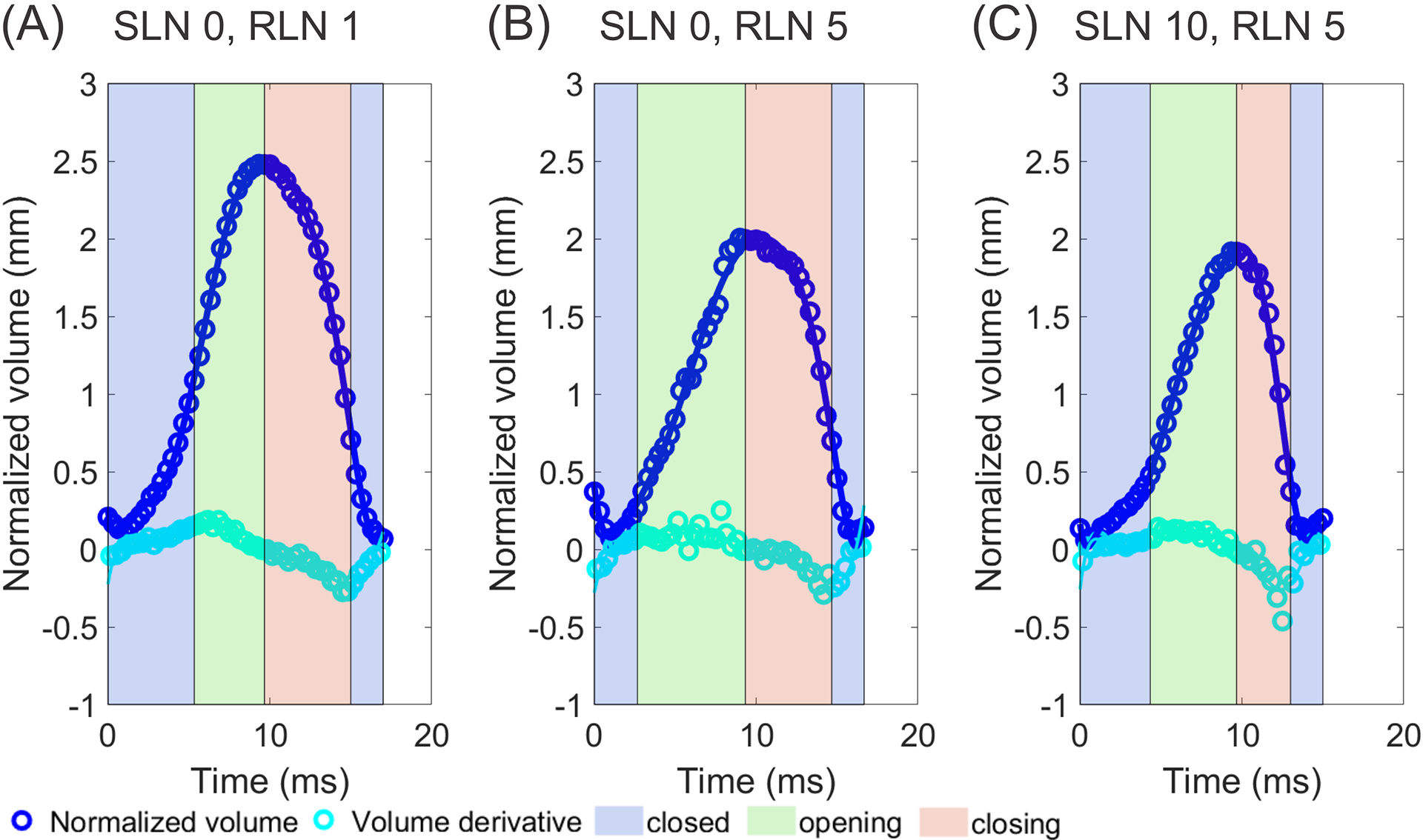
Across 121 unique combinations of the superior laryngeal nerve (SLN) and recurrent laryngeal nerve (RLN) stimulation, the hemilarynx was excited to the oscillation with airflow. VF medial surface reference points were tracked on high-speed video, mapped into 3D space, and surface shape was restored using cubic spline interpolation. Glottal surface shape, reconstruction-based parameters, and glottal volume waveform were calculated. Fundamental frequency (F0), cepstral peak prominence (CPP), and harmonic amplitude (H1-H2) were measured from high-quality audio samples.
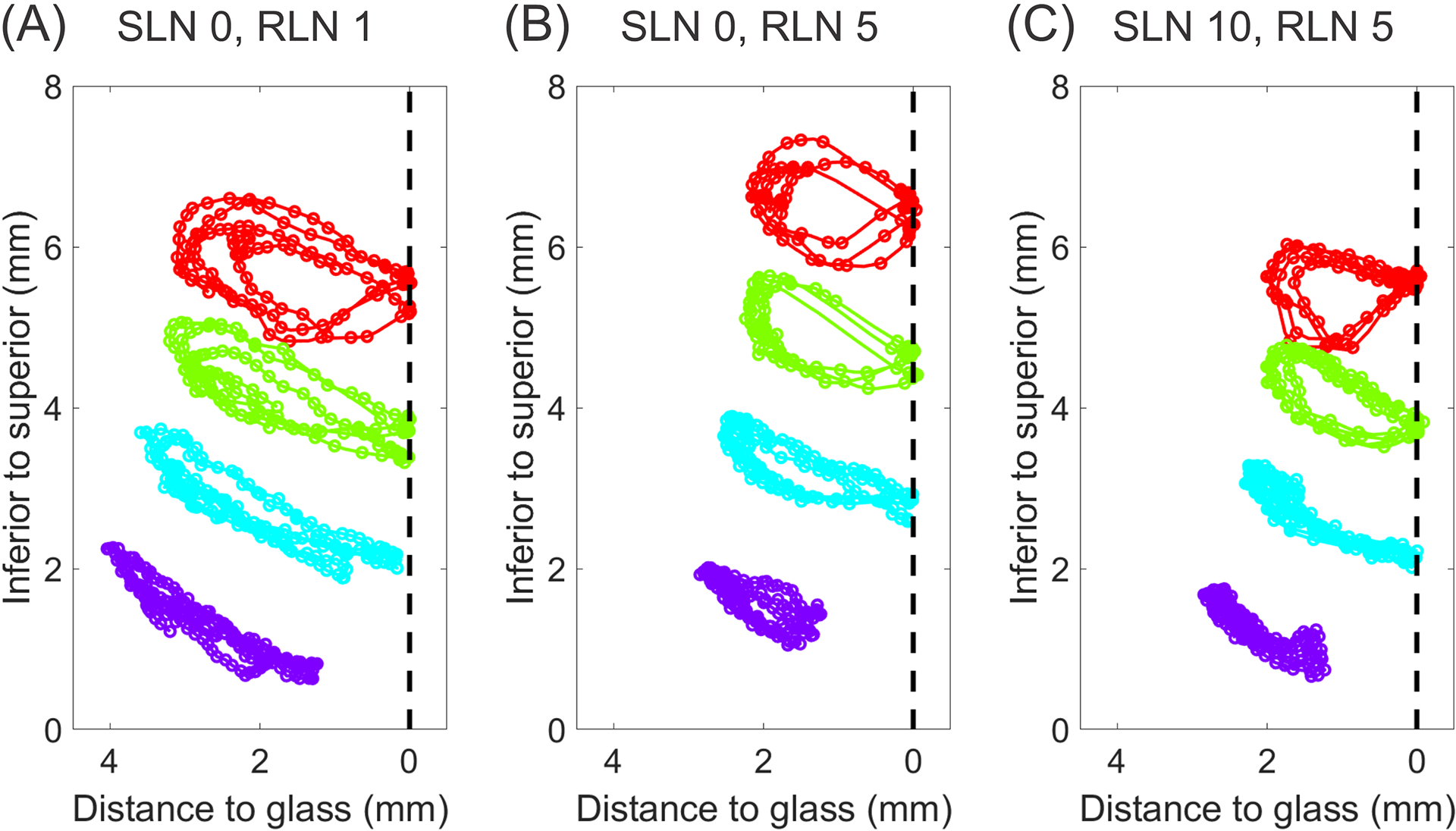
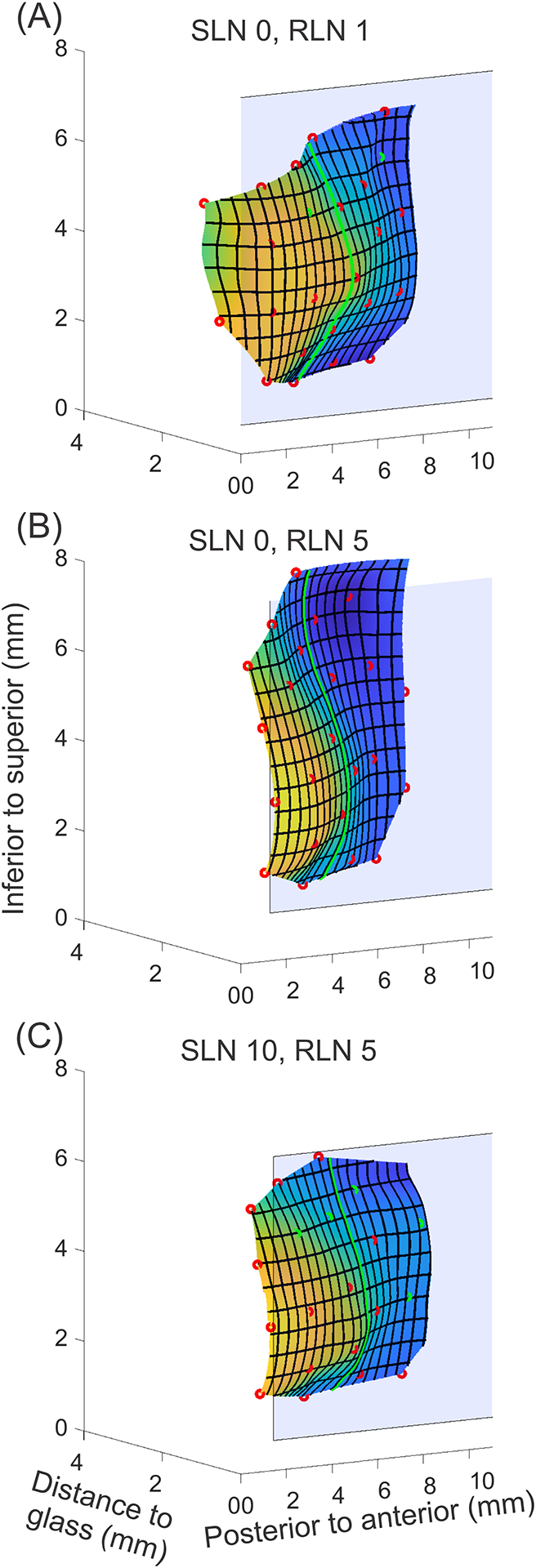
The glottis was convergent during opening and divergent during closing. Neuromuscular activation changed phonatory glottal shape and reduced glottal volume. Significant reduction in glottal volume and closing quotient were present with SLN stimulation. RLN stimulation significantly increased F0 and CPP and decreased H1-H2 (constricted glottis), while SLN effects were similar and synergistic with concurrent RLN stimulation.
3D reconstruction of in vivo medial surface vibration revealed effects of laryngeal nerve stimulation on glottal vibratory pattern and acoustic correlates of voice quality. SLN activation resulted in significantly quicker glottal closure per cycle, decreased glottal volume, and higher-pitched, less breathy, and less noisy voice. RLN had a similar effect on acoustic measures.
NA, Basic Science Laryngoscope, 133:357-365, 2023.
尽管声门的发声姿势和气流脉冲形状会影响音质,但迄今为止的研究受到了从上方观察声带(VF)振动的可视化的限制。我们从内侧视图对 VF 振动运动进行了 3D 重建,并评估了神经肌肉刺激作用下的声门容积波和产生的声学。
体内犬喉半喉发声。
在 121 个独特的上喉神经(SLN)和喉返神经(RLN)刺激组合中,半喉通过气流激励到振荡。VF 内侧表面参考点在高速视频上进行跟踪,映射到 3D 空间,并使用三次样条插值恢复表面形状。计算声门表面形状、基于重建的参数和声门容积波。从高质量音频样本中测量基频(F0)、倒谱峰值突出度(CPP)和谐波幅度(H1-H2)。
声门在打开时收敛,在关闭时发散。神经肌肉激活改变了发声声门的形状并减少了声门容积。SLN 刺激存在明显的声门容积和闭合商减少。RLN 刺激显著增加了 F0 和 CPP,并降低了 H1-H2(声门变窄),而 SLN 效应与同时的 RLN 刺激相似并协同。
体内内侧表面振动的 3D 重建揭示了喉神经刺激对声门振动模式和语音质量声学相关的影响。SLN 激活导致每个周期的声门关闭更快,声门容积减小,以及更高、更不刺耳、更安静的声音。RLN 对声学测量也有类似的影响。
NA,基础科学喉镜,133:357-365,2023。