Li Jinjin, Sun Hongzhao, Wang Chun, Li Shangchun, Cai Yunfei
School of Life Sciences, Qilu Normal University, Jinan, China.
School of Ecology and Environment, Beijing Technology and Business University, Beijing, China.
Front Microbiol. 2022 May 12;13:895383. doi: 10.3389/fmicb.2022.895383. eCollection 2022.
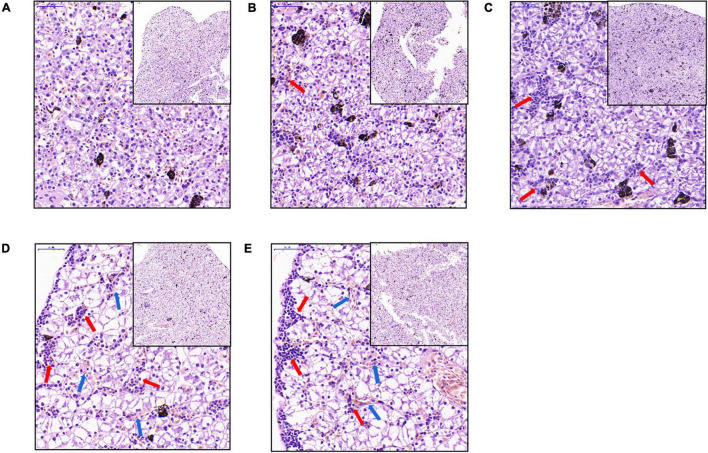
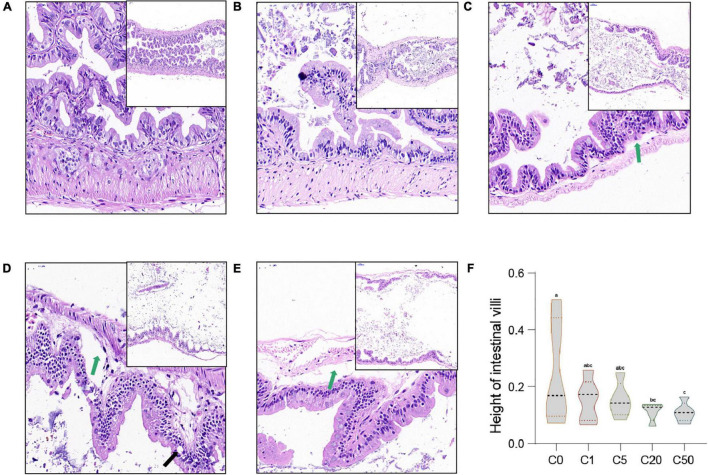
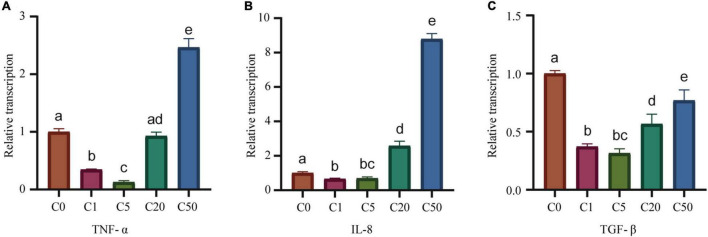
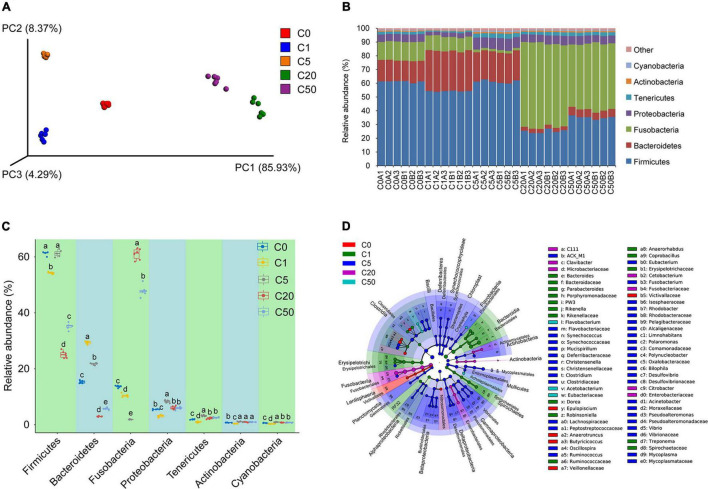
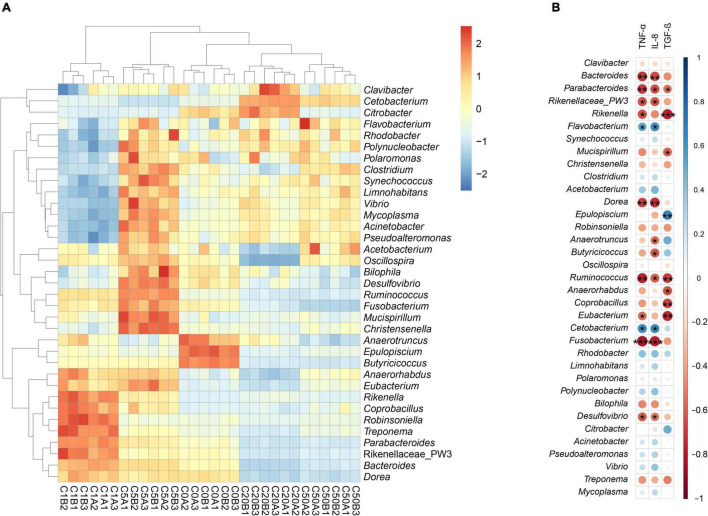
Although toxic effects of microcystins (MCs) in mammals and fish have been extensively studied, the effects of MCs on the immune system and gut microbiota of amphibians have not received sufficient attention. As MCs cause general damage to the vertebrate liver and immune system and trigger an inflammatory response, and the gut microbiota is closely related to host metabolism and immunity, we speculated that MCs can cause changes in the immune system and gut microbiota of amphibians. To verify this, we examined the intestinal and liver injury of exposed to different microcystin-leucine-arginine (MC-LR) concentrations and the effects on the gut microbiota through high-throughput sequencing of 16S rDNA of the gut microbiota combined with histopathological analysis, enzyme activity determination, and qRT-PCR. Our results showed that MC-LR caused focal infiltration of inflammatory cells and increased the number of T cells and local congestion and vacuolization in liver, but reduced the number, density, height, and regularity of villi. These liver and intestinal injuries became more obvious with an increase in MC-LR concentration. MC-LR significantly decreased the activities of malondialdehyde and alkaline phosphatase and the expression of β in the liver. Moreover, MC-LR significantly altered the gut microbiota of . The relative abundance of Firmicutes and Bacteroidetes in high-concentration MC-LR groups was significantly reduced compared to that in low-concentration MC-LR groups, whereas Fusobacteria was significantly enriched. The metabolic gene composition of the gut microbiota in low-concentration MC-LR (≤5 μg/L) groups was significantly different from that in high-concentration MC-LR (≥20 μg/L) groups. These results deepen our understanding of the toxicity of MCs to aquatic organisms and assessment of the ecological risk of MCs in amphibians.
尽管微囊藻毒素(MCs)对哺乳动物和鱼类的毒性作用已得到广泛研究,但MCs对两栖动物免疫系统和肠道微生物群的影响尚未得到足够关注。由于MCs会对脊椎动物肝脏和免疫系统造成一般性损害并引发炎症反应,且肠道微生物群与宿主代谢和免疫密切相关,我们推测MCs会导致两栖动物免疫系统和肠道微生物群发生变化。为验证这一点,我们通过对肠道微生物群的16S rDNA进行高通量测序,并结合组织病理学分析、酶活性测定和qRT-PCR,研究了暴露于不同浓度微囊藻毒素-亮氨酸-精氨酸(MC-LR)下的两栖动物的肠道和肝脏损伤以及对肠道微生物群的影响。我们的结果表明,MC-LR导致炎症细胞局灶性浸润,肝脏中T细胞数量增加以及局部充血和空泡化,但绒毛数量、密度、高度和规则性降低。随着MC-LR浓度的增加,这些肝脏和肠道损伤变得更加明显。MC-LR显著降低了肝脏中丙二醛和碱性磷酸酶的活性以及β的表达。此外,MC-LR显著改变了两栖动物的肠道微生物群。与低浓度MC-LR组相比,高浓度MC-LR组中厚壁菌门和拟杆菌门的相对丰度显著降低,而梭杆菌门显著富集。低浓度MC-LR(≤5μg/L)组肠道微生物群的代谢基因组成与高浓度MC-LR(≥20μg/L)组显著不同。这些结果加深了我们对MCs对水生生物毒性的理解以及对两栖动物中MCs生态风险的评估。