Hamm Jeremy M, Tan Jaron X Y, Barlow Meaghan A, Delaney Rachel L, Duggan Katherine A
North Dakota State University, Fargo, USA.
University of California, Berkeley, Berkeley, USA.
Motiv Emot. 2022;46(3):319-335. doi: 10.1007/s11031-022-09941-6. Epub 2022 May 22.
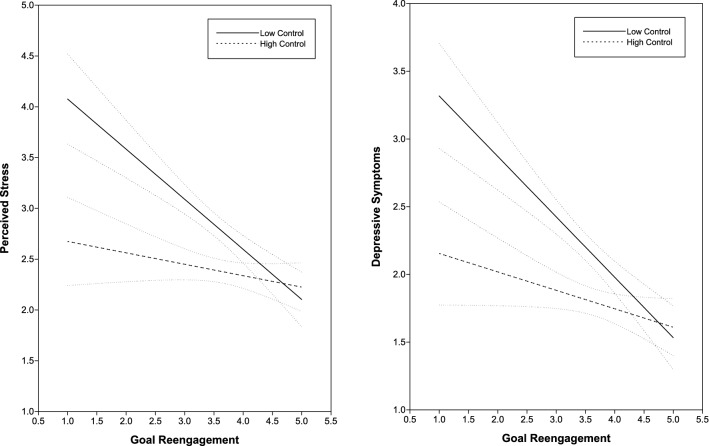
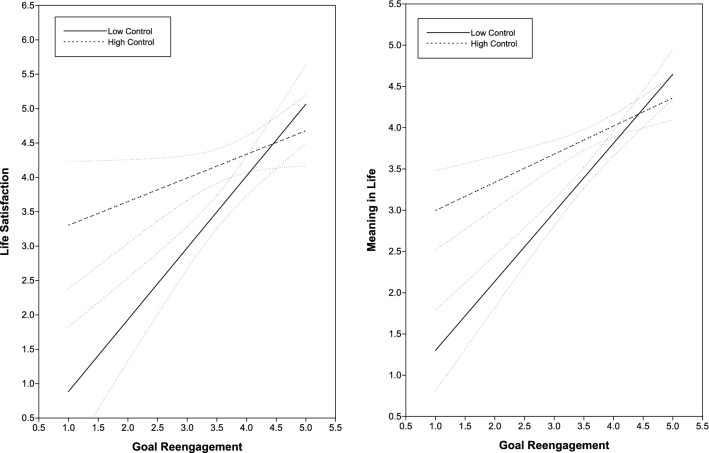
Goal adjustment capacities (i.e., goal disengagement and goal reengagement) are core self-regulatory resources theorized to buffer psychological well-being during intractable life circumstances. However, research has yet to examine whether these capacities protect well-being for individuals who encounter uncontrollable losses in their ability to pursue important life goals due to the COVID-19 pandemic. Using a nationally-representative sample of U.S. adults aged 18-80 ( = 292), the present longitudinal study examined the extent to which goal disengagement and reengagement predicted levels and change in psychological well-being for individuals who differed in perceived control over their goals early in the pandemic. Results from multilevel growth models showed that goal reengagement, but not goal disengagement, capacities predicted higher levels of well-being during the pandemic (lower perceived stress, depressive symptoms; higher life satisfaction, meaning in life). Moderation models showed the benefits of goal reengagement for well-being were pronounced among individuals who perceived pandemic-induced declines in control over their goals. Findings inform theories of motivation and self-regulation and point to the adaptive value of goal reengagement capacities during uncontrollable life circumstances.
目标调整能力(即目标脱离和目标重新参与)是核心的自我调节资源,理论上认为在棘手的生活环境中能缓冲心理健康。然而,对于那些因新冠疫情而在追求重要生活目标的能力方面遭遇无法控制的损失的个体,这些能力是否能保护其心理健康,研究尚未进行考察。本纵向研究使用了一个具有全国代表性的18至80岁美国成年人样本(n = 292),考察了在疫情初期对目标的感知控制程度不同的个体中,目标脱离和重新参与在多大程度上预测了心理健康水平及其变化。多层次增长模型的结果表明,目标重新参与能力而非目标脱离能力,预测了疫情期间更高的心理健康水平(更低的感知压力、抑郁症状;更高的生活满意度、生活意义)。调节模型表明,对于那些感知到疫情导致对目标控制下降的个体,目标重新参与对心理健康的益处更为显著。研究结果为动机和自我调节理论提供了依据,并指出了在无法控制的生活环境中目标重新参与能力的适应性价值。