Department of Cardiology, Tel Aviv Medical Center (Affiliated to The Sackler Faculty of Medicine, Tel Aviv University, Tel Aviv, Israel), Weizmann 6, 6423919, Tel Aviv, Israel.
Department of Cardiology, Jesselson Integrated Heart Center, Shaare Zedek Medical Center (Affiliated to The Faculty of Medicine, Hebrew University of Jerusalem, Jerusalem, Israel), Jerusalem, Israel.
Cardiovasc Diabetol. 2022 May 30;21(1):86. doi: 10.1186/s12933-022-01529-1.
Hemoglobin A1C (HbA1c) is a form of glycated hemoglobin used to estimate glycemic control in diabetic patients. Data regarding the prognostic significance of HbA1c levels in contemporary intensive cardiac care unit (ICCU) patients is limited.
All patients admitted to the ICCU at a tertiary care medical center between January 1, 2020, and June 30, 2021, with documented admission HbA1c levels were included in the study. Patients were divided into 3 groups according to their HbA1c levels: < 5.7 g% [no diabetes mellitus (DM)], 5.7-6.4 g% (pre-DM), ≥ 6.5 g% (DM).
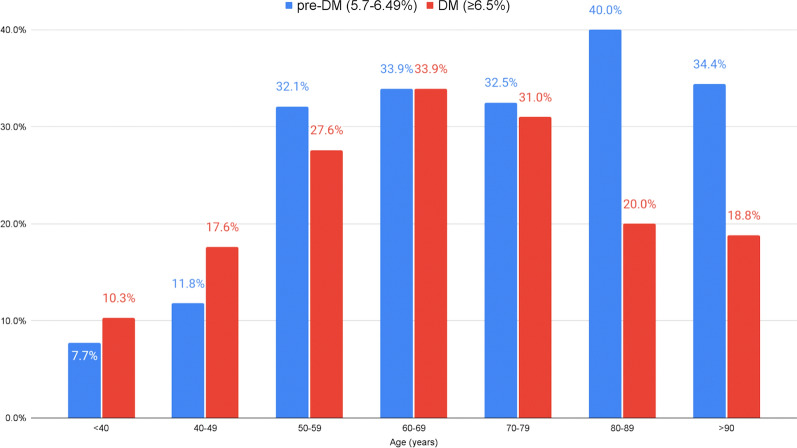
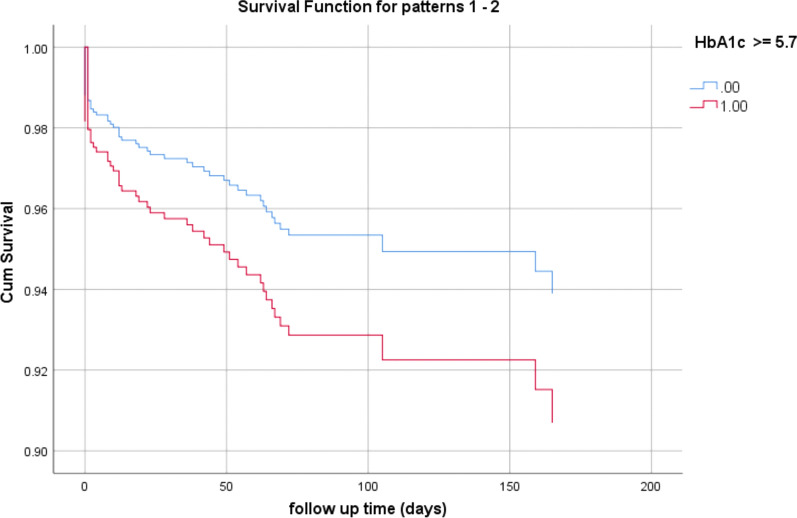
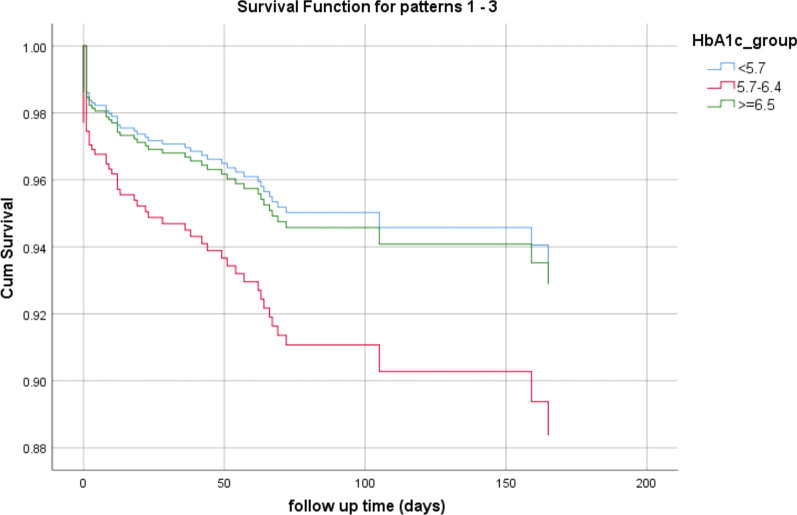
A total of 1412 patients were included. Of them, 974 (69%) were male with a mean age of 67(± 15.7) years old. HbA1c level < 5.7 g% was found in 550 (39%) patients, 5.7-6.4 g% in 458 (32.4%) patients and ≥ 6.5 g% in 404 (28.6%) patients. Among patients who did not know they had DM, 81 (9.3%) patients had high HbA1c levels (≥ 6.5 g%) on admission. The crude mortality rate at follow-up (up to 1.5 years) was almost twice as high among patients with pre-DM and DM than in patients with no DM (10.6% vs. 5.4%, respectively, p = 0.01). Interestingly, although not statistically significant, the trend was that pre-DM patients had the strongest association with mortality rate [HR 1.83, (95% CI 0.936-3.588); p = 0.077].
Although an HbA1c level of ≥ 5.7 g% (pre-DM & DM) is associated with a worse prognosis in patients admitted to ICCU, pre-DM patients, paradoxically, have the highest risk for short and long-term mortality rates.
糖化血红蛋白(HbA1c)是一种用于评估糖尿病患者血糖控制情况的糖化血红蛋白形式。目前关于当代重症心脏监护病房(ICCU)患者 HbA1c 水平的预后意义的数据有限。
本研究纳入了 2020 年 1 月 1 日至 2021 年 6 月 30 日期间在一家三级医疗中心入住 ICCU 并记录有入院 HbA1c 水平的所有患者。根据 HbA1c 水平将患者分为 3 组:<5.7 g%(无糖尿病)、5.7-6.4 g%(前驱糖尿病)、≥6.5 g%(糖尿病)。
共纳入 1412 例患者,其中 974 例(69%)为男性,平均年龄为 67(±15.7)岁。HbA1c 水平<5.7 g%的患者有 550 例(39%),5.7-6.4 g%的患者有 458 例(32.4%),≥6.5 g%的患者有 404 例(28.6%)。在不知道患有糖尿病的患者中,81 例(9.3%)患者的入院 HbA1c 水平(≥6.5 g%)较高。随访(最长 1.5 年)时,前驱糖尿病和糖尿病患者的粗死亡率几乎是无糖尿病患者的两倍(分别为 10.6%和 5.4%,p=0.01)。有趣的是,尽管无统计学意义,但前驱糖尿病患者的死亡率与其他两组相比呈最强关联[风险比 1.83,(95%置信区间 0.936-3.588);p=0.077]。
尽管 HbA1c 水平≥5.7 g%(前驱糖尿病和糖尿病)与 ICCU 入住患者的预后较差相关,但前驱糖尿病患者的短期和长期死亡率风险却最高。