John Ochsner Heart and Vascular Center, New Orleans, LA, USA.
Department of Cardiology, Montefiore Medical Center, NY, USA.
Curr Probl Cardiol. 2022 Sep;47(9):101268. doi: 10.1016/j.cpcardiol.2022.101268. Epub 2022 May 27.
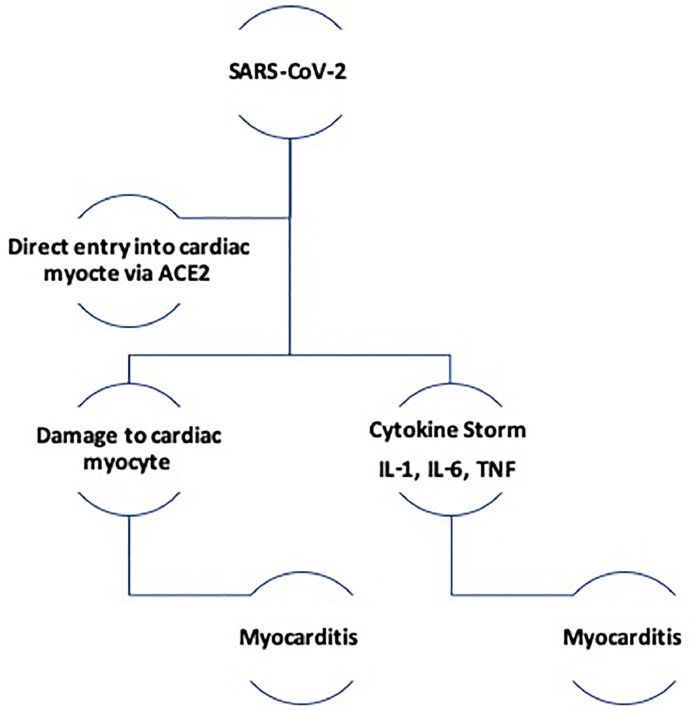
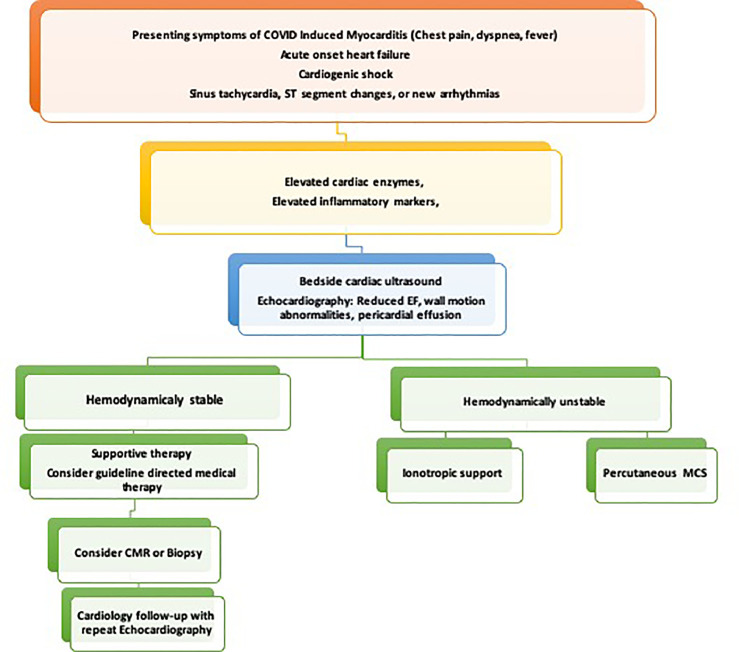
Coronavirus Disease 2019 (COVID-19) has been a significant cause of global mortality and morbidity since it was first reported in December 2019 in Wuhan, China. COVID19 like previous coronaviruses primarily affects the lungs causing pneumonia, interstitial pneumonitis, and severe acute respiratory distress syndrome (ARDS). However, there is increasing evidence linking COVID-19 to cardiovascular complications such as arrhythmias, heart failure, cardiogenic shock, fulminant myocarditis, and cardiac death. Given the novelty of this virus, there is paucity of data on some cardiovascular complications of COVID-19, specifically myocarditis. Myocarditis is an inflammatory disease of the heart muscle with a heterogenous clinical presentation and progression. It is mostly caused by viral infections and is the result of interaction of the virus and the host's immune system. There have been several case reports linking COVID-19 with myocarditis, however the true mechanism of cardiac injury remains under investigation. In this paper we review the clinical presentation, proposed pathophysiology, differential diagnoses and management of myocarditis in COVID-19 patients.
自 2019 年 12 月在中国武汉首次报告以来,2019 年冠状病毒病(COVID-19)一直是全球死亡率和发病率的重要原因。COVID19 与以前的冠状病毒一样,主要影响肺部,导致肺炎、间质性肺炎和严重急性呼吸窘迫综合征(ARDS)。然而,越来越多的证据将 COVID-19 与心血管并发症联系起来,如心律失常、心力衰竭、心源性休克、暴发性心肌炎和心脏性死亡。鉴于这种病毒的新颖性,关于 COVID-19 的一些心血管并发症,特别是心肌炎的数据很少。心肌炎是一种心肌炎症性疾病,具有异质的临床表现和进展。它主要由病毒感染引起,是病毒和宿主免疫系统相互作用的结果。有几例病例报告将 COVID-19 与心肌炎联系起来,但心脏损伤的确切机制仍在研究中。在本文中,我们回顾了 COVID-19 患者心肌炎的临床表现、提出的病理生理学、鉴别诊断和治疗。