School of Medicine, South China University of Technology, Guangzhou, 510006, China.
Guangdong Lung Cancer Institute, Guangdong Provincial People's Hospital, Guangdong Academy of Medical Sciences, Guangzhou, 510080, China.
BMC Med. 2022 May 30;20(1):197. doi: 10.1186/s12916-022-02387-0.
Despite the reported efficacy of osimertinib, central nervous system (CNS) progression is still frequent in EGFR-mutated NSCLC. This study aimed to reveal site-specific resistant mechanisms to osimertinib and investigate subsequent treatments for leptomeningeal metastases (LM).
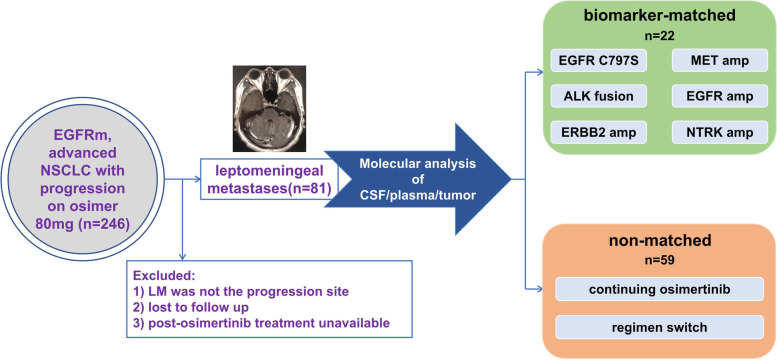
EGFR-mutated NSCLC with LM who progressed on osimertinib were included. Molecular analysis of cerebrospinal fluid (CSF) at osimertinib progression was performed. Subsequent treatments of LM were collected and analyzed.
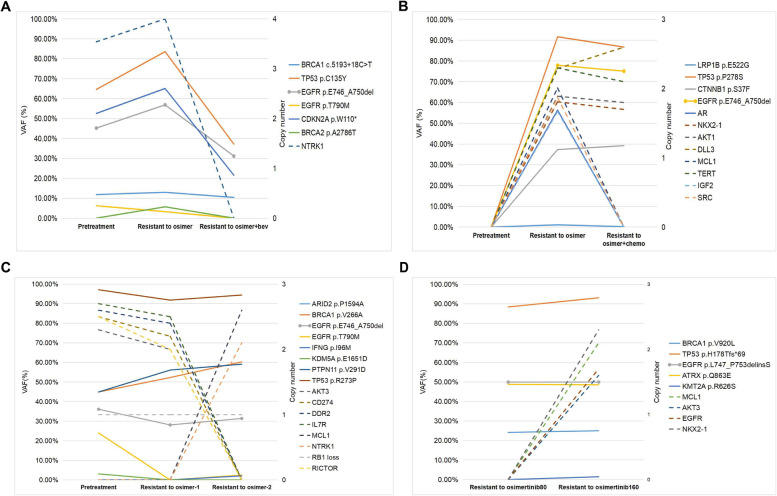
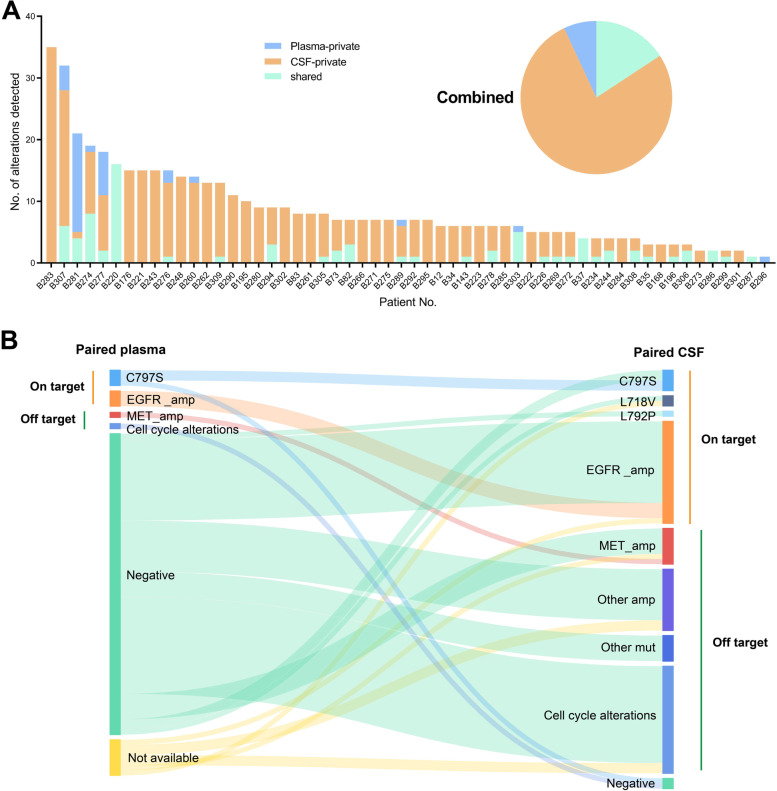
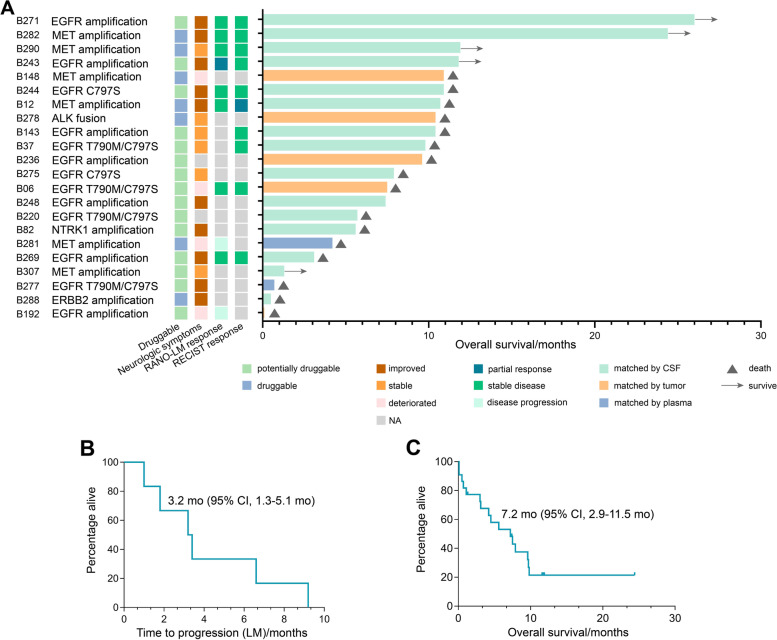
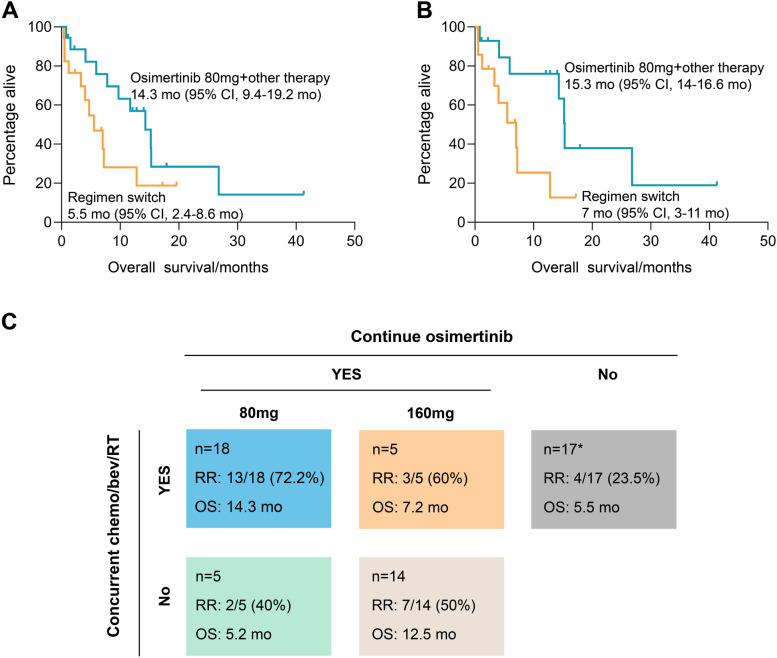
A total of 246 patients were identified. Only those with LM as a progression site on osimertinib were included (n=81). In 58 CSF-plasma pairs, more alterations were uniquely detected in CSF (77%) than in plasma (7%). These mechanisms led to 22 patients receiving matched targeted therapy. Among them, 16 (72.7%) had a clinical response. The median overall survival was 7.2 months. For non-matched therapy (n=59), the osimertinib combination had a longer median overall survival than the regimen switch in CNS-only progression (15.3 vs. 7 months, p=0.03). Finally, serial monitoring by CSF revealed the potential evolution of LM.
Private resistant mechanisms in CSF might match osimertinib-resistant LM for targeted therapy. Besides, continuing osimertinib with intensification strategy might prolong survival, especially for those with CNS-only progression. Prospective exploration is needed.
尽管奥希替尼具有报道的疗效,但表皮生长因子受体(EGFR)突变型非小细胞肺癌(NSCLC)的中枢神经系统(CNS)进展仍然频繁。本研究旨在揭示奥希替尼耐药的特定部位的机制,并探讨针对脑膜转移(LM)的后续治疗方法。
纳入奥希替尼进展时出现 LM 的 EGFR 突变型 NSCLC 患者。对奥希替尼进展时的脑脊液(CSF)进行分子分析。收集并分析 LM 的后续治疗方法。
共鉴定出 246 例患者。仅纳入奥希替尼进展时出现 LM 的患者(n=81)。在 58 对 CSF-血浆样本中,CSF 中独特检测到的改变(77%)多于血浆(7%)。这些机制导致 22 例患者接受了匹配的靶向治疗。其中,16 例(72.7%)有临床反应。中位总生存期为 7.2 个月。对于非匹配治疗(n=59),奥希替尼联合治疗在 CNS 进展的患者中比方案切换的中位总生存期更长(15.3 与 7 个月,p=0.03)。最后,CSF 的连续监测显示了 LM 潜在的演变。
CSF 中的私有耐药机制可能与奥希替尼耐药的 LM 匹配进行靶向治疗。此外,继续使用奥希替尼并强化策略可能延长生存时间,特别是对于仅 CNS 进展的患者。需要进行前瞻性探索。