Zhu Yunyang, Feng Songwei, Song Zhaoming, Wang Zhong, Chen Gang
Department of Neurosurgery, The First Affiliated Hospital of Soochow University, Suzhou, China.
Department of Obstetrics and Gynaecology, Zhongda Hospital, School of Medicine, Southeast University, Nanjing, China.
Front Genet. 2022 May 13;13:894865. doi: 10.3389/fgene.2022.894865. eCollection 2022.
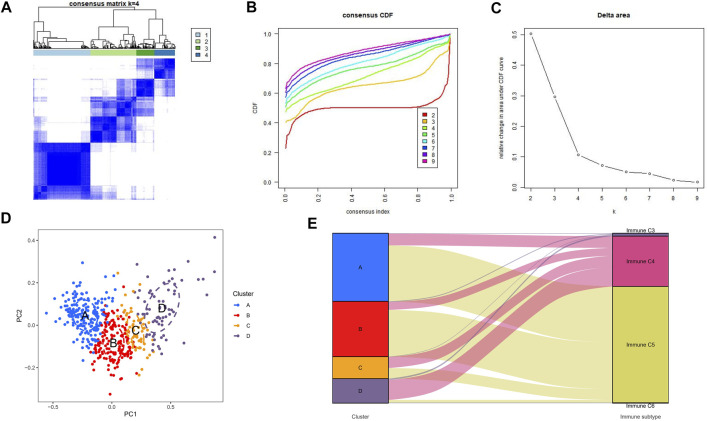
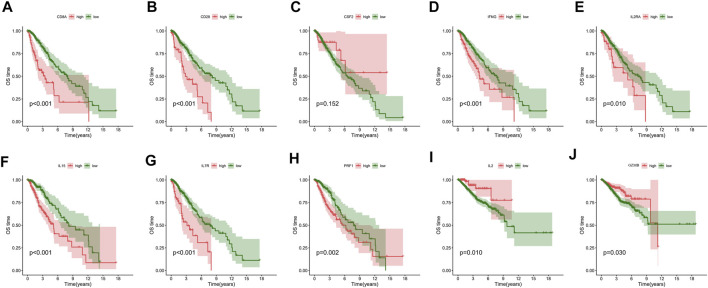
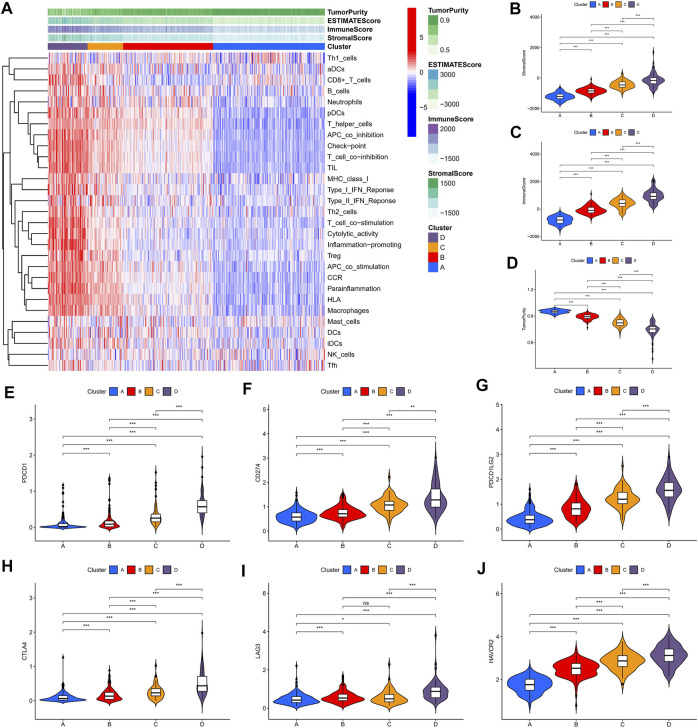
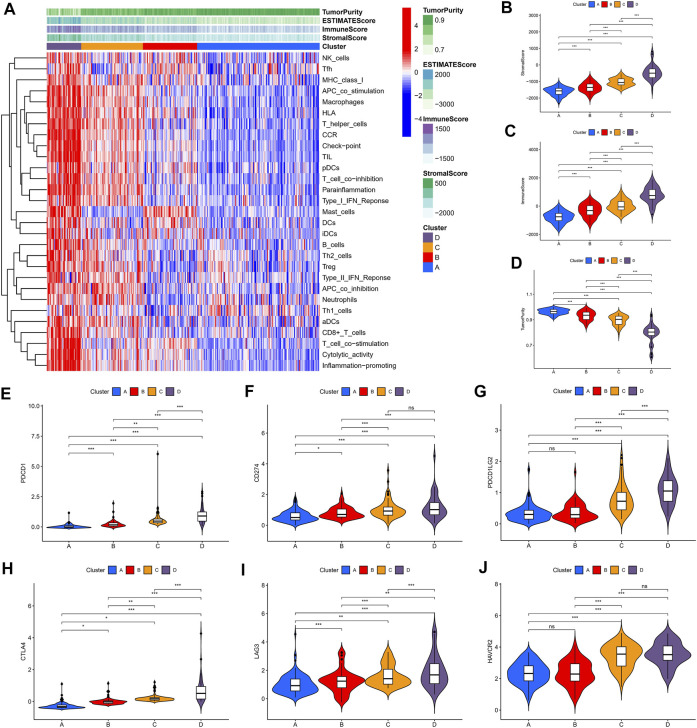
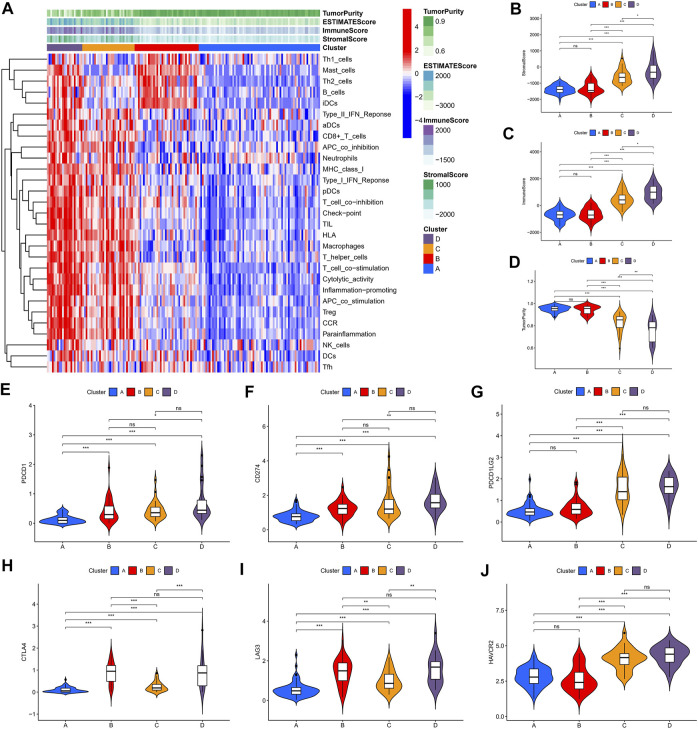
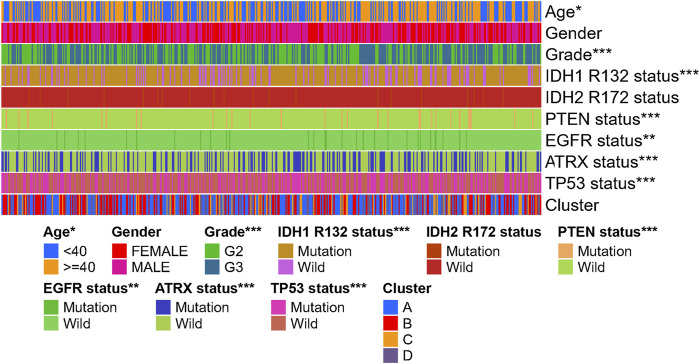
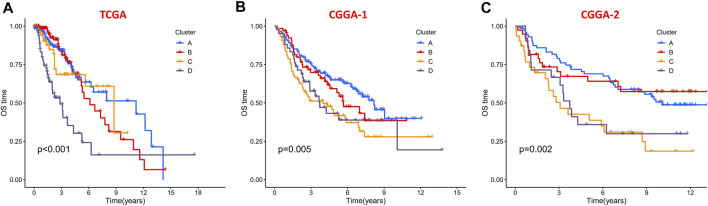
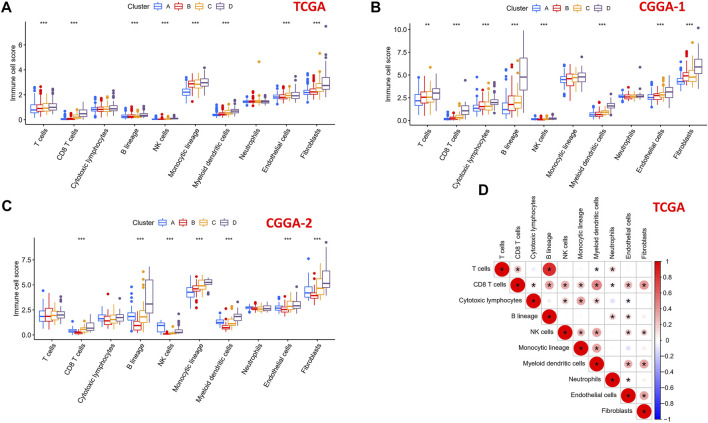
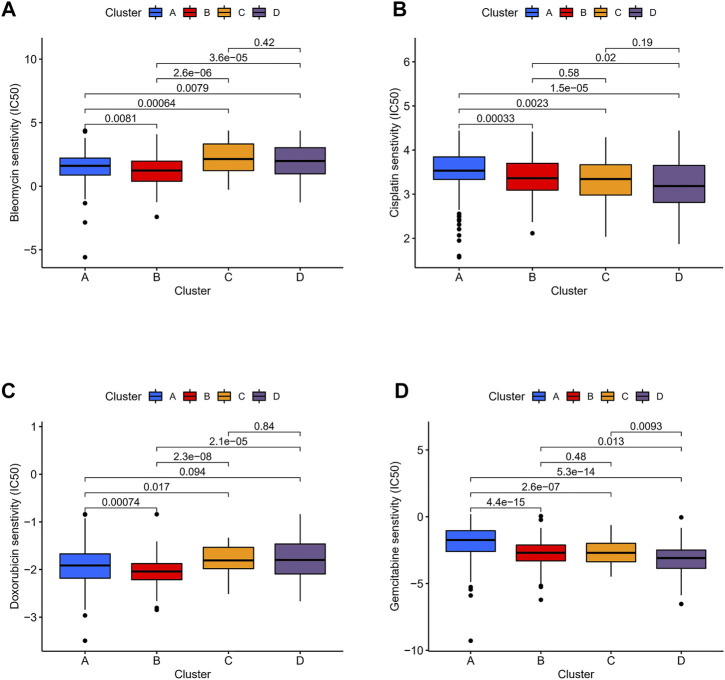
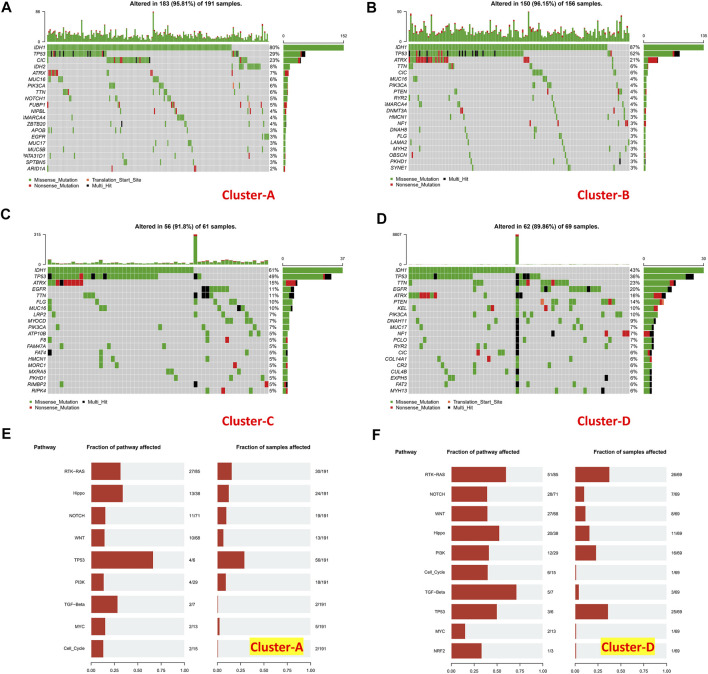
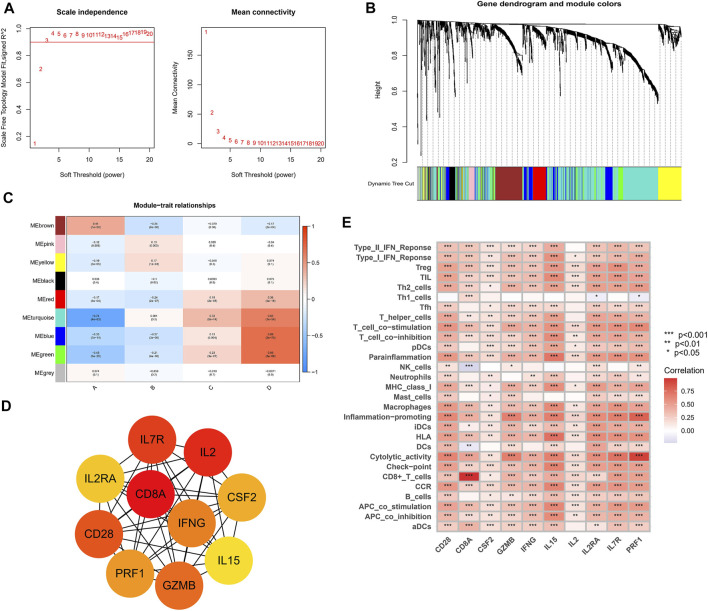
Few breakthroughs have been achieved in the treatment of lower-grade glioma (LGG) in recent decades. Apart from the conventional pathological and histological classifications, subtypes based on immunogenomics would provide reference for individualized treatment and prognosis prediction. Our study identified four immunotypes of lower-grade glioma (clusters A, B, C, and D) by bioinformatics methods in TCGA-LGG and two CGGA datasets. Cluster A was an "immune-cold" phenotype with the lowest immune infiltration and longest survival expectation, whereas cluster D was an "immune-rich" subtype with the highest immune infiltration and poor survival expectation. The expression of immune checkpoints increased along with immune infiltration degrees among the clusters. It was notable that immune clusters correlated with a variety of clinical and immunogenomic factors such as age, WHO grades, IDH1/2 mutation, PTEN, EGFR, ATRX, and TP53 status. In addition, LGGs in cluster D were sensitive to cisplatin, gemcitabine, and immune checkpoint PD-1 inhibitors. RTK-RAS and TP53 pathways were affected in cluster D. Functional pathways such as cytokine-cytokine receptor interaction, antigen processing and presentation, cell adhesion molecules (CAMs), and ECM-receptor interaction were also enriched in cluster D. Hub genes were selected by the Matthews correlation coefficient (MCC) algorithm in the blue module of a gene co-expression network. Our studies might provide an immunogenomics subtyping reference for immunotherapy in LGG.
近几十年来,低级别胶质瘤(LGG)的治疗几乎没有取得突破性进展。除了传统的病理和组织学分类外,基于免疫基因组学的亚型可为个体化治疗和预后预测提供参考。我们的研究通过生物信息学方法在TCGA-LGG和两个CGGA数据集中确定了低级别胶质瘤的四种免疫类型(A、B、C和D簇)。A簇是一种“免疫冷”表型,免疫浸润最低,生存预期最长,而D簇是一种“免疫丰富”亚型,免疫浸润最高,生存预期较差。各簇中免疫检查点的表达随着免疫浸润程度的增加而升高。值得注意的是,免疫簇与多种临床和免疫基因组因素相关,如年龄、世界卫生组织分级、IDH1/2突变、PTEN、EGFR、ATRX和TP53状态。此外,D簇中的LGG对顺铂、吉西他滨和免疫检查点PD-1抑制剂敏感。RTK-RAS和TP53通路在D簇中受到影响。细胞因子-细胞因子受体相互作用、抗原加工和呈递、细胞黏附分子(CAMs)和ECM-受体相互作用等功能通路在D簇中也得到富集。通过基因共表达网络蓝色模块中的马修斯相关系数(MCC)算法选择了枢纽基因。我们的研究可能为LGG免疫治疗提供免疫基因组学亚型参考。