Liu Peihua, Jiang Ling, Kong Weimin, Xie Qiushi, Li Ping, Liu Xiaonan, Zhang Jiayi, Liu Ming, Wang Zhongjian, Zhu Liang, Yang Hanyu, Zhou Ying, Zou Jianjun, Liu Xiaodong, Liu Li
Center of Drug Metabolism and Pharmacokinetics, School of Pharmacy, China Pharmaceutical University, Nanjing 210009, China.
Jiangsu Key Laboratory of New Drug Research and Clinical Pharmacy, Xuzhou Medical University, Xuzhou 221004, China.
Acta Pharm Sin B. 2022 May;12(5):2391-2405. doi: 10.1016/j.apsb.2021.09.031. Epub 2021 Oct 16.
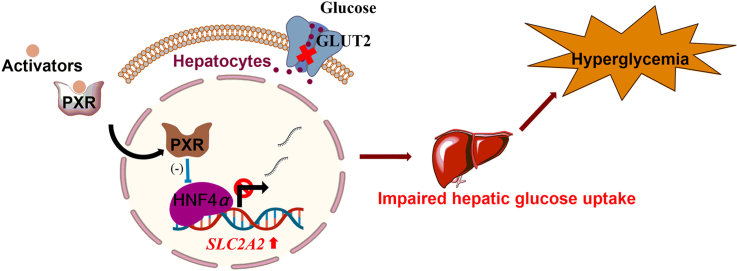
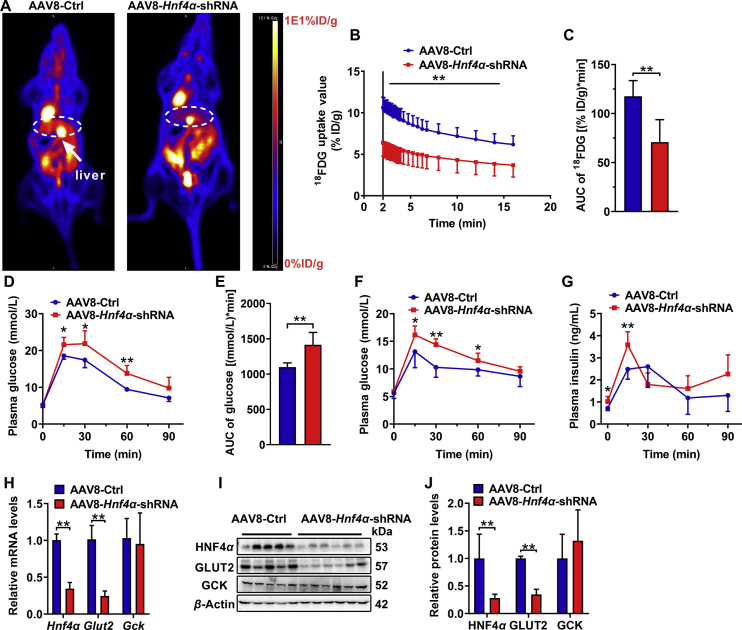
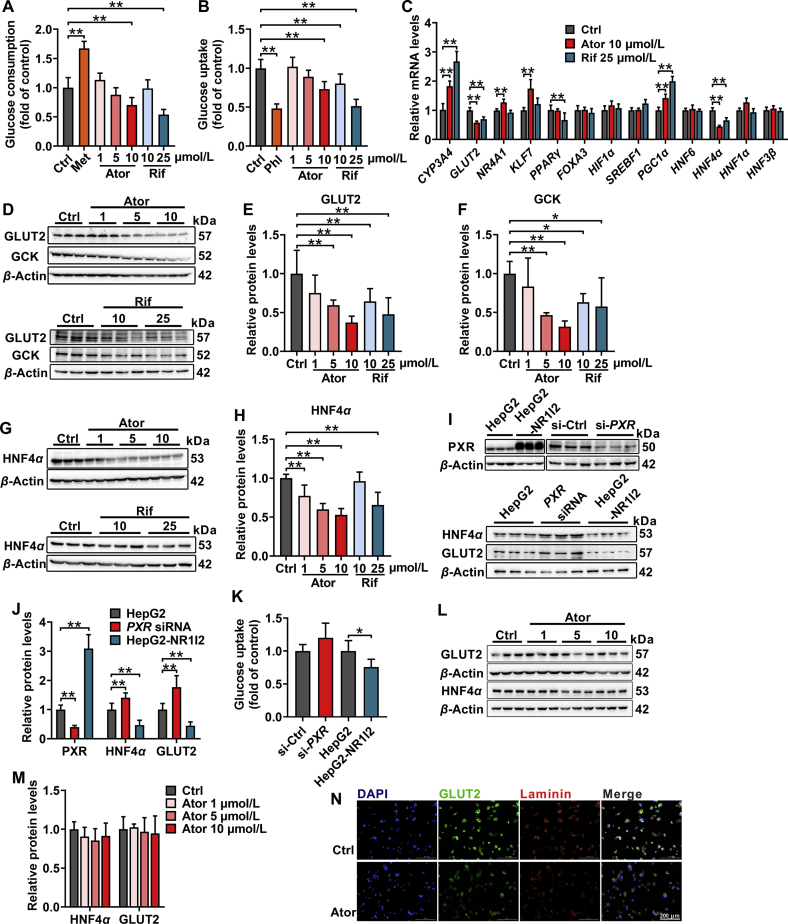
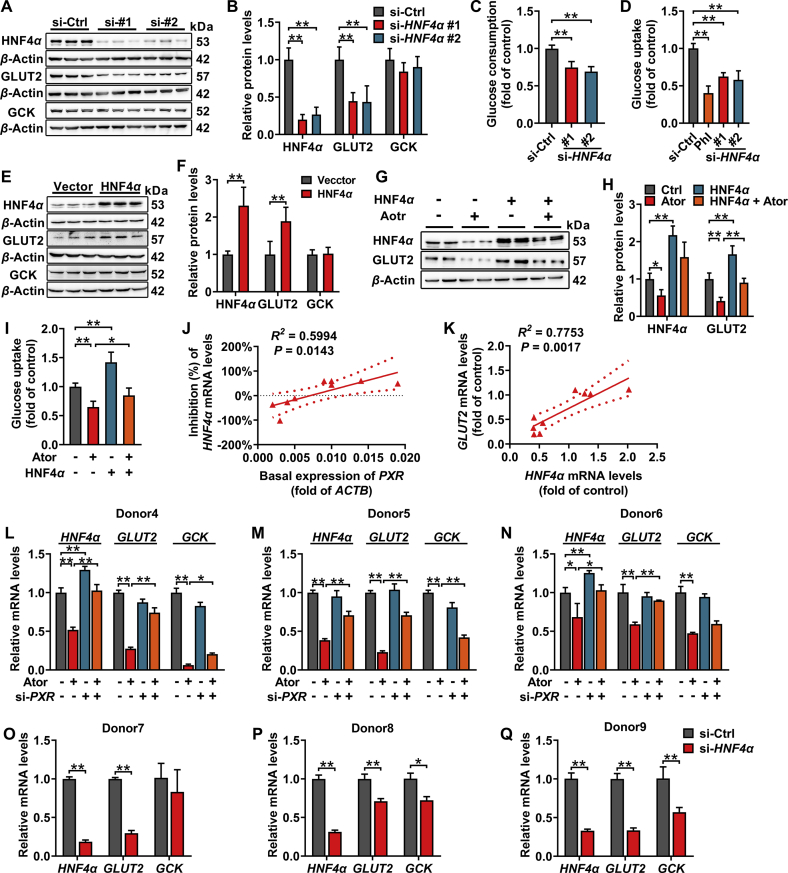
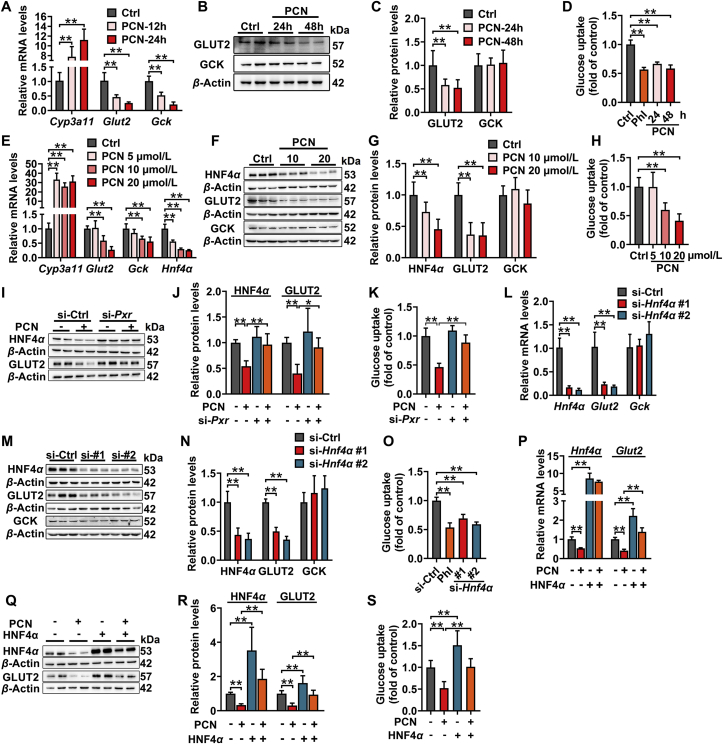
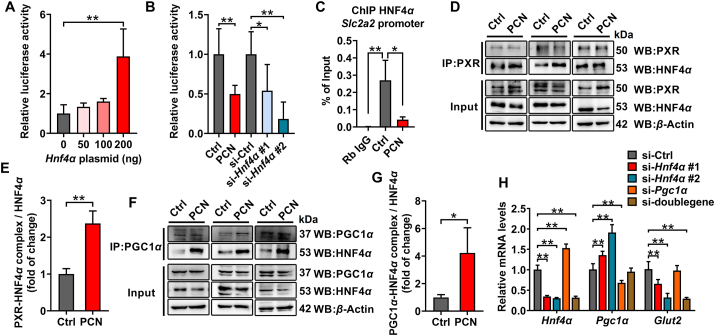
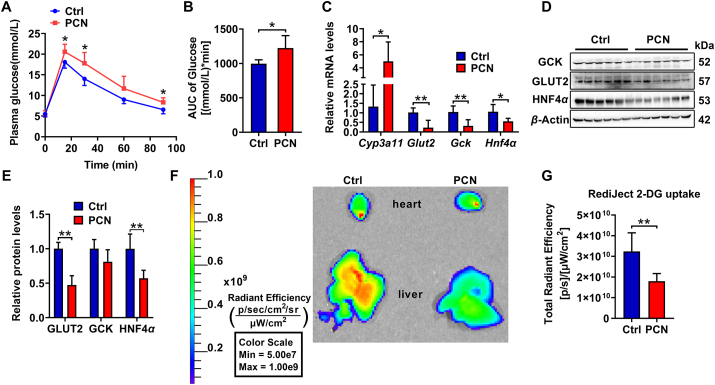
Drug-induced hyperglycemia/diabetes is a global issue. Some drugs induce hyperglycemia by activating the pregnane X receptor (PXR), but the mechanism is unclear. Here, we report that PXR activation induces hyperglycemia by impairing hepatic glucose metabolism due to inhibition of the hepatocyte nuclear factor 4-alpha (HNF4)‒glucose transporter 2 (GLUT2) pathway. The PXR agonists atorvastatin and rifampicin significantly downregulated GLUT2 and HNF4 expression, and impaired glucose uptake and utilization in HepG2 cells. Overexpression of PXR downregulated GLUT2 and HNF4 expression, while silencing upregulated HNF4 and GLUT2 expression. Silencing decreased GLUT2 expression, while overexpressing HNF4 increased GLUT2 expression and glucose uptake. Silencing or overexpressing HNF4 reversed the atorvastatin-induced decrease in GLUT2 expression and glucose uptake. In human primary hepatocytes, atorvastatin downregulated and mRNA expression, which could be attenuated by silencing . Silencing downregulated mRNA expression. These findings were reproduced with mouse primary hepatocytes. plasmid increased promoter activity. silencing or pregnenolone-16-carbonitrile (PCN) suppressed the promoter activity by decreasing HNF4 recruitment to the promoter. Liver-specific deletion and PCN impaired glucose tolerance and hepatic glucose uptake, and decreased the expression of hepatic HNF4 and GLUT2. In conclusion, PXR activation impaired hepatic glucose metabolism partly by inhibiting the HNF4‒GLUT2 pathway. These results highlight the molecular mechanisms by which PXR activators induce hyperglycemia/diabetes.
药物性高血糖/糖尿病是一个全球性问题。一些药物通过激活孕烷X受体(PXR)诱导高血糖,但机制尚不清楚。在此,我们报告PXR激活通过抑制肝细胞核因子4α(HNF4)-葡萄糖转运蛋白2(GLUT2)途径损害肝脏葡萄糖代谢,从而诱导高血糖。PXR激动剂阿托伐他汀和利福平显著下调GLUT2和HNF4表达,并损害HepG2细胞的葡萄糖摄取和利用。PXR过表达下调GLUT2和HNF4表达,而沉默则上调HNF4和GLUT2表达。沉默降低GLUT2表达,而HNF4过表达增加GLUT2表达和葡萄糖摄取。沉默或过表达HNF4可逆转阿托伐他汀诱导的GLUT2表达和葡萄糖摄取的降低。在人原代肝细胞中,阿托伐他汀下调和mRNA表达,沉默可使其减弱。沉默下调mRNA表达。这些发现也在小鼠原代肝细胞中得到重现。质粒增加启动子活性。沉默或孕烯醇酮-16-腈(PCN)通过减少HNF4募集到启动子来抑制启动子活性。肝脏特异性缺失和PCN损害葡萄糖耐量和肝脏葡萄糖摄取,并降低肝脏HNF4和GLUT2的表达。总之,PXR激活部分通过抑制HNF4-GLUT2途径损害肝脏葡萄糖代谢。这些结果突出了PXR激活剂诱导高血糖/糖尿病的分子机制。