Li Jiaojiao, Tang Mengtong, Qi Hao
School of Chemical Engineering and Technology, Tianjin University, Tianjin, China.
Frontiers Science Center for Synthetic Biology (Ministry of Education), Tianjin University, Tianjin, China.
Front Bioeng Biotechnol. 2022 May 13;10:891808. doi: 10.3389/fbioe.2022.891808. eCollection 2022.
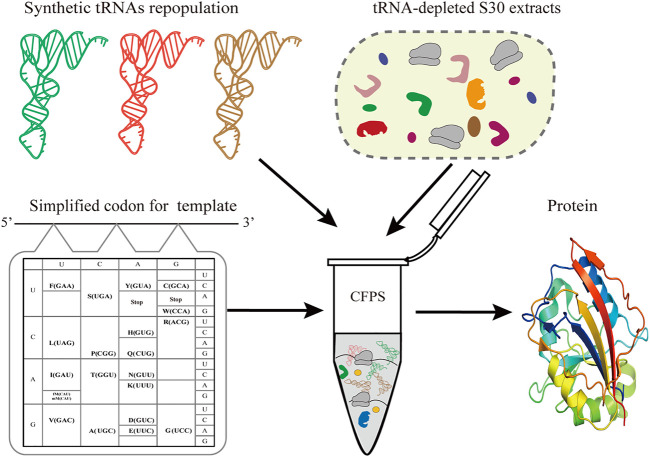
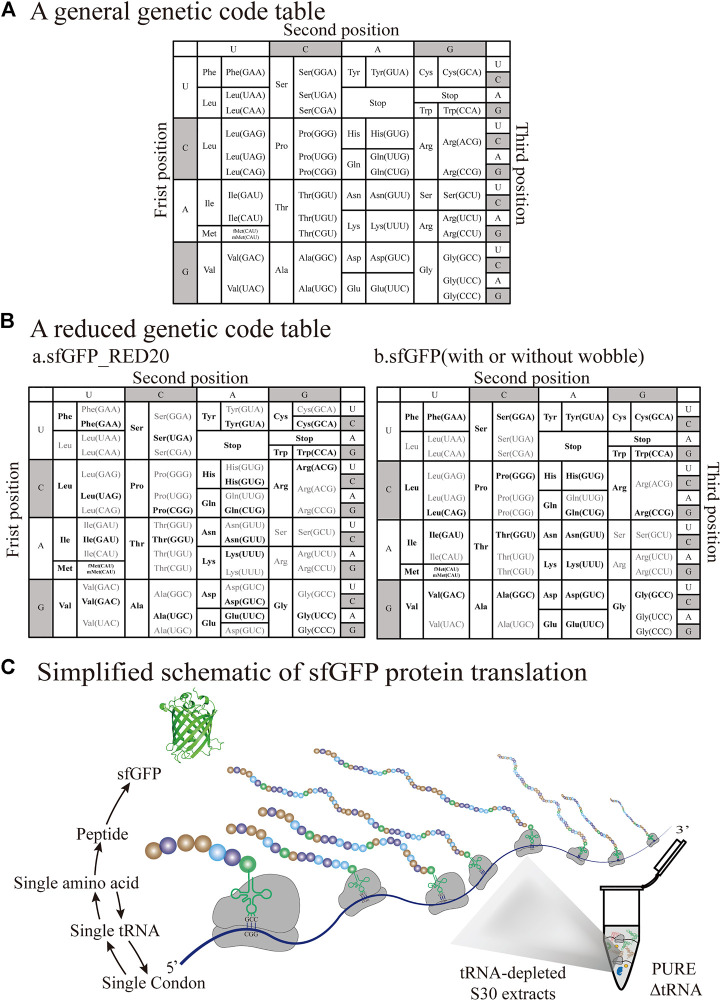
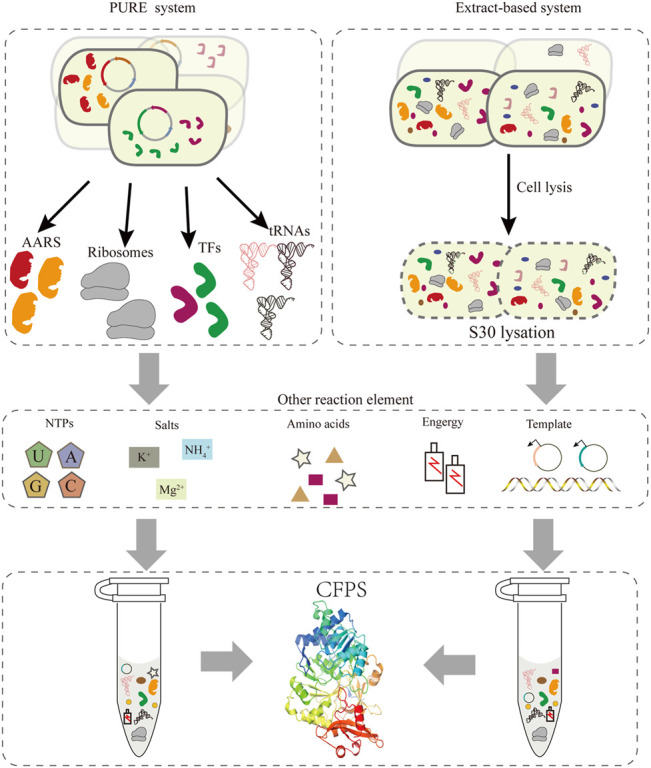
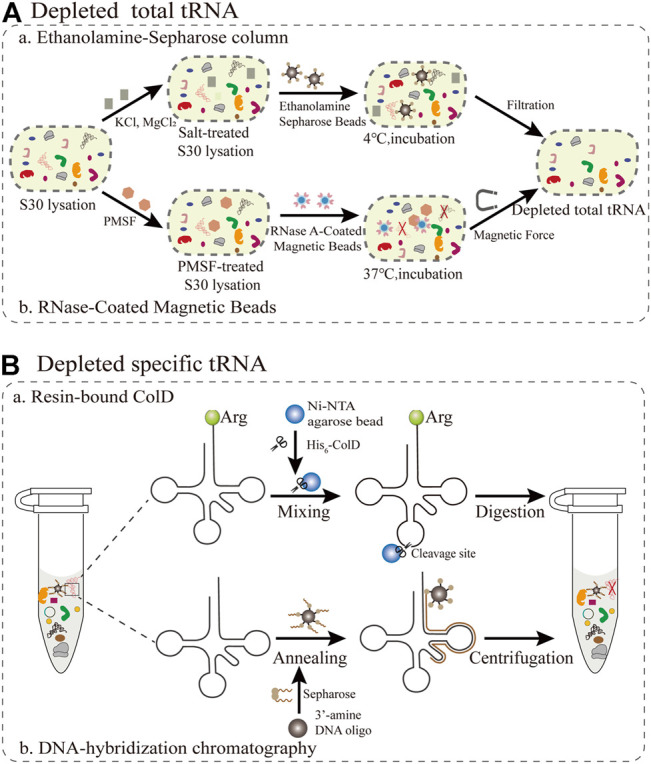
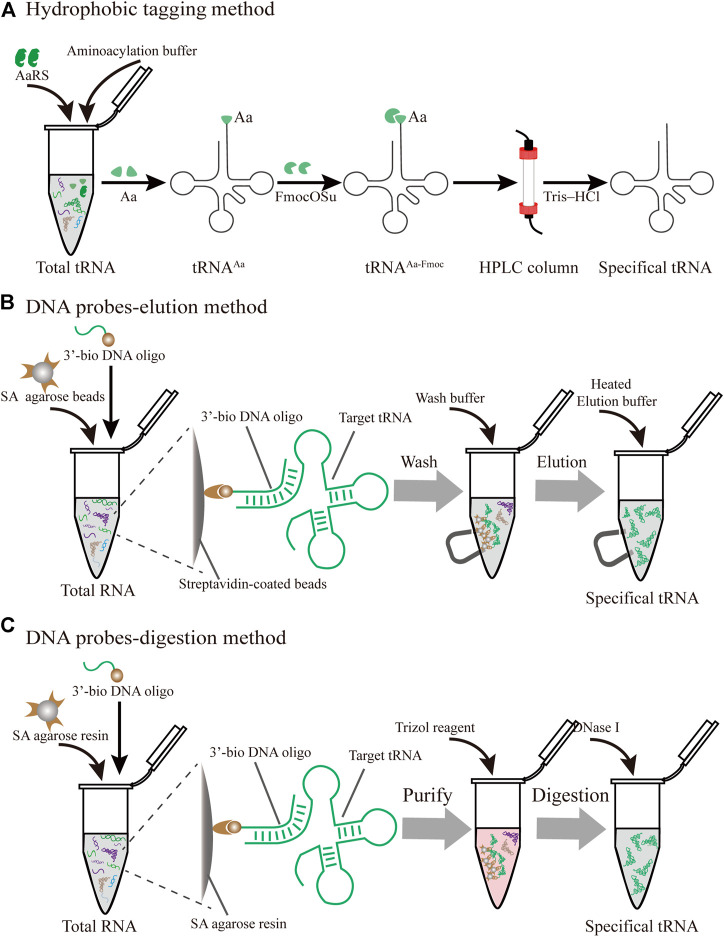
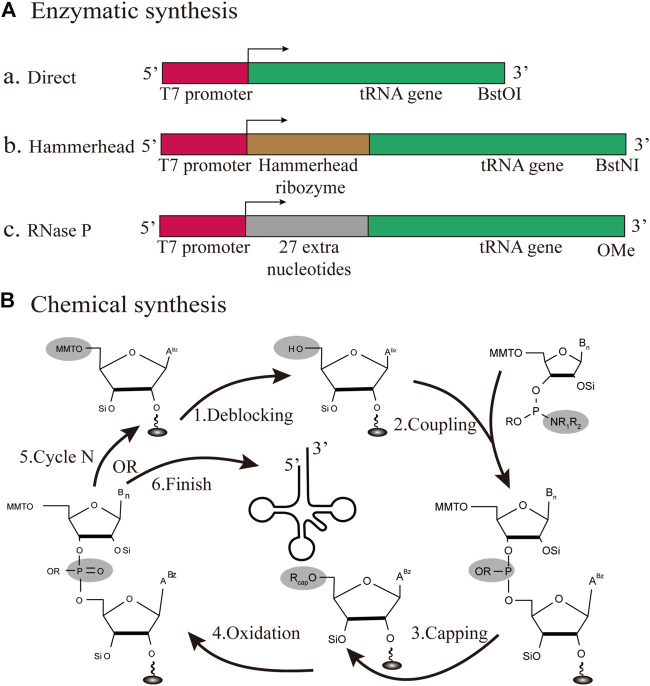
Manipulating transfer RNAs (tRNAs) for emancipating sense codons to simplify genetic codons in a cell-free protein synthesis (CFPS) system can offer more flexibility and controllability. Here, we provide an overview of the tRNA complement protein synthesis system construction in the tRNA-depleted Protein synthesis Using purified Recombinant Elements (PURE) system or S30 extract. These designed polypeptide coding sequences reduce the genetic codon and contain only a single tRNA corresponding to a single amino acid in this presented system. Strategies for removing tRNAs from cell lysates and synthesizing tRNAs / are summarized and discussed in detail. Furthermore, we point out the trend toward a minimized genetic codon for reducing codon redundancy by manipulating tRNAs in the different proteins. It is hoped that the tRNA complement protein synthesis system can facilitate the construction of minimal cells and expand the biomedical application scope of synthetic biology.
在无细胞蛋白质合成(CFPS)系统中,操纵转运RNA(tRNA)以解放有义密码子从而简化遗传密码,可提供更大的灵活性和可控性。在此,我们概述了在缺乏tRNA的利用纯化重组元件的蛋白质合成(PURE)系统或S30提取物中构建tRNA互补蛋白质合成系统的情况。这些设计的多肽编码序列减少了遗传密码子,并且在本系统中仅包含对应于单个氨基酸的单个tRNA。详细总结并讨论了从细胞裂解物中去除tRNA以及合成tRNA的策略。此外,我们指出了通过操纵不同蛋白质中的tRNA来最小化遗传密码子以减少密码子冗余的趋势。希望tRNA互补蛋白质合成系统能够促进最小细胞的构建,并扩大合成生物学在生物医学领域的应用范围。