Pitirri M Kathleen, Durham Emily L, Romano Natalie A, Santos Jacob I, Coupe Abigail P, Zheng Hao, Chen Danny Z, Kawasaki Kazuhiko, Jabs Ethylin Wang, Richtsmeier Joan T, Wu Meng, Motch Perrine Susan M
Department of Anthropology, The Pennsylvania State University, University Park, PA, United States.
Department of Computer Science and Engineering, University of Notre Dame, Notre Dame, IN, United States.
Front Genet. 2022 May 16;13:871927. doi: 10.3389/fgene.2022.871927. eCollection 2022.
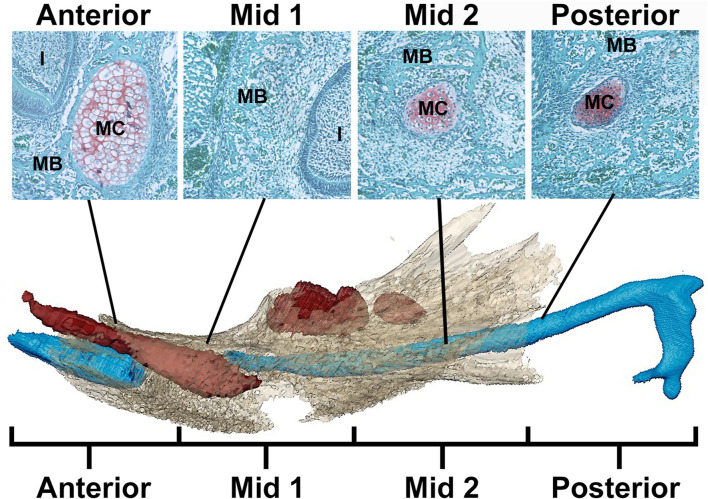
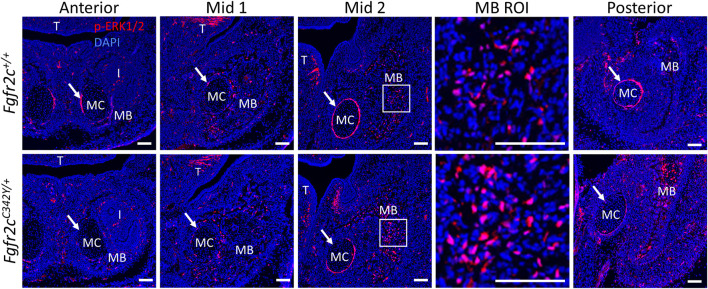
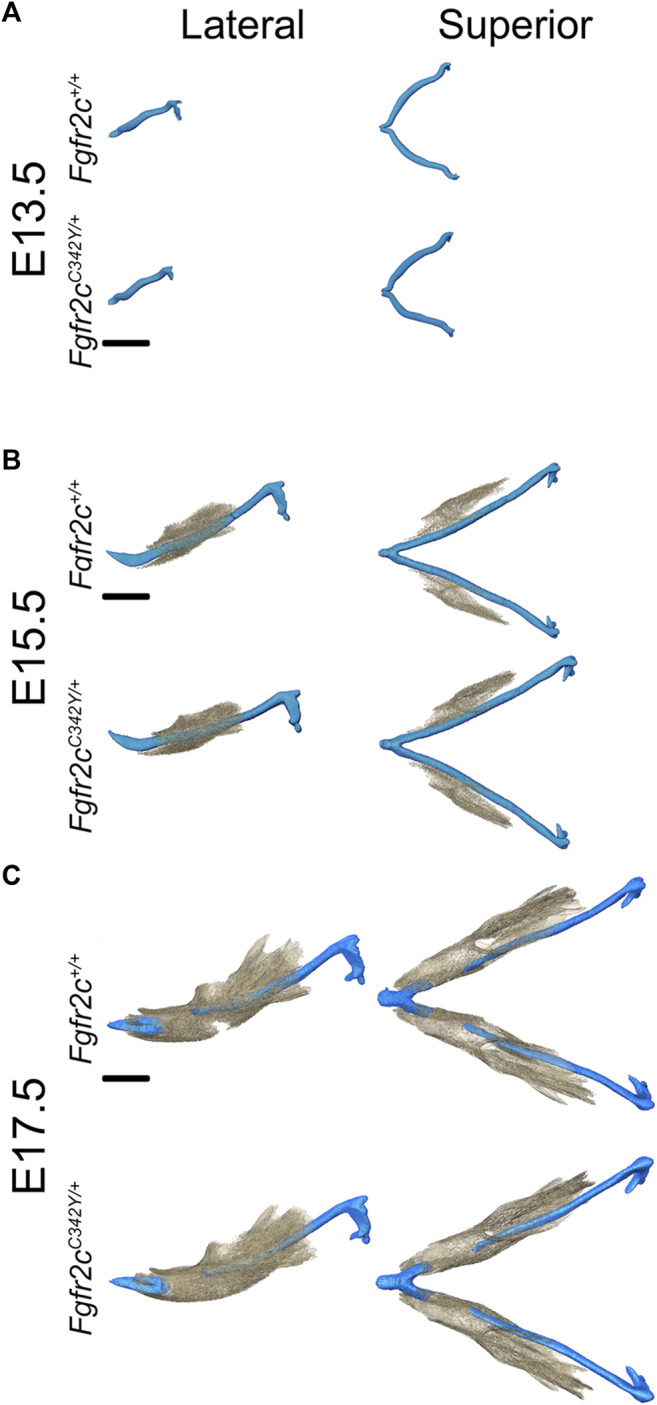
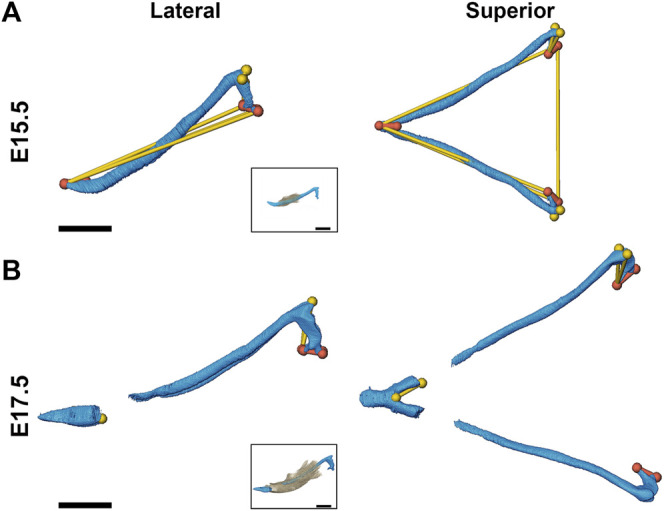
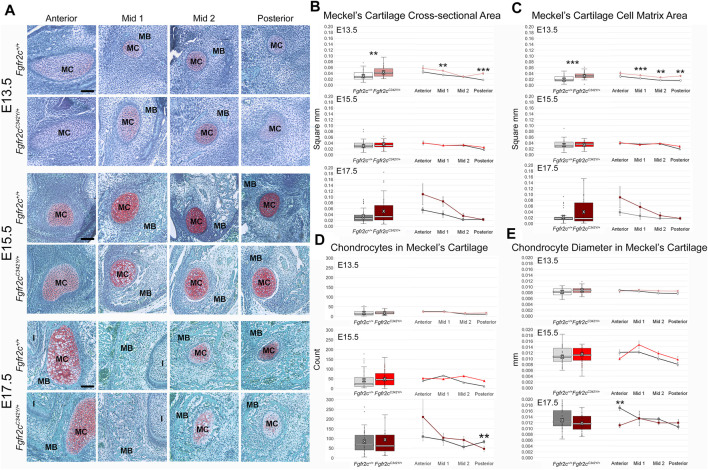
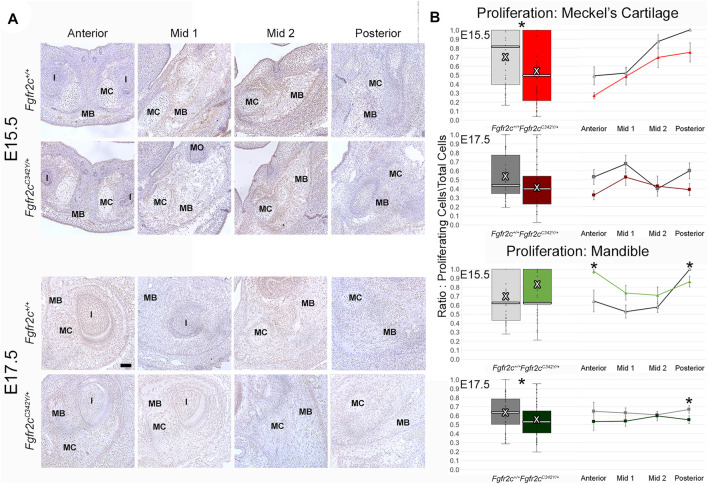
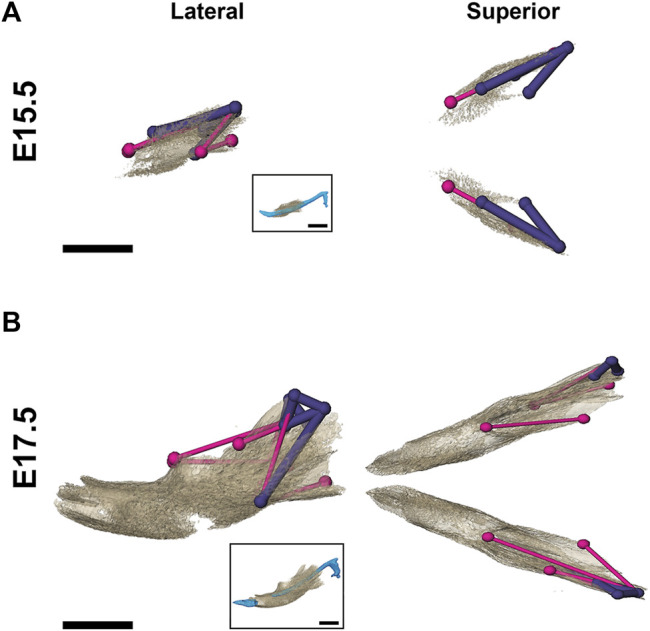
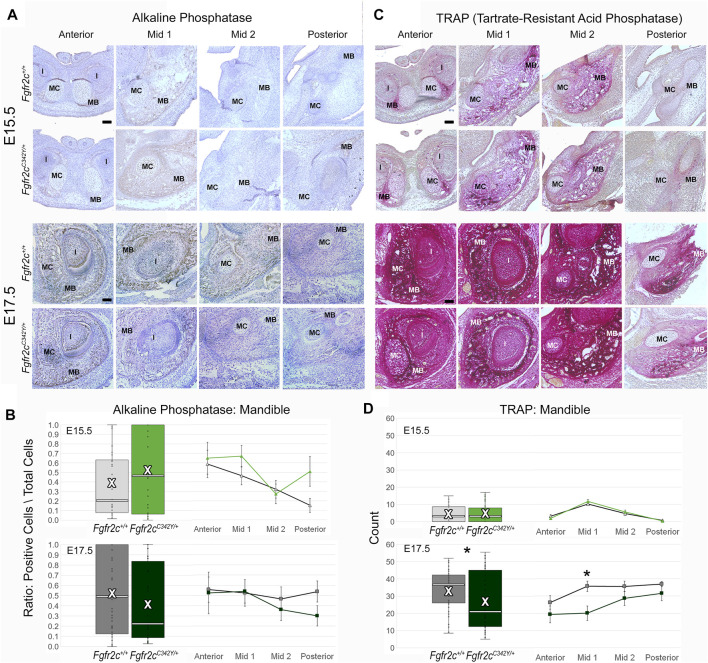
The Crouzon syndrome mouse model carries a cysteine to tyrosine substitution at amino acid position 342 (Cys342Tyr; C342Y) in the fibroblast growth factor receptor 2 () gene equivalent to a mutation commonly associated with Crouzon and Pfeiffer syndromes in humans. The Fgfr2c C342Y mutation results in constitutive activation of the receptor and is associated with upregulation of osteogenic differentiation. Crouzon syndrome mice show premature closure of the coronal suture and other craniofacial anomalies including malocclusion of teeth, most likely due to abnormal craniofacial form. Malformation of the mandible can precipitate a plethora of complications including disrupting development of the upper jaw and palate, impediment of the airway, and alteration of occlusion necessary for proper mastication. The current paradigm of mandibular development assumes that Meckel's cartilage (MC) serves as a support or model for mandibular bone formation and as a template for the later forming mandible. If valid, this implies a functional relationship between MC and the forming mandible, so mandibular dysmorphogenesis might be discerned in MC affecting the relationship between MC and mandibular bone. Here we investigate the relationship of MC to mandible development from the early mineralization of the mandible (E13.5) through the initiation of MC degradation at E17.7 using Crouzon syndrome embryos and their unaffected littermates ( ). Differences between genotypes in both MC and mandibular bone are subtle, however MC of embryos is generally longer relative to unaffected littermates at E15.5 with specific aspects remaining relatively large at E17.5. In contrast, mandibular bone is smaller overall in embryos relative to their unaffected littermates at E15.5 with the posterior aspect remaining relatively small at E17.5. At a cellular level, differences are identified between genotypes early (E13.5) followed by reduced proliferation in MC (E15.5) and in the forming mandible (E17.5) in embryos. Activation of the ERK pathways is reduced in the perichondrium of MC in embryos and increased in bone related cells at E15.5. These data reveal that the Fgfr2c C342Y mutation differentially affects cells by type, location, and developmental age indicating a complex set of changes in the cells that make up the lower jaw.
克鲁宗综合征小鼠模型在成纤维细胞生长因子受体2(Fgfr2)基因的第342位氨基酸处存在半胱氨酸到酪氨酸的替换(Cys342Tyr;C342Y),这等同于人类中通常与克鲁宗综合征和 Pfeiffer 综合征相关的一种突变。Fgfr2c C342Y 突变导致受体的组成性激活,并与成骨分化的上调有关。克鲁宗综合征小鼠表现出冠状缝过早闭合以及其他颅面异常,包括牙齿咬合不正,这很可能是由于颅面形态异常所致。下颌骨畸形会引发大量并发症,包括扰乱上颌和腭的发育、阻碍气道以及改变正常咀嚼所需的咬合。目前下颌骨发育的范式认为,梅克尔软骨(MC)作为下颌骨形成的支撑或模型,并作为后期形成的下颌骨的模板。如果这一观点成立,这意味着 MC 与正在形成的下颌骨之间存在功能关系,因此在下颌骨发育异常中可能会在 MC 中察觉到影响 MC 与下颌骨之间关系的情况。在这里,我们使用克鲁宗综合征胚胎及其未受影响的同窝仔鼠(对照),研究从下颌骨早期矿化(E13.5)到 E17.7 时 MC 开始降解这段时间内 MC 与下颌骨发育的关系。MC 和下颌骨在基因型上的差异很细微,然而在 E15.5 时,克鲁宗综合征胚胎的 MC 相对于未受影响的同窝仔鼠通常更长,在 E17.5 时特定方面仍然相对较大。相比之下,在 E15.5 时,克鲁宗综合征胚胎的下颌骨整体相对于未受影响的同窝仔鼠较小,在 E17.5 时后部仍然相对较小。在细胞水平上,早期(E13.5)在基因型之间就发现了差异,随后在 E15.5 时克鲁宗综合征胚胎的 MC 以及正在形成的下颌骨中的增殖减少。在 E15.5 时,克鲁宗综合征胚胎的 MC 软骨膜中 ERK 通路的激活减少,而在骨相关细胞中增加。这些数据表明,Fgfr2c C342Y 突变根据细胞类型、位置和发育年龄对细胞产生不同影响,表明构成下颌的细胞发生了一系列复杂的变化。