Center for Bioinformatics and Computational Biology, Department of Computer Science and the University of Maryland Institute of Advanced Computer Studies (UMIACS), University of Maryland, College Park, MD, 20742, USA.
Department of Cell Biology and Cancer Science, Rappaport Faculty of Medicine, Technion-Israel Institute of Technology, Haifa, 31096, Israel.
Nat Commun. 2022 Jun 2;13(1):3092. doi: 10.1038/s41467-022-30753-2.
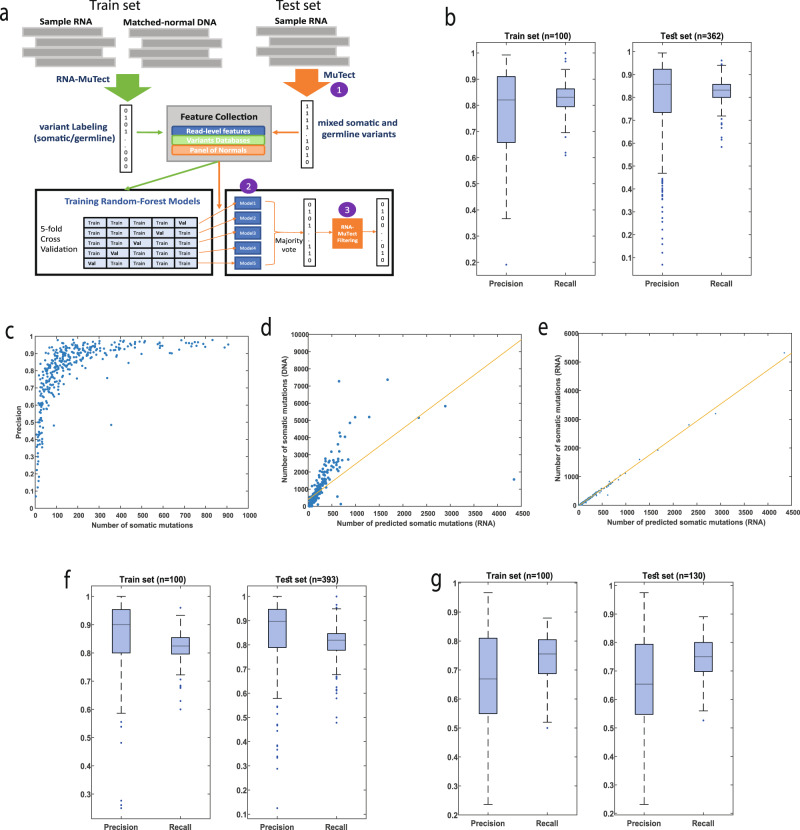
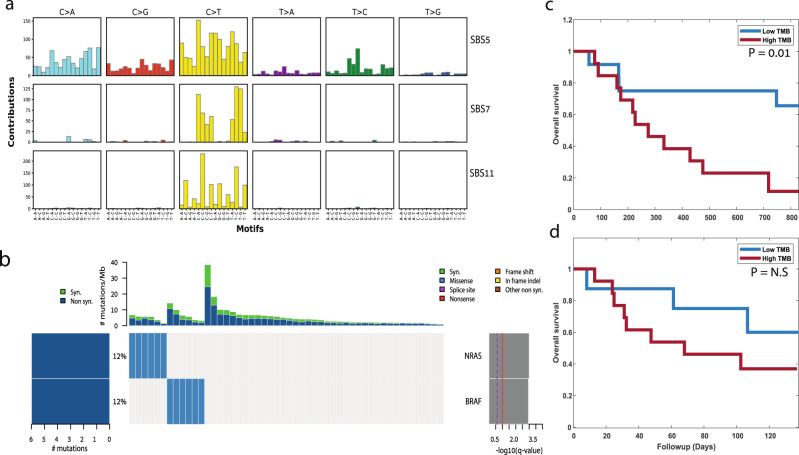
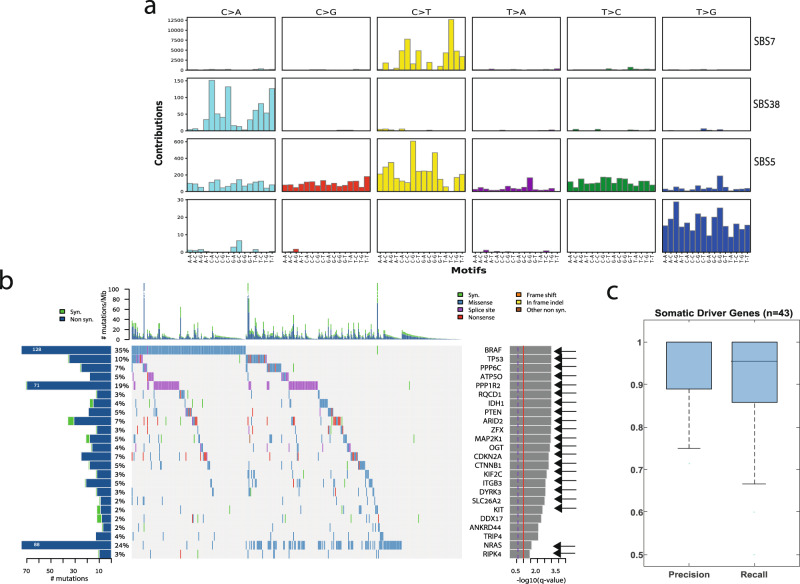
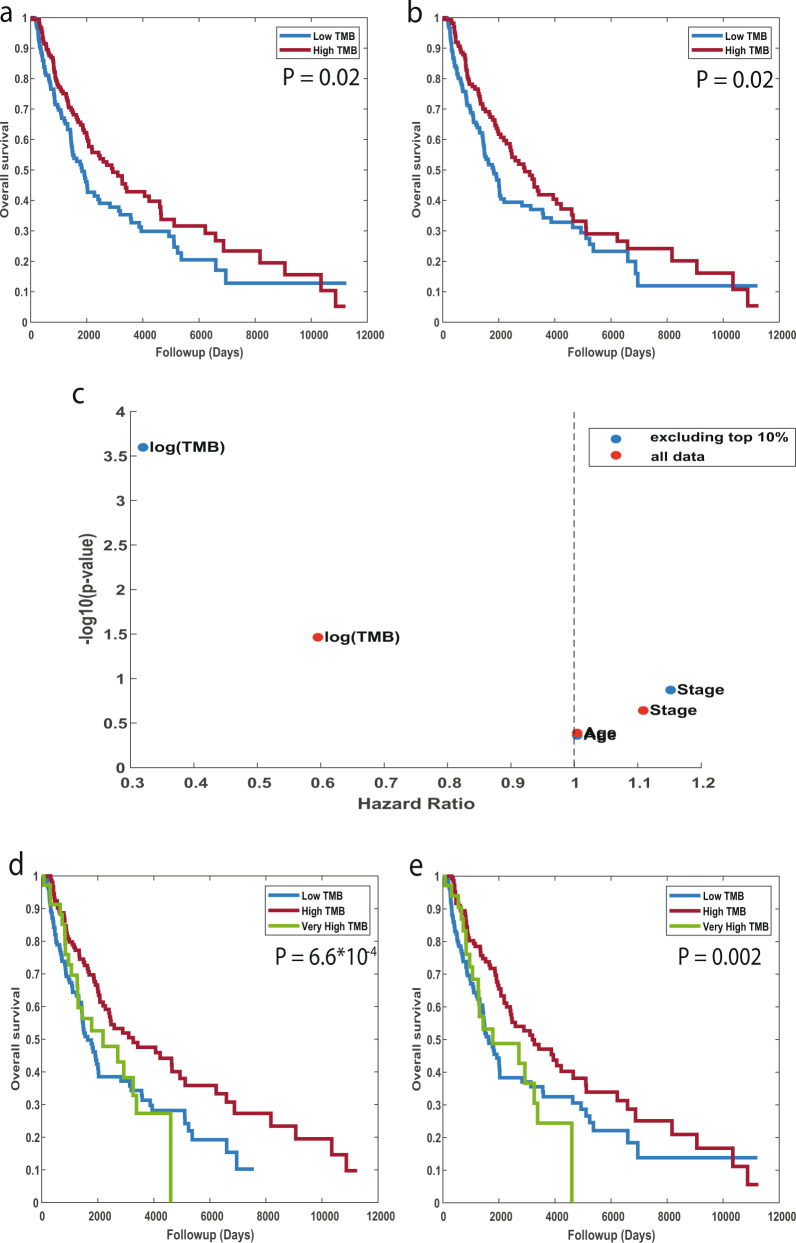
Detection of somatic mutations using patients sequencing data has many clinical applications, including the identification of cancer driver genes, detection of mutational signatures, and estimation of tumor mutational burden (TMB). We have previously developed a tool for detection of somatic mutations using tumor RNA and a matched-normal DNA. Here, we further extend it to detect somatic mutations from RNA sequencing data without a matched-normal sample. This is accomplished via a machine-learning approach that classifies mutations as either somatic or germline based on various features. When applied to RNA-sequencing of >450 melanoma samples high precision and recall are achieved, and both mutational signatures and driver genes are correctly identified. Finally, we show that RNA-based TMB is significantly associated with patient survival, showing similar or higher significance level as compared to DNA-based TMB. Our pipeline can be utilized in many future applications, analyzing novel and existing datasets where only RNA is available.
使用患者测序数据检测体细胞突变具有许多临床应用,包括鉴定癌症驱动基因、检测突变特征和估计肿瘤突变负担(TMB)。我们之前开发了一种使用肿瘤 RNA 和匹配正常 DNA 检测体细胞突变的工具。在这里,我们进一步将其扩展到无需匹配正常样本即可从 RNA 测序数据中检测体细胞突变。这是通过一种机器学习方法实现的,该方法根据各种特征将突变分类为体细胞或种系突变。当应用于 >450 个黑色素瘤样本的 RNA 测序时,实现了高精度和高召回率,并且正确识别了突变特征和驱动基因。最后,我们表明基于 RNA 的 TMB 与患者生存显著相关,与基于 DNA 的 TMB 相比具有相似或更高的显著性水平。我们的流水线可以在许多未来的应用中使用,分析仅提供 RNA 的新数据集和现有数据集。