Zhang Qi, Liu Chang, Shi Rubing, Zhou Shiyi, Shan Huimin, Deng Lidong, Chen Tingting, Guo Yiyan, Zhang Zhijun, Yang Guo-Yuan, Wang Yongting, Tang Yaohui
1School of Biomedical Engineering and Shanghai 6th People's Hospital, Shanghai Jiao Tong University, Shanghai 200030, China.
2Department of Neurology, Ruijin Hospital, School of Medicine, Shanghai Jiao Tong University, Shanghai 200025, China.
Aging Dis. 2022 Jun 1;13(3):943-959. doi: 10.14336/AD.2021.1029. eCollection 2022 Jun.
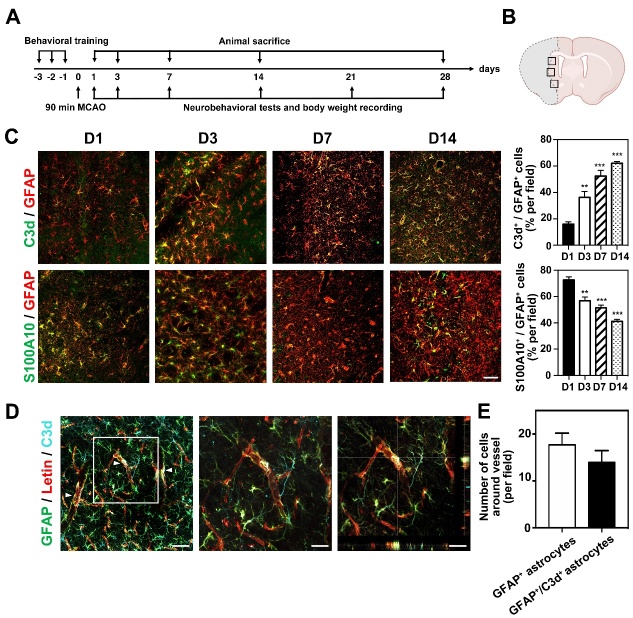
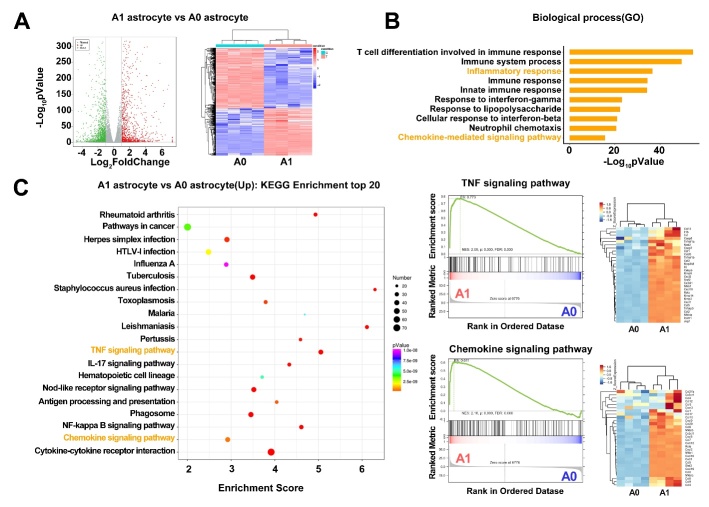
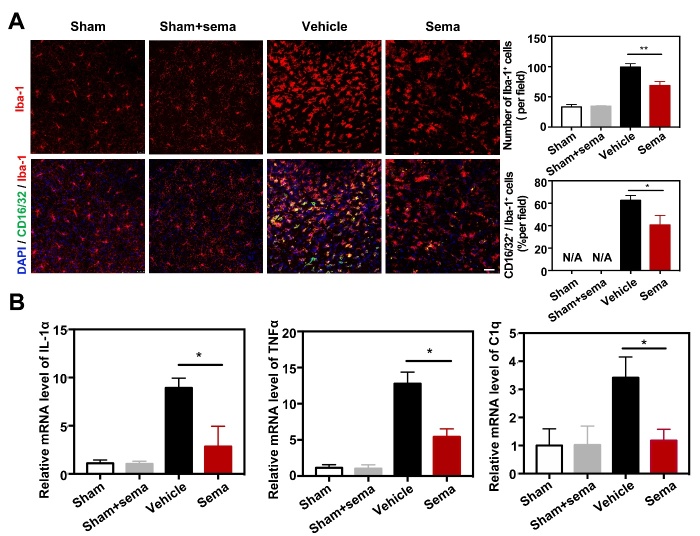
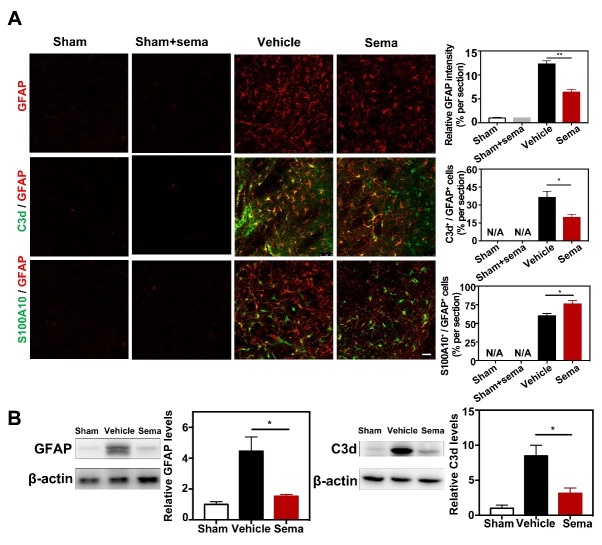
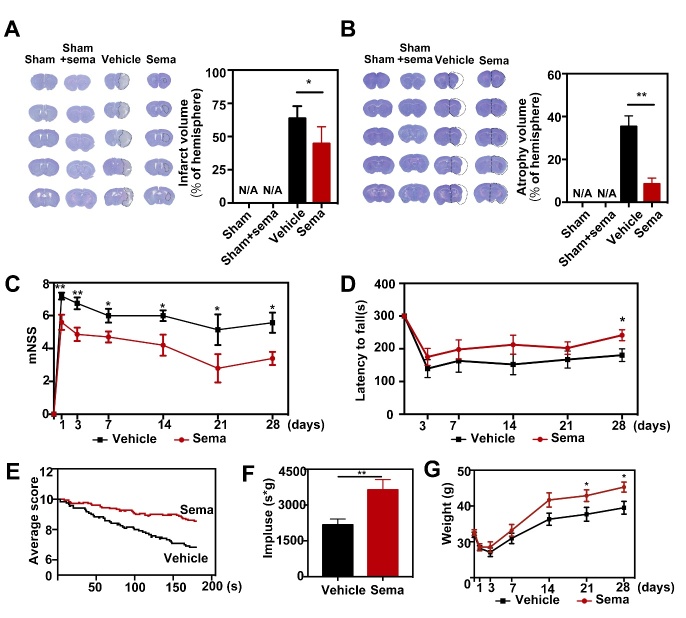
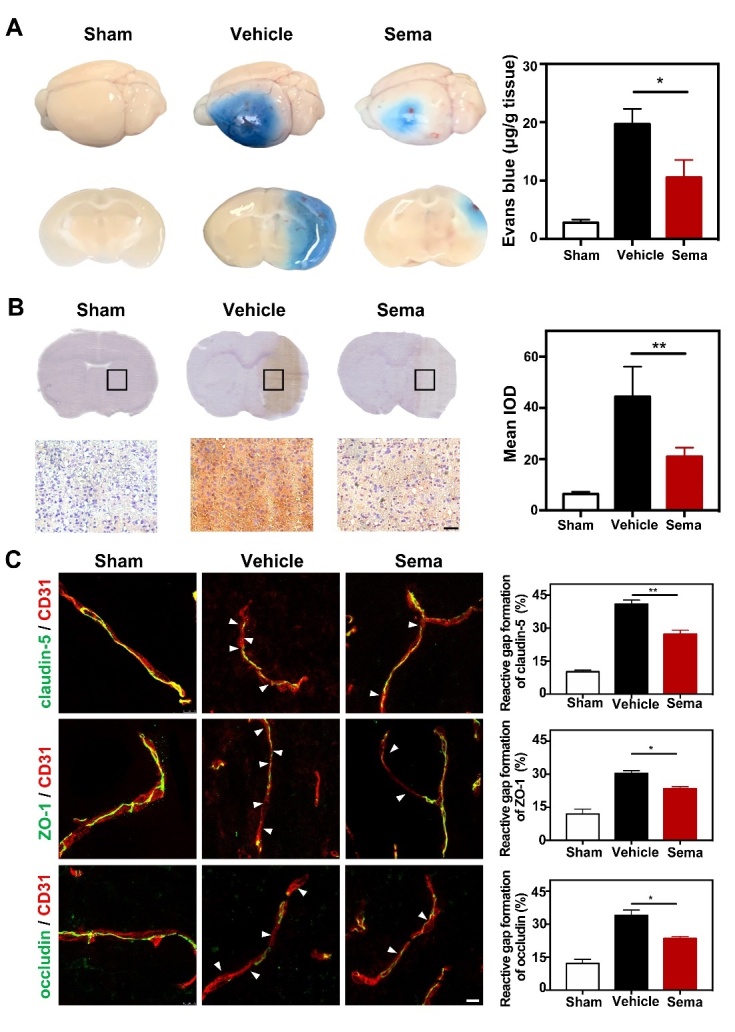
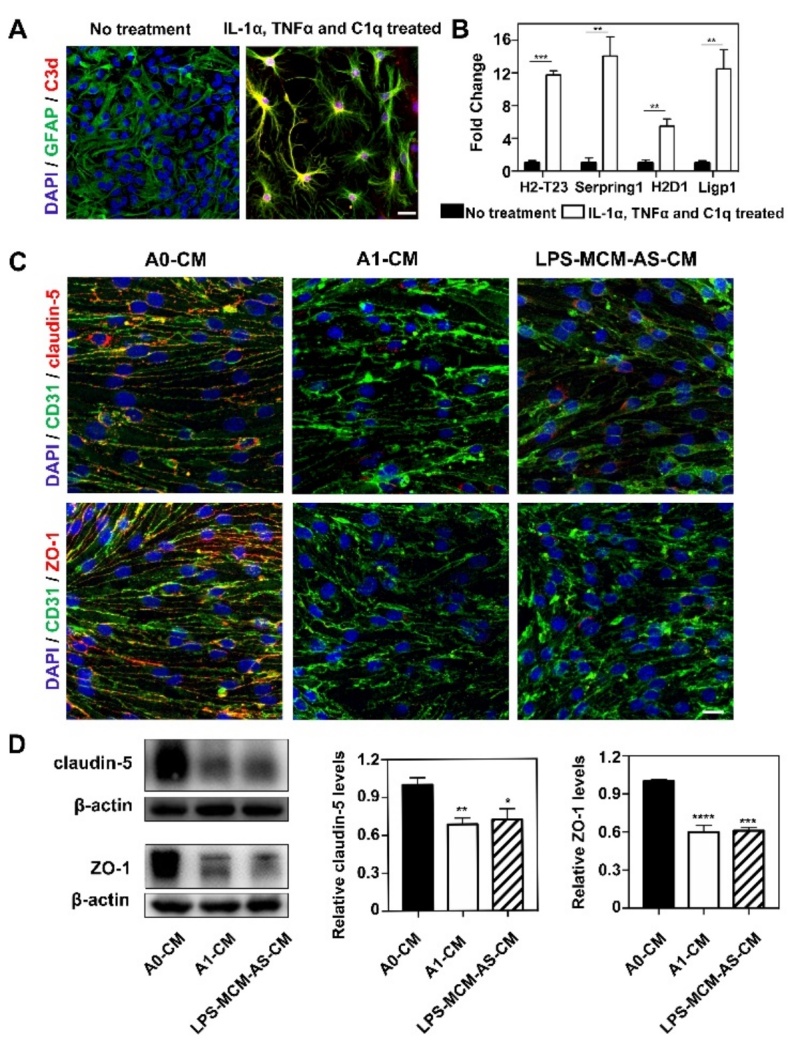
Astrocytes play an essential role in the modulation of blood-brain barrier function. Neurological diseases induce the transformation of astrocytes into a neurotoxic A1 phenotype, exacerbating brain injury. However, the effect of A1 astrocytes on the BBB dysfunction after stroke is unknown. Adult male ICR mice (n=97) were subjected to 90-minute transient middle cerebral artery occlusion (tMCAO). Immunohistochemical staining of A1 (C3d) and A2 (S100A10) was performed to characterize phenotypic changes in astrocytes over time after tMCAO. The glucagon-like peptide-1 receptor agonist semaglutide was intraperitoneally injected into mice to inhibit A1 astrocytes. Infarct volume, atrophy volume, neurobehavioral outcomes, and BBB permeability were evaluated. RNA-seq was adopted to explore the potential targets and signaling pathways of A1 astrocyte-induced BBB dysfunction. Astrocytic C3d expression was increased, while expression of S100A10 was decreased in the first two weeks after tMCAO, reflecting a shift in the astrocytic phenotype. Semaglutide treatment reduced the expression of CD16/32 in microglia and C3d in astrocytes after ischemic stroke (<0.05). Ischemia-induced brain infarct volume, atrophy volume and neuroinflammation were reduced in the semaglutide-treated mice, and neurobehavioral outcomes were improved compared to control mice (<0.05). We further demonstrated that semaglutide treatment reduced the gap formation of tight junction proteins ZO-1, claudin-5 and occludin, as well as IgG leakage three days following tMCAO (<0.05). experiments revealed that A1 astrocyte-conditioned medium disrupted BBB integrity. RNA-seq showed that A1 astrocytes were enriched in inflammatory factors and chemokines and significantly modulated the TNF and chemokine signaling pathways, which are closely related to barrier damage. We concluded that astrocytes undergo a phenotypic shift over time after ischemic stroke. C3d/GFAP astrocytes aggravate BBB disruption, suggesting that inhibiting C3d/GFAP astrocyte formation represents a novel strategy for the treatment of ischemic stroke.
星形胶质细胞在血脑屏障功能调节中发挥着重要作用。神经疾病会诱导星形胶质细胞转变为具有神经毒性的A1表型,从而加剧脑损伤。然而,A1星形胶质细胞对中风后血脑屏障功能障碍的影响尚不清楚。将成年雄性ICR小鼠(n = 97)进行90分钟的短暂大脑中动脉闭塞(tMCAO)。通过对A1(C3d)和A2(S100A10)进行免疫组织化学染色,以表征tMCAO后不同时间星形胶质细胞的表型变化。将胰高血糖素样肽-1受体激动剂司美格鲁肽腹腔注射到小鼠体内以抑制A1星形胶质细胞。评估梗死体积、萎缩体积、神经行为结果和血脑屏障通透性。采用RNA测序来探索A1星形胶质细胞诱导血脑屏障功能障碍的潜在靶点和信号通路。tMCAO后的前两周,星形胶质细胞的C3d表达增加,而S100A10表达降低,这反映了星形胶质细胞表型的转变。司美格鲁肽治疗降低了缺血性中风后小胶质细胞中CD16/32和星形胶质细胞中C3d的表达(<0.05)。与对照小鼠相比,司美格鲁肽治疗的小鼠缺血诱导的脑梗死体积、萎缩体积和神经炎症减少,神经行为结果得到改善(<0.05)。我们进一步证明,司美格鲁肽治疗减少了tMCAO后三天紧密连接蛋白ZO-1、claudin-5和occludin的间隙形成以及IgG渗漏(<0.05)。实验表明,A1星形胶质细胞条件培养基破坏了血脑屏障的完整性。RNA测序显示,A1星形胶质细胞富含炎症因子和趋化因子,并显著调节与屏障损伤密切相关的TNF和趋化因子信号通路。我们得出结论,缺血性中风后星形胶质细胞会随着时间发生表型转变。C3d/GFAP星形胶质细胞会加剧血脑屏障破坏,这表明抑制C3d/GFAP星形胶质细胞的形成是治疗缺血性中风的一种新策略。