Department of Neurosurgery, Oslo University Hospital, Nydalen, PO box 4950, 0424, Oslo, Norway.
Department of Neurohabilitation and Complex Neurology, Oslo University Hospital, Oslo, Norway.
Fluids Barriers CNS. 2022 Jun 4;19(1):45. doi: 10.1186/s12987-022-00333-z.
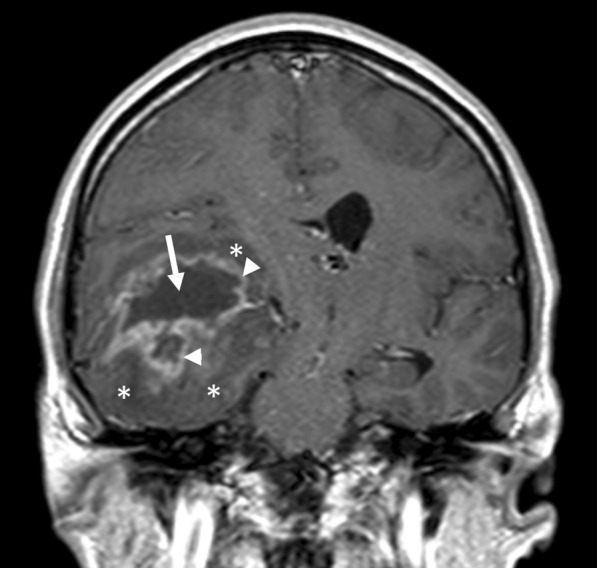
The growth of malignant tumors is influenced by their microenvironment. Glioblastoma, an aggressive primary brain tumor, may have cysts containing fluid that represents the tumor microenvironment. The aim of this study was to investigate whether the cyst fluid of cystic glioblastomas contains growth-stimulating factors. Identification of such growth factors may pave the way for the development of targeted anti-glioblastoma therapies.
We performed hormone analysis of cyst fluid from 25 cystic glioblastomas and proteomics analysis of cyst fluid from another 12 cystic glioblastomas.
Glioblastoma cyst fluid contained hormones within wide concentration ranges: Insulin-like growth factor 1 (0-13.7 nmol/L), insulin (1.4-133 pmol/L), erythropoietin (4.7-402 IU/L), growth hormone (0-0.93 µg/L), testosterone (0.2-10.1 nmol/L), estradiol (0-1.0 nmol/L), triiodothyronine (1.0-11.5). Tumor volume correlated with cyst fluid concentrations of growth hormone and testosterone. Survival correlated inversely with cyst fluid concentration of erythropoietin. Several hormones were present at concentrations that have been shown to stimulate glioblastoma growth in vitro. Concentrations of erythropoietin and estradiol (in men) were higher in cyst fluid than in serum, suggesting formation by tumor or brain tissue. Quantitatively, glioblastoma cyst fluid was dominated by serum proteins, illustrating blood-brain barrier leakage. Proteomics identified several proteins that stimulate tumor cell proliferation and invasiveness, others that inhibit apoptosis or mediate adaption to hypoxia and some that induce neovascularization or blood-brain barrier leakage.
The microenvironment of glioblastomas is rich in growth-stimulating factors that may originate from the circulation, the tumor, or the brain. The wide variation in cyst fluid hormone concentrations may differentially influence tumor growth.
肿瘤的生长受其微环境的影响。胶质母细胞瘤是一种侵袭性原发性脑肿瘤,可能有包含代表肿瘤微环境的液体的囊肿。本研究旨在探讨囊性胶质母细胞瘤的囊液中是否含有生长刺激因子。鉴定这些生长因子可能为靶向抗胶质母细胞瘤治疗铺平道路。
我们对 25 例囊性胶质母细胞瘤的囊液进行了激素分析,并对另外 12 例囊性胶质母细胞瘤的囊液进行了蛋白质组学分析。
胶质母细胞瘤囊液中含有广泛浓度范围的激素:胰岛素样生长因子 1(0-13.7 nmol/L)、胰岛素(1.4-133 pmol/L)、促红细胞生成素(4.7-402 IU/L)、生长激素(0-0.93 µg/L)、睾酮(0.2-10.1 nmol/L)、雌二醇(0-1.0 nmol/L)、三碘甲状腺原氨酸(1.0-11.5)。肿瘤体积与囊液中生长激素和睾酮的浓度相关。生存与囊液中促红细胞生成素的浓度呈负相关。几种激素的浓度被证明可以在体外刺激胶质母细胞瘤的生长。囊液中的促红细胞生成素和雌二醇(男性)浓度高于血清,提示由肿瘤或脑组织形成。定量分析表明,胶质母细胞瘤囊液以血清蛋白为主,说明血脑屏障渗漏。蛋白质组学鉴定出几种刺激肿瘤细胞增殖和侵袭的蛋白质,其他蛋白质抑制细胞凋亡或介导对缺氧的适应,还有一些蛋白质诱导血管生成或血脑屏障渗漏。
胶质母细胞瘤的微环境富含生长刺激因子,这些因子可能来自循环、肿瘤或大脑。囊液中激素浓度的广泛变化可能会对肿瘤生长产生不同的影响。