Division of Neurology, Department of Pediatrics, Children's Hospital Los Angeles, 4650 Sunset Blvd, MS82, Los Angeles, CA, 90027, USA.
Department of Neurology, Keck School of Medicine at the University of Southern California, Los Angeles, CA, USA.
J Neurodev Disord. 2022 Jun 3;14(1):35. doi: 10.1186/s11689-022-09446-w.
Down syndrome regression disorder is a symptom cluster consisting of neuropsychiatric regression without cause. This study evaluated the incidence of neurodiagnostic abnormalities in individuals with Down syndrome regression disorder and determined if abnormalities are indicative of responses to therapeutic intervention.
A retrospective, multi-center, case-control study was performed. Patients were required to have subacute onset and the presence of four of five symptom groups present (cognitive decline, expressive language, sleep derangement, loss of ability to perform activities of daily living, and/or a new movement disorder) and no other explanation for symptoms.
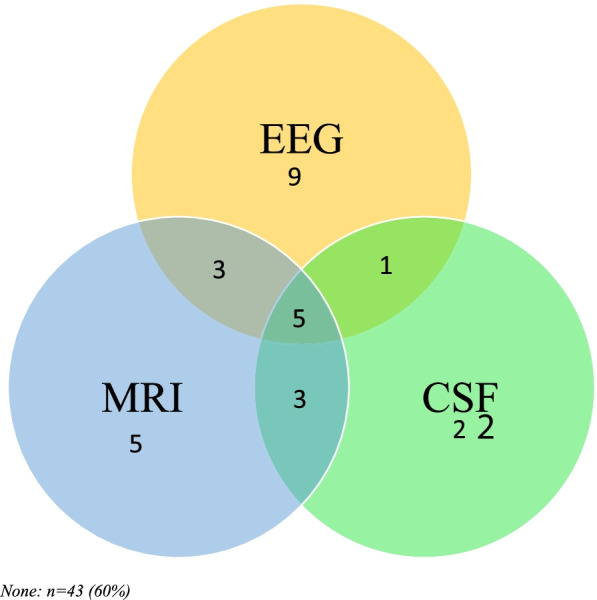
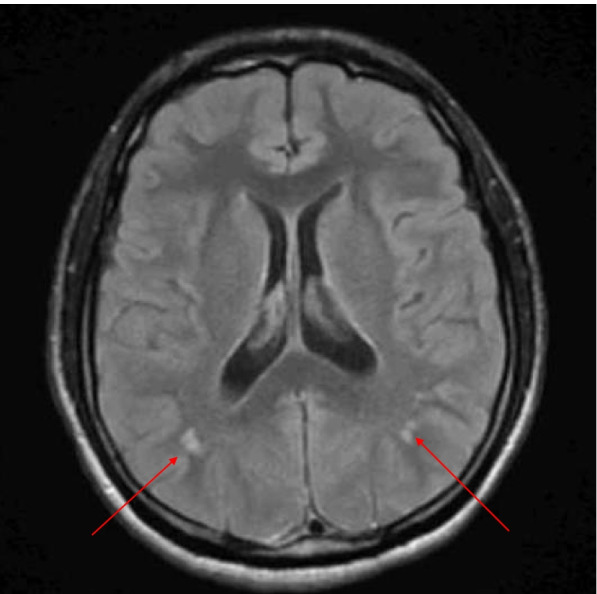
Individuals with Down syndrome regression disorder were comparable to a cohort of individuals with only Down syndrome although had higher rates of autoimmune disease (p = 0.02, 95%CI 1.04-1.75). Neurodiagnostic abnormalities were found on EEG (n = 19, 26%), neuroimaging (n = 16, 22%), and CSF (n = 9, 17%). Pleocytosis was appreciated in five cases, elevated total protein in nine, elevated IgG index in seven, and oligoclonal bands in two. Testing within 2 years of symptom onset was more likely to have neurodiagnostic abnormalities (p = 0.01, 95%CI 1.64-37.06). In individuals with neurodiagnostic abnormalities, immunotherapy was nearly four times more likely to have a therapeutic effect than in those without neurodiagnostic abnormalities (OR 4.11, 95%CI 1.88-9.02). In those with normal neurodiagnostic studies (n = 43), IVIg was effective in 14 of 17 (82%) patients as well although other immunotherapies were uniformly ineffective.
This study reports the novel presence of neurodiagnostic testing abnormalities in individuals with Down syndrome regression disorder, providing credence to this symptom cluster potentially being of neurologic and/or neuroimmunologic etiology.
唐氏综合征退行性障碍是一种由不明原因导致的神经精神退行性障碍的症状群。本研究评估了唐氏综合征退行性障碍患者神经诊断异常的发生率,并确定了这些异常是否与治疗干预的反应有关。
进行了一项回顾性、多中心、病例对照研究。要求患者有亚急性发作,并存在五个症状组中的四个(认知能力下降、表达性语言、睡眠障碍、丧失日常生活活动能力和/或新的运动障碍),且没有其他症状解释。
唐氏综合征退行性障碍患者与仅有唐氏综合征的患者相比具有可比性,尽管自身免疫性疾病的发生率较高(p = 0.02,95%CI 1.04-1.75)。脑电图(n = 19,26%)、神经影像学(n = 16,22%)和脑脊液(n = 9,17%)均发现神经诊断异常。五例有细胞增多症,九例总蛋白升高,七例 IgG 指数升高,两例寡克隆带。在症状发作后 2 年内进行的检查更有可能发现神经诊断异常(p = 0.01,95%CI 1.64-37.06)。在有神经诊断异常的患者中,免疫疗法的疗效是无神经诊断异常患者的近四倍(OR 4.11,95%CI 1.88-9.02)。在神经诊断正常的患者中(n = 43),IVIg 在 17 例患者中的 14 例中有效(82%),尽管其他免疫疗法均无效。
本研究报告了唐氏综合征退行性障碍患者神经诊断测试异常的新发现,为该症状群可能具有神经和/或神经免疫病因提供了依据。