Department of Computational Biology, School of Life Sciences, Fudan University, 200438, Shanghai, China.
Department of Developmental and Behavioural Pediatric & Child Primary Care, Brain and Behavioural Research Unit of Shanghai Institute for Pediatric Research and MOE-Shanghai Key Laboratory for Children's Environmental Health, Xinhua Hospital, Shanghai Jiao Tong University School of Medicine, 200092, Shanghai, China.
Transl Psychiatry. 2022 Jun 3;12(1):228. doi: 10.1038/s41398-022-01987-x.
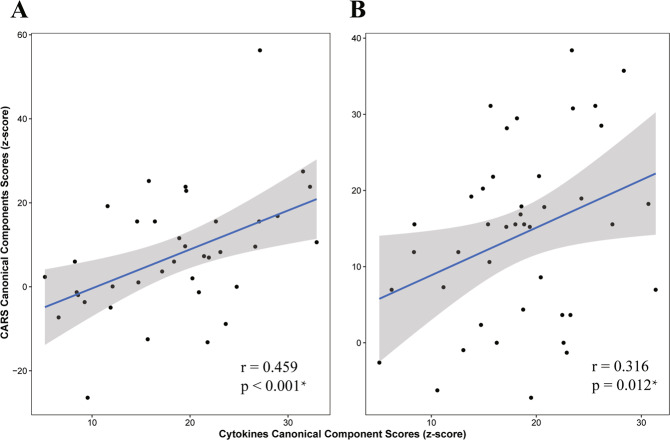
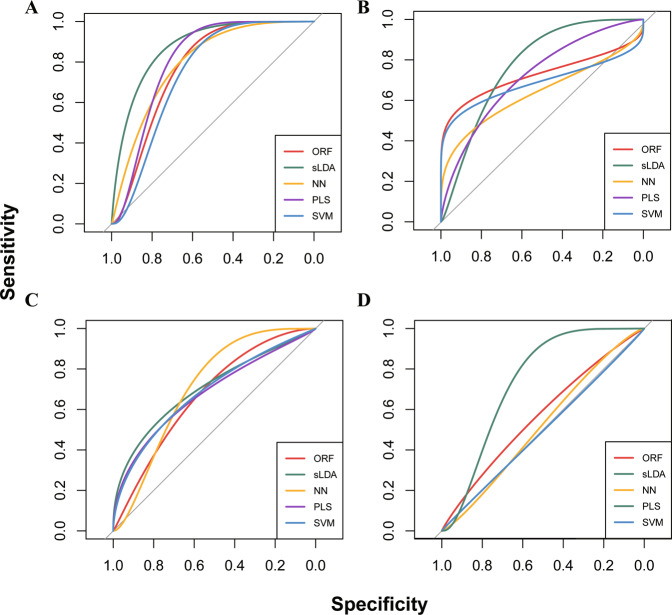
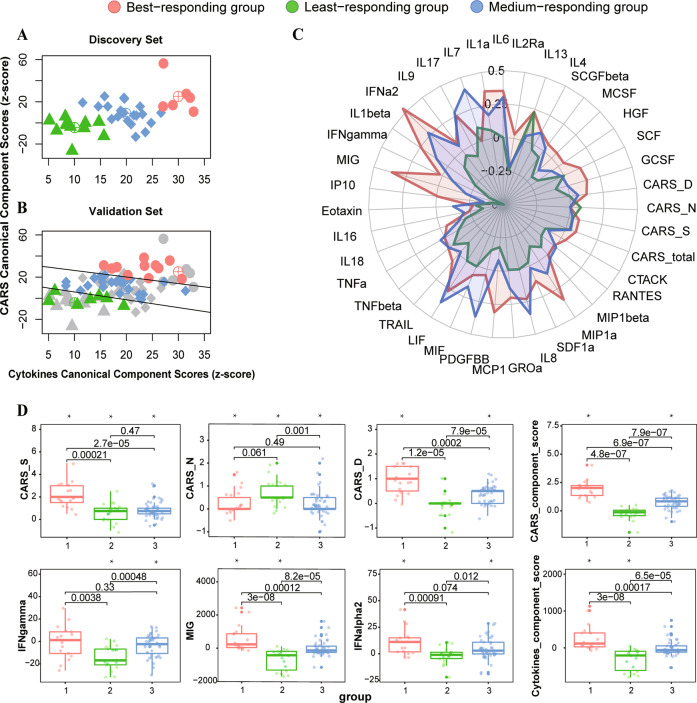
Bumetanide, a drug being studied in autism spectrum disorder (ASD) may act to restore gamma-aminobutyric acid (GABA) function, which may be modulated by the immune system. However, the interaction between bumetanide and the immune system remains unclear. Seventy-nine children with ASD were analysed from a longitudinal sample for a 3-month treatment of bumetanide. The covariation between symptom improvements and cytokine changes was calculated and validated by sparse canonical correlation analysis. Response patterns to bumetanide were revealed by clustering analysis. Five classifiers were used to test whether including the baseline information of cytokines could improve the prediction of the response patterns using an independent test sample. An immuno-behavioural covariation was identified between symptom improvements in the Childhood Autism Rating Scale (CARS) and the cytokine changes among interferon (IFN)-γ, monokine induced by gamma interferon and IFN-α2. Using this covariation, three groups with distinct response patterns to bumetanide were detected, including the best (21.5%, n = 17; Hedge's g of improvement in CARS = 2.16), the least (22.8%, n = 18; g = 1.02) and the medium (55.7%, n = 44; g = 1.42) responding groups. Including the cytokine levels significantly improved the prediction of the best responding group before treatment (the best area under the curve, AUC = 0.832) compared with the model without the cytokine levels (95% confidence interval of the improvement in AUC was [0.287, 0.319]). Cytokine measurements can help in identifying possible responders to bumetanide in ASD children, suggesting that immune responses may interact with the mechanism of action of bumetanide to enhance the GABA function in ASD.
布美他尼是一种正在研究用于自闭症谱系障碍(ASD)的药物,它可能通过调节免疫系统来恢复γ-氨基丁酸(GABA)的功能。然而,布美他尼与免疫系统的相互作用仍不清楚。对来自纵向样本的 79 名 ASD 儿童进行了 3 个月的布美他尼治疗分析。通过稀疏典型相关分析计算和验证了症状改善与细胞因子变化之间的协变。通过聚类分析揭示了对布美他尼的反应模式。使用 5 个分类器来测试在使用独立测试样本时,是否包含细胞因子的基线信息可以改善对反应模式的预测。在儿童自闭症评定量表(CARS)中的症状改善和干扰素(IFN)-γ、γ干扰素诱导的单核细胞因子和 IFN-α2 之间的细胞因子变化之间发现了一种免疫行为协变。利用这种协变,检测到 3 种对布美他尼有明显不同反应模式的组,包括最佳组(21.5%,n=17;CARS 改善的 Hedge's g=2.16)、最差组(22.8%,n=18;g=1.02)和中等组(55.7%,n=44;g=1.42)。与没有细胞因子水平的模型相比,在治疗前纳入细胞因子水平可显著提高最佳反应组的预测(最佳曲线下面积,AUC=0.832)(AUC 改善的 95%置信区间为[0.287,0.319])。细胞因子测量可以帮助识别 ASD 儿童中可能对布美他尼有反应的个体,这表明免疫反应可能与布美他尼的作用机制相互作用,从而增强 ASD 中的 GABA 功能。