Lemonnier E, Villeneuve N, Sonie S, Serret S, Rosier A, Roue M, Brosset P, Viellard M, Bernoux D, Rondeau S, Thummler S, Ravel D, Ben-Ari Y
CHU hoputal Le Cluzeau, CHU Limoges, Limoges, France.
CHU hoputal Le Cluzeau, Hôpital Sainte Marguerite, Marseille, France.
Transl Psychiatry. 2017 Mar 14;7(3):e1056. doi: 10.1038/tp.2017.10.
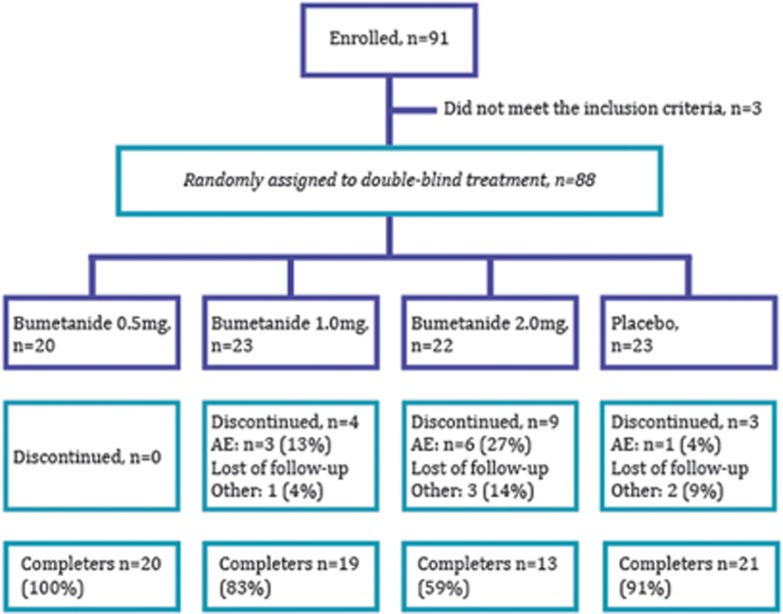
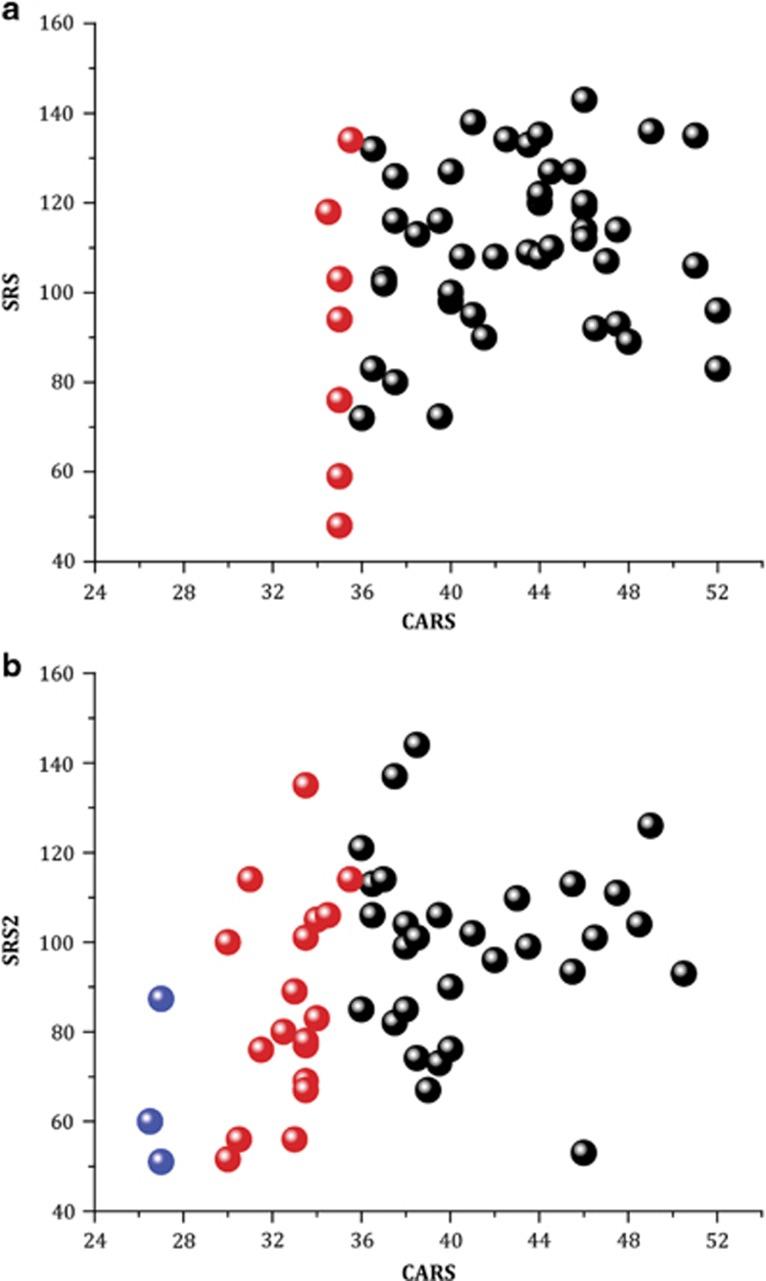
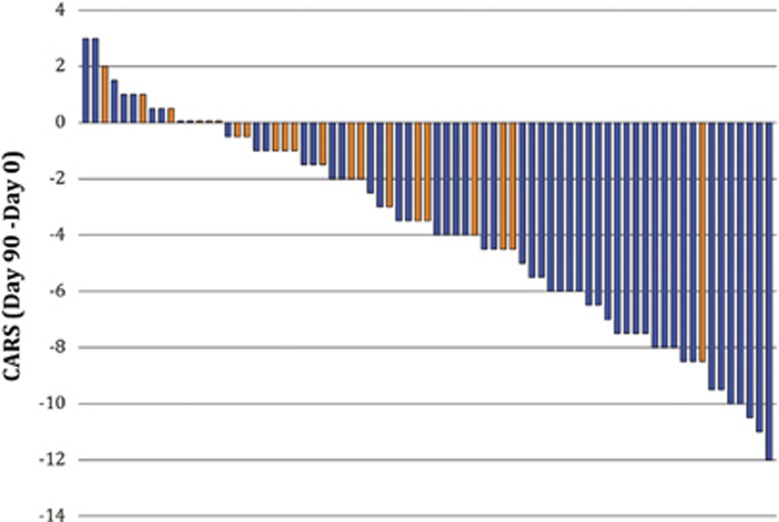
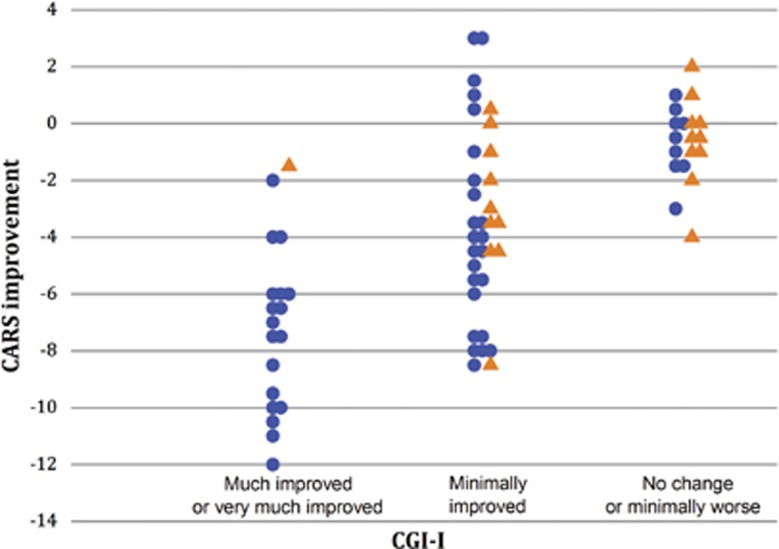
In animal models of autism spectrum disorder (ASD), the NKCC1 chloride-importer inhibitor bumetanide restores physiological (Cl) levels, enhances GABAergic inhibition and attenuates electrical and behavioral symptoms of ASD. In an earlier phase 2 trial; bumetanide reduced the severity of ASD in children and adolescents (3-11 years old). Here we report the results of a multicenter phase 2B study primarily to assess dose/response and safety effects of bumetanide. Efficacy outcome measures included the Childhood Autism Rating Scale (CARS), the Social Responsive Scale (SRS) and the Clinical Global Impressions (CGI) Improvement scale (CGI-I). Eighty-eight patients with ASD spanning across the entire pediatric population (2-18 years old) were subdivided in four age groups and randomized to receive bumetanide (0.5, 1.0 or 2.0 mg twice daily) or placebo for 3 months. The mean CARS value was significantly improved in the completers group (P: 0.015). Also, 23 treated children had more than a six-point improvement in the CARS compared with only one placebo-treated individual. Bumetanide significantly improved CGI (P: 0.0043) and the SRS score by more than 10 points (P: 0.02). The most frequent adverse events were hypokalemia, increased urine elimination, loss of appetite, dehydration and asthenia. Hypokalemia occurred mainly at the beginning of the treatment at 1.0 and 2.0 mg twice-daily doses and improved gradually with oral potassium supplements. The frequency and incidence of adverse event were directly correlated with the dose of bumetanide. Therefore, bumetanide improves the core symptoms of ASD and presents a favorable benefit/risk ratio particularly at 1.0 mg twice daily.
在自闭症谱系障碍(ASD)动物模型中,NKCC1氯化物导入抑制剂布美他尼可恢复生理(Cl)水平,增强γ-氨基丁酸能抑制作用,并减轻ASD的电生理和行为症状。在早期的2期试验中,布美他尼降低了儿童和青少年(3至11岁)ASD的严重程度。在此,我们报告一项多中心2B期研究的结果,主要评估布美他尼的剂量/反应及安全性。疗效指标包括儿童自闭症评定量表(CARS)、社会反应量表(SRS)和临床总体印象(CGI)改善量表(CGI-I)。88例年龄跨度为整个儿科人群(2至18岁)的ASD患者被分为四个年龄组,随机接受布美他尼(0.5、1.0或2.0毫克,每日两次)或安慰剂治疗3个月。完成治疗组的CARS平均得分有显著改善(P:0.015)。此外,23例接受治疗的儿童CARS得分提高超过6分,而接受安慰剂治疗的儿童只有1例。布美他尼显著改善了CGI(P:0.0043),SRS得分提高超过10分(P:0.02)。最常见的不良事件是低钾血症、尿量增加、食欲不振、脱水和乏力。低钾血症主要发生在治疗开始时,每日两次1.0和2.0毫克剂量组,口服补钾后逐渐改善。不良事件的频率和发生率与布美他尼的剂量直接相关。因此,布美他尼可改善ASD的核心症状,尤其是每日两次1.0毫克剂量时,具有良好的效益/风险比。