Perumalsamy Haribalan, Shanmugam Rajeshkumar, Kim Jun-Ran, Anandapadmanaban Gokulanathan, Huq Md Amdadul, Dua Kamal, Chellappan Dinesh Kumar, Yoon Tae Hyun, Balusamy Sri Renukadevi
Institute for Next Generation Material Design, Hanyang University, Seoul 04763, Republic of Korea.
Center for Creative Convergence Education, Hanyang University, Seoul 04763, Republic of Korea.
Bioinorg Chem Appl. 2022 May 26;2022:9569226. doi: 10.1155/2022/9569226. eCollection 2022.
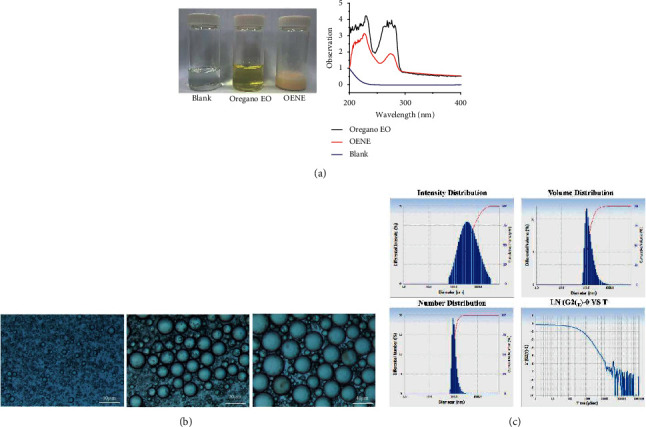
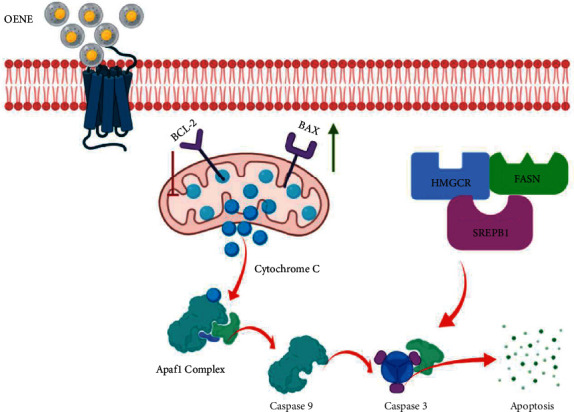
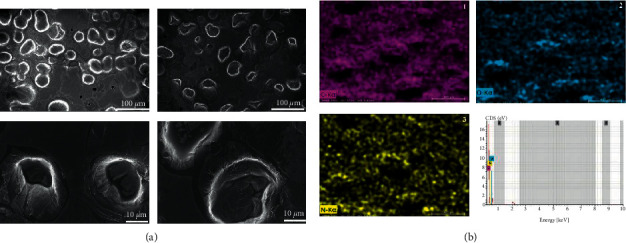
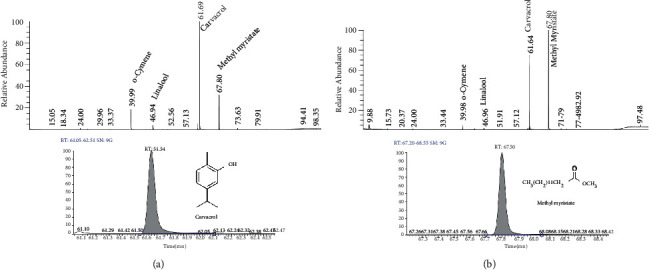
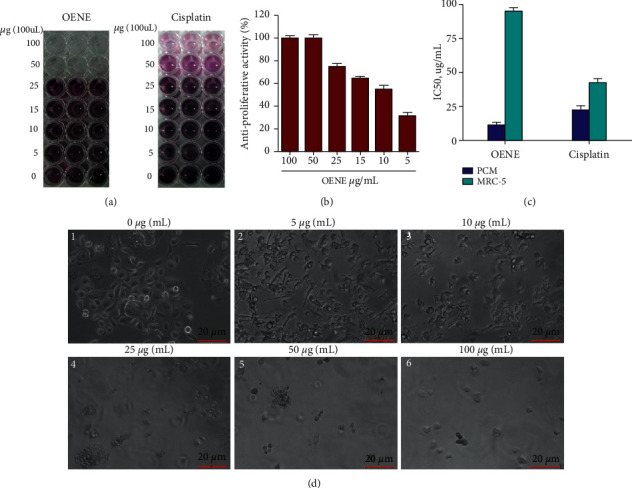
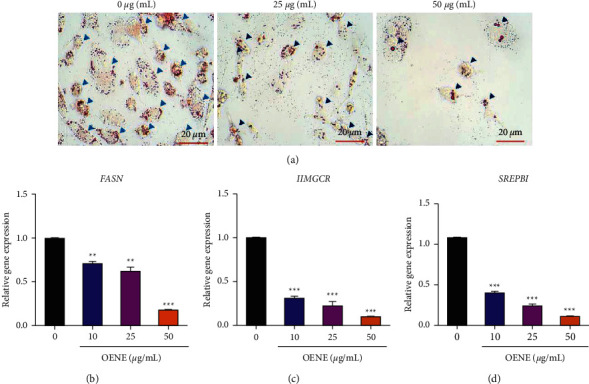
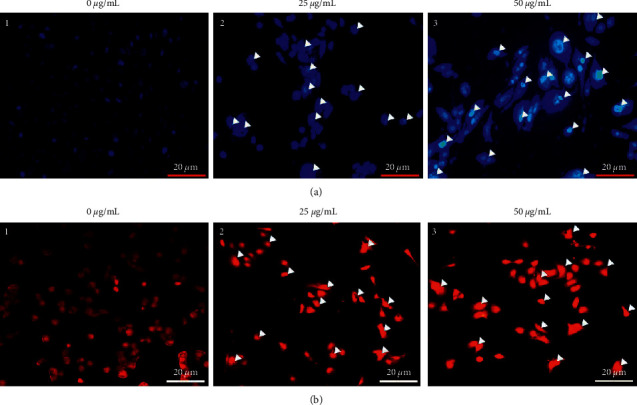
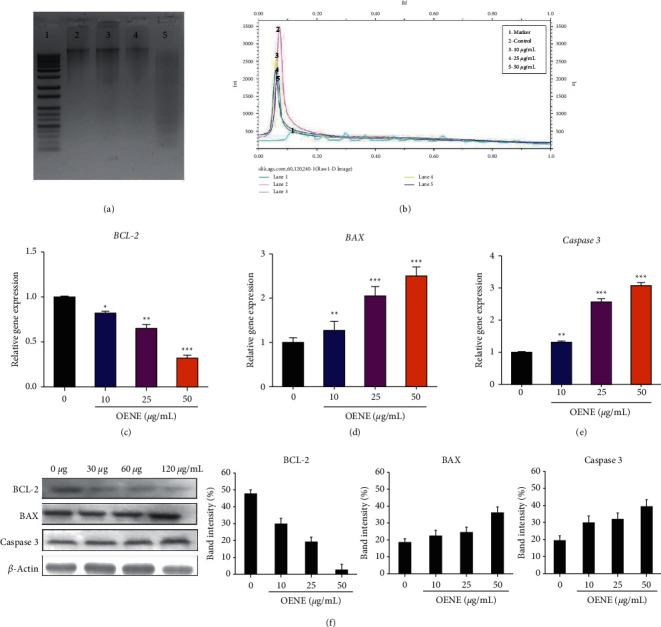
essential oil (EO) is traditionally well-known for its aromatic properties and biomedical applications, including anticancer. This was the first report where oregano essential oil-based nano emulsion (OENE) was synthesized for studying its effects on prostate cancer cell lines (PC3). At first, we have synthesized OENE and characterized using various spectroscopic analyses. The toxicity and inhibitory concentration (IC) of OENE toward prostate cancer by MTT analysis were performed. The lipid biogenesis mediated, molecular target pathway analyses were performed using fluorescence cellular staining techniques, real-time RT-PCR, or western blotting analysis. OENE showed IC at 13.82 g/mL and significantly induced distinct morphological changes, including cell shrinkage, cell density, and cell shape reduction. In addition, OENE could also significantly decreased lipid droplet accumulation which was confirmed by studying mRNA transcripts of 3-hydroxy-3-methylglutaryl-CoA reductase (HMGCR) (0.31-fold), fatty acid synthase (FASN) (0.18-fold), and sterol regulatory element-binding protein (SREPB1) (0.11-fold), respectively. Furthermore, there is a significant upregulation BAX (BCL2 associated X) and caspase 3 expressions. Nevertheless, OENE decreased the transcript level of BCL2 (B-cell lymphoma 2), thus resulting in apoptosis. Overall, our present work demonstrated that OENE could be a therapeutic target for the treatment of prostate cancer and warrants in vivo studies.
精油(EO)传统上以其芳香特性和生物医学应用而闻名,包括抗癌作用。这是首次报道合成基于牛至精油的纳米乳液(OENE)以研究其对前列腺癌细胞系(PC3)的影响。首先,我们合成了OENE并使用各种光谱分析进行了表征。通过MTT分析检测了OENE对前列腺癌的毒性和抑制浓度(IC)。使用荧光细胞染色技术、实时RT-PCR或蛋白质印迹分析进行脂质生物合成介导的分子靶标途径分析。OENE的IC为13.82μg/mL,并显著诱导了明显的形态学变化,包括细胞收缩、细胞密度降低和细胞形态缩小。此外,通过分别研究3-羟基-3-甲基戊二酰辅酶A还原酶(HMGCR)(0.31倍)、脂肪酸合酶(FASN)(0.18倍)和固醇调节元件结合蛋白(SREPB1)(0.11倍)的mRNA转录本证实,OENE还可显著减少脂滴积累。此外,BAX(BCL2相关X)和半胱天冬酶3的表达显著上调。然而,OENE降低了BCL2(B细胞淋巴瘤2)的转录水平,从而导致细胞凋亡。总体而言,我们目前的工作表明,OENE可能是治疗前列腺癌的一个治疗靶点,值得进行体内研究。