Enayatifard Reza, Akbari Jafar, Babaei Amirhossein, Rostamkalaei Seyyed Sohrab, Hashemi Seyyed Mohammad Hassan, Habibi Emran
Department of Pharmaceutics, Faculty of Pharmacy, Mazandaran University of Medical Sciences, Sari, Iran.
Student Research Committee, Department of Pharmaceutics, Faculty of Pharmacy, Mazandaran University of Medical Sciences, Sari, Iran.
Adv Pharm Bull. 2021 Feb;11(2):327-334. doi: 10.34172/apb.2021.028. Epub 2020 Feb 23.
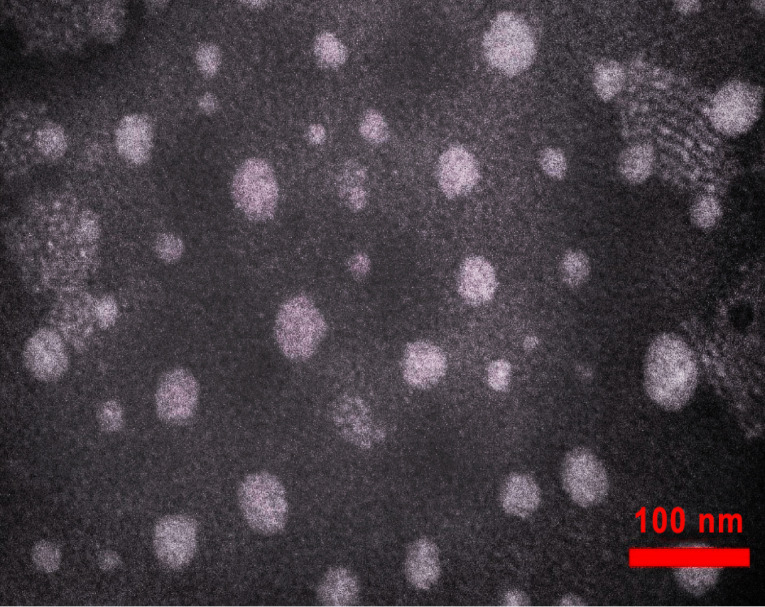
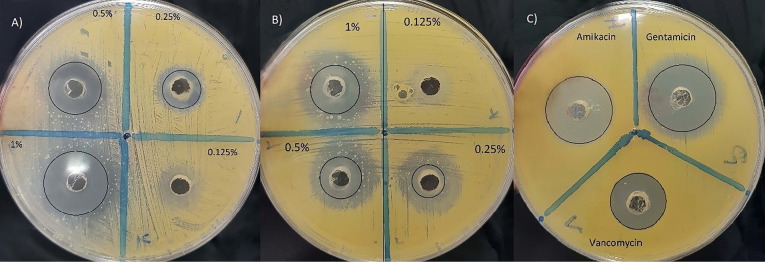
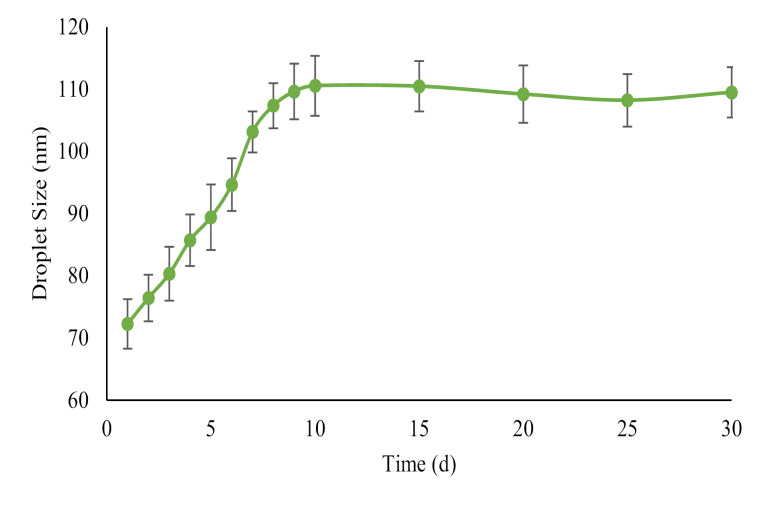
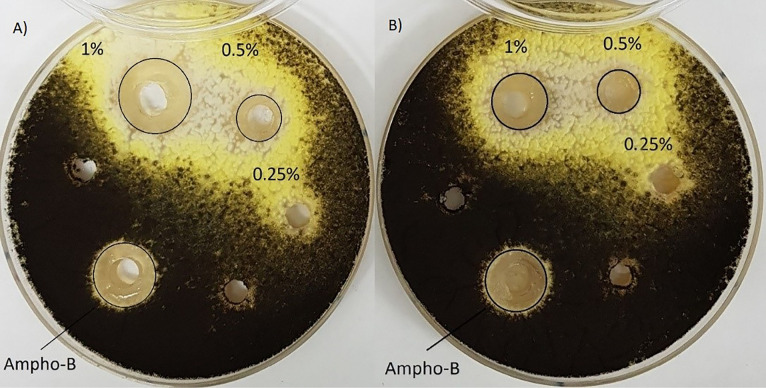
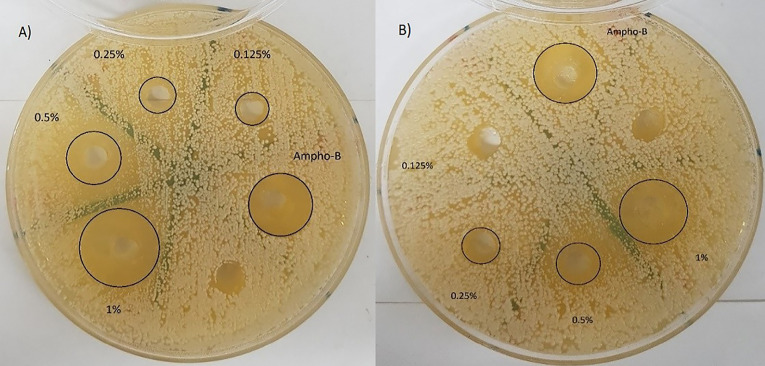
Foodborne diseases are still a serious problem in public health and natural compounds are being widely considered for their potential industrial protective additive in food products. L. has been known as an antimicrobial effective herb. This present study was carried out to examine the antimicrobial effect of essential oil nanoemulsion in comparison with conventional emulsion. The essential oil was obtained by hydrodistillation, analyzed by GC-Mass and formulated as a nanoemulsion to improve water dispersion by high-energy emulsification method. The antimicrobial activity of the prepared formulation was assessed by measuring the minimum inhibitory concentration (MIC), minimum bactericidal/fungicidal concentration (MBC/MFC) and zone of inhibition against some main foodborne pathogen microorganisms. The main component of the oregano essential oil was carvacrol (78%) and the selected nanoemulsion formulation demonstrated low polydispersity (0.11) and mean droplet (72.26 nm) and it was stable even after 30 days of storage. The nanoemulsion form displayed significant activity against the , and with inhibition zones ranging from 8.7-22.3 mm. The MIC of nanoemulsion against the tested bacteria was within the range of 0.156 to 0.312 (mg/mL) and against the tested fungi were in the range of 0.078 to 0.156 (mg/mL). The MBC/MFC of nanoemulsion against the tested microorganisms were in the range of 0.312 to 5 (mg/mL). The study's results demonstrated the possibility of using the nanoemulsion form of oregano essential oil as a food additive to inhibit the growth of some foodborne microorganisms and extending the shelf life of food products.
食源性疾病仍是公共卫生领域的一个严重问题,天然化合物因其在食品中作为潜在工业保护添加剂的可能性而受到广泛关注。牛至已被认为是一种具有抗菌作用的有效草药。本研究旨在比较香芹酚纳米乳液与传统乳液的抗菌效果。通过水蒸馏法获得香芹酚,采用气相色谱 - 质谱联用仪进行分析,并通过高能乳化法将其制成纳米乳液以改善其在水中的分散性。通过测量最低抑菌浓度(MIC)、最低杀菌/杀真菌浓度(MBC/MFC)以及对一些主要食源性病原体微生物的抑菌圈来评估所制备制剂的抗菌活性。牛至精油的主要成分是香芹酚(78%),所选用的纳米乳液制剂表现出低多分散性(0.11)和平均粒径(72.26 nm),并且即使在储存30天后仍保持稳定。纳米乳液形式对金黄色葡萄球菌、大肠杆菌和白色念珠菌显示出显著活性,抑菌圈范围为8.7 - 22.3毫米。纳米乳液对受试细菌的MIC在0.156至0.312(mg/mL)范围内,对受试真菌的MIC在0.078至0.156(mg/mL)范围内。纳米乳液对受试微生物的MBC/MFC在0.312至5(mg/mL)范围内。该研究结果表明,牛至精油纳米乳液形式有可能作为食品添加剂用于抑制某些食源微生物的生长并延长食品保质期。